
BREAKING NEWS
Climate change continues to have an adverse effect in the northern parts of India, especially in the Union Territory of Jammu & Kashmir.
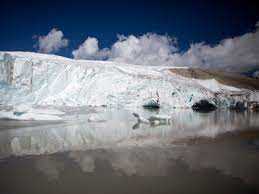
With temperatures heating up, glaciers and ice sheets around the world and especially above the Kashmir Valley are now in a severe meltdown stage, driving up sea levels, causing floods in some parts and droughts in other parts.
Nearly 70 percent of Kashmir’s population is heavily dependent on farming and allied agricultural practices and activities for its survival, and therefore, is naturally in a state of panic and alarm over news of the rapid snow-melt, which could damage their crops hugely.
Scientists in India and abroad have been issuing warnings about warming temperatures at regular intervals. In spring this year, we heard about Kashmir’s mustard crops being washed away by flood waters. Now we are hearing news of the rice, corn and bean harvests taking a severe hit because there hasn’t been sufficient natural water to water them.
The farming community, according to one report, is extremely upset by the unexpected climatic changes as they have been left with a “Hobson’s Choice”, i.e., who to feed, the family or the livestock?
Geo-climatic conditions in India make it one of the world’s most disaster-prone countries and therefore, the management of such calamities, when they occur and in its aftermath, become critical both within its borders and across the region.
Brighter Kashmir has been giving regular updates about the damaging impact of climate change on the local agriculture sector.
In May this year, the daily warned climate change impacting Jammu and Kashmir’s apple yield. In its report then it said that apple production in the valley had been majorly hit due to factors like global warming, climate change, poor irrigation, excessive use of pesticides and unregulated construction activity.
It cautioned the UT administration to provide irrigation at short intervals for Kashmir’s apple orchards and to have a rethink about its conservation strategies to improve irrigation by creating more tube wells for water storage, etc.
A month earlier, in April, Brighter Kashmir warned of Jammu and Kashmir being on the cusp of an imminent climatic disaster and potential economic crisis.
Citing a report of the Delhi-based Centre for Science and Environment (CSE), the daily revealed that of the ten glaciers located in J&K, most of them, if not all, were melting. According to the CSE study, the region’s largest glacier – Kolahoi -- has lost 23 percent of its original area since 1962.
To get a better perspective of this worrisome phenomenon, Brighter Kashmir approached Professor Dr Ghulam Jeelani of the Department of Earth Sciences, University of Kashmir, who warned all those months back that both the Kolahoi Glacier and the Shafat Glacier were disappearing at a rapid rate because of increased global warming, and that this could make the Kashmir Valley a severe water stressed area.
Professor Jeelani was forthright in saying then that, “Glacial melting is definitely affecting the agricultural sector and the horticulture of the region.” He also warned of the danger of thawing permafrost.
“When the earth remains frozen for at least two consecutive years, it is called permafrost. When permafrost melts, it can damage and destroy infrastructure like roads, houses and bridges,” he said.
The Journal, Nature Geoscience, said in its February 2022 report that glaciers across the world now contain far less ice than previously thought. It said that glaciers have lost roughly 5.4 trillion tons of ice between 2000 and 2019 alone.
Agricultural experts are now warning that even a small shift in the snowmelt pattern can create an agricultural crisis in the Valley and by extension affect other sectors of the region’s economy.
There is one report that claims that farmers in South Kashmir have lost around 70 percent of their crops this season due to dry spells and floods.
Glacial experts like Shakil Ahmad Romshoo claim that the seven glaciers of J&K and Ladakh have been shrinking at an average of five metres per year now, instead of the average one metre per year since 2016.
The truth of the matter is that the Himalayas are getting hotter, melting glaciers faster in spring. Flooding is getting more intense because of increased rainfall.
In summer, the reverse happens; there isn’t enough water to irrigate the crops because of drought.
If temperatures keep rising and "extraordinary glacier melting" becomes the norm, that could threaten food, energy and water security in the entire region.
Kashmir's Department of Agriculture is fighting an uphill battle to provide the farming community with up-to-date information about climate swings and immediate help when droughts or floods wipe out crops.
The UT administration has also introduced a national crop
insurance scheme that compensates farmers for losses caused by extreme weather events.
The need of the hour is to upgrade data collection to help Kashmir's farmers reverse this negative climatic trend.
Climate change continues to have an adverse effect in the northern parts of India, especially in the Union Territory of Jammu & Kashmir.
With temperatures heating up, glaciers and ice sheets around the world and especially above the Kashmir Valley are now in a severe meltdown stage, driving up sea levels, causing floods in some parts and droughts in other parts.
Nearly 70 percent of Kashmir’s population is heavily dependent on farming and allied agricultural practices and activities for its survival, and therefore, is naturally in a state of panic and alarm over news of the rapid snow-melt, which could damage their crops hugely.
Scientists in India and abroad have been issuing warnings about warming temperatures at regular intervals. In spring this year, we heard about Kashmir’s mustard crops being washed away by flood waters. Now we are hearing news of the rice, corn and bean harvests taking a severe hit because there hasn’t been sufficient natural water to water them.
The farming community, according to one report, is extremely upset by the unexpected climatic changes as they have been left with a “Hobson’s Choice”, i.e., who to feed, the family or the livestock?
Geo-climatic conditions in India make it one of the world’s most disaster-prone countries and therefore, the management of such calamities, when they occur and in its aftermath, become critical both within its borders and across the region.
Brighter Kashmir has been giving regular updates about the damaging impact of climate change on the local agriculture sector.
In May this year, the daily warned climate change impacting Jammu and Kashmir’s apple yield. In its report then it said that apple production in the valley had been majorly hit due to factors like global warming, climate change, poor irrigation, excessive use of pesticides and unregulated construction activity.
It cautioned the UT administration to provide irrigation at short intervals for Kashmir’s apple orchards and to have a rethink about its conservation strategies to improve irrigation by creating more tube wells for water storage, etc.
A month earlier, in April, Brighter Kashmir warned of Jammu and Kashmir being on the cusp of an imminent climatic disaster and potential economic crisis.
Citing a report of the Delhi-based Centre for Science and Environment (CSE), the daily revealed that of the ten glaciers located in J&K, most of them, if not all, were melting. According to the CSE study, the region’s largest glacier – Kolahoi -- has lost 23 percent of its original area since 1962.
To get a better perspective of this worrisome phenomenon, Brighter Kashmir approached Professor Dr Ghulam Jeelani of the Department of Earth Sciences, University of Kashmir, who warned all those months back that both the Kolahoi Glacier and the Shafat Glacier were disappearing at a rapid rate because of increased global warming, and that this could make the Kashmir Valley a severe water stressed area.
Professor Jeelani was forthright in saying then that, “Glacial melting is definitely affecting the agricultural sector and the horticulture of the region.” He also warned of the danger of thawing permafrost.
“When the earth remains frozen for at least two consecutive years, it is called permafrost. When permafrost melts, it can damage and destroy infrastructure like roads, houses and bridges,” he said.
The Journal, Nature Geoscience, said in its February 2022 report that glaciers across the world now contain far less ice than previously thought. It said that glaciers have lost roughly 5.4 trillion tons of ice between 2000 and 2019 alone.
Agricultural experts are now warning that even a small shift in the snowmelt pattern can create an agricultural crisis in the Valley and by extension affect other sectors of the region’s economy.
There is one report that claims that farmers in South Kashmir have lost around 70 percent of their crops this season due to dry spells and floods.
Glacial experts like Shakil Ahmad Romshoo claim that the seven glaciers of J&K and Ladakh have been shrinking at an average of five metres per year now, instead of the average one metre per year since 2016.
The truth of the matter is that the Himalayas are getting hotter, melting glaciers faster in spring. Flooding is getting more intense because of increased rainfall.
In summer, the reverse happens; there isn’t enough water to irrigate the crops because of drought.
If temperatures keep rising and "extraordinary glacier melting" becomes the norm, that could threaten food, energy and water security in the entire region.
Kashmir's Department of Agriculture is fighting an uphill battle to provide the farming community with up-to-date information about climate swings and immediate help when droughts or floods wipe out crops.
The UT administration has also introduced a national crop
insurance scheme that compensates farmers for losses caused by extreme weather events.
The need of the hour is to upgrade data collection to help Kashmir's farmers reverse this negative climatic trend.

© Copyright 2023 brighterkashmir.com All Rights Reserved. Quantum Technologies