
BREAKING NEWS
Unlike fantasy-driven child-centric films, Jha's stories mirrored reality. He recounts how child actors in the 1970s and 1980s often had to endure gruelling work hours and family burdens, raising the haunting question: was the trade-off childhood lost to sets truly worth it?
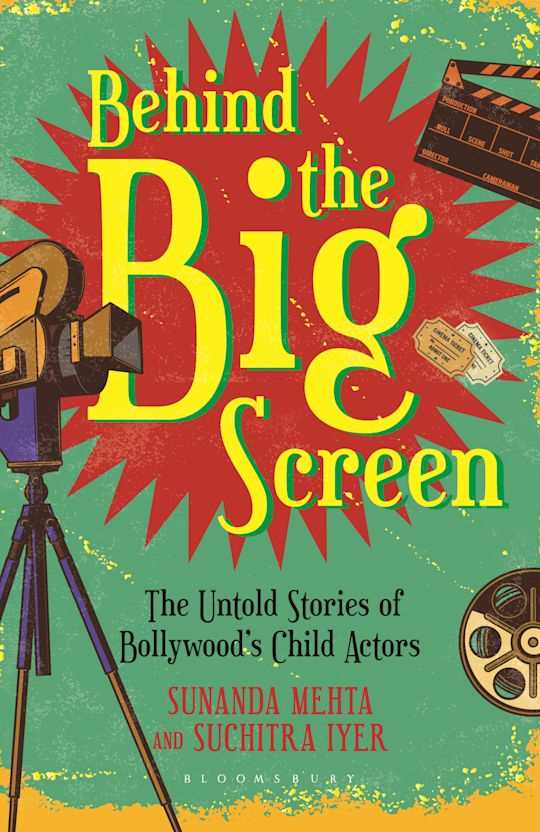
Behind the Big Screen: The Untold Stories of Bollywood's Child Actors (Bloomsbury India), authored by Sunanda Mehta and Suchitra Iyer, is a painstakingly researched and deeply empathetic look at the lives of children who once lit up Hindi cinema.
The book strips away the glamour of the arc lights to reveal the fragile, often turbulent realities behind the camera.
The foreword by filmmaker Prakash Jha sets the tone. Known for hard-hitting films on politics, casteism and corruption, Jha confesses he is not particularly associated with children's films.
Yet, he recounts how his own life was touched by children, from directing Shree Vats for an NGO, where the smiles of orphans moved him to adopt his daughter Disha, to films like Hip Hip Hurray (1984) and Pareeksha (2019), which revolved around school children.
Unlike fantasy-driven child-centric films, Jha's stories mirrored reality. He recounts how child actors in the 1970s and 1980s often had to endure gruelling work hours and family burdens, raising the haunting question: was the trade-off childhood lost to sets truly worth it?
That is the question that lies at the heart of Mehta and Iyer's book. The narrative journeys through decades of Bollywood, from the 1960s to the early 1990s, when child actors formed perhaps the most vulnerable component of a film production unit.
With few laws or regulations governing their work, accountability was low, and childhood was often dismissed as just another phase of life. The book seeks to rewind and let those stories unfold.
The preface begins with a poignantly reflective quote by veteran actor Tabassum, who began her career as a child star. “There is no such thing as a child actor,” she says, explaining how the word “child” drops off once one enters the industry. Her words encapsulate the paradox of early fame, innocence lost for stardom gained.
The authors tell the story of Sharad Goyekar, who received the National Award for Best Child Actor for Tingya, a Marathi film, in 2009. Catapulted from rural Junnar, Maharashtra, where he grazed cattle, into the glittering world of films, Goyekar’s trajectory spiralled downwards rapidly. Within four years, he found himself spent, unhappy, and at a dead end-a cautionary tale of how fame without guidance can destroy young lives.
The book also revisits the harrowing experiences of Daisy Irani, one of the most popular child actors of the 1960s. In a shocking revelation carried by a tabloid, Irani disclosed how she was raped at the age of six by her supposed guardian while shooting for a film. She also spoke of how her mother played a role in destroying her childhood. The account stunned readers but, as the authors note, was only the tip of the iceberg.
Other stories are equally distressing: Baby Naaz, who attempted suicide twice by the age of ten; Sarika, who fought a bitter court battle with her mother over finances; Khushbu, whose father treated her as a money bank -- all these point to exploitation and trauma lurking behind the glamour.
Yet, the book also acknowledges those who embraced the spotlight. Junior Mehmood found his true calling in cinema, while Sachin Pilgaonkar revelled in the fame and would return to it in a heartbeat. Actors like Jugal Hansraj, Alankar Joshi, Shahinda Baig, and Raju Shreshtha recall sweet memories that outnumber the bitter ones, showing that not all child actors were scarred by their experiences.
The narrative is interspersed with accounts from more recent child actors, including those from Slumdog Millionaire. The crushing weight of early fame on these children, juxtaposed with the struggles of earlier generations, serves to underscore how little has changed in safeguarding young performers.
Mehta and Iyer do not stop at these personal accounts. They intersperse the narratives with opinions from directors, counsellors, and lawyers to add depth.
The book points out that the lack of regulations in the previous decades left children at the mercy of exploitation, and how even today fame can dissolve overnight into adolescent anonymity. The transition from celebrated child star to forgotten teenager remains one of the most difficult phases to negotiate.
The authors shortly state that their book is not a comprehensive record of every child actor in Bollywood, something practically impossible given the sheer numbers and scattered nature of these stories.
Many yesteryear actors are no longer alive; some chose not to revisit painful memories, while others were simply untraceable. What emerges instead is a representative mosaic of experiences that captures the bittersweet reality of growing up in front of the camera.
The strength of the book lies in the fact that it is balanced. It does not glamorise childhood stardom, nor does it reduce it to exploitation alone; rather, it holds up the double-edged sword of success and fame.
For some, the spotlight was a blessing, while for others, it was a burden that forever left its scars. The narrative has some tough questions: Does early fame offer a foundation for a secure future, or does it create unsteady, unreal foundations? What happens when childhood fame dissolves into anonymity? How does a child handle such an abrupt transition?
By revisiting names such as Daisy Irani, Baby Naaz, Sarika, Khushbu, Junior Mehmood, Sachin Pilgaonkar, Jugal Hansraj, Alankar Joshi, Shahinda Baig, Raju Shreshtha, and Sharad Goyekar, the book does not let these tales get lost in the spools of time. It reminds readers that the magic of cinema is indeed made of human experiences-fragile, temporary, yet touching reality at its very core.
The prose is unflinching, yet compassionate. The authors do not refrain from telling stories of horror, but they equally celebrate resilience and joy where they find it. Inclusion of a foreword by Prakash Jha added both credence and context, linking personal reflections of a filmmaker to the general narrative around child actors in Indian cinema.
Ultimately, Behind the Big Screen is both a cautionary tale and a tribute: a warning against exploitation and neglect that have marked the lives of many child actors, a tribute to their talent, resilience, and contribution to cinema. This is an invaluable addition to the literature on Indian cinema, since the insights drawn go beyond film history to touch upon aspects of childhood, memory, and identity.
To the readers, the book is a reminder that behind every glittering performance lies a story-sometimes joyous, more often painful, but always human. Mehta and Iyer chronicle these stories and ensure that the voices of Bollywood's child actors are heard, respected, and remembered.
Email:------------------------------daanishinterview@gmail.com
Unlike fantasy-driven child-centric films, Jha's stories mirrored reality. He recounts how child actors in the 1970s and 1980s often had to endure gruelling work hours and family burdens, raising the haunting question: was the trade-off childhood lost to sets truly worth it?
Behind the Big Screen: The Untold Stories of Bollywood's Child Actors (Bloomsbury India), authored by Sunanda Mehta and Suchitra Iyer, is a painstakingly researched and deeply empathetic look at the lives of children who once lit up Hindi cinema.
The book strips away the glamour of the arc lights to reveal the fragile, often turbulent realities behind the camera.
The foreword by filmmaker Prakash Jha sets the tone. Known for hard-hitting films on politics, casteism and corruption, Jha confesses he is not particularly associated with children's films.
Yet, he recounts how his own life was touched by children, from directing Shree Vats for an NGO, where the smiles of orphans moved him to adopt his daughter Disha, to films like Hip Hip Hurray (1984) and Pareeksha (2019), which revolved around school children.
Unlike fantasy-driven child-centric films, Jha's stories mirrored reality. He recounts how child actors in the 1970s and 1980s often had to endure gruelling work hours and family burdens, raising the haunting question: was the trade-off childhood lost to sets truly worth it?
That is the question that lies at the heart of Mehta and Iyer's book. The narrative journeys through decades of Bollywood, from the 1960s to the early 1990s, when child actors formed perhaps the most vulnerable component of a film production unit.
With few laws or regulations governing their work, accountability was low, and childhood was often dismissed as just another phase of life. The book seeks to rewind and let those stories unfold.
The preface begins with a poignantly reflective quote by veteran actor Tabassum, who began her career as a child star. “There is no such thing as a child actor,” she says, explaining how the word “child” drops off once one enters the industry. Her words encapsulate the paradox of early fame, innocence lost for stardom gained.
The authors tell the story of Sharad Goyekar, who received the National Award for Best Child Actor for Tingya, a Marathi film, in 2009. Catapulted from rural Junnar, Maharashtra, where he grazed cattle, into the glittering world of films, Goyekar’s trajectory spiralled downwards rapidly. Within four years, he found himself spent, unhappy, and at a dead end-a cautionary tale of how fame without guidance can destroy young lives.
The book also revisits the harrowing experiences of Daisy Irani, one of the most popular child actors of the 1960s. In a shocking revelation carried by a tabloid, Irani disclosed how she was raped at the age of six by her supposed guardian while shooting for a film. She also spoke of how her mother played a role in destroying her childhood. The account stunned readers but, as the authors note, was only the tip of the iceberg.
Other stories are equally distressing: Baby Naaz, who attempted suicide twice by the age of ten; Sarika, who fought a bitter court battle with her mother over finances; Khushbu, whose father treated her as a money bank -- all these point to exploitation and trauma lurking behind the glamour.
Yet, the book also acknowledges those who embraced the spotlight. Junior Mehmood found his true calling in cinema, while Sachin Pilgaonkar revelled in the fame and would return to it in a heartbeat. Actors like Jugal Hansraj, Alankar Joshi, Shahinda Baig, and Raju Shreshtha recall sweet memories that outnumber the bitter ones, showing that not all child actors were scarred by their experiences.
The narrative is interspersed with accounts from more recent child actors, including those from Slumdog Millionaire. The crushing weight of early fame on these children, juxtaposed with the struggles of earlier generations, serves to underscore how little has changed in safeguarding young performers.
Mehta and Iyer do not stop at these personal accounts. They intersperse the narratives with opinions from directors, counsellors, and lawyers to add depth.
The book points out that the lack of regulations in the previous decades left children at the mercy of exploitation, and how even today fame can dissolve overnight into adolescent anonymity. The transition from celebrated child star to forgotten teenager remains one of the most difficult phases to negotiate.
The authors shortly state that their book is not a comprehensive record of every child actor in Bollywood, something practically impossible given the sheer numbers and scattered nature of these stories.
Many yesteryear actors are no longer alive; some chose not to revisit painful memories, while others were simply untraceable. What emerges instead is a representative mosaic of experiences that captures the bittersweet reality of growing up in front of the camera.
The strength of the book lies in the fact that it is balanced. It does not glamorise childhood stardom, nor does it reduce it to exploitation alone; rather, it holds up the double-edged sword of success and fame.
For some, the spotlight was a blessing, while for others, it was a burden that forever left its scars. The narrative has some tough questions: Does early fame offer a foundation for a secure future, or does it create unsteady, unreal foundations? What happens when childhood fame dissolves into anonymity? How does a child handle such an abrupt transition?
By revisiting names such as Daisy Irani, Baby Naaz, Sarika, Khushbu, Junior Mehmood, Sachin Pilgaonkar, Jugal Hansraj, Alankar Joshi, Shahinda Baig, Raju Shreshtha, and Sharad Goyekar, the book does not let these tales get lost in the spools of time. It reminds readers that the magic of cinema is indeed made of human experiences-fragile, temporary, yet touching reality at its very core.
The prose is unflinching, yet compassionate. The authors do not refrain from telling stories of horror, but they equally celebrate resilience and joy where they find it. Inclusion of a foreword by Prakash Jha added both credence and context, linking personal reflections of a filmmaker to the general narrative around child actors in Indian cinema.
Ultimately, Behind the Big Screen is both a cautionary tale and a tribute: a warning against exploitation and neglect that have marked the lives of many child actors, a tribute to their talent, resilience, and contribution to cinema. This is an invaluable addition to the literature on Indian cinema, since the insights drawn go beyond film history to touch upon aspects of childhood, memory, and identity.
To the readers, the book is a reminder that behind every glittering performance lies a story-sometimes joyous, more often painful, but always human. Mehta and Iyer chronicle these stories and ensure that the voices of Bollywood's child actors are heard, respected, and remembered.
Email:------------------------------daanishinterview@gmail.com

© Copyright 2023 brighterkashmir.com All Rights Reserved. Quantum Technologies