
BREAKING NEWS
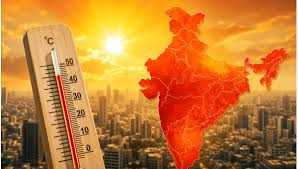
The summer of 2026 has become more than just a season of extreme weather—it has emerged as a serious warning for humanity. Record-breaking heatwaves across India and South Asia during April and May made it clear that climate change is no longer a distant threat but a harsh reality of the present. Temperatures reached 46–48°C in Delhi, Rajasthan, Uttar Pradesh, Maharashtra, and several parts of central India. Electricity demand touched historic highs, streets emptied during peak hours, and for children, the elderly, and low-income communities, daily life became a struggle for survival.
This crisis is the result of decades of ecological imbalance, reckless urbanization, deforestation, overuse of natural resources, and an unsustainable model of development. Nature repeatedly sent warnings, but they were ignored in the pursuit of rapid growth. Today, those warnings have returned in the form of devastating heatwaves.
The destruction of forests has played a major role in intensifying rising temperatures. Forests naturally absorb carbon dioxide, regulate rainfall, and cool the atmosphere. Yet millions of hectares of green cover continue to disappear every year. As forests vanish, temperatures rise, humidity declines, and weather patterns become increasingly unpredictable.
At the same time, cities have turned into “concrete jungles.” Green spaces are shrinking while roads, buildings, and glass structures absorb and trap heat. This has intensified the Urban Heat Island effect, where cities remain far hotter than nearby rural areas. Even nighttime temperatures are rising in cities like Delhi, Mumbai, Jaipur, and Lucknow, offering little relief from the heat. Conditions are worst in poor neighbourhoods where access to water, electricity, and cooling facilities remains limited.
Heatwaves also expose deep social inequality. Wealthier families can escape into air-conditioned spaces, while labourers, street vendors, rickshaw pullers, and construction workers continue to work under the burning sun. Ironically, the growing use of air conditioners further worsens the problem. ACs release hot air outdoors, increase electricity demand, and contribute to greenhouse gas emissions, especially when power generation depends on coal.
The impact of climate change now extends beyond temperature rise. Agriculture, food security, public health, and the economy are all under pressure. Scientific studies show that rising heat and irregular rainfall are already reducing the productivity of crops like wheat and rice. Water shortages and declining soil fertility are creating new risks for food security.
Public health systems are also facing growing challenges. Cases of heatstroke, dehydration, cardiovascular illness, and mental stress are increasing. Children, elderly people, pregnant women, and outdoor workers remain the most vulnerable. In the future, heatwaves could trigger migration as water scarcity and agricultural distress worsen living conditions.
Governments can no longer rely only on heat alerts and temporary measures. Heatwaves must be treated as a major national disaster management issue. Cities need stronger Heat Action Plans, including expansion of green cover, shaded public spaces, cooling centres, drinking water facilities, and water conservation systems. Work schedules and school timings should be adjusted according to extreme weather conditions, while labourers must be protected through regulated working hours and access to rest and drinking water.
Building policies also require urgent reform. Traditional Indian architecture, with ventilated homes, courtyards, mud-based construction, and natural cooling methods, should be revived. Technologies such as cool roofs, rainwater harvesting, and solar-powered cooling systems must receive stronger policy support.
Forest conservation and afforestation should become national priorities rather than symbolic campaigns. Urban forests, parks, green corridors, lakes, and traditional water bodies can help regulate local temperatures and improve environmental balance.
However, governments alone cannot solve this crisis. Citizens must also change their lifestyles and recognize environmental responsibility. Conserving water, reducing energy waste, planting trees, and using public transport are no longer optional choices—they are necessary for survival. India’s old traditions of public water stations, shaded shelters, and community service during summer should be revived to support vulnerable populations.
The summer of 2026 has delivered a powerful message: humanity cannot continue to exploit nature without consequences. Rising temperatures, water scarcity, biodiversity loss, and food insecurity could shape the future if urgent action is delayed. The need of the hour is not to fight nature, but to live in harmony with it by adopting a sustainable and balanced model of development that protects both people and the planet.
The summer of 2026 has become more than just a season of extreme weather—it has emerged as a serious warning for humanity. Record-breaking heatwaves across India and South Asia during April and May made it clear that climate change is no longer a distant threat but a harsh reality of the present. Temperatures reached 46–48°C in Delhi, Rajasthan, Uttar Pradesh, Maharashtra, and several parts of central India. Electricity demand touched historic highs, streets emptied during peak hours, and for children, the elderly, and low-income communities, daily life became a struggle for survival.
This crisis is the result of decades of ecological imbalance, reckless urbanization, deforestation, overuse of natural resources, and an unsustainable model of development. Nature repeatedly sent warnings, but they were ignored in the pursuit of rapid growth. Today, those warnings have returned in the form of devastating heatwaves.
The destruction of forests has played a major role in intensifying rising temperatures. Forests naturally absorb carbon dioxide, regulate rainfall, and cool the atmosphere. Yet millions of hectares of green cover continue to disappear every year. As forests vanish, temperatures rise, humidity declines, and weather patterns become increasingly unpredictable.
At the same time, cities have turned into “concrete jungles.” Green spaces are shrinking while roads, buildings, and glass structures absorb and trap heat. This has intensified the Urban Heat Island effect, where cities remain far hotter than nearby rural areas. Even nighttime temperatures are rising in cities like Delhi, Mumbai, Jaipur, and Lucknow, offering little relief from the heat. Conditions are worst in poor neighbourhoods where access to water, electricity, and cooling facilities remains limited.
Heatwaves also expose deep social inequality. Wealthier families can escape into air-conditioned spaces, while labourers, street vendors, rickshaw pullers, and construction workers continue to work under the burning sun. Ironically, the growing use of air conditioners further worsens the problem. ACs release hot air outdoors, increase electricity demand, and contribute to greenhouse gas emissions, especially when power generation depends on coal.
The impact of climate change now extends beyond temperature rise. Agriculture, food security, public health, and the economy are all under pressure. Scientific studies show that rising heat and irregular rainfall are already reducing the productivity of crops like wheat and rice. Water shortages and declining soil fertility are creating new risks for food security.
Public health systems are also facing growing challenges. Cases of heatstroke, dehydration, cardiovascular illness, and mental stress are increasing. Children, elderly people, pregnant women, and outdoor workers remain the most vulnerable. In the future, heatwaves could trigger migration as water scarcity and agricultural distress worsen living conditions.
Governments can no longer rely only on heat alerts and temporary measures. Heatwaves must be treated as a major national disaster management issue. Cities need stronger Heat Action Plans, including expansion of green cover, shaded public spaces, cooling centres, drinking water facilities, and water conservation systems. Work schedules and school timings should be adjusted according to extreme weather conditions, while labourers must be protected through regulated working hours and access to rest and drinking water.
Building policies also require urgent reform. Traditional Indian architecture, with ventilated homes, courtyards, mud-based construction, and natural cooling methods, should be revived. Technologies such as cool roofs, rainwater harvesting, and solar-powered cooling systems must receive stronger policy support.
Forest conservation and afforestation should become national priorities rather than symbolic campaigns. Urban forests, parks, green corridors, lakes, and traditional water bodies can help regulate local temperatures and improve environmental balance.
However, governments alone cannot solve this crisis. Citizens must also change their lifestyles and recognize environmental responsibility. Conserving water, reducing energy waste, planting trees, and using public transport are no longer optional choices—they are necessary for survival. India’s old traditions of public water stations, shaded shelters, and community service during summer should be revived to support vulnerable populations.
The summer of 2026 has delivered a powerful message: humanity cannot continue to exploit nature without consequences. Rising temperatures, water scarcity, biodiversity loss, and food insecurity could shape the future if urgent action is delayed. The need of the hour is not to fight nature, but to live in harmony with it by adopting a sustainable and balanced model of development that protects both people and the planet.

© Copyright 2023 brighterkashmir.com All Rights Reserved. Quantum Technologies