
BREAKING NEWS
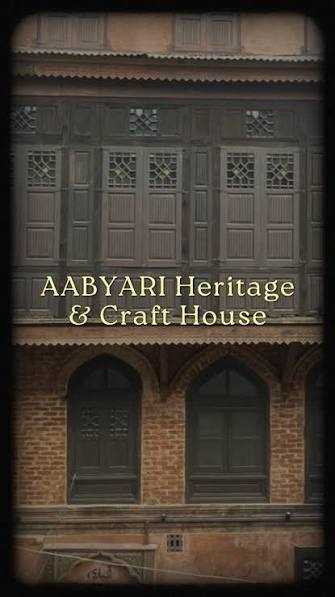
Srinagar, Oct 6: A century-old house in the historic Maharaj Gunj area of Old Srinagar has been given a new lease of life as Aabyari, a cultural centre bringing Kashmir’s architecture, crafts, pashmina, cuisine and music together under one roof.
The four-storeyed house, built in the early 1900s and once owned by a goldsmith, opened to the public in April 2026 after nearly two years of restoration. Founded by Srinagar-born Iqbal Mehboob Shah, who comes from a family associated with the pashmina trade, Aabyari seeks to preserve Kashmir’s traditions by making them part of a living cultural experience.
The name Aabyari, meaning “to nurture” or “to water” in Urdu, reflects the centre’s larger purpose of nurturing traditions that face the risk of fading amid rapid urban and social change.
Rather than functioning solely as a heritage display, Aabyari allows visitors to experience Kashmir’s traditions through artisan demonstrations, craft workshops, pashmina exhibitions, traditional cuisine, calligraphy and Sufiyana music.
The restoration has retained several traditional architectural elements, including mud-plastered walls, chuna-surkhi lime plaster, arched stained-glass windows, latticework, papier-mâché detailing and period furniture. Local craftsmen, including carpenters experienced in traditional houseboat construction, were involved in the restoration.
The project has also revived khanyari tiles, handmade glazed tiles historically associated with Kashmiri architecture. The staircase at Aabyari features such tiles, reflecting an effort to preserve techniques that are increasingly rare.
Traditional design influences are visible throughout the building, including jaali work inspired by the Shah-e-Hamdan shrine, chain-stitch detailing and copper elements incorporated into its interiors.
Craft remains at the heart of the centre. The ground floor houses the Tosha Khana pashmina gallery, while workshops showcase traditional embroidery and weaving. Karkhana Sosan focuses on kani and sozni embroidery, while Karkhana Yemberzal is dedicated to pashmina weaving.
The pashmina displayed at Aabyari traces its journey from the fine undercoat of Changthangi goats in the high-altitude Changthang region of Ladakh to Kashmir, where generations of artisans have developed the skills required to process and weave it into the famed fabric.
Food forms another important part of the experience. The Dewan Khana offers traditional wazwan in an atmosphere designed to reflect Kashmiri hospitality. The menu includes kahwa, nadru monje, gand chetin, rista, rogan josh, goshtaba and firni, alongside vegetarian preparations such as nadru yakhni and dum aloo.
The centre also works with local cooks and bakers, keeping its culinary experience connected to the surrounding community. Sufi musical performances can further add to the cultural experience.
At the top of the building is Ber Kani, a research and development studio where designers explore traditional Kashmiri patterns, techniques and colours and seek ways to adapt them to contemporary design without losing their character.
Aabyari’s location adds another layer to its appeal. Maharaj Gunj, one of Old Srinagar’s historic commercial quarters, has long been associated with trade, pashmina and craftsmanship. Its narrow lanes, old houses, bakeries and markets preserve glimpses of Srinagar’s traditional urban life.
The surrounding heritage circuit, including Khanqah-e-Moula, Jamia Masjid, Pathar Masjid, Budshah Tomb and Mazar-e-Salateen, further places Aabyari within a wider landscape of Kashmir’s history and culture.
The significance of Aabyari lies in its approach to preservation. Rather than treating heritage as something frozen in the past, it seeks to keep traditions visible, functional and connected to contemporary audiences.
Its restored architecture preserves the memory of an old Srinagar house; its workshops sustain traditional skills; its cuisine keeps local culinary practices alive; and its pashmina and craft spaces connect visitors with artisans and techniques passed down through generations.
In a rapidly changing city, Aabyari offers a reminder that Kashmir’s heritage is not confined to monuments. It also survives in homes, workshops, markets, fabrics, food, music and everyday craftsmanship.
Aabyari is, ultimately, an attempt to give these many strands of Kashmir’s cultural identity a common space—and a new life.
If you want, I can also make this more feature-like and literary, suitable for a Sunday magazine page.
Srinagar, Oct 6: A century-old house in the historic Maharaj Gunj area of Old Srinagar has been given a new lease of life as Aabyari, a cultural centre bringing Kashmir’s architecture, crafts, pashmina, cuisine and music together under one roof.
The four-storeyed house, built in the early 1900s and once owned by a goldsmith, opened to the public in April 2026 after nearly two years of restoration. Founded by Srinagar-born Iqbal Mehboob Shah, who comes from a family associated with the pashmina trade, Aabyari seeks to preserve Kashmir’s traditions by making them part of a living cultural experience.
The name Aabyari, meaning “to nurture” or “to water” in Urdu, reflects the centre’s larger purpose of nurturing traditions that face the risk of fading amid rapid urban and social change.
Rather than functioning solely as a heritage display, Aabyari allows visitors to experience Kashmir’s traditions through artisan demonstrations, craft workshops, pashmina exhibitions, traditional cuisine, calligraphy and Sufiyana music.
The restoration has retained several traditional architectural elements, including mud-plastered walls, chuna-surkhi lime plaster, arched stained-glass windows, latticework, papier-mâché detailing and period furniture. Local craftsmen, including carpenters experienced in traditional houseboat construction, were involved in the restoration.
The project has also revived khanyari tiles, handmade glazed tiles historically associated with Kashmiri architecture. The staircase at Aabyari features such tiles, reflecting an effort to preserve techniques that are increasingly rare.
Traditional design influences are visible throughout the building, including jaali work inspired by the Shah-e-Hamdan shrine, chain-stitch detailing and copper elements incorporated into its interiors.
Craft remains at the heart of the centre. The ground floor houses the Tosha Khana pashmina gallery, while workshops showcase traditional embroidery and weaving. Karkhana Sosan focuses on kani and sozni embroidery, while Karkhana Yemberzal is dedicated to pashmina weaving.
The pashmina displayed at Aabyari traces its journey from the fine undercoat of Changthangi goats in the high-altitude Changthang region of Ladakh to Kashmir, where generations of artisans have developed the skills required to process and weave it into the famed fabric.
Food forms another important part of the experience. The Dewan Khana offers traditional wazwan in an atmosphere designed to reflect Kashmiri hospitality. The menu includes kahwa, nadru monje, gand chetin, rista, rogan josh, goshtaba and firni, alongside vegetarian preparations such as nadru yakhni and dum aloo.
The centre also works with local cooks and bakers, keeping its culinary experience connected to the surrounding community. Sufi musical performances can further add to the cultural experience.
At the top of the building is Ber Kani, a research and development studio where designers explore traditional Kashmiri patterns, techniques and colours and seek ways to adapt them to contemporary design without losing their character.
Aabyari’s location adds another layer to its appeal. Maharaj Gunj, one of Old Srinagar’s historic commercial quarters, has long been associated with trade, pashmina and craftsmanship. Its narrow lanes, old houses, bakeries and markets preserve glimpses of Srinagar’s traditional urban life.
The surrounding heritage circuit, including Khanqah-e-Moula, Jamia Masjid, Pathar Masjid, Budshah Tomb and Mazar-e-Salateen, further places Aabyari within a wider landscape of Kashmir’s history and culture.
The significance of Aabyari lies in its approach to preservation. Rather than treating heritage as something frozen in the past, it seeks to keep traditions visible, functional and connected to contemporary audiences.
Its restored architecture preserves the memory of an old Srinagar house; its workshops sustain traditional skills; its cuisine keeps local culinary practices alive; and its pashmina and craft spaces connect visitors with artisans and techniques passed down through generations.
In a rapidly changing city, Aabyari offers a reminder that Kashmir’s heritage is not confined to monuments. It also survives in homes, workshops, markets, fabrics, food, music and everyday craftsmanship.
Aabyari is, ultimately, an attempt to give these many strands of Kashmir’s cultural identity a common space—and a new life.
If you want, I can also make this more feature-like and literary, suitable for a Sunday magazine page.

© Copyright 2023 brighterkashmir.com All Rights Reserved. Quantum Technologies