
BREAKING NEWS
Further, Pakistan asserted that the ceremonial proceedings surrounding the temple were emblematic of an intensifying “systemic marginalisation” of religious minorities in India, with a particular emphasis on the plight of Muslims
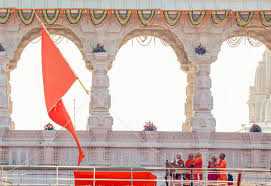
Pakistan, in a tone laden with diplomatic disquiet, articulated its “deep concern” over the hoisting of a saffron flag atop the Shri Ram temple-an act it interprets as emblematic of a broader ideological consolidation within India that, in its view, marginalizes the historical and cultural presence of Muslims in the region. The event, symbolic in its religio-political resonance, has been construed by Islamabad as more than a mere ceremonial gesture; it is portrayed as the latest manifestation of an increasingly assertive majoritarian ethos that Pakistan alleges is reshaping the subcontinental socio-religious landscape. In an official communiqué released on November 25, 2025, Pakistan’s Ministry of Foreign Affairs endeavoured to situate this development within a larger narrative of cultural effacement, minority repression, and contested historical memory. The statement foregrounded the deeply disputed character of the site upon which the temple now stands-a location Pakistan delineated as the former ground of the historic Babri Mosque, demolished in 1992 after a convulsive episode of mob violence. By invoking the destruction of the mosque, Pakistan sought to underscore what it perceives as an unresolved historical injustice, alleging that the construction of the temple at the same locale represents not merely an architectural substitution but a symbolic overwriting of Muslim heritage. The hoisting of the saffron flag, in Islamabad’s telling, functions as a visible assertion of triumphalism, connoting an ideological reconfiguration of public space that privileges a singular civilizational narrative at the expense of pluralistic memory.
Further, Pakistan asserted that the ceremonial proceedings surrounding the temple were emblematic of an intensifying “systemic marginalisation” of religious minorities in India, with a particular emphasis on the plight of Muslims. The communiqué expressed the view that such developments are neither isolated nor incidental, but rather symptomatic of a broader sociopolitical trajectory that has rendered India’s religious minorities increasingly vulnerable to discriminatory pressures. Islamabad’s rhetoric sought to project the events in Ayodhya as representative of a deteriorating environment for minority communities, alleging that institutional and societal mechanisms are converging in ways that precipitate exclusion, alienation, and cultural dispossession. The statement advanced the argument that the saffron flag's elevation over the temple constitutes a calculated attempt to erode the cultural and religious fabric historically associated with India’s Muslim population. By characterizing the act as deliberate, Islamabad intimated that it views the symbolism not as benign ceremonial expression but as an ideational intervention intended to assert the primacy of a majoritarian cultural worldview. The flag, therefore, is construed as a metonym of ideological ascendancy—one that Pakistan claims seeks to reconfigure civilizational memory in a manner that diminishes the historically intertwined legacies of diverse communities. Pakistan, invoking the responsibilities of the global community, urged international actors-particularly the United Nations and heritage preservation bodies-to take cognizance of what it portrayed as a systematic dismantling of Islamic cultural sites across India. By internationalizing the issue, Islamabad attempted to frame the matter not merely as a bilateral grievance but as a question of safeguarding global heritage norms and protecting minority religious spaces from erosion under majoritarian political impulses. The appeal for multilateral scrutiny implicitly suggested that unilateral domestic adjudication is insufficient in circumstances where, in Pakistan’s view, the state itself is complicit in the transformations being decried.
India’s Ministry of External Affairs (MEA), however, responded with marked terseness and emphatic repudiation. The MEA dismissed Pakistan’s remarks with palpable disdain, characterizing them as baseless, untenable, and undeserving of serious engagement. India asserted that Pakistan lacks the moral locus to comment on issues of minority rights or religious freedom, pointing to Pakistan’s own widely criticized record concerning the treatment of its religious and ethnic minorities. In India’s rebuttal, Islamabad’s pronouncements were construed as hypocritical interventions, bereft of legitimacy due to Pakistan’s internal human rights controversies. The MEA’s response further insisted that Pakistan would be better served by introspection rather than issuing admonitions to its neighbor. India exhorted Pakistan to address the manifold crises and structural dysfunctions that persist within its domestic governance, implicitly suggesting that Pakistan’s pronouncements constitute a diversionary tactic rather than a credible contribution to regional discourse. The response framed Pakistan’s critique as an attempt to externalize attention away from its internal challenges by invoking politically charged narratives regarding India’s religious landscape.
India’s rejection also aimed to recontextualize the matter as an internal religious and cultural affair, dissociating the flag-hoisting event from the geopolitical implications ascribed to it by Islamabad. The MEA underscored that India’s civilizational traditions and constitutional framework enable the free practice of religious expression, and it implied that Pakistan’s characterization of the temple event as emblematic of systematic discrimination was an analytically distorted representation designed for propagandistic effect. The Indian statement, thus, projected the Pakistani critique as a habitual rhetorical maneuver rooted in political animus rather than an objective assessment of events. The rhetorical juxtaposition between the two nations’ statements underscores longstanding divergences in interpretive frameworks concerning historical memory, religious identity, and sovereignty over contested narratives. Pakistan seeks to frame the developments in Ayodhya as part of an overarching matrix of minority suppression and cultural re-engineering, asserting that such actions illuminate a profound ideological transformation underway in India. India, conversely, perceives Pakistan’s interventions as opportunistic intrusions devoid of juridical standing or moral consistency, arguing that Islamabad’s human rights rhetoric is vitiated by its own governance failures.
Underlying these dueling narratives is a deeper contest over symbolic geography and historical legitimacy—one rooted in the mutually antagonistic recollections that have shaped Indo-Pakistani relations for decades. The Ayodhya site, in particular, has long been a locus of intense political contestation, carrying layers of religious, historical, and constitutional significance. As such, each symbolic gesture at the site, regardless of its immediate ceremonial purpose, reverberates across the bilateral divide with amplified political meaning. The statements issued by both nations thus reveal more than simple diplomatic disagreement; they expose the ideological fissures and narrative asymmetries that continue to define cross-border discourse. For Pakistan, the temple and its associated rituals signify a perceived erosion of pluralistic ethos within India. For India, Pakistan’s objections exemplify an entrenched pattern of unsolicited moralizing from a state whose own conduct, it argues, undermines any claim to credibility. The result is a rhetorical stalemate, wherein each side reinforces its interpretive position while dismissing the other’s with vehemence and disdain.
Email:--------------------------------onkoul2019@gmail.com
Further, Pakistan asserted that the ceremonial proceedings surrounding the temple were emblematic of an intensifying “systemic marginalisation” of religious minorities in India, with a particular emphasis on the plight of Muslims
Pakistan, in a tone laden with diplomatic disquiet, articulated its “deep concern” over the hoisting of a saffron flag atop the Shri Ram temple-an act it interprets as emblematic of a broader ideological consolidation within India that, in its view, marginalizes the historical and cultural presence of Muslims in the region. The event, symbolic in its religio-political resonance, has been construed by Islamabad as more than a mere ceremonial gesture; it is portrayed as the latest manifestation of an increasingly assertive majoritarian ethos that Pakistan alleges is reshaping the subcontinental socio-religious landscape. In an official communiqué released on November 25, 2025, Pakistan’s Ministry of Foreign Affairs endeavoured to situate this development within a larger narrative of cultural effacement, minority repression, and contested historical memory. The statement foregrounded the deeply disputed character of the site upon which the temple now stands-a location Pakistan delineated as the former ground of the historic Babri Mosque, demolished in 1992 after a convulsive episode of mob violence. By invoking the destruction of the mosque, Pakistan sought to underscore what it perceives as an unresolved historical injustice, alleging that the construction of the temple at the same locale represents not merely an architectural substitution but a symbolic overwriting of Muslim heritage. The hoisting of the saffron flag, in Islamabad’s telling, functions as a visible assertion of triumphalism, connoting an ideological reconfiguration of public space that privileges a singular civilizational narrative at the expense of pluralistic memory.
Further, Pakistan asserted that the ceremonial proceedings surrounding the temple were emblematic of an intensifying “systemic marginalisation” of religious minorities in India, with a particular emphasis on the plight of Muslims. The communiqué expressed the view that such developments are neither isolated nor incidental, but rather symptomatic of a broader sociopolitical trajectory that has rendered India’s religious minorities increasingly vulnerable to discriminatory pressures. Islamabad’s rhetoric sought to project the events in Ayodhya as representative of a deteriorating environment for minority communities, alleging that institutional and societal mechanisms are converging in ways that precipitate exclusion, alienation, and cultural dispossession. The statement advanced the argument that the saffron flag's elevation over the temple constitutes a calculated attempt to erode the cultural and religious fabric historically associated with India’s Muslim population. By characterizing the act as deliberate, Islamabad intimated that it views the symbolism not as benign ceremonial expression but as an ideational intervention intended to assert the primacy of a majoritarian cultural worldview. The flag, therefore, is construed as a metonym of ideological ascendancy—one that Pakistan claims seeks to reconfigure civilizational memory in a manner that diminishes the historically intertwined legacies of diverse communities. Pakistan, invoking the responsibilities of the global community, urged international actors-particularly the United Nations and heritage preservation bodies-to take cognizance of what it portrayed as a systematic dismantling of Islamic cultural sites across India. By internationalizing the issue, Islamabad attempted to frame the matter not merely as a bilateral grievance but as a question of safeguarding global heritage norms and protecting minority religious spaces from erosion under majoritarian political impulses. The appeal for multilateral scrutiny implicitly suggested that unilateral domestic adjudication is insufficient in circumstances where, in Pakistan’s view, the state itself is complicit in the transformations being decried.
India’s Ministry of External Affairs (MEA), however, responded with marked terseness and emphatic repudiation. The MEA dismissed Pakistan’s remarks with palpable disdain, characterizing them as baseless, untenable, and undeserving of serious engagement. India asserted that Pakistan lacks the moral locus to comment on issues of minority rights or religious freedom, pointing to Pakistan’s own widely criticized record concerning the treatment of its religious and ethnic minorities. In India’s rebuttal, Islamabad’s pronouncements were construed as hypocritical interventions, bereft of legitimacy due to Pakistan’s internal human rights controversies. The MEA’s response further insisted that Pakistan would be better served by introspection rather than issuing admonitions to its neighbor. India exhorted Pakistan to address the manifold crises and structural dysfunctions that persist within its domestic governance, implicitly suggesting that Pakistan’s pronouncements constitute a diversionary tactic rather than a credible contribution to regional discourse. The response framed Pakistan’s critique as an attempt to externalize attention away from its internal challenges by invoking politically charged narratives regarding India’s religious landscape.
India’s rejection also aimed to recontextualize the matter as an internal religious and cultural affair, dissociating the flag-hoisting event from the geopolitical implications ascribed to it by Islamabad. The MEA underscored that India’s civilizational traditions and constitutional framework enable the free practice of religious expression, and it implied that Pakistan’s characterization of the temple event as emblematic of systematic discrimination was an analytically distorted representation designed for propagandistic effect. The Indian statement, thus, projected the Pakistani critique as a habitual rhetorical maneuver rooted in political animus rather than an objective assessment of events. The rhetorical juxtaposition between the two nations’ statements underscores longstanding divergences in interpretive frameworks concerning historical memory, religious identity, and sovereignty over contested narratives. Pakistan seeks to frame the developments in Ayodhya as part of an overarching matrix of minority suppression and cultural re-engineering, asserting that such actions illuminate a profound ideological transformation underway in India. India, conversely, perceives Pakistan’s interventions as opportunistic intrusions devoid of juridical standing or moral consistency, arguing that Islamabad’s human rights rhetoric is vitiated by its own governance failures.
Underlying these dueling narratives is a deeper contest over symbolic geography and historical legitimacy—one rooted in the mutually antagonistic recollections that have shaped Indo-Pakistani relations for decades. The Ayodhya site, in particular, has long been a locus of intense political contestation, carrying layers of religious, historical, and constitutional significance. As such, each symbolic gesture at the site, regardless of its immediate ceremonial purpose, reverberates across the bilateral divide with amplified political meaning. The statements issued by both nations thus reveal more than simple diplomatic disagreement; they expose the ideological fissures and narrative asymmetries that continue to define cross-border discourse. For Pakistan, the temple and its associated rituals signify a perceived erosion of pluralistic ethos within India. For India, Pakistan’s objections exemplify an entrenched pattern of unsolicited moralizing from a state whose own conduct, it argues, undermines any claim to credibility. The result is a rhetorical stalemate, wherein each side reinforces its interpretive position while dismissing the other’s with vehemence and disdain.
Email:--------------------------------onkoul2019@gmail.com

© Copyright 2023 brighterkashmir.com All Rights Reserved. Quantum Technologies