
BREAKING NEWS
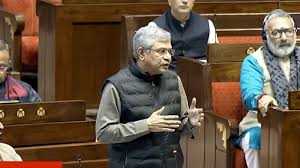
Minister for Railways Ashwini Vaishnaw on Friday informed the Rajya Sabha that survey of the Baramulla-Uri new line (46 km) and Banihal-Baramulla doubling (118 km) has been completed and the Detailed Project Report (DPR) has been prepared. The projects are yet to be sanctioned.
The Baramulla-Uri line will be an extension of the USBRL.
“After preparation of DPR, sanctioning of project requires consultation with various stakeholders, including state governments, and necessary approvals, appraisal of NITI Aayog, Ministry of Finance etc.,” said Vaishnaw in a written response in Rajya Sabha.
Currently, two Vande Bharat trains are operational between Katra and Srinagar section of the project. Further, six pairs of DEMU/MEMU services are available for the Qazigund-Srinagar section and 5 pairs of DEMU/MEMU services are catering to the Srinagar-Baramulla section.
Vaishnaw said the commissioning of the project has helped farmers in transporting apples to different parts of the country.
The Kashmir Line was one of the most difficult projects undertaken by the Indian Railways. Prime Minister Narendra Modi inaugurated the line on June 6. The complete 272-km stretch was constructed at the cost of Rs 43,780 crore, which includes 36 tunnels.
The trickiest stretch was the Katra-Banihal section, totalling 111 km. This includes India’s longest operational transportation tunnel, T-50, running to 12.77 km, the world’s highest railway arch bridge at 359 metres above the sea floor (the Chenab Bridge), and the first cable-stayed railway bridge (the Anji Bridge).
The idea to connect Kashmir with a railway line between Jammu and Srinagar was first conceived by Maharaja Pratap Singh in 1898. In 1905, he approved the construction of a narrow gauge (762-mm) railway line via Reasi.
While Jammu eventually got a train, it was in 1983 that the then Indira Gandhi-led Congress government laid the foundation stone for a Udhampur-Srinagar railway line. Work on the project gained momentum after Atal Bihari Vajpayee-led NDA government declared it a national project in 2002.
Minister for Railways Ashwini Vaishnaw on Friday informed the Rajya Sabha that survey of the Baramulla-Uri new line (46 km) and Banihal-Baramulla doubling (118 km) has been completed and the Detailed Project Report (DPR) has been prepared. The projects are yet to be sanctioned.
The Baramulla-Uri line will be an extension of the USBRL.
“After preparation of DPR, sanctioning of project requires consultation with various stakeholders, including state governments, and necessary approvals, appraisal of NITI Aayog, Ministry of Finance etc.,” said Vaishnaw in a written response in Rajya Sabha.
Currently, two Vande Bharat trains are operational between Katra and Srinagar section of the project. Further, six pairs of DEMU/MEMU services are available for the Qazigund-Srinagar section and 5 pairs of DEMU/MEMU services are catering to the Srinagar-Baramulla section.
Vaishnaw said the commissioning of the project has helped farmers in transporting apples to different parts of the country.
The Kashmir Line was one of the most difficult projects undertaken by the Indian Railways. Prime Minister Narendra Modi inaugurated the line on June 6. The complete 272-km stretch was constructed at the cost of Rs 43,780 crore, which includes 36 tunnels.
The trickiest stretch was the Katra-Banihal section, totalling 111 km. This includes India’s longest operational transportation tunnel, T-50, running to 12.77 km, the world’s highest railway arch bridge at 359 metres above the sea floor (the Chenab Bridge), and the first cable-stayed railway bridge (the Anji Bridge).
The idea to connect Kashmir with a railway line between Jammu and Srinagar was first conceived by Maharaja Pratap Singh in 1898. In 1905, he approved the construction of a narrow gauge (762-mm) railway line via Reasi.
While Jammu eventually got a train, it was in 1983 that the then Indira Gandhi-led Congress government laid the foundation stone for a Udhampur-Srinagar railway line. Work on the project gained momentum after Atal Bihari Vajpayee-led NDA government declared it a national project in 2002.

© Copyright 2023 brighterkashmir.com All Rights Reserved. Quantum Technologies