
BREAKING NEWS
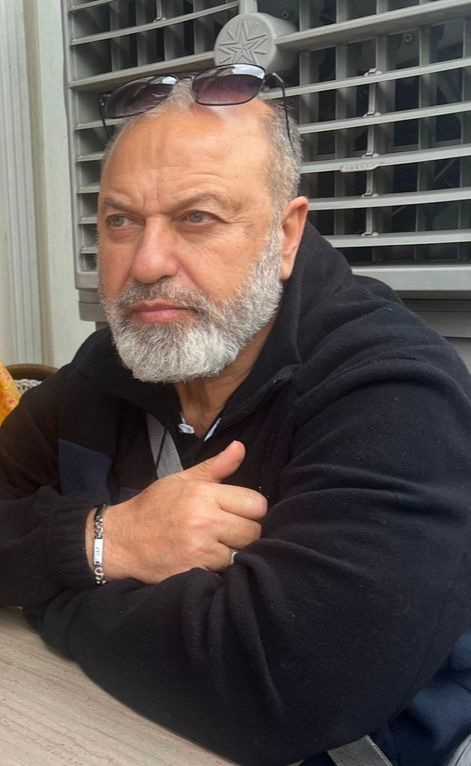
Having had the privilege of observing and knowing some of the great names of Kashmir’s medical fraternity, I can say with humility that Dr Allaqaband belonged to that rare league of physicians whose names inspired trust and respect. Yet to describe him merely as a successful doctor would be to describe only one part of a much larger personality.
I was a primary-school student, playing in the backyard of our ancestral home on the banks of the Jhelum at Zaina Kadal. My mother was unwell, and there was the familiar anxiety that illness brings into a household. In those days, particularly, the arrival of a trusted doctor could transform the atmosphere of an entire home. Then the door opened .A gentleman entered ,neatly dressed in a black suit, carrying his stethoscope. I still remember the warmth of his presence. Before he had even begun examining my mother, the expressions around me seemed to change. Anxiety gave way to reassurance .As a child, I watched with curiosity. Who was this man whose mere arrival appeared to bring comfort ?He greeted my father with the affection and familiarity of a longstanding relationship. When he was leaving, he reached into his medical bag, gave me something and gently patted my face. It was a small gesture. But children remember kindness. Only later did I fully appreciate that the gentleman who had entered our home that day was one of the most distinguished physicians produced by our soil.
Having had the privilege of observing and knowing some of the great names of Kashmir’s medical fraternity, I can say with humility that Dr Allaqaband belonged to that rare league of physicians whose names inspired trust and respect. Yet to describe him merely as a successful doctor would be to describe only one part of a much larger personality.
Medicine was his profession. Service was his larger vocation. That, perhaps, is what made him different. He possessed a remarkably wide canvas of interests and concerns. Religion, social reform, philanthropy, education, culture and community welfare all engaged his attention. He did not believe that professional success entitled a person to withdraw into a comfortable private life. For him, professional achievement was not the end of one’s responsibility to society. It was the beginning of a greater obligation. This is a lesson worth reflecting upon today—particularly for our younger generation.
We increasingly encourage young people to become doctors, engineers, entrepreneurs, administrators, academics or successful professionals. There is nothing wrong with ambition. Indeed, society needs excellence in every field. But somewhere along the way, we must also ask a more important question: After becoming successful, what do we do with that success?
Do we live only for our careers? Or do we also ask what our knowledge, skills, influence and resources can do for the community around us? Dr Sahib s life offers a powerful answer. One of the causes close to his heart was social reform—Samaj Sudhar. Long before social media made public commentary fashionable, he was concerned about practices that quietly damaged ordinary families. He understood the destructive consequences of unhealthy competition and extravagant spending, particularly on marriages. A wedding, he believed in essence, should bring families together—not push them towards financial distress. Even today, this remains one of our most painful social realities. Families borrow beyond their capacity, sell assets and exhaust lifetime savings to meet expectations created by society. Young marriages are delayed because families fear unaffordable expenses. Happiness becomes a competition; simplicity is mistaken for inadequacy.
These were not abstract issues for Dr sahib . He saw them as human problems demanding social consciousness and collective reform. His commitment to philanthropy emerged from the same philosophy. He believed that those blessed with education, resources, status or influence carried an additional responsibility towards those who possessed less.
Service was not a public-relations exercise .It was a moral duty.
Our families shared bonds that went back decades. My father had a small circle of close friends, including distinguished scholars, academics and public-spirited personalities. Growing up, we heard their names and observed a generation in which friendship, intellectual exchange, professional excellence and social responsibility often travelled together.
DrSahib belongs to that tradition. Even today, my conversations with him are rarely casual. I speak to him frequently, sometimes once or twice a week, and almost every conversation leaves me with a certain heaviness of heart. I can hear how deeply he misses Kashmir. He does not merely miss its physical beauty. He misses the people. He misses the community. He misses being physically present when someone needs help, when an institution requires attention or when a social cause needs support.
His physical distance has never created emotional distance. For him, Kashmir remains unfinished business.
I remember occasions when he encouraged me to take forward or represent him in various welfare, philanthropic and social initiatives. He believed that those who were physically present had a responsibility to continue serving. I tried. But I must confess that I could not match the scale of his involvement.
That experience made me realise how much one individual had quietly been doing across so many spheres. His community engagement was neither occasional nor symbolic. He seemed constantly aware of where help was needed, which cause deserved attention and how a professional could use his standing for something beyond himself.
And this is where his life speaks directly to Generation Z. You do not have to abandon your profession to serve society.
A doctor can contribute beyond the hospital. An engineer can contribute beyond the workplace. A businessman can contribute beyond profit. A teacher can contribute beyond the classroom. A young person need not wait for wealth, fame or retirement before becoming useful to the community.
Every profession offers a platform for service. The real question is whether we see beyond ourselves.
We live in an age of unprecedented connectivity but, paradoxically, often of limited community involvement. We know what is happening everywhere, yet may remain detached from what is happening next door. Social media allows us to express concern instantly, but expression is not always the same as participation.
Dr Allaqaband represents a different model: identify a problem, involve yourself and try to make a difference .Not every act of service needs an audience. Not every charitable effort needs a photograph. Not every contribution needs public recognition .Sometimes the most meaningful work is the work nobody sees. That is why his absence is felt by those who knew the extent of his involvement. Kashmir has produced many excellent doctors, administrators, scholars, academics and philanthropists. But occasionally a society produces an individual who resists easy categorisation. represents an ideal that is becoming increasingly important in our times: professional excellence combined with active citizenship and community responsibility. His life reminds us that success becomes meaningful when it travels beyond the self.And love for one’s homeland becomes real when distance does not diminish one’s concern for its people.
Today, when I speak to Dr Sahib , I sometimes feel that Kashmir has been deprived of the physical presence of a man who could still contribute so much. Yet perhaps geography cannot erase a life of service .A person remains present in the lives he touched, the people he helped, the institutions he strengthened and the values he left behind. That is the enduring legacy of those who live beyond themselves.
The Jhelum still carries memories. The old city still holds stories. Families like ours remember the doctor whose arrival brought reassurance. Patients remember the physician. Friends remember decades of companionship. Those engaged in social work remember a man who never believed that one profession was enough to define one’s responsibility .And for the young generation, there is a message in your life worth remembering:
Choose a profession, excel in it, build a career—but do not allow your profession to become the boundary of your humanity.
Society needs successful professionals.
But it needs socially conscious professionals even more.
You miss your land, Dr Sahib.
But please know that your land remembers—and misses—you too.
Beyond the white coat is a larger life: that of a physician, reformer, philanthropist, mentor and community man. Above all, it os the life of a son of Kashmir who never stopped serving his people—even when he is far away from them.
Email:------------------------------drfiazfazili@gmail.com
Having had the privilege of observing and knowing some of the great names of Kashmir’s medical fraternity, I can say with humility that Dr Allaqaband belonged to that rare league of physicians whose names inspired trust and respect. Yet to describe him merely as a successful doctor would be to describe only one part of a much larger personality.
I was a primary-school student, playing in the backyard of our ancestral home on the banks of the Jhelum at Zaina Kadal. My mother was unwell, and there was the familiar anxiety that illness brings into a household. In those days, particularly, the arrival of a trusted doctor could transform the atmosphere of an entire home. Then the door opened .A gentleman entered ,neatly dressed in a black suit, carrying his stethoscope. I still remember the warmth of his presence. Before he had even begun examining my mother, the expressions around me seemed to change. Anxiety gave way to reassurance .As a child, I watched with curiosity. Who was this man whose mere arrival appeared to bring comfort ?He greeted my father with the affection and familiarity of a longstanding relationship. When he was leaving, he reached into his medical bag, gave me something and gently patted my face. It was a small gesture. But children remember kindness. Only later did I fully appreciate that the gentleman who had entered our home that day was one of the most distinguished physicians produced by our soil.
Having had the privilege of observing and knowing some of the great names of Kashmir’s medical fraternity, I can say with humility that Dr Allaqaband belonged to that rare league of physicians whose names inspired trust and respect. Yet to describe him merely as a successful doctor would be to describe only one part of a much larger personality.
Medicine was his profession. Service was his larger vocation. That, perhaps, is what made him different. He possessed a remarkably wide canvas of interests and concerns. Religion, social reform, philanthropy, education, culture and community welfare all engaged his attention. He did not believe that professional success entitled a person to withdraw into a comfortable private life. For him, professional achievement was not the end of one’s responsibility to society. It was the beginning of a greater obligation. This is a lesson worth reflecting upon today—particularly for our younger generation.
We increasingly encourage young people to become doctors, engineers, entrepreneurs, administrators, academics or successful professionals. There is nothing wrong with ambition. Indeed, society needs excellence in every field. But somewhere along the way, we must also ask a more important question: After becoming successful, what do we do with that success?
Do we live only for our careers? Or do we also ask what our knowledge, skills, influence and resources can do for the community around us? Dr Sahib s life offers a powerful answer. One of the causes close to his heart was social reform—Samaj Sudhar. Long before social media made public commentary fashionable, he was concerned about practices that quietly damaged ordinary families. He understood the destructive consequences of unhealthy competition and extravagant spending, particularly on marriages. A wedding, he believed in essence, should bring families together—not push them towards financial distress. Even today, this remains one of our most painful social realities. Families borrow beyond their capacity, sell assets and exhaust lifetime savings to meet expectations created by society. Young marriages are delayed because families fear unaffordable expenses. Happiness becomes a competition; simplicity is mistaken for inadequacy.
These were not abstract issues for Dr sahib . He saw them as human problems demanding social consciousness and collective reform. His commitment to philanthropy emerged from the same philosophy. He believed that those blessed with education, resources, status or influence carried an additional responsibility towards those who possessed less.
Service was not a public-relations exercise .It was a moral duty.
Our families shared bonds that went back decades. My father had a small circle of close friends, including distinguished scholars, academics and public-spirited personalities. Growing up, we heard their names and observed a generation in which friendship, intellectual exchange, professional excellence and social responsibility often travelled together.
DrSahib belongs to that tradition. Even today, my conversations with him are rarely casual. I speak to him frequently, sometimes once or twice a week, and almost every conversation leaves me with a certain heaviness of heart. I can hear how deeply he misses Kashmir. He does not merely miss its physical beauty. He misses the people. He misses the community. He misses being physically present when someone needs help, when an institution requires attention or when a social cause needs support.
His physical distance has never created emotional distance. For him, Kashmir remains unfinished business.
I remember occasions when he encouraged me to take forward or represent him in various welfare, philanthropic and social initiatives. He believed that those who were physically present had a responsibility to continue serving. I tried. But I must confess that I could not match the scale of his involvement.
That experience made me realise how much one individual had quietly been doing across so many spheres. His community engagement was neither occasional nor symbolic. He seemed constantly aware of where help was needed, which cause deserved attention and how a professional could use his standing for something beyond himself.
And this is where his life speaks directly to Generation Z. You do not have to abandon your profession to serve society.
A doctor can contribute beyond the hospital. An engineer can contribute beyond the workplace. A businessman can contribute beyond profit. A teacher can contribute beyond the classroom. A young person need not wait for wealth, fame or retirement before becoming useful to the community.
Every profession offers a platform for service. The real question is whether we see beyond ourselves.
We live in an age of unprecedented connectivity but, paradoxically, often of limited community involvement. We know what is happening everywhere, yet may remain detached from what is happening next door. Social media allows us to express concern instantly, but expression is not always the same as participation.
Dr Allaqaband represents a different model: identify a problem, involve yourself and try to make a difference .Not every act of service needs an audience. Not every charitable effort needs a photograph. Not every contribution needs public recognition .Sometimes the most meaningful work is the work nobody sees. That is why his absence is felt by those who knew the extent of his involvement. Kashmir has produced many excellent doctors, administrators, scholars, academics and philanthropists. But occasionally a society produces an individual who resists easy categorisation. represents an ideal that is becoming increasingly important in our times: professional excellence combined with active citizenship and community responsibility. His life reminds us that success becomes meaningful when it travels beyond the self.And love for one’s homeland becomes real when distance does not diminish one’s concern for its people.
Today, when I speak to Dr Sahib , I sometimes feel that Kashmir has been deprived of the physical presence of a man who could still contribute so much. Yet perhaps geography cannot erase a life of service .A person remains present in the lives he touched, the people he helped, the institutions he strengthened and the values he left behind. That is the enduring legacy of those who live beyond themselves.
The Jhelum still carries memories. The old city still holds stories. Families like ours remember the doctor whose arrival brought reassurance. Patients remember the physician. Friends remember decades of companionship. Those engaged in social work remember a man who never believed that one profession was enough to define one’s responsibility .And for the young generation, there is a message in your life worth remembering:
Choose a profession, excel in it, build a career—but do not allow your profession to become the boundary of your humanity.
Society needs successful professionals.
But it needs socially conscious professionals even more.
You miss your land, Dr Sahib.
But please know that your land remembers—and misses—you too.
Beyond the white coat is a larger life: that of a physician, reformer, philanthropist, mentor and community man. Above all, it os the life of a son of Kashmir who never stopped serving his people—even when he is far away from them.
Email:------------------------------drfiazfazili@gmail.com

© Copyright 2023 brighterkashmir.com All Rights Reserved. Quantum Technologies