BREAKING NEWS

09-01-2026     3 رجب 1440

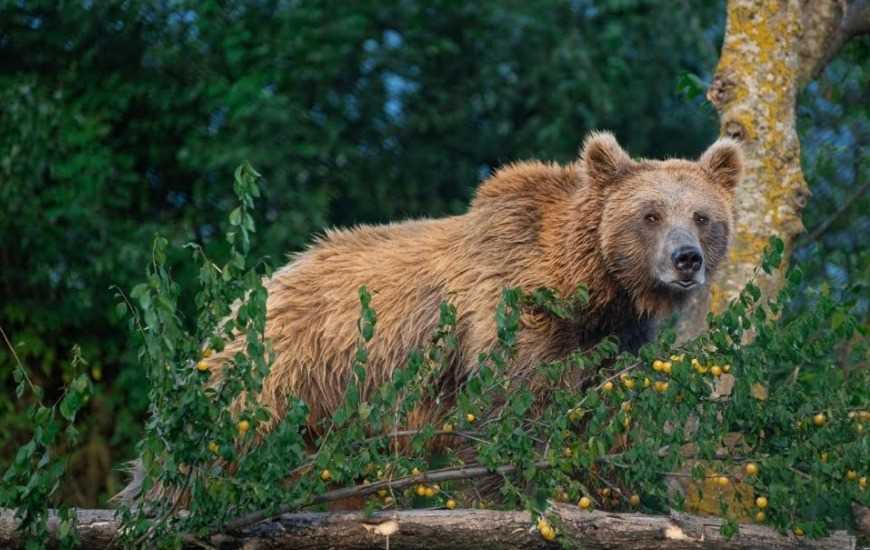
Camera traps shed light on Kashmir’s brown bears

September 01, 2026 | BK NEWS SERVICE

Srinagar, Aug 31: A three-month camera-trapping study by Wildlife SOS, in collaboration with the Jammu & Kashmir Wildlife Protection Department, has provided fresh insights into the behaviour, habitat use and winter denning patterns of Himalayan brown bears in the Kashmir region.

Conducted during the winter of 2025, the study involved the deployment of 17 camera traps at identified brown bear dens above 4,000 metres across the Sonamarg landscape. The cameras operated for three months, recording activity at remote den sites while minimising human disturbance.
The initiative builds on India’s first radio-collaring and telemetry-based study of Himalayan brown bears, launched by Wildlife SOS and the Wildlife Protection Department in 2023. Six bears were fitted with GPS-enabled radio collars to track their movements, habitat use and seasonal behaviour.
Researchers are now planning a second phase focused specifically on denning behaviour. Camera traps will be installed at denning and resting locations identified during the earlier radio-collaring study to examine the characteristics of habitats selected by the bears.
“By combining GPS telemetry with camera trapping, we hope to better understand their denning behaviour and the habitats they depend on,” said Kartick Satyanarayan, Co-founder and CEO of Wildlife SOS.
The research has also highlighted growing human–bear interactions. Preliminary findings from the telemetry study indicate that bears in the Sonamarg landscape frequently visit garbage dumps and areas near human habitation in search of food.
A 2021 Wildlife SOS study found that nearly 75 per cent of the diet of brown bears visiting garbage dumps comprised plastic, chocolates and other food waste, underscoring the ecological consequences of improper waste management.
Alongside camera trapping and radio telemetry, occupancy surveys are being conducted to map bear distribution and habitat use across the landscape. The combined data could help identify critical habitats, movement corridors and seasonal patterns, supporting more effective conservation and conflict-mitigation measures.
Wildlife SOS officials stressed that protecting Himalayan brown bears requires both scientific monitoring and community participation. Better understanding of the factors drawing bears towards human settlements, they said, can help develop practical measures to reduce conflict and promote safer coexistence.
The findings assume added significance as tourism, expanding human activity and changing food availability increasingly bring wildlife and communities into closer contact. Continued analysis of GPS data, camera-trap footage and occupancy surveys is expected to strengthen understanding of Kashmir’s Himalayan brown bear population and guide evidence-based conservation strategies.

BREAKING NEWS

VIDEO

Twitter

Facebook

Camera traps shed light on Kashmir’s brown bears

September 01, 2026 | BK NEWS SERVICE

Srinagar, Aug 31: A three-month camera-trapping study by Wildlife SOS, in collaboration with the Jammu & Kashmir Wildlife Protection Department, has provided fresh insights into the behaviour, habitat use and winter denning patterns of Himalayan brown bears in the Kashmir region.

Conducted during the winter of 2025, the study involved the deployment of 17 camera traps at identified brown bear dens above 4,000 metres across the Sonamarg landscape. The cameras operated for three months, recording activity at remote den sites while minimising human disturbance.
The initiative builds on India’s first radio-collaring and telemetry-based study of Himalayan brown bears, launched by Wildlife SOS and the Wildlife Protection Department in 2023. Six bears were fitted with GPS-enabled radio collars to track their movements, habitat use and seasonal behaviour.
Researchers are now planning a second phase focused specifically on denning behaviour. Camera traps will be installed at denning and resting locations identified during the earlier radio-collaring study to examine the characteristics of habitats selected by the bears.
“By combining GPS telemetry with camera trapping, we hope to better understand their denning behaviour and the habitats they depend on,” said Kartick Satyanarayan, Co-founder and CEO of Wildlife SOS.
The research has also highlighted growing human–bear interactions. Preliminary findings from the telemetry study indicate that bears in the Sonamarg landscape frequently visit garbage dumps and areas near human habitation in search of food.
A 2021 Wildlife SOS study found that nearly 75 per cent of the diet of brown bears visiting garbage dumps comprised plastic, chocolates and other food waste, underscoring the ecological consequences of improper waste management.
Alongside camera trapping and radio telemetry, occupancy surveys are being conducted to map bear distribution and habitat use across the landscape. The combined data could help identify critical habitats, movement corridors and seasonal patterns, supporting more effective conservation and conflict-mitigation measures.
Wildlife SOS officials stressed that protecting Himalayan brown bears requires both scientific monitoring and community participation. Better understanding of the factors drawing bears towards human settlements, they said, can help develop practical measures to reduce conflict and promote safer coexistence.
The findings assume added significance as tourism, expanding human activity and changing food availability increasingly bring wildlife and communities into closer contact. Continued analysis of GPS data, camera-trap footage and occupancy surveys is expected to strengthen understanding of Kashmir’s Himalayan brown bear population and guide evidence-based conservation strategies.



  • Address: R.C 2 Quarters Press Enclave Near Pratap Park, Srinagar 190001.
  • Phone: 0194-2451076 , +91-941-940-0056 , +91-962-292-4716
  • Email: brighterkmr@gmail.com
Owner, Printer, Publisher, Editor: Farooq Ahmad Wani
Legal Advisor: M.J. Hubi
Printed at: Sangermal offset Printing Press Rangreth ( Budgam)
Published from: Gulshanabad Chraresharief Budgam
RNI No.: JKENG/2010/33802
Office No’s: 0194-2451076
Mobile No’s 9419400056, 9622924716 ,7006086442
Postal Regd No: SK/135/2010-2019
POST BOX NO: 1001
Administrative Office: R.C 2 Quarters Press Enclave Near Pratap Park ( Srinagar -190001)

© Copyright 2023 brighterkashmir.com All Rights Reserved. Quantum Technologies

Owner, Printer, Publisher, Editor: Farooq Ahmad Wani
Legal Advisor: M.J. Hubi
Printed at: Abid Enterprizes, Zainkote Srinagar
Published from: Gulshanabad Chraresharief Budgam
RNI No.: JKENG/2010/33802
Office No’s: 0194-2451076, 9622924716 , 9419400056
Postal Regd No: SK/135/2010-2019
Administrative Office: Abi Guzer Srinagar

© Copyright 2018 brighterkashmir.com All Rights Reserved.