
BREAKING NEWS
Pakistan occupied Jammu and Kashmir, commonly referred to as Azad Jammu and Kashmir (AJK) in Pakistan, has witnessed significant political and social developments in 2026. The region's recent unrest has brought questions of governance, representation, economic conditions and political autonomy into sharper focus. For years, public grievances in the territory were largely associated with economic issues such as electricity prices, subsidised wheat, inflation, employment and basic public services. The Jammu Kashmir Joint Awami Action Committee (JAAC) emerged as an important platform for these concerns. What began primarily as an economic protest gradually developed into a broader political movement demanding changes in governance and representation.
The controversy surrounding the 12 seats reserved in the AJK Legislative Assembly for refugees from Indian-administered Jammu and Kashmir became one of the central issues. Protest leaders argued that these seats allow political influence from outside the territory, while authorities maintained that their status is linked to the constitutional and political framework governing AJK. The dispute became particularly important during the 2026 elections.
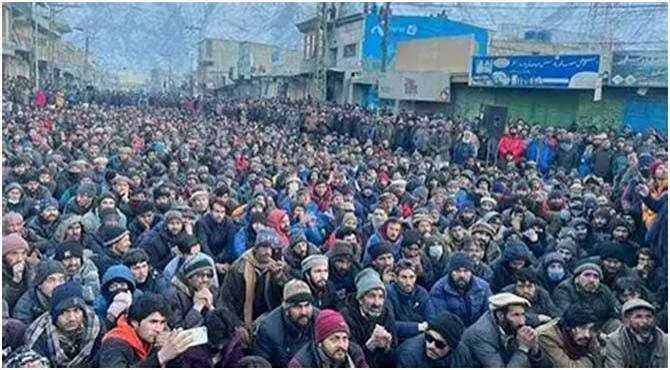
The situation escalated in June 2026 after authorities banned the The Jammu Kashmir Joint Awami Action Committee and moved against its leadership. Protests and clashes subsequently resulted in deaths, arrests, road blockades and disruptions to normal life. Communications restrictions and internet shutdowns further complicated the flow of information. Independent conflict-monitoring data also recorded widespread demonstrations and deadly confrontations during the unrest. The unrest had consequences beyond politics. Road closures affected the movement of essential supplies, while disruptions to banking and communications created difficulties for ordinary residents. Such developments demonstrate that political instability ultimately affects everyday life, particularly in geographically sensitive and economically dependent regions.
The 2026 elections have therefore taken place against an unusually complicated backdrop. Voting was divided into different phases because of security concerns and unrest. The elections have also been accompanied by debates over legitimacy, political representation and the role of reserved refugee constituencies. The political picture has consequently become more complicated. Traditional political parties continue to dominate formal electoral politics, but civil society movements have demonstrated that public dissatisfaction can operate outside established party structures. This is an important change in the political dynamics of the territory.
Another significant factor is the growing importance of economic grievances. For ordinary people, political questions are closely connected with electricity, food prices, employment, healthcare, education, infrastructure and access to basic services. When these issues remain unresolved, they can develop into broader demands for political accountability. The events of 2026 also highlight the importance of communication. Internet restrictions may temporarily reduce the speed at which protests are organised, but they can also deepen mistrust and create an information vacuum. In the digital era, citizens increasingly expect transparency and rapid access to information.
The changing dynamics in Pakistan-occupied Jammu and Kashmir should therefore not be understood solely through the traditional India-Pakistan geopolitical framework. There is an internal dimension that deserves attention: the relationship between local society, political institutions, economic resources and the federal power structure in Pakistan. The future stability of the region will depend significantly on how these grievances are addressed. Political representation, economic development, institutional accountability and public participation will remain central issues. The recent developments suggest that the people of the territory are increasingly demanding that their everyday concerns receive greater political attention. Whether these demands lead to meaningful institutional reforms or continue to generate cycles of protest will depend on the response of the authorities and political leadership.
Ultimately, lasting stability cannot be achieved through elections alone or through the temporary suppression of protests. It requires institutions capable of responding to public concerns, political processes that command credibility and governance that delivers basic services. The developments of 2026 may therefore represent more than another episode of political unrest. They could mark an important stage in the evolution of public expectations and political consciousness in Pakistan-occupied Jammu and Kashmir.
Pakistan occupied Jammu and Kashmir, commonly referred to as Azad Jammu and Kashmir (AJK) in Pakistan, has witnessed significant political and social developments in 2026. The region's recent unrest has brought questions of governance, representation, economic conditions and political autonomy into sharper focus. For years, public grievances in the territory were largely associated with economic issues such as electricity prices, subsidised wheat, inflation, employment and basic public services. The Jammu Kashmir Joint Awami Action Committee (JAAC) emerged as an important platform for these concerns. What began primarily as an economic protest gradually developed into a broader political movement demanding changes in governance and representation.
The controversy surrounding the 12 seats reserved in the AJK Legislative Assembly for refugees from Indian-administered Jammu and Kashmir became one of the central issues. Protest leaders argued that these seats allow political influence from outside the territory, while authorities maintained that their status is linked to the constitutional and political framework governing AJK. The dispute became particularly important during the 2026 elections.
The situation escalated in June 2026 after authorities banned the The Jammu Kashmir Joint Awami Action Committee and moved against its leadership. Protests and clashes subsequently resulted in deaths, arrests, road blockades and disruptions to normal life. Communications restrictions and internet shutdowns further complicated the flow of information. Independent conflict-monitoring data also recorded widespread demonstrations and deadly confrontations during the unrest. The unrest had consequences beyond politics. Road closures affected the movement of essential supplies, while disruptions to banking and communications created difficulties for ordinary residents. Such developments demonstrate that political instability ultimately affects everyday life, particularly in geographically sensitive and economically dependent regions.
The 2026 elections have therefore taken place against an unusually complicated backdrop. Voting was divided into different phases because of security concerns and unrest. The elections have also been accompanied by debates over legitimacy, political representation and the role of reserved refugee constituencies. The political picture has consequently become more complicated. Traditional political parties continue to dominate formal electoral politics, but civil society movements have demonstrated that public dissatisfaction can operate outside established party structures. This is an important change in the political dynamics of the territory.
Another significant factor is the growing importance of economic grievances. For ordinary people, political questions are closely connected with electricity, food prices, employment, healthcare, education, infrastructure and access to basic services. When these issues remain unresolved, they can develop into broader demands for political accountability. The events of 2026 also highlight the importance of communication. Internet restrictions may temporarily reduce the speed at which protests are organised, but they can also deepen mistrust and create an information vacuum. In the digital era, citizens increasingly expect transparency and rapid access to information.
The changing dynamics in Pakistan-occupied Jammu and Kashmir should therefore not be understood solely through the traditional India-Pakistan geopolitical framework. There is an internal dimension that deserves attention: the relationship between local society, political institutions, economic resources and the federal power structure in Pakistan. The future stability of the region will depend significantly on how these grievances are addressed. Political representation, economic development, institutional accountability and public participation will remain central issues. The recent developments suggest that the people of the territory are increasingly demanding that their everyday concerns receive greater political attention. Whether these demands lead to meaningful institutional reforms or continue to generate cycles of protest will depend on the response of the authorities and political leadership.
Ultimately, lasting stability cannot be achieved through elections alone or through the temporary suppression of protests. It requires institutions capable of responding to public concerns, political processes that command credibility and governance that delivers basic services. The developments of 2026 may therefore represent more than another episode of political unrest. They could mark an important stage in the evolution of public expectations and political consciousness in Pakistan-occupied Jammu and Kashmir.

© Copyright 2023 brighterkashmir.com All Rights Reserved. Quantum Technologies