
BREAKING NEWS
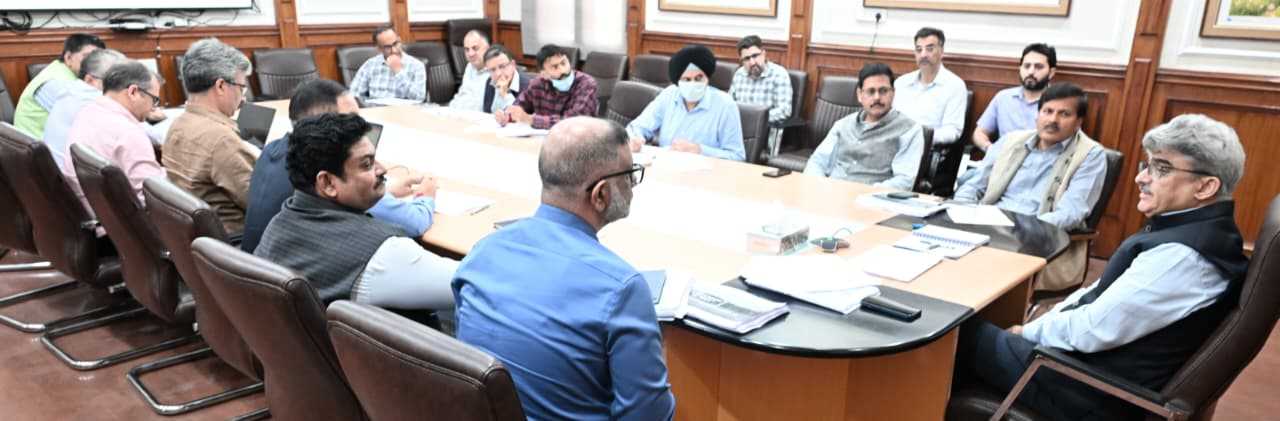
Jammu, Mar 28: Chief Secretary Atal Dulloo chaired a meeting with Administrative Secretaries to review the implementation of deregulation measures under Phase-II of the Ease of Doing Business (EoDB) programme in Jammu and Kashmir, aimed at reducing regulatory hurdles and promoting a business-friendly environment.
Highlighting the need to eliminate redundant procedures, Dulloo emphasized the simplification of processes for entrepreneurs, particularly the multiple No Objection Certificates (NoCs) required to set up schools, nursing homes, and health clinics. He suggested exploring lifetime licenses in select sectors like health and education to avoid unnecessary periodic renewals.
The Chief Secretary directed the Labour and Employment Department, in coordination with the Department of Law, to examine the regulatory framework and propose comprehensive solutions. He also called for a detailed review of the proposed Right to Business Act to facilitate smoother business operations in the UT and enhance investor confidence.
Commissioner Secretary Industries and Commerce, Vikramjit Singh, outlined ongoing initiatives under Phase-II of EoDB, also known as Deregulation 2.0, which targets 30 priority reform areas across seven sectors in 2026. While Phase-I focused on digitization of services, Phase-II emphasizes structural reforms to reduce compliance burdens on MSMEs and startups.
Director of Industries and Commerce, Jammu, Arun Manhas, added that the reforms cover Education, Utilities, Land, Environment, Health, Building & Construction, Labour, Fire Services, and Tourism sectors. The measures aim to streamline approvals, remove procedural redundancies, and create a sustainable regulatory framework that fosters economic growth and investment in Jammu and Kashmir.
Jammu, Mar 28: Chief Secretary Atal Dulloo chaired a meeting with Administrative Secretaries to review the implementation of deregulation measures under Phase-II of the Ease of Doing Business (EoDB) programme in Jammu and Kashmir, aimed at reducing regulatory hurdles and promoting a business-friendly environment.
Highlighting the need to eliminate redundant procedures, Dulloo emphasized the simplification of processes for entrepreneurs, particularly the multiple No Objection Certificates (NoCs) required to set up schools, nursing homes, and health clinics. He suggested exploring lifetime licenses in select sectors like health and education to avoid unnecessary periodic renewals.
The Chief Secretary directed the Labour and Employment Department, in coordination with the Department of Law, to examine the regulatory framework and propose comprehensive solutions. He also called for a detailed review of the proposed Right to Business Act to facilitate smoother business operations in the UT and enhance investor confidence.
Commissioner Secretary Industries and Commerce, Vikramjit Singh, outlined ongoing initiatives under Phase-II of EoDB, also known as Deregulation 2.0, which targets 30 priority reform areas across seven sectors in 2026. While Phase-I focused on digitization of services, Phase-II emphasizes structural reforms to reduce compliance burdens on MSMEs and startups.
Director of Industries and Commerce, Jammu, Arun Manhas, added that the reforms cover Education, Utilities, Land, Environment, Health, Building & Construction, Labour, Fire Services, and Tourism sectors. The measures aim to streamline approvals, remove procedural redundancies, and create a sustainable regulatory framework that fosters economic growth and investment in Jammu and Kashmir.

© Copyright 2023 brighterkashmir.com All Rights Reserved. Quantum Technologies