New Delhi, November 9: Delhi witnessed its highest level of Diwali-related air pollution in five years, with air quality deteriorating significantly after the festival and remaining in the 'very poor' category on Monday morning.
Data from the Central Pollution Control Board (CPCB) showed that the national capital recorded an average Air Quality Index (AQI) of 376 on Diwali. The AQI stood at 371 at 10 am on Monday, making it the worst post-Diwali air quality recorded since 2021.
Out of 51 air quality monitoring stations reporting data on Monday morning, 14 registered pollution levels in the 'severe' category, while 33 recorded 'very poor' air quality. The remaining four stations reported conditions in the 'poor' category. Delhi Technological University recorded the highest AQI of 439.
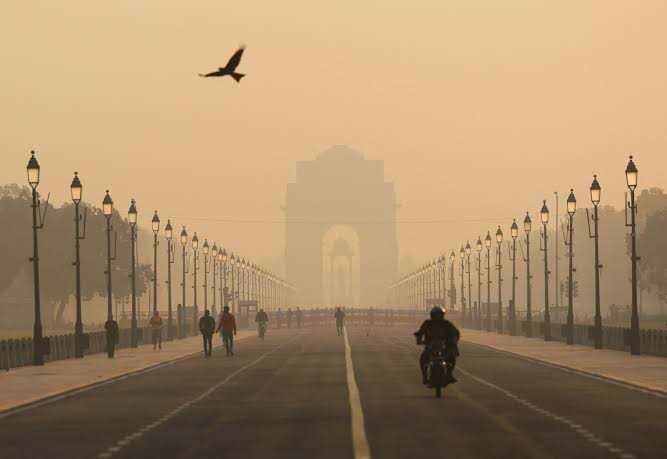
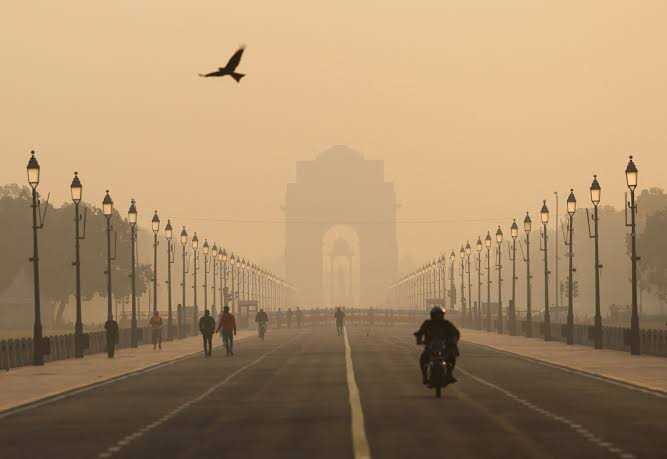
A dense blanket of smog and haze covered several parts of the capital, affecting visibility during the morning hours. Visibility at Safdarjung dropped to 50 metres around 6:30 am, compared to 700 metres a day earlier. At Palam, visibility was recorded at 400 metres.
Several localities, including Bawana, Burari, Jahangirpuri, Sonia Vihar, Punjabi Bagh, Okhla and Rohini, continued to experience high pollution levels, with some areas falling in the severe category.
The deterioration came despite restrictions on firecracker use during Diwali. Although authorities had permitted certified green crackers within designated time slots, fireworks were reportedly set off in several neighbourhoods beyond the prescribed hours.
The Air Quality Early Warning System indicated that pollution levels could remain severe in the coming days due to unfavourable meteorological conditions that were limiting the dispersion of pollutants.
Low wind speeds, vehicular emissions, firecracker smoke and seasonal stubble burning in neighbouring states were among the factors contributing to the deteriorating air quality.
Under CPCB standards, an AQI between 301 and 400 is classified as 'very poor', while readings above 400 fall under the 'severe' category.

New Delhi, November 9: Delhi witnessed its highest level of Diwali-related air pollution in five years, with air quality deteriorating significantly after the festival and remaining in the 'very poor' category on Monday morning.
Data from the Central Pollution Control Board (CPCB) showed that the national capital recorded an average Air Quality Index (AQI) of 376 on Diwali. The AQI stood at 371 at 10 am on Monday, making it the worst post-Diwali air quality recorded since 2021.
Out of 51 air quality monitoring stations reporting data on Monday morning, 14 registered pollution levels in the 'severe' category, while 33 recorded 'very poor' air quality. The remaining four stations reported conditions in the 'poor' category. Delhi Technological University recorded the highest AQI of 439.
A dense blanket of smog and haze covered several parts of the capital, affecting visibility during the morning hours. Visibility at Safdarjung dropped to 50 metres around 6:30 am, compared to 700 metres a day earlier. At Palam, visibility was recorded at 400 metres.
Several localities, including Bawana, Burari, Jahangirpuri, Sonia Vihar, Punjabi Bagh, Okhla and Rohini, continued to experience high pollution levels, with some areas falling in the severe category.
The deterioration came despite restrictions on firecracker use during Diwali. Although authorities had permitted certified green crackers within designated time slots, fireworks were reportedly set off in several neighbourhoods beyond the prescribed hours.
The Air Quality Early Warning System indicated that pollution levels could remain severe in the coming days due to unfavourable meteorological conditions that were limiting the dispersion of pollutants.
Low wind speeds, vehicular emissions, firecracker smoke and seasonal stubble burning in neighbouring states were among the factors contributing to the deteriorating air quality.
Under CPCB standards, an AQI between 301 and 400 is classified as 'very poor', while readings above 400 fall under the 'severe' category.
© Copyright 2023 brighterkashmir.com All Rights Reserved. Quantum Technologies