Srinagar, Sep 2: Traffic management in parts of Downtown Srinagar has shown noticeable changes over the past year, with one-way systems, junction redesigns, vehicle restrictions and stricter enforcement helping regulate movement across some of the city’s most congested stretches.
The measures have been particularly visible in Shehr-e-Khas, where narrow roads, heavy pedestrian movement, roadside encroachments and intense commercial activity have traditionally contributed to frequent traffic bottlenecks.
The arrangements have been implemented under the supervision of SSP Traffic City Ajaz Ahmad Bhat, with DySP Traffic Mehboob-ul-Haq overseeing ground-level implementation.
The Rajouri Kadal-Gojwara stretch has been placed under one-way movement for public transport, while traffic over the narrow Barbar Shah bridge is also being regulated on a one-way basis. Barricading and junction modifications have been introduced at key choke points, including Chhati Padshahi and Kanyar.
Authorities have also restricted e-rickshaw movement along MA Road and Residency Road to reduce mixed traffic on already congested corridors.
Enforcement has emerged as another key component of the strategy. Traffic records indicate that challan disposal increased from 30 per cent in 2024 to 56 per cent in 2025, alongside efforts to clear road obstructions and prevent vehicles from occupying pedestrian pathways.
Traffic management has also been supported by road infrastructure works, including resurfacing, drainage improvements and junction modifications, with the Traffic Department coordinating with the civil administration.
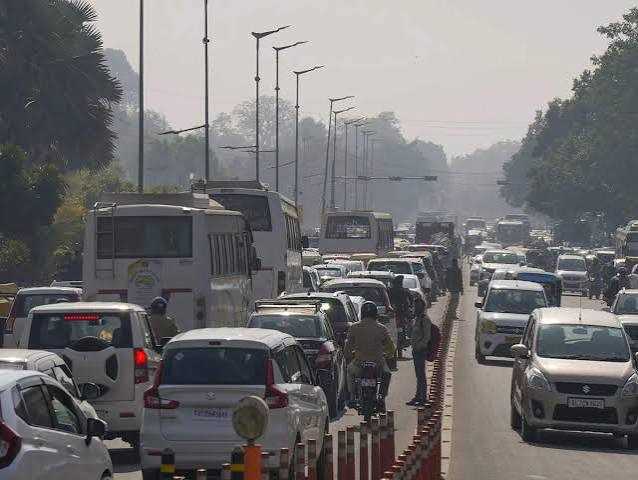
Despite these interventions, Srinagar continues to face broader traffic challenges. Rising vehicle numbers, limited road width, parking shortages, roadside commercial activity and heavy pedestrian movement continue to place enormous pressure on the city’s road network.
The Downtown experiment, however, offers useful lessons. Targeted one-way systems, stricter enforcement and carefully planned junction changes can help improve movement when implemented alongside adequate infrastructure.
Traffic authorities are also examining similar arrangements for congested interior routes in Lal Chowk, Batamaloo and the Safa Kadal-Cement Kadal corridor. Any expansion of restrictions will require meaningful consultations with traders, transport operators and residents.
For Srinagar, the way forward is clear: traffic restrictions alone cannot solve congestion. Diversion routes, parking facilities, efficient public transport, pedestrian infrastructure and better road planning must advance together if the city is to achieve lasting mobility.

Srinagar, Sep 2: Traffic management in parts of Downtown Srinagar has shown noticeable changes over the past year, with one-way systems, junction redesigns, vehicle restrictions and stricter enforcement helping regulate movement across some of the city’s most congested stretches.
The measures have been particularly visible in Shehr-e-Khas, where narrow roads, heavy pedestrian movement, roadside encroachments and intense commercial activity have traditionally contributed to frequent traffic bottlenecks.
The arrangements have been implemented under the supervision of SSP Traffic City Ajaz Ahmad Bhat, with DySP Traffic Mehboob-ul-Haq overseeing ground-level implementation.
The Rajouri Kadal-Gojwara stretch has been placed under one-way movement for public transport, while traffic over the narrow Barbar Shah bridge is also being regulated on a one-way basis. Barricading and junction modifications have been introduced at key choke points, including Chhati Padshahi and Kanyar.
Authorities have also restricted e-rickshaw movement along MA Road and Residency Road to reduce mixed traffic on already congested corridors.
Enforcement has emerged as another key component of the strategy. Traffic records indicate that challan disposal increased from 30 per cent in 2024 to 56 per cent in 2025, alongside efforts to clear road obstructions and prevent vehicles from occupying pedestrian pathways.
Traffic management has also been supported by road infrastructure works, including resurfacing, drainage improvements and junction modifications, with the Traffic Department coordinating with the civil administration.
Despite these interventions, Srinagar continues to face broader traffic challenges. Rising vehicle numbers, limited road width, parking shortages, roadside commercial activity and heavy pedestrian movement continue to place enormous pressure on the city’s road network.
The Downtown experiment, however, offers useful lessons. Targeted one-way systems, stricter enforcement and carefully planned junction changes can help improve movement when implemented alongside adequate infrastructure.
Traffic authorities are also examining similar arrangements for congested interior routes in Lal Chowk, Batamaloo and the Safa Kadal-Cement Kadal corridor. Any expansion of restrictions will require meaningful consultations with traders, transport operators and residents.
For Srinagar, the way forward is clear: traffic restrictions alone cannot solve congestion. Diversion routes, parking facilities, efficient public transport, pedestrian infrastructure and better road planning must advance together if the city is to achieve lasting mobility.
© Copyright 2023 brighterkashmir.com All Rights Reserved. Quantum Technologies