
BREAKING NEWS
India has made considerable progress in women's education, employment, political participation and professional achievements. Women are serving as administrators, scientists, teachers, entrepreneurs, police officers and representatives in democratic institutions
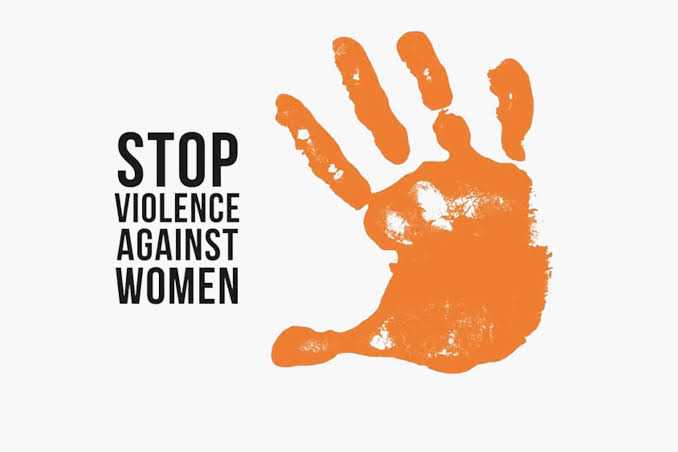
Every year, 25 November is observed as the International Day for the Elimination of Violence Against Women. The day marks the beginning of the global 16 Days of Activism Against Gender-Based Violence, concluding on 10 December, International Human Rights Day. It is an occasion to renew our commitment to women's dignity, equality and security. Yet, beyond official programmes, awareness campaigns and public declarations, an uncomfortable question remains: how safe are women in the society we have built?
Violence against women is not merely a law-and-order problem. It is deeply connected with social attitudes, unequal power relationships, economic dependence, discriminatory customs and a culture that sometimes teaches women to tolerate injustice rather than challenge it. Violence does not always begin with physical assault. It may start with controlling behaviour, humiliation, restrictions on movement, threats or the denial of a woman's right to make decisions about her own life.
“Violence is not always committed in the streets; sometimes it enters the home, hides behind family honour and survives in the silence of society”.
The Indian Reality
India has made considerable progress in women's education, employment, political participation and professional achievements. Women are serving as administrators, scientists, teachers, entrepreneurs, police officers and representatives in democratic institutions. However, this progress has not automatically eliminated domestic violence, dowry-related harassment, sexual assault, workplace discrimination, trafficking and cyberstalking.
According to the National Crime Records Bureau's Crime in India 2023, 4,48,211 cases of crimes against women were registered across the country. These figures represent reported cases, not the complete extent of violence, as many incidents remain unreported because of fear, social pressure, economic dependence and concerns about family reputation.
Domestic violence is particularly disturbing because the home, which should provide security and emotional support, can become a place of fear. Similarly, despite legal prohibition, dowry-related harassment continues to expose the persistence of discriminatory social practices. A woman's dignity should never be measured through the money, gifts or property brought into a marriage.
Another unfortunate tendency is victim-blaming. Instead of questioning the person responsible for violence, sections of society sometimes scrutinise a survivor's clothing, behaviour, friendships and personal choices. Such attitudes shift responsibility away from perpetrators and discourage women from seeking justice.
New Challenges in the Digital Age
The expansion of smartphones and social media has created opportunities for women's education, communication and professional participation. However, the digital world has also introduced new forms of intimidation, including cyberstalking, online blackmail, abusive messages, impersonation and the circulation of private photographs without consent.
AI-generated sexually explicit deepfakes have further increased the risks of digital exploitation. Schools, colleges and families must therefore promote digital literacy, privacy awareness and responsible online behaviour. Digital platforms and law enforcement agencies must respond promptly to complaints rather than allowing online harassment to become a means of silencing women.
Laws Must Translate into Protection
India has developed an important legal framework to address violence against women, including the Protection of Women from Domestic Violence Act, 2005, the Dowry Prohibition Act, 1961, and the Sexual Harassment of Women at Workplace Act, 2013. The Bharatiya Nyaya Sanhita, 2023, also provides for punishment of several offences against women.
However, legislation alone cannot transform society. Its effectiveness depends upon impartial investigations, sensitive police response, timely judicial proceedings and accessible legal assistance. A woman approaching a police station should not have to struggle to establish that her complaint deserves attention. She must be treated with dignity rather than subjected to humiliation or pressure to compromise.
One Stop Centres, Women Help Desks and legal aid services should be strengthened, particularly in rural and remote areas where geographical barriers and social stigma often prevent women from accessing assistance.
The Responsibility of Families
An important part of the solution begins within families. Children learn their understanding of gender relationships by observing the behaviour of adults around them. A boy who repeatedly witnesses women being insulted or controlled may gradually consider such behaviour normal. Similarly, a girl constantly instructed to remain silent for family honour may find it difficult to recognise her right to dignity.
Parents must teach sons respect, consent and equality while encouraging daughters to become educated, financially independent and confident decision-makers. Marriage should never mean surrendering one's identity, freedom or legal rights.
Educational institutions also have an important responsibility. Schools and colleges should organise meaningful discussions on gender equality, domestic violence, cyber safety and legal rights. Workplace sexual harassment committees must function effectively, and women employees and students should be able to raise complaints without fear of intimidation.
In Jammu and Kashmir, colleges, Panchayati Raj Institutions and community organisations can play a constructive role by taking awareness programmes to villages and neighbourhoods rather than limiting them to formal institutional events.
Beyond Annual Observances
The elimination of violence against women requires more than slogans and symbolic celebrations. It demands collective responsibility from governments, police institutions, educational establishments, families and society.
Economic empowerment through education, employment, skill development and financial independence can help women overcome vulnerabilities associated with economic dependence. Men and boys must also become active participants in challenging misogynistic behaviour, rejecting victim-blaming and refusing to remain silent when women face harassment.
A genuinely progressive society is not one that merely produces successful women. It is one in which women do not have to demonstrate extraordinary courage simply to exercise ordinary rights. They should be able to travel, study, work, express opinions and make personal decisions without living under the constant threat of intimidation or violence.
The International Day for the Elimination of Violence Against Women should encourage us to examine our homes, workplaces, institutions and social practices. We must question not only the actions of perpetrators but also the silence and indifference that allow violence to continue.
“A society cannot claim to respect women merely because it celebrates their achievements; it must demonstrate that respect by protecting their dignity when they demand their rights”.
India's progress will remain incomplete as long as a woman has to choose between her dignity and social acceptance, or between seeking justice and preserving family reputation. The real meaning of women's empowerment begins when every woman can live without fear, speak without intimidation and seek justice without being judged. That is the India we must work towards, not merely on 25 November, but every day of the year.
Email:-----------------------paryazdot11@gmail.co

© Copyright 2023 brighterkashmir.com All Rights Reserved. Quantum Technologies