
BREAKING NEWS
Pakistan’s Kashmir Solidarity Day collapses in the face of lived Kashmiri experience. A land that rejected terror, buried its innocents, and shouted “Pakistan Murdabad” in the streets does not need lectures from across the border.
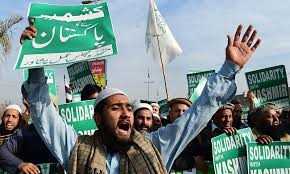
Every year in February, I find myself paying close attention to social media, not out of curiosity but to see how far a narrative can be stretched from reality. On every 5 February, the so-called Republic of Pakistan observes what it calls Kashmir Solidarity Day. As this 5 February approaches, I was scrolling through X and came across a flood of posts and reports from Pakistani handles and news portals. What I read was both predictable and unsettling. According to these reports, Pakistan will observe a nationwide public holiday on 5 February. Public and private offices, educational institutions, and most workplaces will remain closed. A one-minute silence at 10 a.m. has also been announced in the name of paying tribute to Kashmiris who have lost their lives. The irony is impossible to ignore. Much of the bloodshed in Kashmir has its roots in Pakistan’s own actions. The same holds true for Pakistan Occupied Jammu and Kashmir and Gilgit Baltistan, where voices remain suppressed and suffering is rarely acknowledged. Troubled by this contradiction, I decided to speak to a few fellow Kashmiris to understand how they view this so-called display of solidarity.
Bashir Ahmad Wani, a Fruit Seller in Srinagar
My child, I will tell you this with my hand on my heart. Every tyranny that a common Kashmiri has faced was either directly inflicted by Pakistan through its handlers here, or it happened because of their actions. What kind of solidarity do they speak of? Are our graveyards not filled because of them and what they unleashed in our land? Beta, I am neither a supporter nor an opponent of anyone. I am not deeply educated in politics. But I know what I have seen in the last 52 years of my life. They gave our children guns and sold them false dreams of jihad and Jannat, all for their own political gains. No religion, no Islam, teaches this. Our children were used as bait. Tell me, were they children of a lesser God? Let me speak about myself. I have been running this small fruit business for the last ten years. But in truth, it feels like I have been doing it only for the last three. In the years before that, I rarely opened my shop with hope or excitement. Hartals, shutdowns, and fear, all of it pushed and managed from across the border, kept us locked inside our homes. And today, they claim they stand in solidarity with us. Through your writing, wherever it is published, tell them this from me. Kashmir is better where it is today. From across the border, they have only sent us the dead bodies of our loved ones. Nothing less. Nothing more. (This conversation was originally in Kashmiri and has been translated by the author.)
Firdous Ahmad, a Digital Marketing Specialist
In my 25 years of life, I have seen enough pain and violence in Kashmir to know what instability looks like. When our elders say that what we saw is nothing compared to the 1990s, I can only imagine how brutal those years must have been. That is why this so-called Kashmir Solidarity Day observed by Pakistan feels like nothing more than a politically driven drama, meant to project itself internationally as a savior of Kashmir, something it has never been in reality. I clearly remember the violence of 2016. We all know who handled it, who funded it, who supplied guns and grenades, who issued hartal calendars, and who manipulated our youth in the name of a so-called jihad. It was backed by Pakistan and its deep state. How can I forget the dead bodies that reached our homes because of this interference? There is another reality that worries me deeply. Over the past few years, as peace has gradually returned and Kashmiris have shown that they want stability and normal life, a new pattern has emerged. Drugs are now being pushed across borders. Time and again, we see cases where narcotics are recovered alongside weapons. This raises a serious question. If guns failed, is narco-terrorism now the new tool to destroy our youth? As a young Kashmiri, I reject this fake narrative of Pakistan completely. We are doing well. In many ways, we are doing far better than mainland Pakistan in terms of development and stability. Instead of staging symbolic days, Pakistan should focus on its own people and on the basic rights of those living in its illegally occupied territories of POJK and Gilgit Baltistan.
Faizan Ahmad, Writer and a Columnist
Pakistan’s observance of 5 February is presented as solidarity, but facts tell a different story. The violence that scarred Kashmir for decades was not spontaneous. It was fueled by cross-border infiltration, training camps, funding networks, and weapons pushed into the Valley through Pakistan-based terror infrastructure. This is documented in multiple Indian and international security assessments over the years. Today, while Pakistan announces holidays and symbolic gestures, it continues to deny basic constitutional rights to people in Pakistan-occupied Jammu and Kashmir and Gilgit-Baltistan. These regions still lack full parliamentary representation, face restrictions on political expression, and have witnessed repeated arrests during protests over land rights, taxation, and resource control, particularly in 2023 and 2024. In contrast, Jammu and Kashmir functions within a constitutional framework with elected representatives, courts, civic institutions, and expanding infrastructure, education, and healthcare indicators. Solidarity cannot coexist with occupation, denial of rights, and decades of destabilization. Without accountability and reform on its own side of the Line of Control, Pakistan’s annual observance remains a political display, not a moral position.
Hajra, a Women-Rights Activist
Pakistan’s violence against Kashmiris did not begin recently. It goes back to the very beginning, to the tribal raid of 1947. That invasion brought looting, destruction of schools and bridges, mass killings, and sexual violence. The pattern was set early, and it never really stopped. From 1947 to the years of militancy, the damage followed the same script. Today, Jammu and Kashmir is legally part of India through the Instrument of Accession. We are citizens with constitutional rights, access to courts, education, and opportunities like any other Indian. Yet our brothers and sisters in Pakistan-occupied Jammu and Kashmir and Gilgit-Baltistan continue to live without full political rights, without constitutional equality, and under heavy restrictions. The same state that denies them dignity claims to observe a Solidarity Day for us. That contradiction speaks for itself. As a woman, I know this truth personally. Had I spoken openly for women’s rights in Kashmir a decade ago, my life would have been at risk. Those who spoke of peace paid with their lives. TV artist Amreen Bhat was shot dead. Civilian activist Ghulam Rasool Magray was killed. Their only fault was believing that peace matters. If solidarity is to be observed, it should be for the oppressed people of PoJK and Gilgit-Baltistan. Kashmiri youth today is choosing education, entrepreneurship, civil services, and progress. Old propaganda no longer works on us.
Voices from the Ground
Across neighborhoods, workplaces, and tea shops, the reaction is largely the same. People question how a country can claim concern for Kashmir while having no stake in our daily realities. For many, life is now about reopening businesses, educating children, travelling freely, and planning futures that were once put on hold. There is little appetite for symbolic days announced elsewhere, especially when those symbols have never translated into peace or prosperity here. What people want is stability, opportunity, and dignity, not slogans spoken in their name. The feeling is not anger, but disinterest. Kashmiris are busy rebuilding their lives, and narratives frozen in the past no longer resonate with a society trying to move forward.
Conclusion
Pakistan and its deep state received their answer long ago, directly from ordinary Kashmiris. When terrorists attacked tourists in Pahalgam, the response on the streets was spontaneous and unmistakable. Kashmiris came out openly, chanting “Pakistan Murdabad,” rejecting violence carried out in our name and any claim of false concern. That moment spoke louder than any speech or symbolic day observed elsewhere. It reflected a truth Pakistan has long refused to accept: Kashmiris do not see it as a savior. For the sake of our future, these political performances must stop. Let Kashmiris live the lives they are building today, peaceful, secure, and moving forward on their own terms.
Email:-------------------- soulofkashmir1@gmail.com
Pakistan’s Kashmir Solidarity Day collapses in the face of lived Kashmiri experience. A land that rejected terror, buried its innocents, and shouted “Pakistan Murdabad” in the streets does not need lectures from across the border.
Every year in February, I find myself paying close attention to social media, not out of curiosity but to see how far a narrative can be stretched from reality. On every 5 February, the so-called Republic of Pakistan observes what it calls Kashmir Solidarity Day. As this 5 February approaches, I was scrolling through X and came across a flood of posts and reports from Pakistani handles and news portals. What I read was both predictable and unsettling. According to these reports, Pakistan will observe a nationwide public holiday on 5 February. Public and private offices, educational institutions, and most workplaces will remain closed. A one-minute silence at 10 a.m. has also been announced in the name of paying tribute to Kashmiris who have lost their lives. The irony is impossible to ignore. Much of the bloodshed in Kashmir has its roots in Pakistan’s own actions. The same holds true for Pakistan Occupied Jammu and Kashmir and Gilgit Baltistan, where voices remain suppressed and suffering is rarely acknowledged. Troubled by this contradiction, I decided to speak to a few fellow Kashmiris to understand how they view this so-called display of solidarity.
Bashir Ahmad Wani, a Fruit Seller in Srinagar
My child, I will tell you this with my hand on my heart. Every tyranny that a common Kashmiri has faced was either directly inflicted by Pakistan through its handlers here, or it happened because of their actions. What kind of solidarity do they speak of? Are our graveyards not filled because of them and what they unleashed in our land? Beta, I am neither a supporter nor an opponent of anyone. I am not deeply educated in politics. But I know what I have seen in the last 52 years of my life. They gave our children guns and sold them false dreams of jihad and Jannat, all for their own political gains. No religion, no Islam, teaches this. Our children were used as bait. Tell me, were they children of a lesser God? Let me speak about myself. I have been running this small fruit business for the last ten years. But in truth, it feels like I have been doing it only for the last three. In the years before that, I rarely opened my shop with hope or excitement. Hartals, shutdowns, and fear, all of it pushed and managed from across the border, kept us locked inside our homes. And today, they claim they stand in solidarity with us. Through your writing, wherever it is published, tell them this from me. Kashmir is better where it is today. From across the border, they have only sent us the dead bodies of our loved ones. Nothing less. Nothing more. (This conversation was originally in Kashmiri and has been translated by the author.)
Firdous Ahmad, a Digital Marketing Specialist
In my 25 years of life, I have seen enough pain and violence in Kashmir to know what instability looks like. When our elders say that what we saw is nothing compared to the 1990s, I can only imagine how brutal those years must have been. That is why this so-called Kashmir Solidarity Day observed by Pakistan feels like nothing more than a politically driven drama, meant to project itself internationally as a savior of Kashmir, something it has never been in reality. I clearly remember the violence of 2016. We all know who handled it, who funded it, who supplied guns and grenades, who issued hartal calendars, and who manipulated our youth in the name of a so-called jihad. It was backed by Pakistan and its deep state. How can I forget the dead bodies that reached our homes because of this interference? There is another reality that worries me deeply. Over the past few years, as peace has gradually returned and Kashmiris have shown that they want stability and normal life, a new pattern has emerged. Drugs are now being pushed across borders. Time and again, we see cases where narcotics are recovered alongside weapons. This raises a serious question. If guns failed, is narco-terrorism now the new tool to destroy our youth? As a young Kashmiri, I reject this fake narrative of Pakistan completely. We are doing well. In many ways, we are doing far better than mainland Pakistan in terms of development and stability. Instead of staging symbolic days, Pakistan should focus on its own people and on the basic rights of those living in its illegally occupied territories of POJK and Gilgit Baltistan.
Faizan Ahmad, Writer and a Columnist
Pakistan’s observance of 5 February is presented as solidarity, but facts tell a different story. The violence that scarred Kashmir for decades was not spontaneous. It was fueled by cross-border infiltration, training camps, funding networks, and weapons pushed into the Valley through Pakistan-based terror infrastructure. This is documented in multiple Indian and international security assessments over the years. Today, while Pakistan announces holidays and symbolic gestures, it continues to deny basic constitutional rights to people in Pakistan-occupied Jammu and Kashmir and Gilgit-Baltistan. These regions still lack full parliamentary representation, face restrictions on political expression, and have witnessed repeated arrests during protests over land rights, taxation, and resource control, particularly in 2023 and 2024. In contrast, Jammu and Kashmir functions within a constitutional framework with elected representatives, courts, civic institutions, and expanding infrastructure, education, and healthcare indicators. Solidarity cannot coexist with occupation, denial of rights, and decades of destabilization. Without accountability and reform on its own side of the Line of Control, Pakistan’s annual observance remains a political display, not a moral position.
Hajra, a Women-Rights Activist
Pakistan’s violence against Kashmiris did not begin recently. It goes back to the very beginning, to the tribal raid of 1947. That invasion brought looting, destruction of schools and bridges, mass killings, and sexual violence. The pattern was set early, and it never really stopped. From 1947 to the years of militancy, the damage followed the same script. Today, Jammu and Kashmir is legally part of India through the Instrument of Accession. We are citizens with constitutional rights, access to courts, education, and opportunities like any other Indian. Yet our brothers and sisters in Pakistan-occupied Jammu and Kashmir and Gilgit-Baltistan continue to live without full political rights, without constitutional equality, and under heavy restrictions. The same state that denies them dignity claims to observe a Solidarity Day for us. That contradiction speaks for itself. As a woman, I know this truth personally. Had I spoken openly for women’s rights in Kashmir a decade ago, my life would have been at risk. Those who spoke of peace paid with their lives. TV artist Amreen Bhat was shot dead. Civilian activist Ghulam Rasool Magray was killed. Their only fault was believing that peace matters. If solidarity is to be observed, it should be for the oppressed people of PoJK and Gilgit-Baltistan. Kashmiri youth today is choosing education, entrepreneurship, civil services, and progress. Old propaganda no longer works on us.
Voices from the Ground
Across neighborhoods, workplaces, and tea shops, the reaction is largely the same. People question how a country can claim concern for Kashmir while having no stake in our daily realities. For many, life is now about reopening businesses, educating children, travelling freely, and planning futures that were once put on hold. There is little appetite for symbolic days announced elsewhere, especially when those symbols have never translated into peace or prosperity here. What people want is stability, opportunity, and dignity, not slogans spoken in their name. The feeling is not anger, but disinterest. Kashmiris are busy rebuilding their lives, and narratives frozen in the past no longer resonate with a society trying to move forward.
Conclusion
Pakistan and its deep state received their answer long ago, directly from ordinary Kashmiris. When terrorists attacked tourists in Pahalgam, the response on the streets was spontaneous and unmistakable. Kashmiris came out openly, chanting “Pakistan Murdabad,” rejecting violence carried out in our name and any claim of false concern. That moment spoke louder than any speech or symbolic day observed elsewhere. It reflected a truth Pakistan has long refused to accept: Kashmiris do not see it as a savior. For the sake of our future, these political performances must stop. Let Kashmiris live the lives they are building today, peaceful, secure, and moving forward on their own terms.
Email:-------------------- soulofkashmir1@gmail.com

© Copyright 2023 brighterkashmir.com All Rights Reserved. Quantum Technologies