
BREAKING NEWS
Srinagar, Nov 4: An age-old farming tradition in Kashmir's remote Gurez Valley is gradually disappearing, raising concerns over the loss of indigenous potato varieties and generations of agricultural knowledge that have sustained mountain communities through harsh Himalayan winters.
The traditional underground storage structures, locally known as khraw, have for generations helped farming families preserve potatoes, turnips and cabbages for consumption during winter, when heavy snowfall cuts off the valley from the rest of Kashmir.
However, improved road connectivity, changing lifestyles, migration and growing dependence on market-bought produce have steadily reduced the practice, particularly among younger generations.
A report published by The Guardian, based on ground reporting from Gurez, highlights how the decline of these traditional storage pits threatens not just an indigenous food-preservation system but also the genetic diversity of local crops and the knowledge associated with their cultivation.
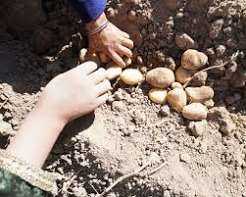
In Chorwan village, farmer Hajra Begum continues to prepare a khraw by lining an underground pit with straw before carefully storing the harvested potatoes. The structure protects the produce from extreme winter conditions and preserves selected potatoes for planting in the following spring.
For generations, families have relied on this method to ensure food security during months when roads remain blocked by snow and temperatures plunge below minus 20 degrees Celsius.
Begum, who learnt the practice from her mother, also inherited the traditional skill of identifying potatoes suitable for storage and selecting healthy seeds for the next crop. She is now passing this knowledge to her daughter but remains uncertain whether future generations will continue the tradition.
She recalled that almost every household once maintained several storage pits, whereas only a handful of families continue the practice today.
The disappearance of khraws is closely linked to the declining cultivation of traditional potato varieties, many of which have adapted over generations to Gurez's difficult climatic and geographical conditions.
According to a 2019 study by the Indian Council of Agricultural Research's National Bureau of Plant Genetic Resources (ICAR-NBPGR), potatoes account for nearly 45 per cent of the cultivated area in Gurez.
However, the genetic diversity of the valley's potato varieties has not been systematically documented.
Dr Sheikh M Sultan, a senior scientist associated with ICAR-NBPGR's Srinagar station, has expressed concern over the disappearance of several varieties that he encountered during earlier surveys.
He has warned that dependence on commercial varieties and the abandonment of indigenous seed production could result in irreversible genetic losses.
Local varieties may possess valuable characteristics, including tolerance to extreme cold and resistance to certain pests and diseases. Scientists believe these genetic traits could prove important in developing crops capable of withstanding changing climatic conditions.
The traditional farming system is also facing pressure from changing weather patterns.
Farmers in Gurez have reported drier springs, declining snowfall and water shortages, affecting potato production and making cultivation increasingly difficult.
Seventy-year-old farmer Abdul Jabbar Mapnoo recalled a time when almost every household maintained two or three underground pits, each capable of storing around five quintals of potatoes.
He said reduced snowfall and drying springs had affected agricultural production, while changing market access had reduced the incentive for families to grow and preserve their own crops.
Dr Parveen Kumar of Sher-e-Kashmir University of Agricultural Sciences and Technology of Kashmir has stressed the importance of recognising locally adapted varieties and adopting suitable climate-change adaptation strategies.
Pressure on agricultural land is another concern. Land acquisition and submergence associated with the Kishanganga hydroelectric project have affected parts of the valley, including Badwan, a village known for potato cultivation.
Experts and agricultural researchers believe that documenting indigenous potato varieties, traditional seed-selection methods and storage practices is becoming increasingly urgent.
Geographical Indication (GI) recognition could help improve the identity and market value of Gurez's traditional agricultural produce. The region could also explore recognition under the Food and Agriculture Organization's Globally Important Agricultural Heritage Systems programme, following the example of Kashmir's traditional saffron-growing landscape in Pampore.
However, recognition alone may not be sufficient. Conservation would require systematic identification of local varieties, preservation of indigenous seeds, scientific research and active participation of farming communities.
The knowledge of selecting, storing and replanting potatoes has traditionally passed from parents to children through everyday agricultural practice. As fewer families cultivate indigenous varieties, this informal system of knowledge transfer is also weakening.
The disappearance of Gurez's khraws therefore represents a loss far greater than the decline of an old storage technique. It signals the possible extinction of a traditional agricultural system, locally adapted crop varieties and a valuable body of community knowledge.
Preserving this heritage will require combining scientific conservation with the wisdom of farmers who have sustained agriculture in the Himalayan valley for generations.

© Copyright 2023 brighterkashmir.com All Rights Reserved. Quantum Technologies