
BREAKING NEWS
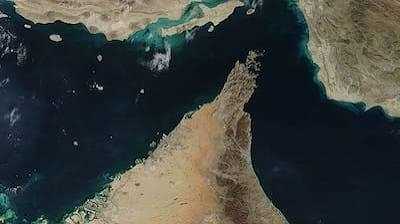
The renewed military exchanges between the United States and Iran over the Strait of Hormuz have once again pushed the Middle East to the edge of a wider conflict. What may appear to be another episode in a long-running geopolitical rivalry carries consequences that extend far beyond the region. The Strait of Hormuz is not merely a narrow waterway; it is one of the world's most strategic maritime corridors, through which nearly one-fifth of global oil supplies and substantial volumes of liquefied natural gas pass every day. Any disruption to this vital passage threatens global energy security, fuels inflation, and unsettles financial markets. History has repeatedly shown that military escalation rarely produces lasting peace. Instead, it creates a dangerous cycle of retaliation, hardens diplomatic positions, and increases the risk of miscalculation. In such a volatile environment, even a limited exchange can rapidly escalate into a broader regional confrontation involving multiple powers, with unpredictable global consequences. The economic repercussions are immediate. Rising crude oil prices translate into higher transportation and manufacturing costs, placing additional inflationary pressure on economies already struggling with slowing growth. Developing nations, heavily dependent on energy imports, bear the greatest burden as governments grapple with rising import bills while trying to shield citizens from escalating fuel prices. Investor confidence weakens, global trade slows, and economic recovery becomes increasingly fragile. Beyond economics lies an even greater humanitarian challenge. Escalating hostilities threaten civilian lives, disrupt maritime trade, and create uncertainty for millions of expatriate workers and commercial shipping operators across the Gulf. The conflict also raises concerns over the security of vital sea lanes that sustain international commerce. A regional military confrontation, therefore, quickly transforms into a global crisis affecting nations far removed from the battlefield. For India, stability in the Gulf is a strategic necessity. The region remains a major source of India's energy imports and is home to millions of Indian expatriates whose welfare and livelihoods are closely linked to peace and stability. Any prolonged conflict would have serious implications for India's energy security, trade, remittances, and maritime interests. The international community must therefore intensify diplomatic efforts before the crisis spirals out of control. Dialogue, confidence-building measures, respect for international maritime law, and sustained engagement remain the only credible path to de-escalation. Responsible leadership demands restraint rather than retaliation and negotiation rather than confrontation. The Strait of Hormuz must continue to serve as a bridge of global commerce, not a battlefield of geopolitical rivalry. At a time when the world is already grappling with economic uncertainty and multiple security challenges, another prolonged conflict in the Gulf would serve no one's interest. Peace is not a sign of weakness but the highest expression of statesmanship. Preventing a wider conflict in the Gulf is no longer merely a regional imperative—it is a global responsibility.
The renewed military exchanges between the United States and Iran over the Strait of Hormuz have once again pushed the Middle East to the edge of a wider conflict. What may appear to be another episode in a long-running geopolitical rivalry carries consequences that extend far beyond the region. The Strait of Hormuz is not merely a narrow waterway; it is one of the world's most strategic maritime corridors, through which nearly one-fifth of global oil supplies and substantial volumes of liquefied natural gas pass every day. Any disruption to this vital passage threatens global energy security, fuels inflation, and unsettles financial markets. History has repeatedly shown that military escalation rarely produces lasting peace. Instead, it creates a dangerous cycle of retaliation, hardens diplomatic positions, and increases the risk of miscalculation. In such a volatile environment, even a limited exchange can rapidly escalate into a broader regional confrontation involving multiple powers, with unpredictable global consequences. The economic repercussions are immediate. Rising crude oil prices translate into higher transportation and manufacturing costs, placing additional inflationary pressure on economies already struggling with slowing growth. Developing nations, heavily dependent on energy imports, bear the greatest burden as governments grapple with rising import bills while trying to shield citizens from escalating fuel prices. Investor confidence weakens, global trade slows, and economic recovery becomes increasingly fragile. Beyond economics lies an even greater humanitarian challenge. Escalating hostilities threaten civilian lives, disrupt maritime trade, and create uncertainty for millions of expatriate workers and commercial shipping operators across the Gulf. The conflict also raises concerns over the security of vital sea lanes that sustain international commerce. A regional military confrontation, therefore, quickly transforms into a global crisis affecting nations far removed from the battlefield. For India, stability in the Gulf is a strategic necessity. The region remains a major source of India's energy imports and is home to millions of Indian expatriates whose welfare and livelihoods are closely linked to peace and stability. Any prolonged conflict would have serious implications for India's energy security, trade, remittances, and maritime interests. The international community must therefore intensify diplomatic efforts before the crisis spirals out of control. Dialogue, confidence-building measures, respect for international maritime law, and sustained engagement remain the only credible path to de-escalation. Responsible leadership demands restraint rather than retaliation and negotiation rather than confrontation. The Strait of Hormuz must continue to serve as a bridge of global commerce, not a battlefield of geopolitical rivalry. At a time when the world is already grappling with economic uncertainty and multiple security challenges, another prolonged conflict in the Gulf would serve no one's interest. Peace is not a sign of weakness but the highest expression of statesmanship. Preventing a wider conflict in the Gulf is no longer merely a regional imperative—it is a global responsibility.

© Copyright 2023 brighterkashmir.com All Rights Reserved. Quantum Technologies