BREAKING NEWS

07-08-2026     3 رجب 1440

Jammu’s Urban Future: From Mother City to Transit City

Looking at Srinagar provides lessons. Srinagar is the urban center of the Kashmir Valley. Unlike Jammu, Srinagar’s economy is based on sectors such as tourism, handicrafts, horticulture, commerce, education and services. The city of Srinagar has an identity it is appealing to tourists and it has cultural significance, which contribute to its economic stability

July 08, 2026 | Hammid Ahmad Wani

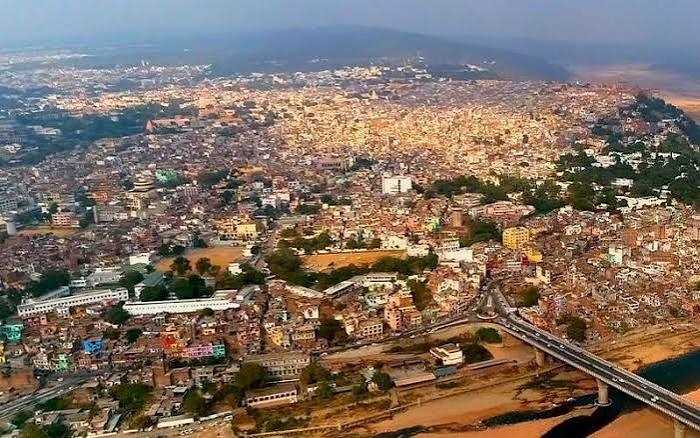
Cities do not usually decline all of a sudden. They often lose importance slowly without any signs as the economic activities that once supported them move to other places. If we look at the history of cities we can see that many cities that were once capitals, transport hubs or trade centers stopped growing when new technologies, changes in mobility or shifts in governance changed the economies. Today Jammu seems to be going through one of these changes. For over a hundred years Jammu had a place in the urban landscape of the former State of Jammu and Kashmir. It was the winter capital, center, regional service hub, transport link, wholesale market and cultural heart of the Dogra region. The city’s economy grew not because of its people but also because of its important roles in the broader regional context.


Implication of Darbar Move


In terms of planning Jammu became a gateway city, a service center and an area where the administration was growing. Its importance in the settlement hierarchy brought in a lot of economic benefits. Government offices, migration tied to the Darbar Move, trade, pilgrimage and tourism all helped build a strong urban economy. The city’s commercial areas, transport hubs, hospitality services and housing markets did well because of these activities. Jammu was a city that many people visited and lived in. Now modern urban changes are starting to change this traditional relationship. Digital governance, services, high-speed roads train links to Kashmir and changing travel habits are changing Jammu’s functional geography. The city is at risk of experiencing what urban economists call displacement. This means that Jammu is losing its importance as a city.
The end of the Darbar Move was not an administrative decision; it marked a big change in the city’s economic landscape. For years’ seasonal administrative migration helped the economy. Rental markets, retail businesses, hospitality and transport services did well because of this cycle of movement. The loss of these connections has weakened what planners call the city’s economic base. Although the planned revival of the Darbar Move in 2025 was celebrated by many Jammu’s current situation suggests it may not recover in the way. The decision to stop this standing tradition has significantly impacted the city’s momentum. Jammu is not the city it used to be.


E-governance and Digital Intrusion.


At the time digital governance has started a new administrative era. E-office systems, virtual meetings, online approvals and digital file management have greatly reduced the need for administrative presence. While this change makes administration more efficient it also diminishes the link between governance and urban economic activity. In essence governance is becoming more location-independent. This means that Jammu is no longer the center of governance. Recent discussions in studies describe this trend as "digital intrusion and falling urban momentum " where Jammu’s historical roles are slowly diminishing without sufficient new economic sectors to fill the gap. This transition often leads to what regional economists call inertia, where a city’s historical identity remains even as its economic foundation weakens. Jammu is facing this problem.
Transportation infrastructure has further sped up this transformation. The growth of highways tunnel links and rail networks has shortened travel times and changed mobility patterns. Historically Jammu benefited from its status as a city. As the major railhead and transport hub before Kashmir it captured substantial economic advantages from transit activities. Now the extension of rail connectivity to the Kashmir Valley is likely to change this dynamic. The city risks losing its role as a stop and may become merely a pass-through point. In transportation planning this is called network bypassing, where better connections allow for travel through a city of to it. Jammu is, at risk of becoming a city that people just pass through. The comparison with Pathankot highlights this issue. Pathankot was once the gateway to Jammu and Kashmir. When the railway services were expanded to Jammu, the city of Pathankot slowly lost its economic importance. Even though Pathankot is still important for military reasons its influence on the surrounding urban area has decreased. Jammu is now facing a situation in its urban development. It is not necessary that Jammu will decline. Cities can. Develop new economic areas and they can also diversify their functions. The real question is whether Jammu can successfully change from being a hub to a diverse metropolitan economy.


Contemporary Parallels


Looking at Srinagar provides lessons. Srinagar is the urban center of the Kashmir Valley. Unlike Jammu, Srinagar’s economy is based on sectors such as tourism, handicrafts, horticulture, commerce, education and services. The city of Srinagar has an identity it is appealing to tourists and it has cultural significance, which contribute to its economic stability. However, Srinagar also faces urban challenges. The city has undergone growth on the outskirts, encroachment on wetlands, traffic congestion, environmental degradation and increasing infrastructure needs. The growth pattern of Srinagar often reflects what planners describe as urban sprawl and ecological neglect. The loss of wetlands rising flood risks and damage to natural drainage systems have increased climate vulnerabilities. The 2014 floods showed the consequences of development without environmental protections. Expanding into floodplains and low areas has heightened disaster risks. Srinagar also suffers from a concentration of economic and institutional functions. The city exhibits traits of the city syndrome, where one center overshadows smaller cities. While this concentration boosts Srinagar’s economy it also creates congestion, land shortages, infrastructure strains and environmental harm.
Jammu in contrast presents an urban picture. The city of Jammu has more land available lower ecological risks and significant opportunities for planned growth. Jammu’s strategic position between the plains and the Himalayas offers potential for logistics, warehousing and regional trade. However, Jammu’s economy is still heavily reliant on government jobs, retail and transit activities. The lack of knowledge industries, technology sectors, innovation ecosystems and advanced service industries has limited economic diversification. As a result, Jammu shows signs of monoculture, where heavy reliance on a few sectors increases vulnerability to changes.


Redefining the Role of Jammu City


The challenge lies in redefining Jammu’s role in the emerging regional economy. From a planning perspective Jammu has the potential to become a logistics hub serving Jammu, Kashmir and Ladakh. Better rail and road connectivity could support freight movement, warehousing, distribution centers and supply-chain capabilities. Of seeing connectivity as a threat the city of Jammu can leverage its locational advantages. Likewise sectors such as education, healthcare, information technology and institutional development can serve as new economic drivers. Creating innovation districts knowledge corridors and institutional clusters would boost Jammu’s resilience. Tourism also needs an approach. Jammu has been viewed as a gateway not as a destination. Nonetheless the city of Jammu has heritage sites like Mubarak Mandi, Bahu Fort, Raghunath Temple and Dogra cultural traditions. Connecting these sites with tourism circuits could enhance Jammu’s identity and strengthen its visitor economy. Urban renewal projects are also essential. Improving spaces, pedestrian paths waterfront development along the Tawi, transit-oriented developments and mixed-use urban centers can increase Jammu’s livability. Modern urban planning emphasizes placemaking, where cities create meaningful public spaces that foster social interactions and economic activity.


Urban Planning Fallacies


Both Jammu and Srinagar show the shortcomings of master planning. Numerous master plans have been made over the years. Significant implementation issues persist. Land-use proposals often fail to influence development. The gap between planning documents and urban realities has led to growth, infrastructure shortfalls and environmental harm. Therefore, we cannot view the future of Jammu and Srinagar as a competition. The two cities are part of an urban system and their economic fates are intertwined. Regional planning should promote urban functions rather than duplication of growth strategies. Srinagar can continue as the tourism, service center of the Valley while Jammu could evolve into the logistics, education, healthcare and industrial hub of the region. This approach would encourage regional development and lessen reliance on a single urban center. The fundamental question is not whether Jammu is becoming another Pathankot. It is whether Jammu can effectively transition from a city to a diverse metropolitan economy. Urban history shows that cities that rely on transport or administrative functions often struggle when those functions change. In contrast cities that diversify their economies strengthen their institutions. Enhance their urban environments remain resilient.


Need for Visionary Urban Planning


Jammu now stands at this crossroads. The city of Jammu can. Continue depending on dwindling functions or adopt a new urban vision focused on economic diversification, spatial planning, institutional growth and urban renewal. Connectivity, digital governance and infrastructure are not the problems themselves. The real challenge is ensuring these transformative forces are part of an urban strategy. Without such a strategy Jammu risks becoming a transit point. If Jammu continues on the path it is not far away that Katra town may assume the status of shaping the regional urban future of Jammu and imbibe all the economic growth momentum. However, with the planning efforts Jammu could become a resilient, competitive and sustainable metropolitan center in the western Himalayas. The future of Jammu will depend less on the trains that pass through it and more on the vision that shapes its progress, for the future.


Email:-------------------------- hamwani24@gmail.com

BREAKING NEWS

VIDEO

Twitter

Facebook

Jammu’s Urban Future: From Mother City to Transit City

Looking at Srinagar provides lessons. Srinagar is the urban center of the Kashmir Valley. Unlike Jammu, Srinagar’s economy is based on sectors such as tourism, handicrafts, horticulture, commerce, education and services. The city of Srinagar has an identity it is appealing to tourists and it has cultural significance, which contribute to its economic stability

July 08, 2026 | Hammid Ahmad Wani

Cities do not usually decline all of a sudden. They often lose importance slowly without any signs as the economic activities that once supported them move to other places. If we look at the history of cities we can see that many cities that were once capitals, transport hubs or trade centers stopped growing when new technologies, changes in mobility or shifts in governance changed the economies. Today Jammu seems to be going through one of these changes. For over a hundred years Jammu had a place in the urban landscape of the former State of Jammu and Kashmir. It was the winter capital, center, regional service hub, transport link, wholesale market and cultural heart of the Dogra region. The city’s economy grew not because of its people but also because of its important roles in the broader regional context.


Implication of Darbar Move


In terms of planning Jammu became a gateway city, a service center and an area where the administration was growing. Its importance in the settlement hierarchy brought in a lot of economic benefits. Government offices, migration tied to the Darbar Move, trade, pilgrimage and tourism all helped build a strong urban economy. The city’s commercial areas, transport hubs, hospitality services and housing markets did well because of these activities. Jammu was a city that many people visited and lived in. Now modern urban changes are starting to change this traditional relationship. Digital governance, services, high-speed roads train links to Kashmir and changing travel habits are changing Jammu’s functional geography. The city is at risk of experiencing what urban economists call displacement. This means that Jammu is losing its importance as a city.
The end of the Darbar Move was not an administrative decision; it marked a big change in the city’s economic landscape. For years’ seasonal administrative migration helped the economy. Rental markets, retail businesses, hospitality and transport services did well because of this cycle of movement. The loss of these connections has weakened what planners call the city’s economic base. Although the planned revival of the Darbar Move in 2025 was celebrated by many Jammu’s current situation suggests it may not recover in the way. The decision to stop this standing tradition has significantly impacted the city’s momentum. Jammu is not the city it used to be.


E-governance and Digital Intrusion.


At the time digital governance has started a new administrative era. E-office systems, virtual meetings, online approvals and digital file management have greatly reduced the need for administrative presence. While this change makes administration more efficient it also diminishes the link between governance and urban economic activity. In essence governance is becoming more location-independent. This means that Jammu is no longer the center of governance. Recent discussions in studies describe this trend as "digital intrusion and falling urban momentum " where Jammu’s historical roles are slowly diminishing without sufficient new economic sectors to fill the gap. This transition often leads to what regional economists call inertia, where a city’s historical identity remains even as its economic foundation weakens. Jammu is facing this problem.
Transportation infrastructure has further sped up this transformation. The growth of highways tunnel links and rail networks has shortened travel times and changed mobility patterns. Historically Jammu benefited from its status as a city. As the major railhead and transport hub before Kashmir it captured substantial economic advantages from transit activities. Now the extension of rail connectivity to the Kashmir Valley is likely to change this dynamic. The city risks losing its role as a stop and may become merely a pass-through point. In transportation planning this is called network bypassing, where better connections allow for travel through a city of to it. Jammu is, at risk of becoming a city that people just pass through. The comparison with Pathankot highlights this issue. Pathankot was once the gateway to Jammu and Kashmir. When the railway services were expanded to Jammu, the city of Pathankot slowly lost its economic importance. Even though Pathankot is still important for military reasons its influence on the surrounding urban area has decreased. Jammu is now facing a situation in its urban development. It is not necessary that Jammu will decline. Cities can. Develop new economic areas and they can also diversify their functions. The real question is whether Jammu can successfully change from being a hub to a diverse metropolitan economy.


Contemporary Parallels


Looking at Srinagar provides lessons. Srinagar is the urban center of the Kashmir Valley. Unlike Jammu, Srinagar’s economy is based on sectors such as tourism, handicrafts, horticulture, commerce, education and services. The city of Srinagar has an identity it is appealing to tourists and it has cultural significance, which contribute to its economic stability. However, Srinagar also faces urban challenges. The city has undergone growth on the outskirts, encroachment on wetlands, traffic congestion, environmental degradation and increasing infrastructure needs. The growth pattern of Srinagar often reflects what planners describe as urban sprawl and ecological neglect. The loss of wetlands rising flood risks and damage to natural drainage systems have increased climate vulnerabilities. The 2014 floods showed the consequences of development without environmental protections. Expanding into floodplains and low areas has heightened disaster risks. Srinagar also suffers from a concentration of economic and institutional functions. The city exhibits traits of the city syndrome, where one center overshadows smaller cities. While this concentration boosts Srinagar’s economy it also creates congestion, land shortages, infrastructure strains and environmental harm.
Jammu in contrast presents an urban picture. The city of Jammu has more land available lower ecological risks and significant opportunities for planned growth. Jammu’s strategic position between the plains and the Himalayas offers potential for logistics, warehousing and regional trade. However, Jammu’s economy is still heavily reliant on government jobs, retail and transit activities. The lack of knowledge industries, technology sectors, innovation ecosystems and advanced service industries has limited economic diversification. As a result, Jammu shows signs of monoculture, where heavy reliance on a few sectors increases vulnerability to changes.


Redefining the Role of Jammu City


The challenge lies in redefining Jammu’s role in the emerging regional economy. From a planning perspective Jammu has the potential to become a logistics hub serving Jammu, Kashmir and Ladakh. Better rail and road connectivity could support freight movement, warehousing, distribution centers and supply-chain capabilities. Of seeing connectivity as a threat the city of Jammu can leverage its locational advantages. Likewise sectors such as education, healthcare, information technology and institutional development can serve as new economic drivers. Creating innovation districts knowledge corridors and institutional clusters would boost Jammu’s resilience. Tourism also needs an approach. Jammu has been viewed as a gateway not as a destination. Nonetheless the city of Jammu has heritage sites like Mubarak Mandi, Bahu Fort, Raghunath Temple and Dogra cultural traditions. Connecting these sites with tourism circuits could enhance Jammu’s identity and strengthen its visitor economy. Urban renewal projects are also essential. Improving spaces, pedestrian paths waterfront development along the Tawi, transit-oriented developments and mixed-use urban centers can increase Jammu’s livability. Modern urban planning emphasizes placemaking, where cities create meaningful public spaces that foster social interactions and economic activity.


Urban Planning Fallacies


Both Jammu and Srinagar show the shortcomings of master planning. Numerous master plans have been made over the years. Significant implementation issues persist. Land-use proposals often fail to influence development. The gap between planning documents and urban realities has led to growth, infrastructure shortfalls and environmental harm. Therefore, we cannot view the future of Jammu and Srinagar as a competition. The two cities are part of an urban system and their economic fates are intertwined. Regional planning should promote urban functions rather than duplication of growth strategies. Srinagar can continue as the tourism, service center of the Valley while Jammu could evolve into the logistics, education, healthcare and industrial hub of the region. This approach would encourage regional development and lessen reliance on a single urban center. The fundamental question is not whether Jammu is becoming another Pathankot. It is whether Jammu can effectively transition from a city to a diverse metropolitan economy. Urban history shows that cities that rely on transport or administrative functions often struggle when those functions change. In contrast cities that diversify their economies strengthen their institutions. Enhance their urban environments remain resilient.


Need for Visionary Urban Planning


Jammu now stands at this crossroads. The city of Jammu can. Continue depending on dwindling functions or adopt a new urban vision focused on economic diversification, spatial planning, institutional growth and urban renewal. Connectivity, digital governance and infrastructure are not the problems themselves. The real challenge is ensuring these transformative forces are part of an urban strategy. Without such a strategy Jammu risks becoming a transit point. If Jammu continues on the path it is not far away that Katra town may assume the status of shaping the regional urban future of Jammu and imbibe all the economic growth momentum. However, with the planning efforts Jammu could become a resilient, competitive and sustainable metropolitan center in the western Himalayas. The future of Jammu will depend less on the trains that pass through it and more on the vision that shapes its progress, for the future.


Email:-------------------------- hamwani24@gmail.com

  • Address: R.C 2 Quarters Press Enclave Near Pratap Park, Srinagar 190001.
  • Phone: 0194-2451076 , +91-941-940-0056 , +91-962-292-4716
  • Email: brighterkmr@gmail.com
Owner, Printer, Publisher, Editor: Farooq Ahmad Wani
Legal Advisor: M.J. Hubi
Printed at: Sangermal offset Printing Press Rangreth ( Budgam)
Published from: Gulshanabad Chraresharief Budgam
RNI No.: JKENG/2010/33802
Office No’s: 0194-2451076
Mobile No’s 9419400056, 9622924716 ,7006086442
Postal Regd No: SK/135/2010-2019
POST BOX NO: 1001
Administrative Office: R.C 2 Quarters Press Enclave Near Pratap Park ( Srinagar -190001)

© Copyright 2023 brighterkashmir.com All Rights Reserved. Quantum Technologies

Owner, Printer, Publisher, Editor: Farooq Ahmad Wani
Legal Advisor: M.J. Hubi
Printed at: Abid Enterprizes, Zainkote Srinagar
Published from: Gulshanabad Chraresharief Budgam
RNI No.: JKENG/2010/33802
Office No’s: 0194-2451076, 9622924716 , 9419400056
Postal Regd No: SK/135/2010-2019
Administrative Office: Abi Guzer Srinagar

© Copyright 2018 brighterkashmir.com All Rights Reserved.