
BREAKING NEWS
Jammu, Feb 17: The Jammu and Kashmir Legislative Assembly on Tuesday approved substantial grants for agriculture, horticulture, animal husbandry, rural development, and allied sectors, totaling several lakh crore rupees. The allocations include Rs 4,56,569.56 lakh for Rural Development and Panchayati Raj, Rs 2,42,386.40 lakh for Agriculture, Rs 1,16,040.98 lakh for Animal and Sheep Husbandry, Rs 69,648.23 lakh for Horticulture, Rs 20,620.56 lakh for Fisheries, Rs 26,611.42 lakh for Cooperatives, and Rs 36,126.71 lakh for the Election department.
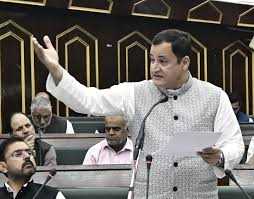
The grants were passed via voice vote following day-long deliberations. Minister for Agriculture Production, Rural Development, Cooperatives and Election, Javid Ahmed Dar, highlighted the central role of agriculture and allied sectors in J&K’s economy, contributing ₹41,273 crore, or 19% of the SGDP. Horticulture alone contributes 41%, livestock 33%, and core agriculture 25%.
Dar detailed a multi-pronged strategy aimed at modernizing agriculture, empowering farmers, and enhancing productivity. Under flagship schemes like the High-Density Plantation Scheme, Integrated Dairy Development, Sheep and Poultry Development programs, the government has expanded cultivable land, boosted crop yields through vertical farming, promoted oilseeds and apiculture, and increased mushroom production.
Horticulture initiatives include high-density plantations, fruit nurseries, rootstock banks, plant propagation units, and CA storage expansion. The government also emphasized livestock development with elite breeding imports, milk productivity enhancements, and new milk processing plants, targeting self-reliance and increased farmer incomes.
Digital platforms like JKCIP, Kisan Khidmat Ghars, and Kisan Sathi are strengthening last-mile service delivery, while insurance schemes, micro-irrigation subsidies, and disease-free planting material initiatives provide risk mitigation.
Rural development measures under MGNREGA, PMAY-G, SBM-Gramin, greywater and solid waste management, and skill development schemes have generated employment, improved housing, and promoted entrepreneurship. Over 7.9 lakh rural women have been mobilized into 95,000 SHGs, leveraging significant bank credit and capital support.
The Minister also unveiled new initiatives, including the Aromatic and Medicinal Plants Mission, Viksit Village Project, and enhanced cooperative sector support, while proposing 40 new micro food processing units across the UT.
Legislators from multiple parties actively participated in the debate and later withdrew cut motions after the Minister assured that concerns would be addressed.
The comprehensive grants and schemes aim to transform J&K’s agriculture, rural livelihoods, and allied sectors, driving sustainable economic growth and inclusive development.
Jammu, Feb 17: The Jammu and Kashmir Legislative Assembly on Tuesday approved substantial grants for agriculture, horticulture, animal husbandry, rural development, and allied sectors, totaling several lakh crore rupees. The allocations include Rs 4,56,569.56 lakh for Rural Development and Panchayati Raj, Rs 2,42,386.40 lakh for Agriculture, Rs 1,16,040.98 lakh for Animal and Sheep Husbandry, Rs 69,648.23 lakh for Horticulture, Rs 20,620.56 lakh for Fisheries, Rs 26,611.42 lakh for Cooperatives, and Rs 36,126.71 lakh for the Election department.
The grants were passed via voice vote following day-long deliberations. Minister for Agriculture Production, Rural Development, Cooperatives and Election, Javid Ahmed Dar, highlighted the central role of agriculture and allied sectors in J&K’s economy, contributing ₹41,273 crore, or 19% of the SGDP. Horticulture alone contributes 41%, livestock 33%, and core agriculture 25%.
Dar detailed a multi-pronged strategy aimed at modernizing agriculture, empowering farmers, and enhancing productivity. Under flagship schemes like the High-Density Plantation Scheme, Integrated Dairy Development, Sheep and Poultry Development programs, the government has expanded cultivable land, boosted crop yields through vertical farming, promoted oilseeds and apiculture, and increased mushroom production.
Horticulture initiatives include high-density plantations, fruit nurseries, rootstock banks, plant propagation units, and CA storage expansion. The government also emphasized livestock development with elite breeding imports, milk productivity enhancements, and new milk processing plants, targeting self-reliance and increased farmer incomes.
Digital platforms like JKCIP, Kisan Khidmat Ghars, and Kisan Sathi are strengthening last-mile service delivery, while insurance schemes, micro-irrigation subsidies, and disease-free planting material initiatives provide risk mitigation.
Rural development measures under MGNREGA, PMAY-G, SBM-Gramin, greywater and solid waste management, and skill development schemes have generated employment, improved housing, and promoted entrepreneurship. Over 7.9 lakh rural women have been mobilized into 95,000 SHGs, leveraging significant bank credit and capital support.
The Minister also unveiled new initiatives, including the Aromatic and Medicinal Plants Mission, Viksit Village Project, and enhanced cooperative sector support, while proposing 40 new micro food processing units across the UT.
Legislators from multiple parties actively participated in the debate and later withdrew cut motions after the Minister assured that concerns would be addressed.
The comprehensive grants and schemes aim to transform J&K’s agriculture, rural livelihoods, and allied sectors, driving sustainable economic growth and inclusive development.

© Copyright 2023 brighterkashmir.com All Rights Reserved. Quantum Technologies