
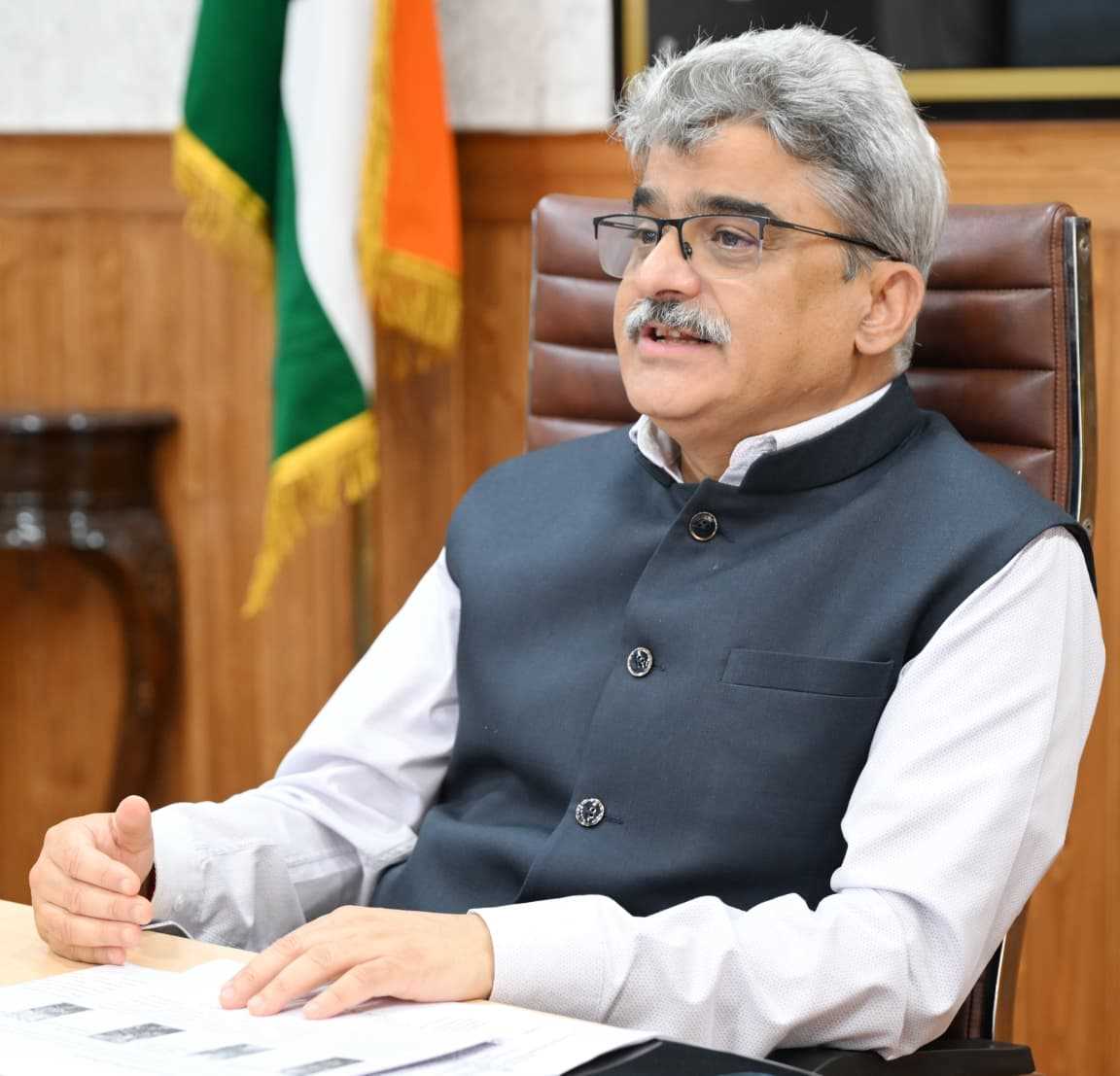
Srinagar, Oct 1: Chief Secretary Atal Dulloo on Thursday held detailed consultations with Vice Chancellors of universities and senior officials of the Higher Education Department to explore the creation of a Multiversity ecosystem in Jammu and Kashmir.
The proposed model seeks to leverage the collective academic, research, technological and infrastructural strengths of universities and premier institutions across the Union Territory, while promoting greater collaboration and resource sharing.
The meeting was attended by Vice Chancellors of J&K universities, Commissioner Secretary Higher Education Ram Niwas Sharma, Director Colleges J&K Dr Twinkle Suri and other senior officers.
The discussions focused on developing an institutional framework for inter-university collaboration, shared academic resources, multidisciplinary learning, student and faculty mobility, joint research and stronger industry linkages, in line with the vision of the National Education Policy (NEP) 2020.
Dulloo said rapid technological advancements were transforming workplaces and creating new challenges that require multidisciplinary knowledge and skills. He stressed that the future would belong to individuals capable of continuously upgrading their knowledge, acquiring diverse skills and working across institutional and professional boundaries.
He said a Multiversity model could provide an institutional mechanism for grooming a future-ready generation by bringing together the strengths of different institutions and widening students’ access to diverse fields of knowledge.
The Chief Secretary particularly emphasised the need to move “from papers to patents”, calling for a clear roadmap for research, innovation and technology transfer. He directed that the proposed framework include specific milestones, timelines, institutional responsibilities and measurable outcomes.
Earlier, IUST Vice Chancellor Prof Shakil Ahmad Romshoo made a detailed presentation on the concept and its relevance to J&K. He said an inter-institutional framework was needed to ensure that the region’s higher education system remained relevant to emerging requirements.
Romshoo highlighted J&K’s diverse higher education ecosystem, comprising universities, AIIMS, SKIMS, IIT, IIM, agricultural and technical institutions, besides a large network of colleges. He said these institutions could complement one another by sharing infrastructure, expertise and academic resources instead of duplicating facilities.
The proposed model envisages interdisciplinary learning pathways, shared courses and facilities, student and faculty mobility, internships and apprenticeships, industry and public-sector linkages, anchor institutions and measurable Key Performance Indicators (KPIs).
Commissioner Secretary Higher Education Ram Niwas Sharma said several private universities in the country had adopted collaborative arrangements for sharing resources, faculty and students. He suggested identifying an institution as a Special Purpose Vehicle (SPV) or anchor institution to drive the initiative, initially through a select set of courses.
Director Colleges Dr Twinkle Suri stressed that equity of access should remain a key consideration, noting that J&K already has a substantial institutional and infrastructural base.
Dulloo called for further development of the concept into a time-bound, outcome-oriented framework, with clearly defined responsibilities and measurable milestones.
He said the initiative should ultimately expand opportunities for students and researchers while strengthening the quality, employability, innovation and research potential of J&K’s higher education ecosystem.


Srinagar, Oct 1: Chief Secretary Atal Dulloo on Thursday held detailed consultations with Vice Chancellors of universities and senior officials of the Higher Education Department to explore the creation of a Multiversity ecosystem in Jammu and Kashmir.
The proposed model seeks to leverage the collective academic, research, technological and infrastructural strengths of universities and premier institutions across the Union Territory, while promoting greater collaboration and resource sharing.
The meeting was attended by Vice Chancellors of J&K universities, Commissioner Secretary Higher Education Ram Niwas Sharma, Director Colleges J&K Dr Twinkle Suri and other senior officers.
The discussions focused on developing an institutional framework for inter-university collaboration, shared academic resources, multidisciplinary learning, student and faculty mobility, joint research and stronger industry linkages, in line with the vision of the National Education Policy (NEP) 2020.
Dulloo said rapid technological advancements were transforming workplaces and creating new challenges that require multidisciplinary knowledge and skills. He stressed that the future would belong to individuals capable of continuously upgrading their knowledge, acquiring diverse skills and working across institutional and professional boundaries.
He said a Multiversity model could provide an institutional mechanism for grooming a future-ready generation by bringing together the strengths of different institutions and widening students’ access to diverse fields of knowledge.
The Chief Secretary particularly emphasised the need to move “from papers to patents”, calling for a clear roadmap for research, innovation and technology transfer. He directed that the proposed framework include specific milestones, timelines, institutional responsibilities and measurable outcomes.
Earlier, IUST Vice Chancellor Prof Shakil Ahmad Romshoo made a detailed presentation on the concept and its relevance to J&K. He said an inter-institutional framework was needed to ensure that the region’s higher education system remained relevant to emerging requirements.
Romshoo highlighted J&K’s diverse higher education ecosystem, comprising universities, AIIMS, SKIMS, IIT, IIM, agricultural and technical institutions, besides a large network of colleges. He said these institutions could complement one another by sharing infrastructure, expertise and academic resources instead of duplicating facilities.
The proposed model envisages interdisciplinary learning pathways, shared courses and facilities, student and faculty mobility, internships and apprenticeships, industry and public-sector linkages, anchor institutions and measurable Key Performance Indicators (KPIs).
Commissioner Secretary Higher Education Ram Niwas Sharma said several private universities in the country had adopted collaborative arrangements for sharing resources, faculty and students. He suggested identifying an institution as a Special Purpose Vehicle (SPV) or anchor institution to drive the initiative, initially through a select set of courses.
Director Colleges Dr Twinkle Suri stressed that equity of access should remain a key consideration, noting that J&K already has a substantial institutional and infrastructural base.
Dulloo called for further development of the concept into a time-bound, outcome-oriented framework, with clearly defined responsibilities and measurable milestones.
He said the initiative should ultimately expand opportunities for students and researchers while strengthening the quality, employability, innovation and research potential of J&K’s higher education ecosystem.

© Copyright 2023 brighterkashmir.com All Rights Reserved. Quantum Technologies