
BREAKING NEWS
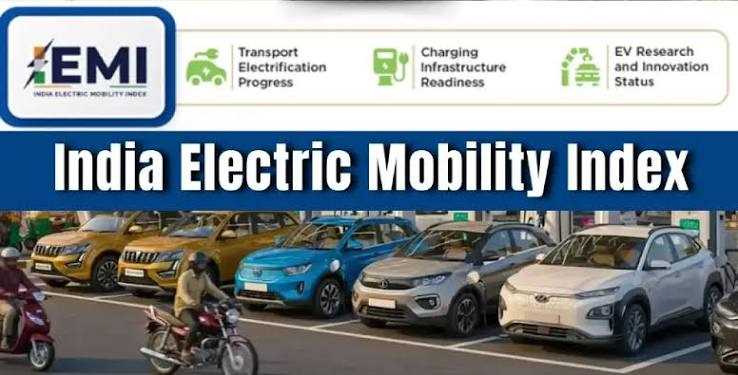
Srinagar: Jammu and Kashmir has improved its position in electric mobility but continues to face major policy and infrastructure gaps, ranking 27th among 36 States and Union Territories in the India Electric Mobility Index 2025.
The Union Territory scored 31 points against the national average of 42, improving from 20 points in 2024. It ranked sixth among 12 hilly and northeastern States and UTs.
The index highlights significant gaps across key areas of electric mobility. Under transport electrification, J&K scored zero for government initiatives, purchase incentives, transition initiatives and operational support. Its score for private EV registration stood at 21, while commercial EV registration received a full score of 100.
Charging infrastructure remains another major concern. J&K scored 51 for the charger-to-vehicle ratio and 100 for power availability, but received zero points for capital subsidies for charging, charging infrastructure development initiatives and EV-related building bylaws. Renewable energy capacity linked to electric mobility scored 17.
The UT also recorded a weak score in research and innovation. While it scored 25 for EV startups and 62 for patents, it received zero for R&D initiatives, indicating limited institutional support for electric mobility research.
Across the three major themes, J&K remained below the national averages. Transport electrification scored 33 against 77 nationally, charging infrastructure 32 against 97, and EV research and innovation 25 against 94.
The report, however, notes some progress, including the doubling of the smart electric bus fleet, with 200 additional e-buses planned for urban commuting as well as tourism and pilgrimage routes. It also identifies the estimated 5.9 million tonnes of lithium reserves in J&K as a potential strategic advantage for India’s battery and EV manufacturing ecosystem.
The index recommends that J&K frame and notify a comprehensive EV policy, along with suitable incentives for EV adoption, charging infrastructure and research and innovation.
While the overall score has risen by 11 points in a year, the assessment underscores the need for stronger policy support and infrastructure to accelerate the UT’s electric-mobility transition.
Srinagar: Jammu and Kashmir has improved its position in electric mobility but continues to face major policy and infrastructure gaps, ranking 27th among 36 States and Union Territories in the India Electric Mobility Index 2025.
The Union Territory scored 31 points against the national average of 42, improving from 20 points in 2024. It ranked sixth among 12 hilly and northeastern States and UTs.
The index highlights significant gaps across key areas of electric mobility. Under transport electrification, J&K scored zero for government initiatives, purchase incentives, transition initiatives and operational support. Its score for private EV registration stood at 21, while commercial EV registration received a full score of 100.
Charging infrastructure remains another major concern. J&K scored 51 for the charger-to-vehicle ratio and 100 for power availability, but received zero points for capital subsidies for charging, charging infrastructure development initiatives and EV-related building bylaws. Renewable energy capacity linked to electric mobility scored 17.
The UT also recorded a weak score in research and innovation. While it scored 25 for EV startups and 62 for patents, it received zero for R&D initiatives, indicating limited institutional support for electric mobility research.
Across the three major themes, J&K remained below the national averages. Transport electrification scored 33 against 77 nationally, charging infrastructure 32 against 97, and EV research and innovation 25 against 94.
The report, however, notes some progress, including the doubling of the smart electric bus fleet, with 200 additional e-buses planned for urban commuting as well as tourism and pilgrimage routes. It also identifies the estimated 5.9 million tonnes of lithium reserves in J&K as a potential strategic advantage for India’s battery and EV manufacturing ecosystem.
The index recommends that J&K frame and notify a comprehensive EV policy, along with suitable incentives for EV adoption, charging infrastructure and research and innovation.
While the overall score has risen by 11 points in a year, the assessment underscores the need for stronger policy support and infrastructure to accelerate the UT’s electric-mobility transition.

© Copyright 2023 brighterkashmir.com All Rights Reserved. Quantum Technologies