
BREAKING NEWS
Srinagar, Nov 22: Kashmiri master artisan and national awardee Bashir Ahmad Bhat from Budgam’s Sonpah village is drawing widespread attention at the 45th India International Trade Fair in New Delhi, showcasing the intricate art of traditional shawl-making.
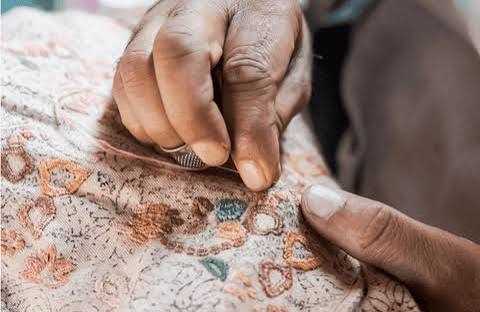
Participating in the five-day event at Bharat Mandapam, Pragati Maidan, Bhat is exhibiting an array of handcrafted shawls at the Jammu and Kashmir Pavilion in Hall No. 1. Alongside displaying his work, he is demonstrating the painstaking process of making a jama shawl, attracting visitors, particularly young people and international buyers.
Bhat, who has been associated with the craft for nearly four decades, belongs to Sonpah village in Beerwah tehsil, which has been designated a Craft Village by the Government of India. The village, comprising around 400 households, has produced more than 20 state and national award-winning artisans specialising in fine sozni needlework.
According to Bhat, the craft was introduced in the village nearly 200 years ago by religious preacher Ghulam Hassan Shera. His father, Ghulam Ahmad Bhat, was among the first to learn it from him.
At this year's expo, Bhat is showcasing reversible shawls that can be worn on both sides, with prices ranging from Rs 1.5 lakh to Rs 9 lakh. These include the exclusive aksi shawl, which can take up to three years to complete, and the nim jama shawl, priced at Rs 1.5 lakh. Ordinary shawls are available for Rs 10,000 to Rs 20,000.
“The work on an aksi shawl is much finer. It can take up to three years to make,” he said.
Bhat, who also participated in the BRICS Handicraft Exchange Programme in Jaipur in 2016, said the craft had transformed his family's fortunes. His children and other relatives are also engaged in the profession, with some earning awards for their work.
He believes the industry has considerable potential but stressed that exporters must offer artisans fair prices to ensure sustainable livelihoods. He also urged educated youth to learn traditional crafts and become self-reliant rather than waiting solely for government jobs.
Describing shawl-making as a sacred legacy handed down by Hazrat Shah-e-Hamdan (RA), Bhat said the tradition must be protected and passed on to future generations in an organised manner.
He said he receives online orders from several countries, including the US, European nations, Canada and Saudi Arabia. Last year, he sold a shawl to a buyer in Pune for Rs 7.5 lakh.
Bhat also works with around 12 experienced artisans, all award winners, and trains young people through government-supported training initiatives.
His achievements have also brought him national recognition. On National Handloom Day, August 7, he was invited to Delhi, where he met Prime Minister Narendra Modi and discussed the traditional art of shawl-making.
Despite the growing interest in his work, Bhat expressed concern over the allocation of exhibition space at the trade fair. He said late bookings often leave artisans with less accessible locations, affecting customer footfall and business.
He has been participating in the fair for nearly 25 years and said many regular customers return every year to meet him. Some even show him photographs and videos from their visits dating back to 2000.
For Bhat, the live demonstrations remain an important way of educating visitors about the skill, patience and years of labour that go into creating each Kashmiri shawl.

© Copyright 2023 brighterkashmir.com All Rights Reserved. Quantum Technologies