
BREAKING NEWS
Budgam, Nov 24: Long before renewable energy became a policy priority, villages in Kashmir had developed an indigenous way of harnessing nature’s power. Flowing streams turned heavy grinding stones, processing wheat, rice and maize without electricity or diesel while sustaining rural livelihoods.
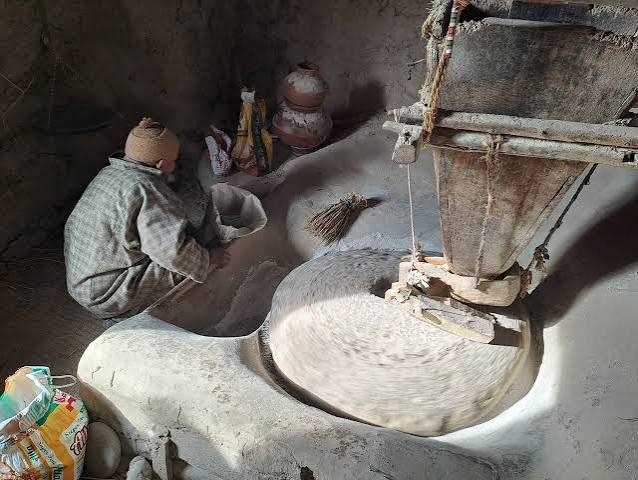
One such traditional watermill in Wahabpora village of central Kashmir’s Budgam district is believed to be nearly 300 years old. Locally known as an ‘Aab Gharat’ or ‘Pani Chaki’, the mill continues to operate, preserving a centuries-old tradition and offering a glimpse into Kashmir’s rural technological heritage.
Powered entirely by flowing water, the traditional mill uses the natural force of a stream to rotate its mechanism and grind grains into flour. Its simple yet effective design reflects the ingenuity of generations who adapted to their surroundings and made productive use of available natural resources.
For generations, such watermills played an important role in village life. They provided an accessible means of processing locally grown grains and supported families engaged in milling. Before the widespread availability of electricity and modern machinery, the gharat was an essential part of the rural economy.
Beyond their economic importance, these mills represent an environmentally sustainable form of traditional technology. They use renewable water power, require no conventional fuel and produce no direct emissions from fuel combustion. Their operation also reflects a model of local resource utilisation that remains relevant amid growing concerns over climate change and energy sustainability.
However, this centuries-old livelihood is increasingly under pressure. The spread of electric flour mills, changing consumption patterns, declining dependence on traditional occupations and the challenges of maintaining old structures have reduced the role of watermills in many villages.
Traditional mill operators also face difficulties linked to seasonal fluctuations in water flow, upkeep of the machinery and the limited economic returns from the occupation. As younger generations move towards other livelihood options, the skills and knowledge required to operate and maintain these mills risk being lost.
The survival of the Wahabpora watermill therefore carries significance beyond the continued operation of a single traditional unit. It represents a living link with Kashmir’s rural past and an example of community-based renewable technology that has served generations.
Preserving such heritage requires more than admiration for its history. Documentation, technical support, restoration of traditional structures and appropriate livelihood assistance could help keep these mills functional. Linking them with heritage tourism and educational initiatives could also create wider awareness about their historical and environmental value.
At a time when governments and communities are exploring sustainable alternatives to conventional energy, Kashmir’s traditional watermills offer an important lesson: renewable energy is not entirely a modern concept. In villages like Wahabpora, it has been part of everyday life for centuries.
The nearly 300-year-old Aab Gharat stands as a reminder of that legacy. Its continued operation is not merely about grinding grain; it is about keeping alive an indigenous technology, a rural livelihood and a valuable part of Kashmir’s cultural heritage.

© Copyright 2023 brighterkashmir.com All Rights Reserved. Quantum Technologies