BREAKING NEWS

01-20-2026     3 رجب 1440

Keeladi and the Long Shadow of Indian Origins

The excavation trenches are surrounded by small heaps of mud guarded by green nets, where the women labourers search for artefacts such as beads and potsherds. Tourists make peepholes, and some even come up with tales about past people as they savour puris, which causes an archaeologist to lose temper and retort, "Be respectful to our workplace! What would you think of my coming in and having lunch in your office?


January 19, 2026 | Daanish Bin Nabi

An archaeological site in the southern part of India has become a source of cultural pride and political opposition in a country where history is frequently invoked to argue about the present, questioning ancient historical accounts of the subcontinent's civilisations.
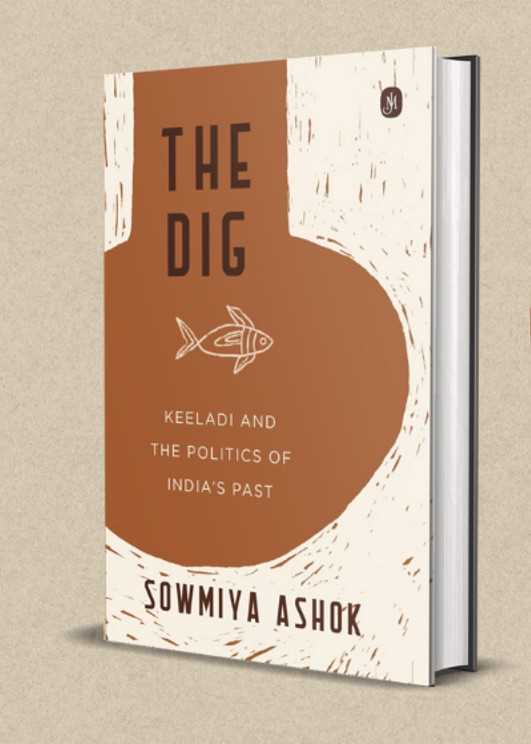
Sowmiya Ashok, a journalist with Hachette India, was published in the book The Dig: Keeladi and the Politics of India Past, which examines the story of a dig in Tamil Nadu that identified a new explanation for early urbanisation in the area. Based on ground-level reporting, historical analysis, and subjective reflection, Ashok creates a story that reveals how the findings of the past are intertwined with contemporary identity politics.
The book begins with a graphic description of the situation in the village of Keeladi in August 2021, when a Tamil food vendor is driving a cart with his snack, chaat, and buttermilk through a coconut grove to attract tourists.
The excavation trenches are surrounded by small heaps of mud guarded by green nets, where the women labourers search for artefacts such as beads and potsherds. Tourists make peepholes, and some even come up with tales about past people as they savour puris, which causes an archaeologist to lose temper and retort, "Be respectful to our workplace! What would you think of my coming in and having lunch in your office?
The most popular archaeological site in Tamil Nadu is Keeladi, which was first reported in the news in 2015.
Since that time, it has attracted masses of people by buses, mini-vans, and two-wheelers, driven by fascination and curiosity to establish some sort of a relationship with what may be the legacy of their ancestors. The coconut grove maintained an urban centre beneath it over the centuries, and excavations showed that it had very unusual characteristics: it contained enormous brick walls and ring wells, the first such discovery in Tamil Nadu.
Human civilisation can be traced back to about the eighth century BCE - a disputed dating period - that we have fine pottery, iron tools and Neolithic ones. The residents became good urbanites and constructed with burnt bricks, making terracotta drains to control water; millets were consumed, cattle were raised, and the roof was tiled with two holes and grooves through which rainwater would pass.
Ashok describes the location's popularity: in the period between September and October 2019, more than one lakh people visited, carrying phone cameras. On Gandhi Jayanti that year, 9,000 people came in a single day, requiring informal crowd control and traffic blocking at the intersection of National Highway 87.
The government of Tamil Nadu even ordered a stationary model of the trenches, which were toured around the state during book fairs, where people could have their photos taken. One of the Tamil archaeologists once said, we can close down all the sites except this one... Keeladi will be regarded as Tamil Thai - the mother of the Tamil language.
The story traces the rise of Keeladi to a turning point in politics: in 2014, a new government came to power in Delhi, determined to rewrite Indian history. Ashok compares this to previous projects, such as the Saraswati Heritage Project of 2003-2005, which was controversial and aimed to refute the Aryan migration theory. It placed Indo-Aryan speakers as indigenous, authors of the Vedas, chariot builders, Sanskrit speakers, and disseminators of culture, based in India, and displaced the centre of the Indus Valley Civilisation to India. With the Bharatiya Janata Party returning to power in 2014, these projects again began to pick up pace.
However, Keeladi became a household name and a symbol of individuality among the Dravidians, a civilisation that grew on its own on the banks of a river in Tamil Nadu rather than in northwest India. Claims were made that locals in the north constructed brick channels and wrote on pots without inheritance.
Others were as early as the sixth century BCE, implying that Tamils were the earliest to write in the subcontinent, which aroused ecstasy at the prospect.
According to Ashok, Keeladi has no Vedic artefacts or worship objects that could associate it with the northern riverine plains, which is the seat of Hinduism. In its place, parallels to Harappan locations emerged: urban planning and graffiti on pots with proto-Dravidian characteristics. This stimulated theories that Harappan proto-Dravidian speakers had migrated south after the decline of the Indus Valley Civilisation, either by invasion or by climate change.
The book is a vivid example of how Keeladi became part of the global pitch in Tamil Nadu when he was featured at the 44th International Chess Olympiad in July 2022 in Chennai. Arrangements included feeding 1,000 guests and dignitaries representing 187 countries, with the chefs devising menus that reflected Tamil antiquity.
It was a kind of homecoming as Tamil Nadu delivered more than half of India's grandmasters, including 18-year-old Chennai-based R. Praggnanandhaa, the youngest in the world to qualify for the Chess World Cup. Tamil Nadu was assertive amid heated debates over federalism between the Centre (Bharatiya Janata Party) and the state (Dravida Munnetra Kazhagam).
Chennai was flooded by the state in trappings of chess with a horse-headed mascot named Thambi, meaning younger brother in Tamil, deliberately trying to remind C.N. Annadurai, the founder of DMK, who affectionately referred to everyone as Thambi.
Thambi was bare-breasted with a Veshti of a chequered border, palm crossed in greeting, upon walls and banners: sometimes as a common street man, with Veshti crossed over, at Marina beach as a family man, and elsewhere with triceps flaunting and chess flying. Their theme song was by A.R. Rahman, and they had a walk with Chief Minister M.K. Stalin on the Napier Bridge, which was adorned as a chessboard. Rahman gave a Sangam poem: Yadhum Oore Yavarum Kelir (We feel a kinship towards all places; everyone is our own). Next came dancers in black-and-white balaclavas, and the effect was of a humorous kidnapping.
At the first ceremony held at the Nehru Indoor Stadium, Tamil Nadu demonstrated its heritage. Narendra Modi, the prime minister, in a white shirt and Veshti decorated with chess pieces, sat close to Stalin. The party cadres showed competition in advance through photos of Modi on Olympiad hoardings, and DMK members raised their grievances publicly.
Ashok adds to the time: finds moved the beginnings further. The rice husks and soil samples at the Sri Vagalai urn site date back 3,200 years to 1,000 years ago; the Iron Age site of Mayiladumpparai dates to 3345 BCE, almost 5,300 years ago, which fits within the Harappan timelines.
In the case of the Attirampakkam, the stone tools were dated 1.5 million years ago. During the Olympiad, Kamal Haasan, with his booming voice, narrated Tamil history, starting with poets of the ninth century CE and culminating in the glorification of the language, culture, and soil. There were eruptions of live chat with statements such as "Chess was introduced by Tamils" in the context of the north-south divide.
The epilogue reverses the course of Ashok: from the humble Besant Nagar flat constructed by Tamil Nadu Housing Board in the 1970s, her own native with a teak tree and grinding stone, to larger roots. She goes to Vadnagar, where the Mauryans lived and have a multi-religious strata from the Mauryans to the present day, and she pays tribute to the diversity of India.
Ashok criticises the process of making history noisy, governments rewriting scrolls to their advantage, leaving people feeling estranged. She cautions against live-in rewriting, drawing parallels with Israel-Palestine. However, she learns of Indians who quietly work out origin puzzles, and she stresses migrations as the creators of languages, textiles, recipes, and genetics.
The Dig is a brilliant combination of reportage and memoir, and uses the lens of Keeladi to explore the interaction between archaeology and politics. The prose style that is made available to us by Ashok brings Tamil pride into the limelight of the Indian mosaic. She is simultaneously critiquing parochialism and glorifying diversity, and she wants readers to see divisions as constructs.

Email:------------------------daanishinterview@gmail.com

 

BREAKING NEWS

VIDEO

Twitter

Facebook

Keeladi and the Long Shadow of Indian Origins

The excavation trenches are surrounded by small heaps of mud guarded by green nets, where the women labourers search for artefacts such as beads and potsherds. Tourists make peepholes, and some even come up with tales about past people as they savour puris, which causes an archaeologist to lose temper and retort, "Be respectful to our workplace! What would you think of my coming in and having lunch in your office?


January 19, 2026 | Daanish Bin Nabi

An archaeological site in the southern part of India has become a source of cultural pride and political opposition in a country where history is frequently invoked to argue about the present, questioning ancient historical accounts of the subcontinent's civilisations.
Sowmiya Ashok, a journalist with Hachette India, was published in the book The Dig: Keeladi and the Politics of India Past, which examines the story of a dig in Tamil Nadu that identified a new explanation for early urbanisation in the area. Based on ground-level reporting, historical analysis, and subjective reflection, Ashok creates a story that reveals how the findings of the past are intertwined with contemporary identity politics.
The book begins with a graphic description of the situation in the village of Keeladi in August 2021, when a Tamil food vendor is driving a cart with his snack, chaat, and buttermilk through a coconut grove to attract tourists.
The excavation trenches are surrounded by small heaps of mud guarded by green nets, where the women labourers search for artefacts such as beads and potsherds. Tourists make peepholes, and some even come up with tales about past people as they savour puris, which causes an archaeologist to lose temper and retort, "Be respectful to our workplace! What would you think of my coming in and having lunch in your office?
The most popular archaeological site in Tamil Nadu is Keeladi, which was first reported in the news in 2015.
Since that time, it has attracted masses of people by buses, mini-vans, and two-wheelers, driven by fascination and curiosity to establish some sort of a relationship with what may be the legacy of their ancestors. The coconut grove maintained an urban centre beneath it over the centuries, and excavations showed that it had very unusual characteristics: it contained enormous brick walls and ring wells, the first such discovery in Tamil Nadu.
Human civilisation can be traced back to about the eighth century BCE - a disputed dating period - that we have fine pottery, iron tools and Neolithic ones. The residents became good urbanites and constructed with burnt bricks, making terracotta drains to control water; millets were consumed, cattle were raised, and the roof was tiled with two holes and grooves through which rainwater would pass.
Ashok describes the location's popularity: in the period between September and October 2019, more than one lakh people visited, carrying phone cameras. On Gandhi Jayanti that year, 9,000 people came in a single day, requiring informal crowd control and traffic blocking at the intersection of National Highway 87.
The government of Tamil Nadu even ordered a stationary model of the trenches, which were toured around the state during book fairs, where people could have their photos taken. One of the Tamil archaeologists once said, we can close down all the sites except this one... Keeladi will be regarded as Tamil Thai - the mother of the Tamil language.
The story traces the rise of Keeladi to a turning point in politics: in 2014, a new government came to power in Delhi, determined to rewrite Indian history. Ashok compares this to previous projects, such as the Saraswati Heritage Project of 2003-2005, which was controversial and aimed to refute the Aryan migration theory. It placed Indo-Aryan speakers as indigenous, authors of the Vedas, chariot builders, Sanskrit speakers, and disseminators of culture, based in India, and displaced the centre of the Indus Valley Civilisation to India. With the Bharatiya Janata Party returning to power in 2014, these projects again began to pick up pace.
However, Keeladi became a household name and a symbol of individuality among the Dravidians, a civilisation that grew on its own on the banks of a river in Tamil Nadu rather than in northwest India. Claims were made that locals in the north constructed brick channels and wrote on pots without inheritance.
Others were as early as the sixth century BCE, implying that Tamils were the earliest to write in the subcontinent, which aroused ecstasy at the prospect.
According to Ashok, Keeladi has no Vedic artefacts or worship objects that could associate it with the northern riverine plains, which is the seat of Hinduism. In its place, parallels to Harappan locations emerged: urban planning and graffiti on pots with proto-Dravidian characteristics. This stimulated theories that Harappan proto-Dravidian speakers had migrated south after the decline of the Indus Valley Civilisation, either by invasion or by climate change.
The book is a vivid example of how Keeladi became part of the global pitch in Tamil Nadu when he was featured at the 44th International Chess Olympiad in July 2022 in Chennai. Arrangements included feeding 1,000 guests and dignitaries representing 187 countries, with the chefs devising menus that reflected Tamil antiquity.
It was a kind of homecoming as Tamil Nadu delivered more than half of India's grandmasters, including 18-year-old Chennai-based R. Praggnanandhaa, the youngest in the world to qualify for the Chess World Cup. Tamil Nadu was assertive amid heated debates over federalism between the Centre (Bharatiya Janata Party) and the state (Dravida Munnetra Kazhagam).
Chennai was flooded by the state in trappings of chess with a horse-headed mascot named Thambi, meaning younger brother in Tamil, deliberately trying to remind C.N. Annadurai, the founder of DMK, who affectionately referred to everyone as Thambi.
Thambi was bare-breasted with a Veshti of a chequered border, palm crossed in greeting, upon walls and banners: sometimes as a common street man, with Veshti crossed over, at Marina beach as a family man, and elsewhere with triceps flaunting and chess flying. Their theme song was by A.R. Rahman, and they had a walk with Chief Minister M.K. Stalin on the Napier Bridge, which was adorned as a chessboard. Rahman gave a Sangam poem: Yadhum Oore Yavarum Kelir (We feel a kinship towards all places; everyone is our own). Next came dancers in black-and-white balaclavas, and the effect was of a humorous kidnapping.
At the first ceremony held at the Nehru Indoor Stadium, Tamil Nadu demonstrated its heritage. Narendra Modi, the prime minister, in a white shirt and Veshti decorated with chess pieces, sat close to Stalin. The party cadres showed competition in advance through photos of Modi on Olympiad hoardings, and DMK members raised their grievances publicly.
Ashok adds to the time: finds moved the beginnings further. The rice husks and soil samples at the Sri Vagalai urn site date back 3,200 years to 1,000 years ago; the Iron Age site of Mayiladumpparai dates to 3345 BCE, almost 5,300 years ago, which fits within the Harappan timelines.
In the case of the Attirampakkam, the stone tools were dated 1.5 million years ago. During the Olympiad, Kamal Haasan, with his booming voice, narrated Tamil history, starting with poets of the ninth century CE and culminating in the glorification of the language, culture, and soil. There were eruptions of live chat with statements such as "Chess was introduced by Tamils" in the context of the north-south divide.
The epilogue reverses the course of Ashok: from the humble Besant Nagar flat constructed by Tamil Nadu Housing Board in the 1970s, her own native with a teak tree and grinding stone, to larger roots. She goes to Vadnagar, where the Mauryans lived and have a multi-religious strata from the Mauryans to the present day, and she pays tribute to the diversity of India.
Ashok criticises the process of making history noisy, governments rewriting scrolls to their advantage, leaving people feeling estranged. She cautions against live-in rewriting, drawing parallels with Israel-Palestine. However, she learns of Indians who quietly work out origin puzzles, and she stresses migrations as the creators of languages, textiles, recipes, and genetics.
The Dig is a brilliant combination of reportage and memoir, and uses the lens of Keeladi to explore the interaction between archaeology and politics. The prose style that is made available to us by Ashok brings Tamil pride into the limelight of the Indian mosaic. She is simultaneously critiquing parochialism and glorifying diversity, and she wants readers to see divisions as constructs.

Email:------------------------daanishinterview@gmail.com


  • Address: R.C 2 Quarters Press Enclave Near Pratap Park, Srinagar 190001.
  • Phone: 0194-2451076 , +91-941-940-0056 , +91-962-292-4716
  • Email: brighterkmr@gmail.com
Owner, Printer, Publisher, Editor: Farooq Ahmad Wani
Legal Advisor: M.J. Hubi
Printed at: Sangermal offset Printing Press Rangreth ( Budgam)
Published from: Gulshanabad Chraresharief Budgam
RNI No.: JKENG/2010/33802
Office No’s: 0194-2451076
Mobile No’s 9419400056, 9622924716 ,7006086442
Postal Regd No: SK/135/2010-2019
POST BOX NO: 1001
Administrative Office: R.C 2 Quarters Press Enclave Near Pratap Park ( Srinagar -190001)

© Copyright 2023 brighterkashmir.com All Rights Reserved. Quantum Technologies

Owner, Printer, Publisher, Editor: Farooq Ahmad Wani
Legal Advisor: M.J. Hubi
Printed at: Abid Enterprizes, Zainkote Srinagar
Published from: Gulshanabad Chraresharief Budgam
RNI No.: JKENG/2010/33802
Office No’s: 0194-2451076, 9622924716 , 9419400056
Postal Regd No: SK/135/2010-2019
Administrative Office: Abi Guzer Srinagar

© Copyright 2018 brighterkashmir.com All Rights Reserved.