
BREAKING NEWS
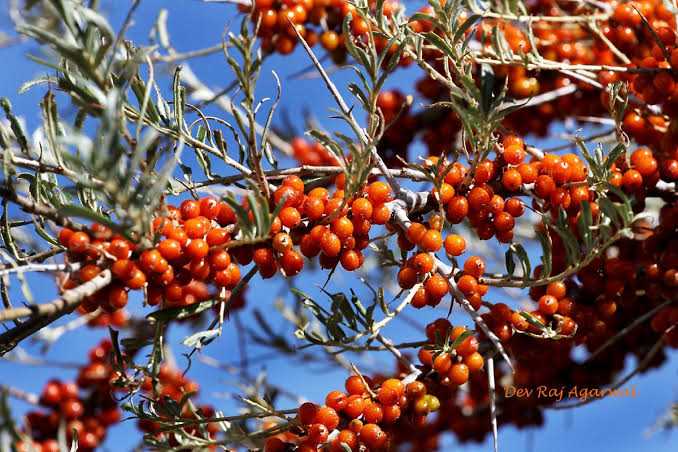
What makes Sea Buckthorn particularly remarkable is the environment in which it grows. The plant has adapted to Ladakh’s harsh climate and fragile terrain
From the cold desert to global markets, Sea Buckthorn is emerging as a symbol of Ladakh’s natural wealth, resilience and entrepreneurial potential.
In the stark landscape of Ladakh, where agriculture is constrained by altitude, water scarcity and extreme temperatures, a small orange berry has quietly flourished for centuries. Growing along riverbanks and across the cold desert, Sea Buckthorn—popularly known as “Leh Berry”—is now attracting attention far beyond its traditional habitat. Once regarded primarily as a wild Himalayan fruit, it is increasingly being recognized as a high-value resource with applications across food, wellness, nutraceuticals, cosmetics and sustainable livelihoods.
That opportunity will take centre stage at the Sea Buckthorn Conclave-cum-Reverse Buyer-Seller Meet in Leh on 18–19 September 2026. The proposed event will bring together around 50 verified domestic and international buyers and more than 150 Ladakhi enterprises, FPOs, SHGs, cooperatives and other value-chain stakeholders, with the objective of connecting local producers with larger markets. The ambition is straightforward: to take Leh Berry beyond raw produce and build it into a recognised Himalayan brand.
What makes Sea Buckthorn particularly remarkable is the environment in which it grows. The plant has adapted to Ladakh’s harsh climate and fragile terrain, while its roots help stabilise soil and its nitrogen-fixing characteristics add to its ecological value. In a region increasingly focused on climate-resilient livelihoods, few natural resources combine ecological and economic potential so closely. In many ways, Leh Berry reflects the character of Ladakh itself—resilient, adaptable and capable of creating opportunity from adversity.
Its appeal, however, extends beyond its ability to survive. Sea Buckthorn berries contain vitamins, carotenoids, flavonoids, polyphenols, minerals and essential fatty acids, while its oil is particularly noted for its fatty-acid composition, including Omega-3, Omega-6, Omega-9 and Omega-7. These properties have generated growing interest in functional foods, wellness products, nutraceuticals and cosmetics. The berry can be transformed into juices, jams, teas, oils and a wide range of value-added products. Yet the real opportunity lies not simply in harvesting more berries, but in retaining more of their value within Ladakh. Processing, packaging, branding and product development can create opportunities for farmers, cooperatives, women entrepreneurs, youth and MSMEs while generating employment closer to rural communities.
Sea Buckthorn is, of course, not a new discovery for the Himalayas. Government sources have noted references to its medicinal properties in eighth-century Tibetan literature, while Himalayan communities have traditionally used the plant in various ways. Modern science is now examining its nutritional and bioactive compounds, creating an important meeting point between traditional knowledge and contemporary research. This heritage, however, needs to be presented responsibly. Scientific interest in Sea Buckthorn should not be confused with claims that it can cure diseases. Its strongest proposition lies in its nutritional richness, functional potential and distinctive Himalayan origin.
The bigger challenge today is therefore not discovering the berry, but building the ecosystem around it. Scientific cultivation, organised collection, modern processing, quality standards, certification, attractive packaging, strong branding and reliable market access will be essential if Leh Berry is to compete beyond its traditional markets. The Reverse Buyer-Seller Meet is particularly important in this context because it shifts the focus from simply displaying products to creating commercial connections. By bringing buyers directly into interaction with Ladakhi enterprises through structured B2B meetings, the initiative can help translate local production into actual business opportunities.
The proposed farm-to-market activities add another dimension to this effort. Buyers and visitors will have the opportunity to see where Leh Berry begins, experience its harvesting and understand how the fruit is transformed into finished products. That origin itself is an asset. A bottle of Sea Buckthorn juice sold in a distant market may be a processed product, but its story begins beside a Himalayan river in Ladakh. This gives Leh Berry something that modern brands spend heavily to create—a compelling story of place, authenticity and origin.
Ladakh already has products with strong identities. Pashmina represents the pastoral and artisanal heritage of Changthang, apricot reflects the agricultural traditions of the region, while handlooms and handicrafts embody generations of local craftsmanship. Leh Berry can add another dimension to this portfolio—the natural and ecological wealth of the cold desert. The proposed 65-stall exhibition at Leh Main Market will place Sea Buckthorn within this larger ecosystem of Ladakhi products, creating an opportunity to strengthen the broader idea of Brand Ladakh, where origin, authenticity, sustainability and quality become defining attributes.
Institutional support will be crucial to this journey. The Centre of Excellence for Sea Buckthorn can provide an important platform for research, training, scientific cultivation and value addition. The Union Agriculture Ministry’s constitution of a high-level committee in August 2026 to examine a proposal for a dedicated national Sea Buckthorn research centre in Nubra Valley further reflects the growing national interest in the crop and Ladakh’s potential role in its research and commercial development.
Ladakh’s Pashmina story offers an instructive example of how a local resource can evolve into a globally recognised product through quality, value addition, craftsmanship and a strong identity. Leh Berry has the potential to follow a different but equally compelling path. Its strength lies in the combination of Himalayan origin, traditional knowledge, nutritional potential, ecological resilience and modern entrepreneurship. The challenge is to ensure that the value generated by this resource does not remain confined to the raw berry, but reaches the communities and enterprises that cultivate, collect, process and promote it.
The orange berry has already demonstrated that it can survive some of the harshest conditions on earth. The next challenge is to build the science, enterprise and markets that will allow it to thrive beyond Ladakh. From a wild Himalayan berry to a globally recognised product, the journey of Leh Berry could become one of the most compelling new chapters in the story of Brand Ladakh.
Email:---------------------balisachin775@gmail.com
What makes Sea Buckthorn particularly remarkable is the environment in which it grows. The plant has adapted to Ladakh’s harsh climate and fragile terrain
From the cold desert to global markets, Sea Buckthorn is emerging as a symbol of Ladakh’s natural wealth, resilience and entrepreneurial potential.
In the stark landscape of Ladakh, where agriculture is constrained by altitude, water scarcity and extreme temperatures, a small orange berry has quietly flourished for centuries. Growing along riverbanks and across the cold desert, Sea Buckthorn—popularly known as “Leh Berry”—is now attracting attention far beyond its traditional habitat. Once regarded primarily as a wild Himalayan fruit, it is increasingly being recognized as a high-value resource with applications across food, wellness, nutraceuticals, cosmetics and sustainable livelihoods.
That opportunity will take centre stage at the Sea Buckthorn Conclave-cum-Reverse Buyer-Seller Meet in Leh on 18–19 September 2026. The proposed event will bring together around 50 verified domestic and international buyers and more than 150 Ladakhi enterprises, FPOs, SHGs, cooperatives and other value-chain stakeholders, with the objective of connecting local producers with larger markets. The ambition is straightforward: to take Leh Berry beyond raw produce and build it into a recognised Himalayan brand.
What makes Sea Buckthorn particularly remarkable is the environment in which it grows. The plant has adapted to Ladakh’s harsh climate and fragile terrain, while its roots help stabilise soil and its nitrogen-fixing characteristics add to its ecological value. In a region increasingly focused on climate-resilient livelihoods, few natural resources combine ecological and economic potential so closely. In many ways, Leh Berry reflects the character of Ladakh itself—resilient, adaptable and capable of creating opportunity from adversity.
Its appeal, however, extends beyond its ability to survive. Sea Buckthorn berries contain vitamins, carotenoids, flavonoids, polyphenols, minerals and essential fatty acids, while its oil is particularly noted for its fatty-acid composition, including Omega-3, Omega-6, Omega-9 and Omega-7. These properties have generated growing interest in functional foods, wellness products, nutraceuticals and cosmetics. The berry can be transformed into juices, jams, teas, oils and a wide range of value-added products. Yet the real opportunity lies not simply in harvesting more berries, but in retaining more of their value within Ladakh. Processing, packaging, branding and product development can create opportunities for farmers, cooperatives, women entrepreneurs, youth and MSMEs while generating employment closer to rural communities.
Sea Buckthorn is, of course, not a new discovery for the Himalayas. Government sources have noted references to its medicinal properties in eighth-century Tibetan literature, while Himalayan communities have traditionally used the plant in various ways. Modern science is now examining its nutritional and bioactive compounds, creating an important meeting point between traditional knowledge and contemporary research. This heritage, however, needs to be presented responsibly. Scientific interest in Sea Buckthorn should not be confused with claims that it can cure diseases. Its strongest proposition lies in its nutritional richness, functional potential and distinctive Himalayan origin.
The bigger challenge today is therefore not discovering the berry, but building the ecosystem around it. Scientific cultivation, organised collection, modern processing, quality standards, certification, attractive packaging, strong branding and reliable market access will be essential if Leh Berry is to compete beyond its traditional markets. The Reverse Buyer-Seller Meet is particularly important in this context because it shifts the focus from simply displaying products to creating commercial connections. By bringing buyers directly into interaction with Ladakhi enterprises through structured B2B meetings, the initiative can help translate local production into actual business opportunities.
The proposed farm-to-market activities add another dimension to this effort. Buyers and visitors will have the opportunity to see where Leh Berry begins, experience its harvesting and understand how the fruit is transformed into finished products. That origin itself is an asset. A bottle of Sea Buckthorn juice sold in a distant market may be a processed product, but its story begins beside a Himalayan river in Ladakh. This gives Leh Berry something that modern brands spend heavily to create—a compelling story of place, authenticity and origin.
Ladakh already has products with strong identities. Pashmina represents the pastoral and artisanal heritage of Changthang, apricot reflects the agricultural traditions of the region, while handlooms and handicrafts embody generations of local craftsmanship. Leh Berry can add another dimension to this portfolio—the natural and ecological wealth of the cold desert. The proposed 65-stall exhibition at Leh Main Market will place Sea Buckthorn within this larger ecosystem of Ladakhi products, creating an opportunity to strengthen the broader idea of Brand Ladakh, where origin, authenticity, sustainability and quality become defining attributes.
Institutional support will be crucial to this journey. The Centre of Excellence for Sea Buckthorn can provide an important platform for research, training, scientific cultivation and value addition. The Union Agriculture Ministry’s constitution of a high-level committee in August 2026 to examine a proposal for a dedicated national Sea Buckthorn research centre in Nubra Valley further reflects the growing national interest in the crop and Ladakh’s potential role in its research and commercial development.
Ladakh’s Pashmina story offers an instructive example of how a local resource can evolve into a globally recognised product through quality, value addition, craftsmanship and a strong identity. Leh Berry has the potential to follow a different but equally compelling path. Its strength lies in the combination of Himalayan origin, traditional knowledge, nutritional potential, ecological resilience and modern entrepreneurship. The challenge is to ensure that the value generated by this resource does not remain confined to the raw berry, but reaches the communities and enterprises that cultivate, collect, process and promote it.
The orange berry has already demonstrated that it can survive some of the harshest conditions on earth. The next challenge is to build the science, enterprise and markets that will allow it to thrive beyond Ladakh. From a wild Himalayan berry to a globally recognised product, the journey of Leh Berry could become one of the most compelling new chapters in the story of Brand Ladakh.
Email:---------------------balisachin775@gmail.com

© Copyright 2023 brighterkashmir.com All Rights Reserved. Quantum Technologies