
BREAKING NEWS
The goal of achieving literacy has still not been fully accomplished despite six decades of global efforts. According to UNESCO, in 2024, at least 739 million young people and adults worldwide were deprived of basic literacy skills
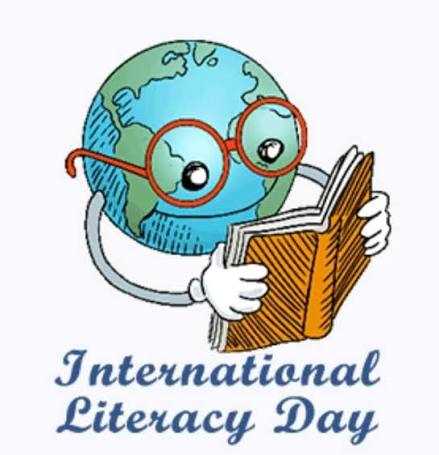
Literacy is far more than knowing letters and words; it awakens the courage to question, the wisdom to decide, the awareness to claim one’s rights and the confidence to shape one’s own destiny. Literacy is the first gateway to this ability. Therefore, limiting literacy merely to the ability to recognize letters and write words would be to narrow its broader meaning. In today’s changing times, a literate person is one who can understand information, distinguish between right and wrong, use technology wisely, and make responsible decisions towards his or her family, society and nature. Keeping this broader perspective in mind, ‘International Literacy Day’ is observed across the world on 8 September. The year 2026 is particularly historic because it marks 60 years since the declaration establishing International Literacy Day. UNESCO declared 8 September as this day in 1966, and its global observance began in 1967. This year’s theme is ‘Literacy for People, the Planet and Prosperity’. The theme makes it clear that literacy is connected not only with education but also deeply with human dignity, environmental sustainability and economic opportunities.
The goal of achieving literacy has still not been fully accomplished despite six decades of global efforts. According to UNESCO, in 2024, at least 739 million young people and adults worldwide were deprived of basic literacy skills. The situation of children is also a matter of concern. Not nearly one in four, but approximately four out of ten children worldwide are unable to reach the minimum level of proficiency in reading, while in 2023 around 272 million children and adolescents were out of school. These figures show that merely increasing the number of schools is not enough; ensuring the quality of education, continuity of learning and access for every individual is equally essential. The first and foremost benefit of literacy goes to the individual. A person who can read and write can understand information about government schemes, use banking and digital services, read health-related instructions, search for employment opportunities and raise his or her voice for rights. A mother becoming literate is not merely one individual becoming educated; its impact extends to the entire next generation. A literate family is better equipped to make informed decisions regarding children’s education, health, nutrition and future. Therefore, literacy should be regarded as a fundamental force of social transformation.
In the present era, the definition of literacy has become even broader. The digital age has made access to information easier, but at the same time it has created new threats in the form of misinformation, fake news, online fraud and misleading propaganda. Now merely reading a book is not enough; it is also necessary to understand whether the information available on the internet is reliable or not. The rapid expansion of artificial intelligence has made this challenge even more serious. The literacy of the future will also have to include digital literacy, media literacy, financial literacy, health literacy and AI literacy. Only then can knowledge become a light that shows the right direction amid the noise of information. This year’s theme gives equal importance to the ‘planet’ along with ‘people’. To confront environmental crises, society must also be aware, and knowledge is the foundation of awareness. Information related to climate change, water conservation, biodiversity, energy saving, waste management and the judicious use of natural resources will translate into behaviour only when people are capable of understanding it and making decisions based on it. Literacy gives individuals the power to understand that protecting the environment is not merely the responsibility of governments but an issue connected with the everyday behaviour of every citizen. UNESCO also links the 2026 theme with inclusion, a sustainable future, livelihoods and opportunities for economic development.
The third important word in the theme is ‘prosperity’. Without education and literacy, it is difficult to ensure that the benefits of economic development reach every section of society. A literate person is better equipped to learn new skills, seek employment, start an enterprise and adapt to a changing economy. Today, when the nature of employment is changing rapidly and the importance of technological competence is increasing, the ability to continue learning throughout life is becoming the real capital. Literacy is the first step towards this lifelong learning.
For India too, this day is an occasion for introspection. The country has made remarkable progress in the field of literacy. According to the Ministry of Education, the literacy rate among the population aged seven years and above was recorded at 80.9 percent in PLFS 2023-24, significantly higher than the 74.04 percent recorded in 2011. Female literacy also increased from 57.93 percent in 2011 to 74.6 percent in 2023-24. However, the inequalities hidden behind the national average cannot be ignored. Differences still exist between rural and urban areas, between men and women, and among different states. Therefore, the next challenge before India is not merely the question of ‘how many people are literate’, but the question of ‘how many people are able to learn and understand effectively’. The literacy campaign will succeed only when it moves beyond documents and government programmes and becomes a shared responsibility of society. A culture of reading must be developed in schools, libraries must be made vibrant, quality content must be made available in local languages, and digital resources must reach villages and disadvantaged communities. Flexible learning arrangements tailored to the needs of women, migrant workers, persons with disabilities, the elderly and socially disadvantaged groups are essential. Technology should be used to expand access, not to deepen digital inequality.
The most important thing is that literacy should not be regarded as a means of passing examinations, but as the power to understand life better and make it better. When a person reads and understands his or her rights, when a farmer uses weather and market information, when a woman becomes more financially independent through digital banking, when a young person learns a new skill through knowledge available online, or when a citizen changes his or her behaviour on the basis of environmental information, literacy is transformed into real change. A society in which the opportunity to read, understand and learn reaches the last person can become more just, more sensitive and more sustainable. This year’s call on Literacy Day is, in fact, an appeal for a future world where knowledge empowers individuals, education connects society, understanding protects nature, and skills open new doors to prosperity. The need is simply to ensure that this light of knowledge does not remain confined to a few hands, but reaches every home, every village, every settlement and every individual. Only then can literacy truly become the light of human development.
Email:-------------------------- atul250603@gmail.com
The goal of achieving literacy has still not been fully accomplished despite six decades of global efforts. According to UNESCO, in 2024, at least 739 million young people and adults worldwide were deprived of basic literacy skills
Literacy is far more than knowing letters and words; it awakens the courage to question, the wisdom to decide, the awareness to claim one’s rights and the confidence to shape one’s own destiny. Literacy is the first gateway to this ability. Therefore, limiting literacy merely to the ability to recognize letters and write words would be to narrow its broader meaning. In today’s changing times, a literate person is one who can understand information, distinguish between right and wrong, use technology wisely, and make responsible decisions towards his or her family, society and nature. Keeping this broader perspective in mind, ‘International Literacy Day’ is observed across the world on 8 September. The year 2026 is particularly historic because it marks 60 years since the declaration establishing International Literacy Day. UNESCO declared 8 September as this day in 1966, and its global observance began in 1967. This year’s theme is ‘Literacy for People, the Planet and Prosperity’. The theme makes it clear that literacy is connected not only with education but also deeply with human dignity, environmental sustainability and economic opportunities.
The goal of achieving literacy has still not been fully accomplished despite six decades of global efforts. According to UNESCO, in 2024, at least 739 million young people and adults worldwide were deprived of basic literacy skills. The situation of children is also a matter of concern. Not nearly one in four, but approximately four out of ten children worldwide are unable to reach the minimum level of proficiency in reading, while in 2023 around 272 million children and adolescents were out of school. These figures show that merely increasing the number of schools is not enough; ensuring the quality of education, continuity of learning and access for every individual is equally essential. The first and foremost benefit of literacy goes to the individual. A person who can read and write can understand information about government schemes, use banking and digital services, read health-related instructions, search for employment opportunities and raise his or her voice for rights. A mother becoming literate is not merely one individual becoming educated; its impact extends to the entire next generation. A literate family is better equipped to make informed decisions regarding children’s education, health, nutrition and future. Therefore, literacy should be regarded as a fundamental force of social transformation.
In the present era, the definition of literacy has become even broader. The digital age has made access to information easier, but at the same time it has created new threats in the form of misinformation, fake news, online fraud and misleading propaganda. Now merely reading a book is not enough; it is also necessary to understand whether the information available on the internet is reliable or not. The rapid expansion of artificial intelligence has made this challenge even more serious. The literacy of the future will also have to include digital literacy, media literacy, financial literacy, health literacy and AI literacy. Only then can knowledge become a light that shows the right direction amid the noise of information. This year’s theme gives equal importance to the ‘planet’ along with ‘people’. To confront environmental crises, society must also be aware, and knowledge is the foundation of awareness. Information related to climate change, water conservation, biodiversity, energy saving, waste management and the judicious use of natural resources will translate into behaviour only when people are capable of understanding it and making decisions based on it. Literacy gives individuals the power to understand that protecting the environment is not merely the responsibility of governments but an issue connected with the everyday behaviour of every citizen. UNESCO also links the 2026 theme with inclusion, a sustainable future, livelihoods and opportunities for economic development.
The third important word in the theme is ‘prosperity’. Without education and literacy, it is difficult to ensure that the benefits of economic development reach every section of society. A literate person is better equipped to learn new skills, seek employment, start an enterprise and adapt to a changing economy. Today, when the nature of employment is changing rapidly and the importance of technological competence is increasing, the ability to continue learning throughout life is becoming the real capital. Literacy is the first step towards this lifelong learning.
For India too, this day is an occasion for introspection. The country has made remarkable progress in the field of literacy. According to the Ministry of Education, the literacy rate among the population aged seven years and above was recorded at 80.9 percent in PLFS 2023-24, significantly higher than the 74.04 percent recorded in 2011. Female literacy also increased from 57.93 percent in 2011 to 74.6 percent in 2023-24. However, the inequalities hidden behind the national average cannot be ignored. Differences still exist between rural and urban areas, between men and women, and among different states. Therefore, the next challenge before India is not merely the question of ‘how many people are literate’, but the question of ‘how many people are able to learn and understand effectively’. The literacy campaign will succeed only when it moves beyond documents and government programmes and becomes a shared responsibility of society. A culture of reading must be developed in schools, libraries must be made vibrant, quality content must be made available in local languages, and digital resources must reach villages and disadvantaged communities. Flexible learning arrangements tailored to the needs of women, migrant workers, persons with disabilities, the elderly and socially disadvantaged groups are essential. Technology should be used to expand access, not to deepen digital inequality.
The most important thing is that literacy should not be regarded as a means of passing examinations, but as the power to understand life better and make it better. When a person reads and understands his or her rights, when a farmer uses weather and market information, when a woman becomes more financially independent through digital banking, when a young person learns a new skill through knowledge available online, or when a citizen changes his or her behaviour on the basis of environmental information, literacy is transformed into real change. A society in which the opportunity to read, understand and learn reaches the last person can become more just, more sensitive and more sustainable. This year’s call on Literacy Day is, in fact, an appeal for a future world where knowledge empowers individuals, education connects society, understanding protects nature, and skills open new doors to prosperity. The need is simply to ensure that this light of knowledge does not remain confined to a few hands, but reaches every home, every village, every settlement and every individual. Only then can literacy truly become the light of human development.
Email:-------------------------- atul250603@gmail.com

© Copyright 2023 brighterkashmir.com All Rights Reserved. Quantum Technologies