
BREAKING NEWS
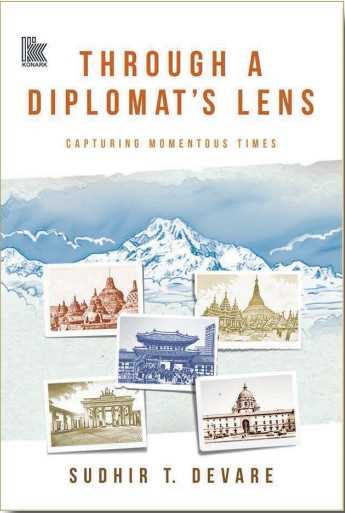
In a crowded bookshelf of memoirs by retired officers of the Indian Foreign Service, a notable addition is Sudhir T. Devare’s “Through a Diplomat’s Lens: Capturing Momentous Times,” published by Konark Publishers.
Spanning a large part of four decades, from 1964 to 2001, the memories shared with readers are not confined to the author’s experiences but offer a panoramic sweep of India’s foreign policy interactions across various continents during some of the most troubled phases of the Cold War era.
The background of Devare’s work is the meager tradition of IFS biographies. The fact that even such men as K.P.S. Menon (Sr), Y.D. Gundevia and R.K. Dayal, who headed the ICS in its early phases, wrote voluminously, but that most of those who followed in the IFS were "too engrossed in the art of diplomacy to take on the art of writing" is no longer true, with a spate of biographies that have broken this tradition, according to Devare.
The contemporaneous opinion that "for decades, it was a common assessment that every retired diplomat had a book in him, and that is where it should be" is now a thing of the past, thanks to this spate of biographies, which is a heartening phenomenon, according to Devare.
The postings that came with a young Devare were pivotal in terms of historical transformations. The earliest assignment that mattered most from the perspective of India’s national interests was, perhaps, in Sikkim.
Together with Political Officer Shankar Bajpai, he handled a situation that arose from the Sikkimese people’s opposition to the ruler, the Chogyal. The result of his handling of the situation brought Sikkim into India’s fold in 1975.
Devare writes extensively on the posting, noting the strategic relevance of India’s interests in the Himalayan range.
Later, as the Ambassador of India to Ukraine, a newly created posting following the dissolution of the Soviet Union, he saw the emergence of a newborn state.
The insights he offers on identity, the fate of Indian nationals, and the vulnerability of institutions are disturbingly relevant to the conflict that has erupted between Ukraine and Russia.
The final posting to Indonesia had equal significance. Moving to Indonesia when India’s “Look East Policy” was taking shape, he actively worked on developing a strong sense of mutual security and economic cooperation with the people of the Southeast Asian nations.
It is no surprise that he, with his wife Hema, accepted the Indonesian way of life with utmost sincerity when his presence in Indonesia saw a shift from an authoritarian regime to a democratic setup in 1998.
This is not a memoir from a private life but a professional odyssey. The author, himself a believer in Gandhian ideals of peace and satyagraha, explains how these ideals appealed to the leadership in Korea and Indonesia.
The candor and depth of his intellect are evident, as Ambassador Chinmay R. Gharekhan explains in the Foreword. Gharekhan, who has been India’s Permanent Representative to the UN in Geneva and New York, and consultant to Prime Ministers Indira Gandhi and Rajiv Gandhi, commends the author’s lucid mind and his empathy with people’s hopes.
The urge to write has been expressed by his friends, including Ambassador Satish Chandra, S. Narendra (former Information Advisor to the Prime Minister), and journalist Vijay Naik, who encouraged him to write.
Academics such as Vinay Hardikar, apart from editors such as H.K. Dua and A.S. Bhasin, have also urged him to commit his experiences to paper. The author thanks persons such as Gharekhan, Dr. Vijay Kelkar, Ambassador Shyam Saran, Dr. C. Raja Mohan, Tommy Koh of Singapore, Ong Keng Yong, and Indonesia’s Dr. Dewi Fortuna Anwar, who read his manuscript and said things that encouraged him.
"Through a Diplomat's Lens" is more of a historical narrative of the phases that the author has lived through, rather than his own life’s milestones.
The book reflects the interest of India’s foreign policy in areas that saw dramatic changes, from the merging of Sikkim into India in 1975 to the dissolution of the Soviet Union, with the emergence of Ukraine, Armenia, and Georgia. The author mentions how the ideals of Gandhian philosophy attracted leaders in Korea and Indonesia, and India's "Look East Policy" evolved with the democratic changes that occurred in Southeast Asia.
The book also explores the development of diplomacy itself, from the dispatches and telegrams of the pre-Internet age to the modern age of tweets, WhatsApp messages, and television broadcasts.
In his exploration of the development of diplomacy, Devare draws a comparison between the traditional style of diplomacy that relies on interactions and parliamentary discussions, with the more rapid, image-conscious environment of contemporary foreign policy.
The author’s discussion on South Korea’s martial law decree in December 2024, Germany’s unity in 1990, Indonesia’s transition to a democratic government in 1998, and Ukraine’s resistance against Russian rule, which has been ongoing since 2022, are case studies on how countries cope with change.
Instead of a personal document, this memoir is a signpost to the way India has situated itself within a changing international environment, that is, a commitment to democratic ideals, nonalignment, and diversified international engagement, but in a way that takes cognizance of the hopes and dreams of common people in the continents of Asia and Europe.
The epilogue in this biography is most thought-provoking. The author, Devare, pauses to consider how the art of diplomacy has changed. In his generation, he says that foreign affairs developed because of ‘personal interactions, dispatches, telegrams, and thoughtful reports in newspapers by discerning journalists’. In his opinion, today, because of technology, ‘diplomatic interactions are now carried out via Twitter, WhatsApp, and YouTube’.
The role he gives to the diplomat is that of securing an enabling environment for security, economic, and socio-cultural development. National interest, professionalism, and patriotism formed the currency of diplomas, but he also cites human ideals of freedom, openness, and democracy.
Email:daanishinterview@gmail.com
In a crowded bookshelf of memoirs by retired officers of the Indian Foreign Service, a notable addition is Sudhir T. Devare’s “Through a Diplomat’s Lens: Capturing Momentous Times,” published by Konark Publishers.
Spanning a large part of four decades, from 1964 to 2001, the memories shared with readers are not confined to the author’s experiences but offer a panoramic sweep of India’s foreign policy interactions across various continents during some of the most troubled phases of the Cold War era.
The background of Devare’s work is the meager tradition of IFS biographies. The fact that even such men as K.P.S. Menon (Sr), Y.D. Gundevia and R.K. Dayal, who headed the ICS in its early phases, wrote voluminously, but that most of those who followed in the IFS were "too engrossed in the art of diplomacy to take on the art of writing" is no longer true, with a spate of biographies that have broken this tradition, according to Devare.
The contemporaneous opinion that "for decades, it was a common assessment that every retired diplomat had a book in him, and that is where it should be" is now a thing of the past, thanks to this spate of biographies, which is a heartening phenomenon, according to Devare.
The postings that came with a young Devare were pivotal in terms of historical transformations. The earliest assignment that mattered most from the perspective of India’s national interests was, perhaps, in Sikkim.
Together with Political Officer Shankar Bajpai, he handled a situation that arose from the Sikkimese people’s opposition to the ruler, the Chogyal. The result of his handling of the situation brought Sikkim into India’s fold in 1975.
Devare writes extensively on the posting, noting the strategic relevance of India’s interests in the Himalayan range.
Later, as the Ambassador of India to Ukraine, a newly created posting following the dissolution of the Soviet Union, he saw the emergence of a newborn state.
The insights he offers on identity, the fate of Indian nationals, and the vulnerability of institutions are disturbingly relevant to the conflict that has erupted between Ukraine and Russia.
The final posting to Indonesia had equal significance. Moving to Indonesia when India’s “Look East Policy” was taking shape, he actively worked on developing a strong sense of mutual security and economic cooperation with the people of the Southeast Asian nations.
It is no surprise that he, with his wife Hema, accepted the Indonesian way of life with utmost sincerity when his presence in Indonesia saw a shift from an authoritarian regime to a democratic setup in 1998.
This is not a memoir from a private life but a professional odyssey. The author, himself a believer in Gandhian ideals of peace and satyagraha, explains how these ideals appealed to the leadership in Korea and Indonesia.
The candor and depth of his intellect are evident, as Ambassador Chinmay R. Gharekhan explains in the Foreword. Gharekhan, who has been India’s Permanent Representative to the UN in Geneva and New York, and consultant to Prime Ministers Indira Gandhi and Rajiv Gandhi, commends the author’s lucid mind and his empathy with people’s hopes.
The urge to write has been expressed by his friends, including Ambassador Satish Chandra, S. Narendra (former Information Advisor to the Prime Minister), and journalist Vijay Naik, who encouraged him to write.
Academics such as Vinay Hardikar, apart from editors such as H.K. Dua and A.S. Bhasin, have also urged him to commit his experiences to paper. The author thanks persons such as Gharekhan, Dr. Vijay Kelkar, Ambassador Shyam Saran, Dr. C. Raja Mohan, Tommy Koh of Singapore, Ong Keng Yong, and Indonesia’s Dr. Dewi Fortuna Anwar, who read his manuscript and said things that encouraged him.
"Through a Diplomat's Lens" is more of a historical narrative of the phases that the author has lived through, rather than his own life’s milestones.
The book reflects the interest of India’s foreign policy in areas that saw dramatic changes, from the merging of Sikkim into India in 1975 to the dissolution of the Soviet Union, with the emergence of Ukraine, Armenia, and Georgia. The author mentions how the ideals of Gandhian philosophy attracted leaders in Korea and Indonesia, and India's "Look East Policy" evolved with the democratic changes that occurred in Southeast Asia.
The book also explores the development of diplomacy itself, from the dispatches and telegrams of the pre-Internet age to the modern age of tweets, WhatsApp messages, and television broadcasts.
In his exploration of the development of diplomacy, Devare draws a comparison between the traditional style of diplomacy that relies on interactions and parliamentary discussions, with the more rapid, image-conscious environment of contemporary foreign policy.
The author’s discussion on South Korea’s martial law decree in December 2024, Germany’s unity in 1990, Indonesia’s transition to a democratic government in 1998, and Ukraine’s resistance against Russian rule, which has been ongoing since 2022, are case studies on how countries cope with change.
Instead of a personal document, this memoir is a signpost to the way India has situated itself within a changing international environment, that is, a commitment to democratic ideals, nonalignment, and diversified international engagement, but in a way that takes cognizance of the hopes and dreams of common people in the continents of Asia and Europe.
The epilogue in this biography is most thought-provoking. The author, Devare, pauses to consider how the art of diplomacy has changed. In his generation, he says that foreign affairs developed because of ‘personal interactions, dispatches, telegrams, and thoughtful reports in newspapers by discerning journalists’. In his opinion, today, because of technology, ‘diplomatic interactions are now carried out via Twitter, WhatsApp, and YouTube’.
The role he gives to the diplomat is that of securing an enabling environment for security, economic, and socio-cultural development. National interest, professionalism, and patriotism formed the currency of diplomas, but he also cites human ideals of freedom, openness, and democracy.
Email:daanishinterview@gmail.com

© Copyright 2023 brighterkashmir.com All Rights Reserved. Quantum Technologies