
BREAKING NEWS
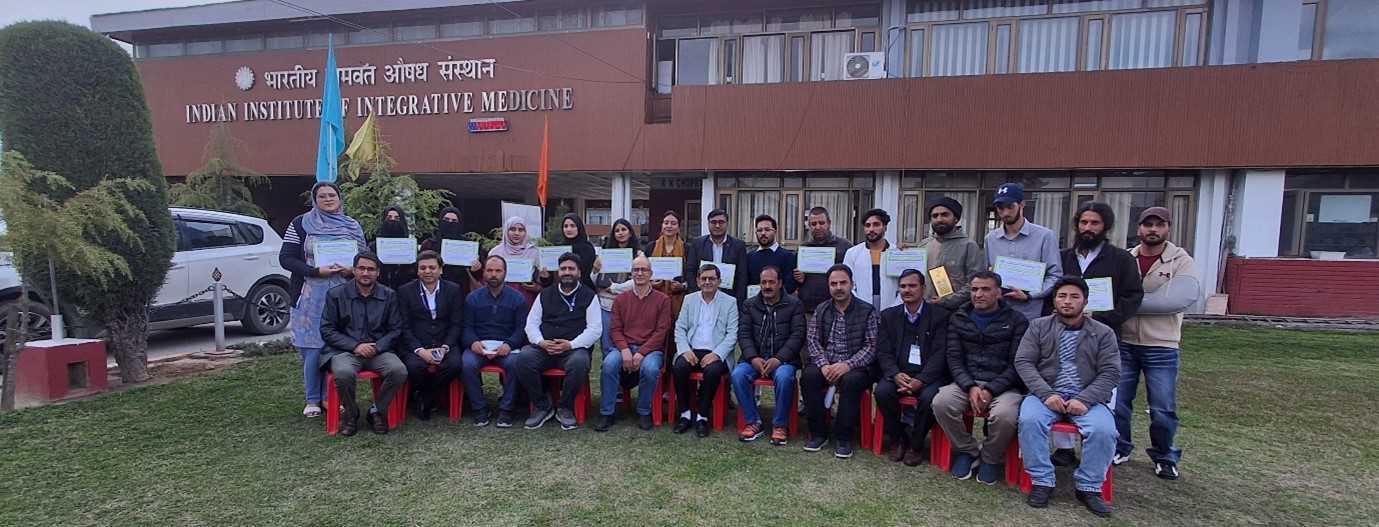
Srinagar, Mar 28: The CSIR–Indian Institute of Integrative Medicine (CSIR IIIM), Srinagar Branch, concluded a three day hands on training programme on Downstream Processing of Medicinal & Aromatic Plants (MAPs), with intensive modules on extraction technologies, Gas Chromatography (GC) and High Performance Liquid Chromatography (HPLC). The programme was conducted under the CSIR Integrated Skill Initiatives and brought together 20 participants from across India, reflecting the growing national demand for practical, industry oriented training in natural product processing and quality analytics.
Presiding over the valedictory function as Chief Guest, Dr. Zabeer Ahmed, Director, CSIR IIIM, distributed certificates to the participants and underscored the strategic importance of downstream processing in converting biodiversity into validated, market ready products. In his presidential address, Dr. Ahmed highlighted that extraction science and chromatographic analytics form the backbone of quality assurance, safety, and efficacy for herbal and aroma based value chains. He emphasized that India’s leadership in the Medicinal & Aromatic Plants sector must be strengthened through standardization, traceability, and robust analytical characterization, enabling products that can meet both domestic and global regulatory expectations.
Dr. Ahmed further stated that such hands on programmes are critical to building a skilled workforce that can translate scientific knowledge into scalable solutions for farmers, entrepreneurs and industry. Linking the programme to the national vision of “Viksit Bharat”, he noted that science enabled value addition in MAPs can accelerate rural livelihoods, strengthen agri based enterprises and support innovation driven growth. He also emphasized that AYUSH systems can be synergized with modern allopathy through rigorous evidence generation, process optimization and advanced analytical platforms—thereby improving confidence, safety and acceptance of plant based interventions across healthcare ecosystems.
The three day programme was designed to provide an end to end understanding of downstream processing workflows, from raw material overview to extraction, separation and analytical profiling. On Day 1, the programme commenced with an overview of the scope and significance of MAPs by Dr. Phalisteen Sultan, followed by a technical session on the role of chromatography in phytochemical separation, identification and quality control by Dr. Syed Khalid. The afternoon session included hands on training on oil extraction techniques conducted by Dr. Qazi Parvaiz, focusing on practical aspects of process parameters and best practices.
On Day 2, the Participants received hands on demonstrations on different chromatographic techniques, with emphasis on method principles, sample preparation, and interpretation of chromatograms for ensuring product consistency and quality. On day 3, Dr. Younis Rather, Scientist, GMC Srinagar, conducted an intensive hands on module on HPLC techniques, covering analytical workflows relevant to natural products and herbal matrices. Participants also visited the Gene Bank facility at CSIR IIIM Srinagar, gaining exposure to institutional resources supporting conservation, characterization, and research on valuable biological germplasm.
Earlier, Dr. Nasir Ul Rasheed, Nodal Skill Development, briefed the participants on the CSIR Integrated Skill Initiatives and its role in systematic capacity building through hands on, application driven training. He also informed that CSIR IIIM has recently launched job oriented and job role skill development programmes approved by NCVET and LSSDC, aligned with NEP 2020 guidelines, aimed at enhancing employability and workforce readiness.
At the valedictory session, Dr. Qazi Parvaiz delivered the welcome address, while Dr. Phalisteen Sultan presented an overview of the programme outcomes and learning highlights. The proceedings were conducted by Dr. Khalid Yousaf, and Dr. Fayaz Malik proposed the vote of thanks.
Srinagar, Mar 28: The CSIR–Indian Institute of Integrative Medicine (CSIR IIIM), Srinagar Branch, concluded a three day hands on training programme on Downstream Processing of Medicinal & Aromatic Plants (MAPs), with intensive modules on extraction technologies, Gas Chromatography (GC) and High Performance Liquid Chromatography (HPLC). The programme was conducted under the CSIR Integrated Skill Initiatives and brought together 20 participants from across India, reflecting the growing national demand for practical, industry oriented training in natural product processing and quality analytics.
Presiding over the valedictory function as Chief Guest, Dr. Zabeer Ahmed, Director, CSIR IIIM, distributed certificates to the participants and underscored the strategic importance of downstream processing in converting biodiversity into validated, market ready products. In his presidential address, Dr. Ahmed highlighted that extraction science and chromatographic analytics form the backbone of quality assurance, safety, and efficacy for herbal and aroma based value chains. He emphasized that India’s leadership in the Medicinal & Aromatic Plants sector must be strengthened through standardization, traceability, and robust analytical characterization, enabling products that can meet both domestic and global regulatory expectations.
Dr. Ahmed further stated that such hands on programmes are critical to building a skilled workforce that can translate scientific knowledge into scalable solutions for farmers, entrepreneurs and industry. Linking the programme to the national vision of “Viksit Bharat”, he noted that science enabled value addition in MAPs can accelerate rural livelihoods, strengthen agri based enterprises and support innovation driven growth. He also emphasized that AYUSH systems can be synergized with modern allopathy through rigorous evidence generation, process optimization and advanced analytical platforms—thereby improving confidence, safety and acceptance of plant based interventions across healthcare ecosystems.
The three day programme was designed to provide an end to end understanding of downstream processing workflows, from raw material overview to extraction, separation and analytical profiling. On Day 1, the programme commenced with an overview of the scope and significance of MAPs by Dr. Phalisteen Sultan, followed by a technical session on the role of chromatography in phytochemical separation, identification and quality control by Dr. Syed Khalid. The afternoon session included hands on training on oil extraction techniques conducted by Dr. Qazi Parvaiz, focusing on practical aspects of process parameters and best practices.
On Day 2, the Participants received hands on demonstrations on different chromatographic techniques, with emphasis on method principles, sample preparation, and interpretation of chromatograms for ensuring product consistency and quality. On day 3, Dr. Younis Rather, Scientist, GMC Srinagar, conducted an intensive hands on module on HPLC techniques, covering analytical workflows relevant to natural products and herbal matrices. Participants also visited the Gene Bank facility at CSIR IIIM Srinagar, gaining exposure to institutional resources supporting conservation, characterization, and research on valuable biological germplasm.
Earlier, Dr. Nasir Ul Rasheed, Nodal Skill Development, briefed the participants on the CSIR Integrated Skill Initiatives and its role in systematic capacity building through hands on, application driven training. He also informed that CSIR IIIM has recently launched job oriented and job role skill development programmes approved by NCVET and LSSDC, aligned with NEP 2020 guidelines, aimed at enhancing employability and workforce readiness.
At the valedictory session, Dr. Qazi Parvaiz delivered the welcome address, while Dr. Phalisteen Sultan presented an overview of the programme outcomes and learning highlights. The proceedings were conducted by Dr. Khalid Yousaf, and Dr. Fayaz Malik proposed the vote of thanks.

© Copyright 2023 brighterkashmir.com All Rights Reserved. Quantum Technologies