
BREAKING NEWS
Prof. Banihali’s academic career spanned several decades and multiple prestigious positions. He began his professional journey as a school teacher and later served as Tehsil Education Officer. His intellectual capabilities soon led him to the University of Kashmir, where he joined the Persian Department as a lecturer.
His academic rise was steady and remarkable. He was promoted to Reader in the Department of Central Asian Studies and, in 1986, appointed as Head of the Kashmiri Department at the University of Kashmir. After retirement, he continued his academic association as a visiting professor at the Iqbal Institute of Philosophy, University of Kashmir.
He holds the distinction of being the first Ph.D. degree holder in Persian from the University of Kashmir, a milestone that reflects his scholarly depth and pioneering academic spirit.
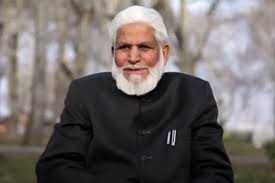
Today, the 26th of April, we pay our respectful homage to one of the most distinguished Kashmiri poets, scholars, and academicians, Prof. Marghoob Banihali. His passing marked the end of an era in Kashmiri literature, leaving behind a profound and irreplaceable void. A visionary poet deeply rooted in humanistic values, intellectual inquiry, and cultural preservation, Prof. Banihali dedicated his entire life to literature, education, and research. Even years after his demise, his poetic voice continues to resonate, inspiring generations with wisdom, sensitivity, and spiritual depth.
Early Life and Formative Struggles
Born as Ghulam Mohammad Giri in 1937 in the Giri family of Bankoot area of Banihal in Ramban district of Jammu and Kashmir, he later became widely known by his pen name Marghoob Banihali. His early life was marked by hardship and loss. He lost his mother at the age of five and his father at fourteen, experiences that deeply shaped his emotional and philosophical outlook on life and found expression in his later literary works.
Despite these personal tragedies, Marghoob Banihali’s academic journey reflected extraordinary resilience and brilliance. He emerged as one of the brightest minds of his generation, consistently excelling in his studies and developing a strong foundation in language, literature, and philosophy from an early age.
Academic Journey and Scholarly Contributions
Prof. Banihali’s academic career spanned several decades and multiple prestigious positions. He began his professional journey as a school teacher and later served as Tehsil Education Officer. His intellectual capabilities soon led him to the University of Kashmir, where he joined the Persian Department as a lecturer.
His academic rise was steady and remarkable. He was promoted to Reader in the Department of Central Asian Studies and, in 1986, appointed as Head of the Kashmiri Department at the University of Kashmir. After retirement, he continued his academic association as a visiting professor at the Iqbal Institute of Philosophy, University of Kashmir.
He holds the distinction of being the first Ph.D. degree holder in Persian from the University of Kashmir, a milestone that reflects his scholarly depth and pioneering academic spirit.
Literary Legacy and Contributions
Dr. Marghoob Banihali authored more than fifty books, covering poetry, prose, translation, and critical studies in Kashmiri, Urdu, and English. His literary output earned him national and international recognition, along with twelve major awards and numerous other honours.
Among his most notable works is “Kasheer Baale Apaer” (Kashmir Across the Mountains), a powerful historical narrative documenting the exile and migration of Kashmiris under earlier regimes. The work also reflects his own ancestral history, as his family was once displaced during the Sikh era and later returned after several generations.
Another landmark contribution was his poetry collection “Partavistan”, for which he received the Sahitya Akademi Award in 1979. The work, inspired by the socio-political turbulence of the 1975 Emergency period, is regarded as one of the finest poetic reflections of its time in Kashmiri literature.
He also contributed significantly to translation and literary criticism, producing monographs and analytical works on figures such as Khwaja Ghulam Rasool Kamgar Kishtwari, Rasa Javidani, Abdul Rahim Aama, and Waliullah Matoo. His translations of works on Sarojini Naidu, Kazi Nazrul Islam, and Ghalib further enriched the literary landscape of the region.
Philosophical Outlook and Intellectual Depth
Marghoob Banihali was deeply influenced by classical Persian and Islamic literary traditions. A follower of Maulana Rumi and Allama Iqbal, he viewed their works alongside those of Hafiz, Ghalib, and Sheikh-ul-Alam as part of what he termed “Quran pasand shayari”—poetry aligned with spiritual and moral values.
His critical works on Allama Iqbal, including “Kalam-e-Iqbal Kay Sarchashmay” and “Adamgari-e-Iqbal”, demonstrate his analytical depth and philosophical understanding. These writings reflect not only literary criticism but also a profound engagement with metaphysical and existential questions.
Contribution to Kashmiri Language and Linguistics
One of Prof. Banihali’s most significant intellectual contributions was his lifelong commitment to the development and preservation of the Kashmiri language. He extensively researched its origin, evolution, and structure, advocating for its enrichment and standardization.
He proposed a distinctive linguistic framework known as the “Marghoob Theory,” which aimed at developing a systematic script and expressive medium for Kashmiri. This theory remains a subject of academic discussion and reflects his visionary approach to language planning and cultural identity.
Themes of Humanism and Social Consciousness
Although much of his work is rooted in classical and philosophical traditions, Marghoob Banihali’s poetry also reflects the lived realities of his time. His verses often subtly address themes of suffering, displacement, injustice, and social imbalance.
His famous Persian couplet:
“Zi Aab Aatash Ast Aabad Kashmir, Wazi haani shawad barbaad Kashmir”
(“Water and fire sustain Kashmir, yet water and fire also destroy Kashmir”)
captures the paradoxical relationship between nature, life, and destruction in the Valley’s history.
Another powerful metaphor appears in his poetry:
“The eagle is trapped in a cage, while crows celebrate freely in the open sky,”
a symbolic reflection on injustice and social disorder.
His writings consistently reveal a deep empathy for the oppressed, the marginalized, and the underprivileged. He believed literature must serve humanity and remain connected to moral and ethical values.
Personal Life and Human Character
Beyond his scholarly and literary identity, Prof. Banihali was a devoted family man and mentor. He raised ten children with care, ensuring they received education and moral grounding. His personal life reflected simplicity, discipline, and intellectual curiosity.
He maintained close associations with several literary and academic figures of his time, including Mirza Ghulam Hassan Beigh Arif, Maulana Qasim Shah Bukhari, Manshoor Banihali, Prof. Majrooh Rashid, and Prof. Rattan Talashi. These relationships further enriched his intellectual environment and collaborative spirit.
Beliefs, Principles, and Social Commitment
Prof. Banihali was known for his strong principles and unwavering integrity. He never compromised on his beliefs, even in difficult circumstances. He remained a consistent advocate for truth, justice, and human dignity.
His work also reflects concern for moral education and spiritual development. His book “Islamiyatas Kun Sath Kadam” (Seven Steps Towards Studying Islam) was adopted in some educational institutions in Kashmir, reflecting his commitment to integrating ethical and cultural education.
He was widely respected as a supporter of orphans, underprivileged students, and struggling scholars, often assisting them in both academic and personal capacities.
Death and Literary Immortality
Prof. Marghoob Banihali passed away on 26 April 2021, on the 24th day of the holy month of Ramadan 1442 Hijri. His death was widely mourned across literary and academic circles.
On his passing, Dr. Hasrat Hussain composed a chronogrammatic elegy in Abjad notation, marking his death year as 1442 Hijri, reflecting the deep reverence he commanded among contemporaries.
Legacy and Continuing Influence
Marghoob Banihali remains a towering figure in Kashmiri literature. His contributions span poetry, linguistics, philosophy, translation, and cultural history. He represents a renaissance generation of writers who sought to bridge tradition and modernity, spirituality and intellect, and local identity with universal human values.
His literary vision continues to inspire scholars, poets, and students. His works are not merely texts but living expressions of Kashmiri cultural memory and intellectual heritage.
Conclusion
Prof. Marghoob Banihali’s life stands as a testament to the power of knowledge, resilience, and humanistic thought. He was not only a poet of words but also a poet of values—justice, compassion, and truth. His intellectual legacy continues to illuminate Kashmiri literature, ensuring that his voice remains present across generations.
As we remember him today, we are reminded that true poets do not merely write for their time; they write for eternity. Marghoob Banihali belongs to that eternal tradition of thinkers whose words continue to guide, heal, and inspire humanity.
Email:---------------------------- masoongeo@gmail.com
Prof. Banihali’s academic career spanned several decades and multiple prestigious positions. He began his professional journey as a school teacher and later served as Tehsil Education Officer. His intellectual capabilities soon led him to the University of Kashmir, where he joined the Persian Department as a lecturer.
His academic rise was steady and remarkable. He was promoted to Reader in the Department of Central Asian Studies and, in 1986, appointed as Head of the Kashmiri Department at the University of Kashmir. After retirement, he continued his academic association as a visiting professor at the Iqbal Institute of Philosophy, University of Kashmir.
He holds the distinction of being the first Ph.D. degree holder in Persian from the University of Kashmir, a milestone that reflects his scholarly depth and pioneering academic spirit.
Today, the 26th of April, we pay our respectful homage to one of the most distinguished Kashmiri poets, scholars, and academicians, Prof. Marghoob Banihali. His passing marked the end of an era in Kashmiri literature, leaving behind a profound and irreplaceable void. A visionary poet deeply rooted in humanistic values, intellectual inquiry, and cultural preservation, Prof. Banihali dedicated his entire life to literature, education, and research. Even years after his demise, his poetic voice continues to resonate, inspiring generations with wisdom, sensitivity, and spiritual depth.
Early Life and Formative Struggles
Born as Ghulam Mohammad Giri in 1937 in the Giri family of Bankoot area of Banihal in Ramban district of Jammu and Kashmir, he later became widely known by his pen name Marghoob Banihali. His early life was marked by hardship and loss. He lost his mother at the age of five and his father at fourteen, experiences that deeply shaped his emotional and philosophical outlook on life and found expression in his later literary works.
Despite these personal tragedies, Marghoob Banihali’s academic journey reflected extraordinary resilience and brilliance. He emerged as one of the brightest minds of his generation, consistently excelling in his studies and developing a strong foundation in language, literature, and philosophy from an early age.
Academic Journey and Scholarly Contributions
Prof. Banihali’s academic career spanned several decades and multiple prestigious positions. He began his professional journey as a school teacher and later served as Tehsil Education Officer. His intellectual capabilities soon led him to the University of Kashmir, where he joined the Persian Department as a lecturer.
His academic rise was steady and remarkable. He was promoted to Reader in the Department of Central Asian Studies and, in 1986, appointed as Head of the Kashmiri Department at the University of Kashmir. After retirement, he continued his academic association as a visiting professor at the Iqbal Institute of Philosophy, University of Kashmir.
He holds the distinction of being the first Ph.D. degree holder in Persian from the University of Kashmir, a milestone that reflects his scholarly depth and pioneering academic spirit.
Literary Legacy and Contributions
Dr. Marghoob Banihali authored more than fifty books, covering poetry, prose, translation, and critical studies in Kashmiri, Urdu, and English. His literary output earned him national and international recognition, along with twelve major awards and numerous other honours.
Among his most notable works is “Kasheer Baale Apaer” (Kashmir Across the Mountains), a powerful historical narrative documenting the exile and migration of Kashmiris under earlier regimes. The work also reflects his own ancestral history, as his family was once displaced during the Sikh era and later returned after several generations.
Another landmark contribution was his poetry collection “Partavistan”, for which he received the Sahitya Akademi Award in 1979. The work, inspired by the socio-political turbulence of the 1975 Emergency period, is regarded as one of the finest poetic reflections of its time in Kashmiri literature.
He also contributed significantly to translation and literary criticism, producing monographs and analytical works on figures such as Khwaja Ghulam Rasool Kamgar Kishtwari, Rasa Javidani, Abdul Rahim Aama, and Waliullah Matoo. His translations of works on Sarojini Naidu, Kazi Nazrul Islam, and Ghalib further enriched the literary landscape of the region.
Philosophical Outlook and Intellectual Depth
Marghoob Banihali was deeply influenced by classical Persian and Islamic literary traditions. A follower of Maulana Rumi and Allama Iqbal, he viewed their works alongside those of Hafiz, Ghalib, and Sheikh-ul-Alam as part of what he termed “Quran pasand shayari”—poetry aligned with spiritual and moral values.
His critical works on Allama Iqbal, including “Kalam-e-Iqbal Kay Sarchashmay” and “Adamgari-e-Iqbal”, demonstrate his analytical depth and philosophical understanding. These writings reflect not only literary criticism but also a profound engagement with metaphysical and existential questions.
Contribution to Kashmiri Language and Linguistics
One of Prof. Banihali’s most significant intellectual contributions was his lifelong commitment to the development and preservation of the Kashmiri language. He extensively researched its origin, evolution, and structure, advocating for its enrichment and standardization.
He proposed a distinctive linguistic framework known as the “Marghoob Theory,” which aimed at developing a systematic script and expressive medium for Kashmiri. This theory remains a subject of academic discussion and reflects his visionary approach to language planning and cultural identity.
Themes of Humanism and Social Consciousness
Although much of his work is rooted in classical and philosophical traditions, Marghoob Banihali’s poetry also reflects the lived realities of his time. His verses often subtly address themes of suffering, displacement, injustice, and social imbalance.
His famous Persian couplet:
“Zi Aab Aatash Ast Aabad Kashmir, Wazi haani shawad barbaad Kashmir”
(“Water and fire sustain Kashmir, yet water and fire also destroy Kashmir”)
captures the paradoxical relationship between nature, life, and destruction in the Valley’s history.
Another powerful metaphor appears in his poetry:
“The eagle is trapped in a cage, while crows celebrate freely in the open sky,”
a symbolic reflection on injustice and social disorder.
His writings consistently reveal a deep empathy for the oppressed, the marginalized, and the underprivileged. He believed literature must serve humanity and remain connected to moral and ethical values.
Personal Life and Human Character
Beyond his scholarly and literary identity, Prof. Banihali was a devoted family man and mentor. He raised ten children with care, ensuring they received education and moral grounding. His personal life reflected simplicity, discipline, and intellectual curiosity.
He maintained close associations with several literary and academic figures of his time, including Mirza Ghulam Hassan Beigh Arif, Maulana Qasim Shah Bukhari, Manshoor Banihali, Prof. Majrooh Rashid, and Prof. Rattan Talashi. These relationships further enriched his intellectual environment and collaborative spirit.
Beliefs, Principles, and Social Commitment
Prof. Banihali was known for his strong principles and unwavering integrity. He never compromised on his beliefs, even in difficult circumstances. He remained a consistent advocate for truth, justice, and human dignity.
His work also reflects concern for moral education and spiritual development. His book “Islamiyatas Kun Sath Kadam” (Seven Steps Towards Studying Islam) was adopted in some educational institutions in Kashmir, reflecting his commitment to integrating ethical and cultural education.
He was widely respected as a supporter of orphans, underprivileged students, and struggling scholars, often assisting them in both academic and personal capacities.
Death and Literary Immortality
Prof. Marghoob Banihali passed away on 26 April 2021, on the 24th day of the holy month of Ramadan 1442 Hijri. His death was widely mourned across literary and academic circles.
On his passing, Dr. Hasrat Hussain composed a chronogrammatic elegy in Abjad notation, marking his death year as 1442 Hijri, reflecting the deep reverence he commanded among contemporaries.
Legacy and Continuing Influence
Marghoob Banihali remains a towering figure in Kashmiri literature. His contributions span poetry, linguistics, philosophy, translation, and cultural history. He represents a renaissance generation of writers who sought to bridge tradition and modernity, spirituality and intellect, and local identity with universal human values.
His literary vision continues to inspire scholars, poets, and students. His works are not merely texts but living expressions of Kashmiri cultural memory and intellectual heritage.
Conclusion
Prof. Marghoob Banihali’s life stands as a testament to the power of knowledge, resilience, and humanistic thought. He was not only a poet of words but also a poet of values—justice, compassion, and truth. His intellectual legacy continues to illuminate Kashmiri literature, ensuring that his voice remains present across generations.
As we remember him today, we are reminded that true poets do not merely write for their time; they write for eternity. Marghoob Banihali belongs to that eternal tradition of thinkers whose words continue to guide, heal, and inspire humanity.
Email:---------------------------- masoongeo@gmail.com

© Copyright 2023 brighterkashmir.com All Rights Reserved. Quantum Technologies