
BREAKING NEWS
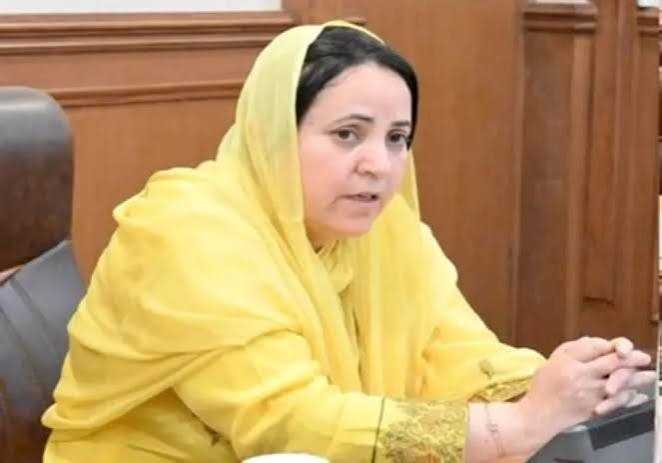
New Delhi, Nov 18: Minister for Social Welfare, Health and Medical Education, Sakeena Itoo, on Wednesday highlighted geographical, infrastructural and administrative barriers affecting students in remote and far-flung areas of Jammu and Kashmir, calling for a more inclusive and accessible scholarship delivery mechanism.
She was speaking at the two-day departmental summit, ‘Samaveshi Niti Sankalp’, organised by the Union Ministry of Social Justice and Empowerment at Sushma Swaraj Bhawan, New Delhi. The summit, being held on November 18 and 19, aims to strengthen Centre-State coordination for effective implementation of social justice and empowerment initiatives in line with the vision of Viksit Bharat@2047.
During a thematic session on ‘One Nation, One Scholarship Portal – Accessible Scholarships, Empowered Students’, Sakeena drew attention to the difficulties faced by students in remote and hilly areas, including Basholi, Kishtwar, Reasi, Doda, Tanghdar, Machil, Keran, Gurez and Uri.
She said poor internet connectivity, difficult terrain and limited access to digital services often prevent eligible students from accessing educational and welfare schemes.
The Minister stressed that while digital platforms can simplify scholarship delivery, their design and implementation must reflect ground realities to ensure that no deserving beneficiary is excluded.
“Jammu and Kashmir has several remote and hilly areas where students continue to face difficulties in accessing online services due to poor internet connectivity and other geographical constraints. These challenges need to be adequately addressed while designing and implementing a unified scholarship portal so that the benefits of such initiatives reach every eligible student, irrespective of their location,” she said.
Highlighting administrative bottlenecks, Sakeena said delays in issuing income and caste certificates often affect the timely submission and verification of scholarship applications, depriving deserving students of benefits within stipulated timelines.
She called for better coordination among concerned departments and district administrations to ensure timely issuance of documents and smooth processing of applications.
“Access to education and financial assistance should not be determined by a student’s geographical location or administrative hurdles. We must put in place a responsive and time-bound mechanism to ensure that deserving students, particularly those belonging to economically weaker and disadvantaged sections, receive their entitled benefits without unnecessary delays,” she added.
The Minister also stressed the need for targeted interventions for girl students from remote and difficult terrains, saying their access to scholarships and educational support was essential for gender equality, educational inclusion and social empowerment.
Outlining the initiatives being undertaken by Jammu and Kashmir, she said the Social Welfare Department would issue a comprehensive verification calendar well in advance of 2027 to streamline the process, facilitate timely disposal of applications and ensure efficient delivery of benefits.
She said advance scheduling and improved inter-departmental coordination would minimise delays and make the scholarship mechanism more transparent, accessible and beneficiary-friendly.
Sakeena's intervention highlighted the need to ensure that national policies and digital reforms remain sensitive to the specific challenges faced by people living in remote, border and hilly areas.
The summit witnessed participation of senior ministers, representatives and administrative secretaries from several States and Union Territories, including Maharashtra, Karnataka, Andhra Pradesh and Uttar Pradesh.
The deliberations are expected to culminate in actionable strategies and the sharing of best practices among States and Union Territories to strengthen social welfare delivery, scholarship reforms and inclusive development.

© Copyright 2023 brighterkashmir.com All Rights Reserved. Quantum Technologies