
BREAKING NEWS
Pakistan journalist-cum-op-ed writer Durdana Najam’s jaundiced take and analysis of the 1,597-page charge sheet prepared by India’s National Investigation Agency (NIA) on the Baiusaran Valley massacre of April 22, 2025 has to be called out for its hypocrisy and lack of understanding of facts on ground.
Najam saying that the “(NIA) document exposes deep fault lines” in the Indian method of investigation, and not accepting as well as outrightly rejecting Pakistan’s culpability in perpetrating the killing of 27 innocent civilians, including 25 Hindus, one Christian and one Kashmiri Muslim pony rider, reinforces the longstanding Indian view of Pakistan being a nation in denial. It is a country that represents and swears by the famed medieval kitchen idiom of a “pot calling the kettle black", i.e., accusing India of a flaw or flaws it itself is guilty of.
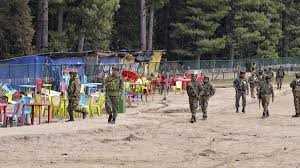
The NIA and other Indian security agency investigations have independently and painstakingly gathered verifiable evidence of the Pakistani State and the Pakistan Army’s covert involvement in facilitating the demonic attack on Indian tourists on a holiday. Through the attack, Pakistan sent out a message to the world that J&K in general, and the Kashmir Valley in particular, continues to be unstable and fear struck, and that the terror ecosystem is far from dead.
To suggest that the NIA procured “confessions through torture and pressure”, and lacking in credibility, is rich. Durdana Najam, as is to be expected from a citizen of Pakistan, has clearly failed to acknowledge, or credit the Indian leadership and India’s armed forces for their swift and telling strategic response to the dastardly crime that brought Pakistan to its knees within a short span of three days.
“Operation Sindoor” and “Operation Mahadev” highlighted the efficiency and effectiveness of the actions of the Indian armed forces, who were given a free hand by the government to expose Pakistan’s falsities and involvement.
India also scored well in terms of its co-ordinated “Information War” with Pakistan. India clearly established Pakistan’s role through a fair, transparent and impartial investigation. Islamabad’s refutation of the investigations and allied findings came as no surprise, and was in fact par for the course.
It is true that in the broader historical context, the territory of Jammu and Kashmir still remains an unresolved bilateral dispute between India and Pakistan that has needlessly been given international colour for the past 77 years. Nothing said or written in Pakistan can take away the fact that the Indian side of Kashmir is on a development march promoting socio-economic well-being along with civilian empowerment. The last six years have shown this in full measure, politics notwithstandin
Pakistan journalist-cum-op-ed writer Durdana Najam’s jaundiced take and analysis of the 1,597-page charge sheet prepared by India’s National Investigation Agency (NIA) on the Baiusaran Valley massacre of April 22, 2025 has to be called out for its hypocrisy and lack of understanding of facts on ground.
Najam saying that the “(NIA) document exposes deep fault lines” in the Indian method of investigation, and not accepting as well as outrightly rejecting Pakistan’s culpability in perpetrating the killing of 27 innocent civilians, including 25 Hindus, one Christian and one Kashmiri Muslim pony rider, reinforces the longstanding Indian view of Pakistan being a nation in denial. It is a country that represents and swears by the famed medieval kitchen idiom of a “pot calling the kettle black", i.e., accusing India of a flaw or flaws it itself is guilty of.
The NIA and other Indian security agency investigations have independently and painstakingly gathered verifiable evidence of the Pakistani State and the Pakistan Army’s covert involvement in facilitating the demonic attack on Indian tourists on a holiday. Through the attack, Pakistan sent out a message to the world that J&K in general, and the Kashmir Valley in particular, continues to be unstable and fear struck, and that the terror ecosystem is far from dead.
To suggest that the NIA procured “confessions through torture and pressure”, and lacking in credibility, is rich. Durdana Najam, as is to be expected from a citizen of Pakistan, has clearly failed to acknowledge, or credit the Indian leadership and India’s armed forces for their swift and telling strategic response to the dastardly crime that brought Pakistan to its knees within a short span of three days.
“Operation Sindoor” and “Operation Mahadev” highlighted the efficiency and effectiveness of the actions of the Indian armed forces, who were given a free hand by the government to expose Pakistan’s falsities and involvement.
India also scored well in terms of its co-ordinated “Information War” with Pakistan. India clearly established Pakistan’s role through a fair, transparent and impartial investigation. Islamabad’s refutation of the investigations and allied findings came as no surprise, and was in fact par for the course.
It is true that in the broader historical context, the territory of Jammu and Kashmir still remains an unresolved bilateral dispute between India and Pakistan that has needlessly been given international colour for the past 77 years. Nothing said or written in Pakistan can take away the fact that the Indian side of Kashmir is on a development march promoting socio-economic well-being along with civilian empowerment. The last six years have shown this in full measure, politics notwithstandin

© Copyright 2023 brighterkashmir.com All Rights Reserved. Quantum Technologies