
BREAKING NEWS
The experience of Nilnag reflects a wider weakness in environmental governance: conservation plans are often treated as completed documents rather than as living ecological management frameworks
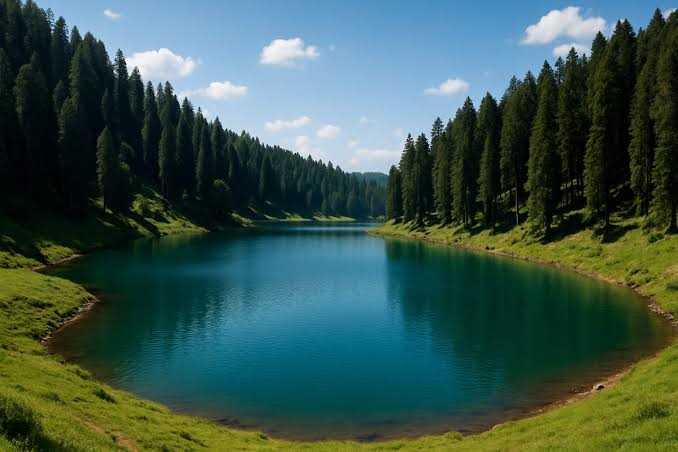
Nilnag Lake has a unique place in the ecological and cultural landscape of the Kashmir Himalaya. Located in the Yusmarg landscape, it is more than a pretty water body or burgeoning tourism area. Nilnag is a freshwater ecosystem sustained by its surrounding forests, mountain slopes, streams, grazing landscapes, and human settlements. Its ecological health is therefore inseparable from the condition of the wider catchment. The lake cannot remain healthy if the landscape that feeds and protects it continues to deteriorate. It was this ecological interconnectedness that informed the Nilnag Conservation Plan prepared by the Town Planning Organisation, Kashmir, in 2002. The plan attempted to move beyond conventional site development by bringing together catchment protection, ecological restoration, afforestation, drainage management, sediment control, regulated tourism, infrastructure provision, institutional coordination and greater stakeholder involvement in decision making and reviving the virtually lost lake. Its underlying philosophy was essentially that Nilnag should be conserved as an ecological system rather than developed merely as a scenic site. Twenty-four years later, however, the more important question is not whether anything has happened at Nilnag. Several interventions have undoubtedly taken place. Dredging was undertaken, roads improved, monitoring infrastructure created, siltation arrest basin ,regeneration peripheral Nallah and introduction of tourism-related facilities. More recently, attention has been given to fencing, parks, gates and walkways, while community groups have periodically undertaken cleanliness campaigns. The real question is whether these interventions have collectively evolved into a continuous, adequately financed and scientifically monitored lake-conservation programme. The evidence points to a significant gap between the vision of 2002 and the conservation practice of today and bringing tourists to the jewel like lake for economic upliftment of the people living ints immediate surroundings.
The experience of Nilnag reflects a wider weakness in environmental governance: conservation plans are often treated as completed documents rather than as living ecological management frameworks. Consequently, individual projects emerge at different times and through different agencies, but the continuity between ecological assessment, restoration, protection, monitoring and maintenance remains weak. Nilnag has received development attention, but it has yet to receive the sustained lake-to-landscape conservation regime which its ecological sensitivity requires.
Nilnag Is a Catchment, Not Merely a Lake
The most important principle that should guide the future of Nilnag is that a lake cannot be conserved by treating its water surface in isolation. The lake is the receiving component of a larger hydrological and ecological system. Rainfall, snowmelt, groundwater, streams and surface runoff interact across the catchment before eventually reaching the lake. Soil erosion on a mountain slope can therefore become sediment deposition within the lake. Poor drainage can become nutrient enrichment. Degraded vegetation can increase runoff. Unregulated grazing can expose soil to erosion.
The 2002 conservation vision recognised many of these relationships. Proposals relating to afforestation, regulated grazing, no-grazing areas, sediment-retention measures, drainage management and protection of the lake periphery were not isolated engineering recommendations. Together, they represented the foundations of an ecosystem-based conservation strategy. Their incomplete implementation helps explain why subsequent interventions have produced only partial or temporary results. Dredging is the clearest example. Removing accumulated sediment from the lake can restore depth and temporarily improve the water body, but it does not address the processes generating that sediment. If erosion continues upstream and streams continue to transport silt into Nilnag, sedimentation will inevitably recur if the peripheral out fall channels are not made functional especially when silt load is heavy during heavy rains. Conservation must therefore move from removing sediment after it enters the lake to preventing sediment from entering the lake in the first place.
Dredging Should Be a Restoration Tool, Not a Conservation Strategy
The dredging undertaken in 2017 remains one of the most visible interventions associated with Nilnag. It demonstrated recognition of the lake's deteriorating physical condition and the need for ecological restoration. However, dredging must be placed within a broader restoration framework. Repeated dredging without catchment rehabilitation risks creating an expensive cycle of intervention and re-intervention. It treats the consequence rather than the ecological cause. Before any future dredging is undertaken, Nilnag should therefore have a scientifically prepared sediment management and sediment budget assessment. Every significant inflow should be mapped. Sources of erosion should be identified. Seasonal sediment movement should be monitored, particularly during periods of intense rainfall. Erosion-prone slopes should receive vegetative stabilisation, while small check structures, sediment traps and micro-settling basins can intercept sediment before it reaches the lake.The conservation objective should consequently be simple: retain soil on the landscape rather than repeatedly removing it from the lake. This becomes even more important in the context of changing Himalayan climate conditions, where intense rainfall episodes can generate rapid runoff, slope erosion and sediment mobilisation. Climate resilience and lake conservation must therefore become part of the same planning framework.
Restoring the Catchment: Conservation Begins Beyond the Shoreline
The greatest unfinished component of the Nilnag conservation vision is perhaps the catchment itself. Afforestation, soil conservation, slope stabilisation, regulated grazing and protection of drainage channels may not possess the visual appeal of a newly constructed road, walkway or park, but they are fundamental to the lake's long-term survival. The catchment should now be divided into ecological management zones according to slope, vegetation cover, drainage characteristics, erosion susceptibility and human use. Highly sensitive areas should receive strict ecological protection. Degraded forest patches should be restored using native vegetation suited to local ecological conditions. Grazing should be regulated spatially and seasonally, particularly in vulnerable areas. Conservation should also move beyond numerical targets such as the number of trees planted. The real indicators should be improved soil stability, increased infiltration, reduced surface runoff, enhanced vegetation cover and declining sediment delivery to the lake. This is the difference between plantation activity and genuine ecosystem restoration.
Water Is the Life-Support System
Hydrology must become the foundation of future Nilnag management. The lake's ecological condition depends not simply on how much water it contains, but on the quantity, quality, timing and movement of that water. A contemporary hydrological assessment should establish the lake's inflows, outflows, seasonal water levels, groundwater interactions, sediment deposition patterns and overall water balance. Any water-regulation structure should operate according to ecological requirements rather than simply engineering convenience. Peripheral drainage also requires ecological redesign. Runoff entering the lake should pass through a sequence of interception, filtration, settlement and controlled discharge wherever appropriate. Natural drainage channels should be protected rather than unnecessarily converted into conventional engineered drains. Nilnag therefore needs water-sensitive conservation planning, in which hydrology, biodiversity, soil conservation and land management are treated as interconnected components of one ecological system.
Tourism Must Remain Within Ecological Limits
Nilnag's scenic and cultural character makes tourism an important opportunity, but tourism must remain subordinate to ecological carrying capacity. Improved connectivity can generate employment and strengthen local livelihoods, but better roads can simultaneously increase visitor pressure, parking demand, waste generation and commercial activity. The central question should therefore change from how many visitors Nilnag can attract to how many visitors its ecosystem can sustain. Before tourism infrastructure expands further, an ecological carrying-capacity assessment should establish appropriate thresholds for visitors, vehicles, parking, boating, built-up areas, commercial activity, accommodation and waste generation. Development should be concentrated within carefully identified visitor zones rather than dispersed around the lake. The lake edge itself should remain predominantly ecological. Sensitive shoreline areas should be protected from unnecessary construction, commercialisation and intensive recreational activity. The appropriate model for Nilnag is therefore low-impact, high-value nature and cultural tourism, rather than mass tourism.
Infrastructure Must Be Managed as an Ecological Asset
The history of Nilnag also demonstrates that creating infrastructure is only the first stage of public investment. Boats that remain unused, huts awaiting formal handover, non-functional lighting and poorly maintained public spaces reveal a deeper institutional problem: infrastructure without management becomes a burden rather than an asset. Every facility should have a clearly identified custodian, operating arrangement, maintenance budget and accountability mechanism. An inventory of existing infrastructure should classify each facility as operational, repairable, redundant or requiring ecological redesign. Future construction should also pass through a conservation compatibility assessment. The question should not merely be whether a facility can be built, but whether its location, scale, materials, operation and maintenance are compatible with the ecological character of the landscape.
Conserving the Cultural Landscape
Nilnag is also part of a cultural landscape, including the presence of the Said Sahib shrine and associated traditions. Conservation should therefore recognise both ecological and cultural values. Sacred spaces, ecological conservation zones, visitor areas, circulation routes and service areas should be spatially differentiated while remaining functionally integrated. Cultural tourism can strengthen conservation when it generates local stewardship and economic benefits. Conversely, uncontrolled construction around culturally important places can fragment the landscape. Nilnag's cultural identity should therefore be protected alongside its ecological identity.
Waste Management Must Become a Conservation System
Community initiatives such as cleanliness campaigns demonstrate that public concern for Nilnag remains strong. Such initiatives are valuable expressions of stewardship, but voluntary campaigns cannot substitute for permanent environmental management. Nilnag requires source segregation, controlled collection, designated storage, regular removal and strict prohibition of waste dumping throughout the catchment. Plastic and food waste generated by visitors and vendors should be systematically collected. A carry-in, carry-out principle could be introduced in particularly sensitive areas. Waste management must also extend upstream because waste discarded outside the immediate lakefront can ultimately enter the hydrological system. A clean lake should therefore be understood not as the result of periodic cleaning drives but as the outcome of a permanent circular system of prevention, collection, recovery and responsible disposal.
Local Community as Stewards, Not Adversaries
Conservation cannot succeed by treating local communities simply as pressures upon natural resources. People living around Nilnag have legitimate requirements for fuelwood, fodder, grazing and livelihoods. Restriction without alternatives can generate resentment and undermine conservation. The future approach should therefore be based on community stewardship and benefit-sharing. Improved energy access, regulated fodder resources, community forestry, sustainable livelihoods and eco-tourism opportunities can reduce dependence upon fragile ecosystems. Local youth could be trained as nature interpreters, ecological monitors, waste-management workers and responsible eco-tourism guides. A portion of tourism revenue should visibly support local conservation and community development. When communities receive tangible benefits from a healthy ecosystem, conservation becomes an economic and social interest rather than merely a regulatory obligation.
Institutional Fragmentation: The Missing Link
Perhaps the most serious weakness in the Nilnag experience is institutional fragmentation. Different agencies have undertaken different interventions, including tourism-related works and lake-restoration activities. Multiple agencies are not inherently problematic; ecosystems themselves cross administrative boundaries.The problem arises when no single institutional mechanism integrates their responsibilities. Nilnag requires coordinated participation from tourism, forests, irrigation, rural development, roads, local government, revenue, environment and scientific institutions. A dedicated Nilnag Lake Conservation and Management Authority, or an empowered interdepartmental conservation committee supported by a technically qualified secretariat, could provide this coordination. Its responsibilities should include ecological monitoring, catchment restoration, land-use regulation, tourism management, infrastructure coordination, community participation, enforcement and annual public reporting. Most importantly, every recommendation of the 2002 plan should be placed within an implementation matrix identifying its status, responsible agency, expenditure, ecological outcome and future relevance.
From Plan to Accountability
After more than two decades, Nilnag now requires an independent 2002–2026 conservation audit. Every original recommendation should be classified as completed, substantially completed, partially completed, initiated but stalled, not initiated, no longer relevant, or requiring modification. Such an audit would convert the discussion from anecdotal criticism into evidence-based conservation governance. The next step should then be preparation of a 2026 Nilnag Integrated Lake and Catchment Management Plan, using the 2002 plan as its foundation but updating it for contemporary ecological and climatic realities. Modern geospatial tools can establish the baseline through satellite imagery, GIS-based watershed mapping, drone surveys, GPS-based boundary demarcation and bathymetric assessment. A long-term water-quality programme should monitor parameters such as temperature, pH, dissolved oxygen, turbidity and nutrients, alongside biological indicators. A publicly accessible Nilnag Lake Health Dashboard could periodically report ecological indicators, restoration progress, water quality, visitor pressure and conservation expenditure. Such transparency would transform conservation from an administrative exercise into a continuing public commitment.
The Way Forward: From a Lake Project to a Landscape Mission
The immediate requirement is not another isolated project. It is a time-bound Nilnag Conservation Mission. Its first stage should be an independent ecological and institutional audit. The second should scientifically delineate the lake, catchment, buffer and ecological sensitivity zones. The third should focus on upstream soil conservation, sediment interception, drainage protection, vegetation restoration and grazing management. The fourth should undertake scientifically justified lake restoration. The fifth should establish tourism carrying capacities and rationalize infrastructure. The sixth should create permanent waste, sanitation and maintenance systems. The seventh should establish an accountable institutional mechanism with a dedicated conservation budget and annual reporting. Ultimately, Nilnag should be integrated into a broader Yusmarg landscape conservation strategy rather than managed as an isolated tourist attraction boost tourism and economy of the area.
The Vision Must Now Become a Conservation Culture
The story of Nilnag is not simply the story of an unimplemented conservation plan. It represents a larger challenge in environmental governance in Jammu and Kashmir: our institutional culture has often been stronger in preparing plans and announcing projects than in maintaining long-term ecological programmes. The 2002 plan already contained many of the essential ingredients like catchment protection, ecological restoration, tourism regulation, infrastructure management, community considerations and institutional coordination. Its partial implementation demonstrates that the problem was not the absence of ideas. The problem was the absence of continuity, institutional ownership, sustained financing, ecological monitoring and accountability. The recent attention to roads, parks, fencing and walkways should therefore be welcomed, but these interventions must become subordinate components of a much larger conservation framework. Nilnag does not need another cycle of disconnected projects. It needs a lake-to-landscape conservation culture. Its success should not ultimately be measured by the length of the road reaching it, the number of huts constructed beside it, the number of boats placed on its waters or the number of tourists visiting it. The true indicators of success will be whether its water remains ecologically healthy, its catchment remains stable, its biodiversity is protected, its hydrological processes remain functional, its shoreline remains free from uncontrolled development and surrounding communities gain a sustainable stake in its protection. The 2002 Conservation Plan should therefore not be regarded as an obsolete document. It should be treated as the starting point for ecological accountability. Twenty-four years after its preparation, the fundamental question remains: if we already knew what needed to be done in 2002, why are we still confronting the similar ecological concerns in 2026?
Email:-------------------------------- hamwani24@gmail.com
The experience of Nilnag reflects a wider weakness in environmental governance: conservation plans are often treated as completed documents rather than as living ecological management frameworks
Nilnag Lake has a unique place in the ecological and cultural landscape of the Kashmir Himalaya. Located in the Yusmarg landscape, it is more than a pretty water body or burgeoning tourism area. Nilnag is a freshwater ecosystem sustained by its surrounding forests, mountain slopes, streams, grazing landscapes, and human settlements. Its ecological health is therefore inseparable from the condition of the wider catchment. The lake cannot remain healthy if the landscape that feeds and protects it continues to deteriorate. It was this ecological interconnectedness that informed the Nilnag Conservation Plan prepared by the Town Planning Organisation, Kashmir, in 2002. The plan attempted to move beyond conventional site development by bringing together catchment protection, ecological restoration, afforestation, drainage management, sediment control, regulated tourism, infrastructure provision, institutional coordination and greater stakeholder involvement in decision making and reviving the virtually lost lake. Its underlying philosophy was essentially that Nilnag should be conserved as an ecological system rather than developed merely as a scenic site. Twenty-four years later, however, the more important question is not whether anything has happened at Nilnag. Several interventions have undoubtedly taken place. Dredging was undertaken, roads improved, monitoring infrastructure created, siltation arrest basin ,regeneration peripheral Nallah and introduction of tourism-related facilities. More recently, attention has been given to fencing, parks, gates and walkways, while community groups have periodically undertaken cleanliness campaigns. The real question is whether these interventions have collectively evolved into a continuous, adequately financed and scientifically monitored lake-conservation programme. The evidence points to a significant gap between the vision of 2002 and the conservation practice of today and bringing tourists to the jewel like lake for economic upliftment of the people living ints immediate surroundings.
The experience of Nilnag reflects a wider weakness in environmental governance: conservation plans are often treated as completed documents rather than as living ecological management frameworks. Consequently, individual projects emerge at different times and through different agencies, but the continuity between ecological assessment, restoration, protection, monitoring and maintenance remains weak. Nilnag has received development attention, but it has yet to receive the sustained lake-to-landscape conservation regime which its ecological sensitivity requires.
Nilnag Is a Catchment, Not Merely a Lake
The most important principle that should guide the future of Nilnag is that a lake cannot be conserved by treating its water surface in isolation. The lake is the receiving component of a larger hydrological and ecological system. Rainfall, snowmelt, groundwater, streams and surface runoff interact across the catchment before eventually reaching the lake. Soil erosion on a mountain slope can therefore become sediment deposition within the lake. Poor drainage can become nutrient enrichment. Degraded vegetation can increase runoff. Unregulated grazing can expose soil to erosion.
The 2002 conservation vision recognised many of these relationships. Proposals relating to afforestation, regulated grazing, no-grazing areas, sediment-retention measures, drainage management and protection of the lake periphery were not isolated engineering recommendations. Together, they represented the foundations of an ecosystem-based conservation strategy. Their incomplete implementation helps explain why subsequent interventions have produced only partial or temporary results. Dredging is the clearest example. Removing accumulated sediment from the lake can restore depth and temporarily improve the water body, but it does not address the processes generating that sediment. If erosion continues upstream and streams continue to transport silt into Nilnag, sedimentation will inevitably recur if the peripheral out fall channels are not made functional especially when silt load is heavy during heavy rains. Conservation must therefore move from removing sediment after it enters the lake to preventing sediment from entering the lake in the first place.
Dredging Should Be a Restoration Tool, Not a Conservation Strategy
The dredging undertaken in 2017 remains one of the most visible interventions associated with Nilnag. It demonstrated recognition of the lake's deteriorating physical condition and the need for ecological restoration. However, dredging must be placed within a broader restoration framework. Repeated dredging without catchment rehabilitation risks creating an expensive cycle of intervention and re-intervention. It treats the consequence rather than the ecological cause. Before any future dredging is undertaken, Nilnag should therefore have a scientifically prepared sediment management and sediment budget assessment. Every significant inflow should be mapped. Sources of erosion should be identified. Seasonal sediment movement should be monitored, particularly during periods of intense rainfall. Erosion-prone slopes should receive vegetative stabilisation, while small check structures, sediment traps and micro-settling basins can intercept sediment before it reaches the lake.The conservation objective should consequently be simple: retain soil on the landscape rather than repeatedly removing it from the lake. This becomes even more important in the context of changing Himalayan climate conditions, where intense rainfall episodes can generate rapid runoff, slope erosion and sediment mobilisation. Climate resilience and lake conservation must therefore become part of the same planning framework.
Restoring the Catchment: Conservation Begins Beyond the Shoreline
The greatest unfinished component of the Nilnag conservation vision is perhaps the catchment itself. Afforestation, soil conservation, slope stabilisation, regulated grazing and protection of drainage channels may not possess the visual appeal of a newly constructed road, walkway or park, but they are fundamental to the lake's long-term survival. The catchment should now be divided into ecological management zones according to slope, vegetation cover, drainage characteristics, erosion susceptibility and human use. Highly sensitive areas should receive strict ecological protection. Degraded forest patches should be restored using native vegetation suited to local ecological conditions. Grazing should be regulated spatially and seasonally, particularly in vulnerable areas. Conservation should also move beyond numerical targets such as the number of trees planted. The real indicators should be improved soil stability, increased infiltration, reduced surface runoff, enhanced vegetation cover and declining sediment delivery to the lake. This is the difference between plantation activity and genuine ecosystem restoration.
Water Is the Life-Support System
Hydrology must become the foundation of future Nilnag management. The lake's ecological condition depends not simply on how much water it contains, but on the quantity, quality, timing and movement of that water. A contemporary hydrological assessment should establish the lake's inflows, outflows, seasonal water levels, groundwater interactions, sediment deposition patterns and overall water balance. Any water-regulation structure should operate according to ecological requirements rather than simply engineering convenience. Peripheral drainage also requires ecological redesign. Runoff entering the lake should pass through a sequence of interception, filtration, settlement and controlled discharge wherever appropriate. Natural drainage channels should be protected rather than unnecessarily converted into conventional engineered drains. Nilnag therefore needs water-sensitive conservation planning, in which hydrology, biodiversity, soil conservation and land management are treated as interconnected components of one ecological system.
Tourism Must Remain Within Ecological Limits
Nilnag's scenic and cultural character makes tourism an important opportunity, but tourism must remain subordinate to ecological carrying capacity. Improved connectivity can generate employment and strengthen local livelihoods, but better roads can simultaneously increase visitor pressure, parking demand, waste generation and commercial activity. The central question should therefore change from how many visitors Nilnag can attract to how many visitors its ecosystem can sustain. Before tourism infrastructure expands further, an ecological carrying-capacity assessment should establish appropriate thresholds for visitors, vehicles, parking, boating, built-up areas, commercial activity, accommodation and waste generation. Development should be concentrated within carefully identified visitor zones rather than dispersed around the lake. The lake edge itself should remain predominantly ecological. Sensitive shoreline areas should be protected from unnecessary construction, commercialisation and intensive recreational activity. The appropriate model for Nilnag is therefore low-impact, high-value nature and cultural tourism, rather than mass tourism.
Infrastructure Must Be Managed as an Ecological Asset
The history of Nilnag also demonstrates that creating infrastructure is only the first stage of public investment. Boats that remain unused, huts awaiting formal handover, non-functional lighting and poorly maintained public spaces reveal a deeper institutional problem: infrastructure without management becomes a burden rather than an asset. Every facility should have a clearly identified custodian, operating arrangement, maintenance budget and accountability mechanism. An inventory of existing infrastructure should classify each facility as operational, repairable, redundant or requiring ecological redesign. Future construction should also pass through a conservation compatibility assessment. The question should not merely be whether a facility can be built, but whether its location, scale, materials, operation and maintenance are compatible with the ecological character of the landscape.
Conserving the Cultural Landscape
Nilnag is also part of a cultural landscape, including the presence of the Said Sahib shrine and associated traditions. Conservation should therefore recognise both ecological and cultural values. Sacred spaces, ecological conservation zones, visitor areas, circulation routes and service areas should be spatially differentiated while remaining functionally integrated. Cultural tourism can strengthen conservation when it generates local stewardship and economic benefits. Conversely, uncontrolled construction around culturally important places can fragment the landscape. Nilnag's cultural identity should therefore be protected alongside its ecological identity.
Waste Management Must Become a Conservation System
Community initiatives such as cleanliness campaigns demonstrate that public concern for Nilnag remains strong. Such initiatives are valuable expressions of stewardship, but voluntary campaigns cannot substitute for permanent environmental management. Nilnag requires source segregation, controlled collection, designated storage, regular removal and strict prohibition of waste dumping throughout the catchment. Plastic and food waste generated by visitors and vendors should be systematically collected. A carry-in, carry-out principle could be introduced in particularly sensitive areas. Waste management must also extend upstream because waste discarded outside the immediate lakefront can ultimately enter the hydrological system. A clean lake should therefore be understood not as the result of periodic cleaning drives but as the outcome of a permanent circular system of prevention, collection, recovery and responsible disposal.
Local Community as Stewards, Not Adversaries
Conservation cannot succeed by treating local communities simply as pressures upon natural resources. People living around Nilnag have legitimate requirements for fuelwood, fodder, grazing and livelihoods. Restriction without alternatives can generate resentment and undermine conservation. The future approach should therefore be based on community stewardship and benefit-sharing. Improved energy access, regulated fodder resources, community forestry, sustainable livelihoods and eco-tourism opportunities can reduce dependence upon fragile ecosystems. Local youth could be trained as nature interpreters, ecological monitors, waste-management workers and responsible eco-tourism guides. A portion of tourism revenue should visibly support local conservation and community development. When communities receive tangible benefits from a healthy ecosystem, conservation becomes an economic and social interest rather than merely a regulatory obligation.
Institutional Fragmentation: The Missing Link
Perhaps the most serious weakness in the Nilnag experience is institutional fragmentation. Different agencies have undertaken different interventions, including tourism-related works and lake-restoration activities. Multiple agencies are not inherently problematic; ecosystems themselves cross administrative boundaries.The problem arises when no single institutional mechanism integrates their responsibilities. Nilnag requires coordinated participation from tourism, forests, irrigation, rural development, roads, local government, revenue, environment and scientific institutions. A dedicated Nilnag Lake Conservation and Management Authority, or an empowered interdepartmental conservation committee supported by a technically qualified secretariat, could provide this coordination. Its responsibilities should include ecological monitoring, catchment restoration, land-use regulation, tourism management, infrastructure coordination, community participation, enforcement and annual public reporting. Most importantly, every recommendation of the 2002 plan should be placed within an implementation matrix identifying its status, responsible agency, expenditure, ecological outcome and future relevance.
From Plan to Accountability
After more than two decades, Nilnag now requires an independent 2002–2026 conservation audit. Every original recommendation should be classified as completed, substantially completed, partially completed, initiated but stalled, not initiated, no longer relevant, or requiring modification. Such an audit would convert the discussion from anecdotal criticism into evidence-based conservation governance. The next step should then be preparation of a 2026 Nilnag Integrated Lake and Catchment Management Plan, using the 2002 plan as its foundation but updating it for contemporary ecological and climatic realities. Modern geospatial tools can establish the baseline through satellite imagery, GIS-based watershed mapping, drone surveys, GPS-based boundary demarcation and bathymetric assessment. A long-term water-quality programme should monitor parameters such as temperature, pH, dissolved oxygen, turbidity and nutrients, alongside biological indicators. A publicly accessible Nilnag Lake Health Dashboard could periodically report ecological indicators, restoration progress, water quality, visitor pressure and conservation expenditure. Such transparency would transform conservation from an administrative exercise into a continuing public commitment.
The Way Forward: From a Lake Project to a Landscape Mission
The immediate requirement is not another isolated project. It is a time-bound Nilnag Conservation Mission. Its first stage should be an independent ecological and institutional audit. The second should scientifically delineate the lake, catchment, buffer and ecological sensitivity zones. The third should focus on upstream soil conservation, sediment interception, drainage protection, vegetation restoration and grazing management. The fourth should undertake scientifically justified lake restoration. The fifth should establish tourism carrying capacities and rationalize infrastructure. The sixth should create permanent waste, sanitation and maintenance systems. The seventh should establish an accountable institutional mechanism with a dedicated conservation budget and annual reporting. Ultimately, Nilnag should be integrated into a broader Yusmarg landscape conservation strategy rather than managed as an isolated tourist attraction boost tourism and economy of the area.
The Vision Must Now Become a Conservation Culture
The story of Nilnag is not simply the story of an unimplemented conservation plan. It represents a larger challenge in environmental governance in Jammu and Kashmir: our institutional culture has often been stronger in preparing plans and announcing projects than in maintaining long-term ecological programmes. The 2002 plan already contained many of the essential ingredients like catchment protection, ecological restoration, tourism regulation, infrastructure management, community considerations and institutional coordination. Its partial implementation demonstrates that the problem was not the absence of ideas. The problem was the absence of continuity, institutional ownership, sustained financing, ecological monitoring and accountability. The recent attention to roads, parks, fencing and walkways should therefore be welcomed, but these interventions must become subordinate components of a much larger conservation framework. Nilnag does not need another cycle of disconnected projects. It needs a lake-to-landscape conservation culture. Its success should not ultimately be measured by the length of the road reaching it, the number of huts constructed beside it, the number of boats placed on its waters or the number of tourists visiting it. The true indicators of success will be whether its water remains ecologically healthy, its catchment remains stable, its biodiversity is protected, its hydrological processes remain functional, its shoreline remains free from uncontrolled development and surrounding communities gain a sustainable stake in its protection. The 2002 Conservation Plan should therefore not be regarded as an obsolete document. It should be treated as the starting point for ecological accountability. Twenty-four years after its preparation, the fundamental question remains: if we already knew what needed to be done in 2002, why are we still confronting the similar ecological concerns in 2026?
Email:-------------------------------- hamwani24@gmail.com

© Copyright 2023 brighterkashmir.com All Rights Reserved. Quantum Technologies