BREAKING NEWS

08-31-2026     3 رجب 1440

Prepare Before Disaster Strikes

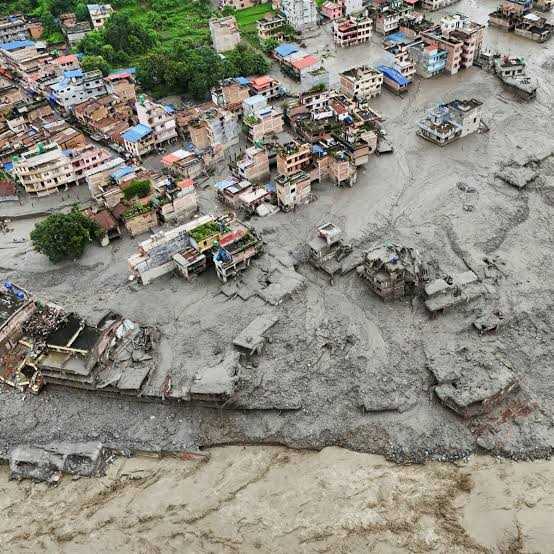
Recent floods, flash floods and extreme weather across Jammu & Kashmir, Nepal and other parts of the country are a reminder that disaster preparedness must move beyond emergency response and become a way of life.

August 31, 2026 | Syed Yunis Bukhari

Disasters rarely announce their arrival. A few hours of intense rainfall can turn a calm river into a dangerous torrent, a cloudburst can transform a mountain stream into a destructive force, and a landslide can bring roads, bridges and entire communities to a standstill. The recent episodes of floods, flash floods and extreme weather across Jammu & Kashmir, Nepal and several other parts of India have once again reminded us of a reality that we often tend to forget: we cannot prevent every natural disaster, but we can certainly reduce its human cost.
For a region like Jammu & Kashmir, this lesson carries particular significance. The Himalayas are among the world's most fragile and geologically sensitive landscapes. The mountains, rivers and valleys that give Kashmir its extraordinary beauty also make many communities vulnerable to floods, cloudbursts, landslides, avalanches and other hazards. The devastating floods of 2014 remain a painful reminder of how rapidly an extreme weather event can overwhelm normal life. Homes can be inundated, roads disconnected, electricity disrupted and communication networks brought down within hours.
Yet disasters should not be judged only by the damage they cause. They should also be judged by the lessons we learn from them.


A Warning is Useful Only When it Leads to Action


India has made considerable progress in weather forecasting, flood monitoring and emergency response. Satellites, weather radars, river-level monitoring systems, mobile alerts and digital platforms have significantly improved our ability to identify developing threats. But technology alone cannot save lives.
The real test begins when a warning reaches an ordinary family.
A warning that says heavy rainfall is expected may not be sufficient for a family living near a river or below an unstable slope. People need to know whether they should evacuate, where they should go, which roads are safe and what they should carry with them. The difference between an early warning and an effective warning is action.
This is why disaster preparedness must move from early warning to early action.
Every vulnerable village, town and neighbourhoods should have a basic disaster plan. People should know evacuation routes and safe locations before an emergency begins. Schools, hospitals, government offices and other institutions should periodically conduct emergency drills. Local volunteers should be trained to assist children, elderly persons and other vulnerable members of the community.
Disaster management cannot remain the responsibility of government agencies alone. During the first few hours of a major disaster, local communities are often the first responders. A trained neighbour may reach a stranded family before a rescue team can. A teacher may help evacuate children. A local volunteer may guide people towards a safe location when roads and communication networks are disrupted.
There is another difficult question that we must confront. As Jammu & Kashmir develops, expands its road network and welcomes increasing numbers of residents and tourists, are we ensuring that development remains compatible with the region's environmental and geological realities?
Development is essential. Roads, bridges, buildings, tourism infrastructure and connectivity are necessary for economic progress. But development in a fragile mountain environment must be carefully planned.
Natural streams, drainage channels, wetlands and floodplains are not empty spaces. They are part of the landscape's natural system for managing water. When these channels are obstructed or when construction takes place in vulnerable areas without adequate risk assessment, a natural event can become a human-made catastrophe.
The same concern applies to urban areas. Increasing urbanization brings pressure on drainage systems. When heavy rainfall meets inadequate drainage, waterlogging can quickly disrupt transportation, homes, businesses and essential services.
The answer is not to stop development. The answer is to make development resilient.
Every major infrastructure project in a vulnerable region should consider what could happen during an extreme rainfall event, landslide or earthquake. Roads and bridges should be designed with disaster risks in mind. Drainage systems should be maintained and upgraded. Vulnerable slopes should be monitored. Flood-prone areas should be identified clearly, and land-use planning should reflect those risks.
The cost of prevention may appear high today, but the cost of rebuilding after a disaster is almost always higher not only financially, but in terms of human suffering.

From Disaster Response to Disaster Resilience


India has developed significant capacity for disaster response. Specialised rescue forces, the armed forces, police, healthcare workers, civil administration and volunteers have repeatedly displayed courage during floods, landslides, earthquakes and other emergencies.
But rescue, however efficient and heroic, begins after the disaster has already happened.
The greater goal should be to reduce the number of people who need rescuing.
That means investing in prevention, preparedness, resilient infrastructure, hazard mapping, community awareness and regular emergency exercises. It means asking not only how quickly we can respond to a disaster, but also how effectively we can prevent a foreseeable hazard from becoming a humanitarian crisis.
This approach is particularly important in the Himalayan region, where communities face several overlapping risks. A period of intense rainfall can trigger flooding and landslides simultaneously. In winter, heavy snowfall and avalanches can create another set of challenges. Earthquakes remain a serious concern across the Himalayan belt.
Preparedness, therefore, cannot be limited to floods alone.
Every household should have a basic understanding of the risks in its locality. Every school should know its evacuation procedure. Every hospital should have a plan for maintaining essential services during an emergency. Every district should regularly test its communication and evacuation arrangements.
Most importantly, disaster preparedness must become part of public culture.
We teach children how to cross a road safely. We conduct fire drills in buildings. We should similarly teach communities what to do during a flood, earthquake, landslide or other emergency.
The recent disasters in Nepal, Jammu & Kashmir and other parts of the country should not be remembered only through photographs of flooded roads, damaged homes and rescue operations. They should be remembered as warnings.
We cannot prevent every cloudburst. We cannot stop every landslide. We cannot control every river. But we can ensure that people receive warnings in time. We can protect natural drainage systems. We can build stronger infrastructure. We can prepare evacuation routes. We can train communities. We can strengthen emergency communication.
And we can ensure that development does not create new vulnerabilities.
When the waters rise again and sooner or later, they will the true measure of our preparedness will not simply be the number of rescue teams deployed. It will be the number of people who received timely warnings, the communities that evacuated safely, the critical services that continued functioning and the lives that were saved because preparations had been made in advance.
The next disaster may not resemble the last one. That is precisely why preparation cannot wait for the next warning.
The time to prepare is when the skies are clear, the rivers are calm and life appears normal.
Because when the waters rise, it may already be too late to begin preparing.


Email:---------------------- yunis.e16472@cumail.in

BREAKING NEWS

VIDEO

Twitter

Facebook

Prepare Before Disaster Strikes

Recent floods, flash floods and extreme weather across Jammu & Kashmir, Nepal and other parts of the country are a reminder that disaster preparedness must move beyond emergency response and become a way of life.

August 31, 2026 | Syed Yunis Bukhari

Disasters rarely announce their arrival. A few hours of intense rainfall can turn a calm river into a dangerous torrent, a cloudburst can transform a mountain stream into a destructive force, and a landslide can bring roads, bridges and entire communities to a standstill. The recent episodes of floods, flash floods and extreme weather across Jammu & Kashmir, Nepal and several other parts of India have once again reminded us of a reality that we often tend to forget: we cannot prevent every natural disaster, but we can certainly reduce its human cost.
For a region like Jammu & Kashmir, this lesson carries particular significance. The Himalayas are among the world's most fragile and geologically sensitive landscapes. The mountains, rivers and valleys that give Kashmir its extraordinary beauty also make many communities vulnerable to floods, cloudbursts, landslides, avalanches and other hazards. The devastating floods of 2014 remain a painful reminder of how rapidly an extreme weather event can overwhelm normal life. Homes can be inundated, roads disconnected, electricity disrupted and communication networks brought down within hours.
Yet disasters should not be judged only by the damage they cause. They should also be judged by the lessons we learn from them.


A Warning is Useful Only When it Leads to Action


India has made considerable progress in weather forecasting, flood monitoring and emergency response. Satellites, weather radars, river-level monitoring systems, mobile alerts and digital platforms have significantly improved our ability to identify developing threats. But technology alone cannot save lives.
The real test begins when a warning reaches an ordinary family.
A warning that says heavy rainfall is expected may not be sufficient for a family living near a river or below an unstable slope. People need to know whether they should evacuate, where they should go, which roads are safe and what they should carry with them. The difference between an early warning and an effective warning is action.
This is why disaster preparedness must move from early warning to early action.
Every vulnerable village, town and neighbourhoods should have a basic disaster plan. People should know evacuation routes and safe locations before an emergency begins. Schools, hospitals, government offices and other institutions should periodically conduct emergency drills. Local volunteers should be trained to assist children, elderly persons and other vulnerable members of the community.
Disaster management cannot remain the responsibility of government agencies alone. During the first few hours of a major disaster, local communities are often the first responders. A trained neighbour may reach a stranded family before a rescue team can. A teacher may help evacuate children. A local volunteer may guide people towards a safe location when roads and communication networks are disrupted.
There is another difficult question that we must confront. As Jammu & Kashmir develops, expands its road network and welcomes increasing numbers of residents and tourists, are we ensuring that development remains compatible with the region's environmental and geological realities?
Development is essential. Roads, bridges, buildings, tourism infrastructure and connectivity are necessary for economic progress. But development in a fragile mountain environment must be carefully planned.
Natural streams, drainage channels, wetlands and floodplains are not empty spaces. They are part of the landscape's natural system for managing water. When these channels are obstructed or when construction takes place in vulnerable areas without adequate risk assessment, a natural event can become a human-made catastrophe.
The same concern applies to urban areas. Increasing urbanization brings pressure on drainage systems. When heavy rainfall meets inadequate drainage, waterlogging can quickly disrupt transportation, homes, businesses and essential services.
The answer is not to stop development. The answer is to make development resilient.
Every major infrastructure project in a vulnerable region should consider what could happen during an extreme rainfall event, landslide or earthquake. Roads and bridges should be designed with disaster risks in mind. Drainage systems should be maintained and upgraded. Vulnerable slopes should be monitored. Flood-prone areas should be identified clearly, and land-use planning should reflect those risks.
The cost of prevention may appear high today, but the cost of rebuilding after a disaster is almost always higher not only financially, but in terms of human suffering.

From Disaster Response to Disaster Resilience


India has developed significant capacity for disaster response. Specialised rescue forces, the armed forces, police, healthcare workers, civil administration and volunteers have repeatedly displayed courage during floods, landslides, earthquakes and other emergencies.
But rescue, however efficient and heroic, begins after the disaster has already happened.
The greater goal should be to reduce the number of people who need rescuing.
That means investing in prevention, preparedness, resilient infrastructure, hazard mapping, community awareness and regular emergency exercises. It means asking not only how quickly we can respond to a disaster, but also how effectively we can prevent a foreseeable hazard from becoming a humanitarian crisis.
This approach is particularly important in the Himalayan region, where communities face several overlapping risks. A period of intense rainfall can trigger flooding and landslides simultaneously. In winter, heavy snowfall and avalanches can create another set of challenges. Earthquakes remain a serious concern across the Himalayan belt.
Preparedness, therefore, cannot be limited to floods alone.
Every household should have a basic understanding of the risks in its locality. Every school should know its evacuation procedure. Every hospital should have a plan for maintaining essential services during an emergency. Every district should regularly test its communication and evacuation arrangements.
Most importantly, disaster preparedness must become part of public culture.
We teach children how to cross a road safely. We conduct fire drills in buildings. We should similarly teach communities what to do during a flood, earthquake, landslide or other emergency.
The recent disasters in Nepal, Jammu & Kashmir and other parts of the country should not be remembered only through photographs of flooded roads, damaged homes and rescue operations. They should be remembered as warnings.
We cannot prevent every cloudburst. We cannot stop every landslide. We cannot control every river. But we can ensure that people receive warnings in time. We can protect natural drainage systems. We can build stronger infrastructure. We can prepare evacuation routes. We can train communities. We can strengthen emergency communication.
And we can ensure that development does not create new vulnerabilities.
When the waters rise again and sooner or later, they will the true measure of our preparedness will not simply be the number of rescue teams deployed. It will be the number of people who received timely warnings, the communities that evacuated safely, the critical services that continued functioning and the lives that were saved because preparations had been made in advance.
The next disaster may not resemble the last one. That is precisely why preparation cannot wait for the next warning.
The time to prepare is when the skies are clear, the rivers are calm and life appears normal.
Because when the waters rise, it may already be too late to begin preparing.


Email:---------------------- yunis.e16472@cumail.in

  • Address: R.C 2 Quarters Press Enclave Near Pratap Park, Srinagar 190001.
  • Phone: 0194-2451076 , +91-941-940-0056 , +91-962-292-4716
  • Email: brighterkmr@gmail.com
Owner, Printer, Publisher, Editor: Farooq Ahmad Wani
Legal Advisor: M.J. Hubi
Printed at: Sangermal offset Printing Press Rangreth ( Budgam)
Published from: Gulshanabad Chraresharief Budgam
RNI No.: JKENG/2010/33802
Office No’s: 0194-2451076
Mobile No’s 9419400056, 9622924716 ,7006086442
Postal Regd No: SK/135/2010-2019
POST BOX NO: 1001
Administrative Office: R.C 2 Quarters Press Enclave Near Pratap Park ( Srinagar -190001)

© Copyright 2023 brighterkashmir.com All Rights Reserved. Quantum Technologies

Owner, Printer, Publisher, Editor: Farooq Ahmad Wani
Legal Advisor: M.J. Hubi
Printed at: Abid Enterprizes, Zainkote Srinagar
Published from: Gulshanabad Chraresharief Budgam
RNI No.: JKENG/2010/33802
Office No’s: 0194-2451076, 9622924716 , 9419400056
Postal Regd No: SK/135/2010-2019
Administrative Office: Abi Guzer Srinagar

© Copyright 2018 brighterkashmir.com All Rights Reserved.