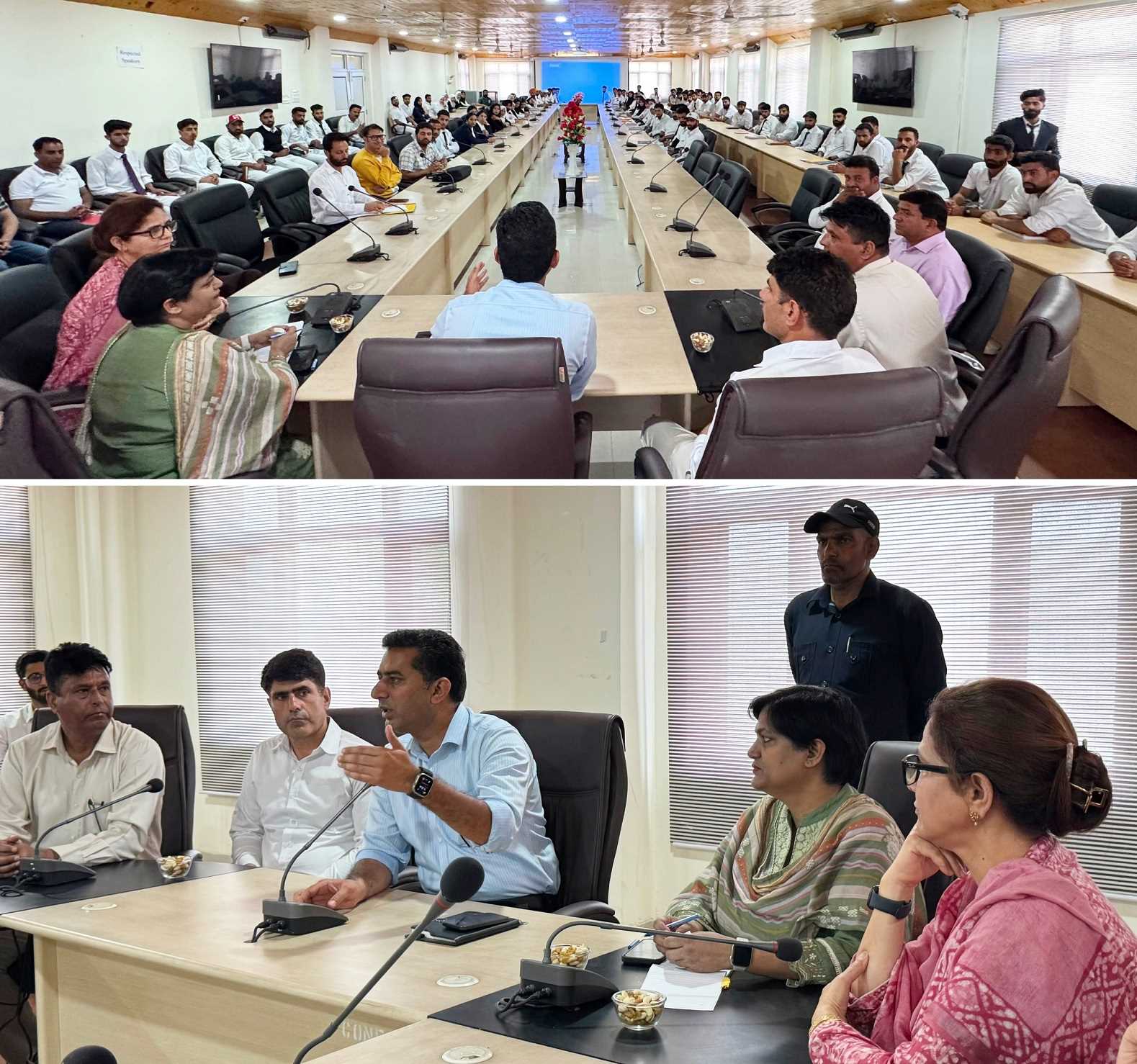
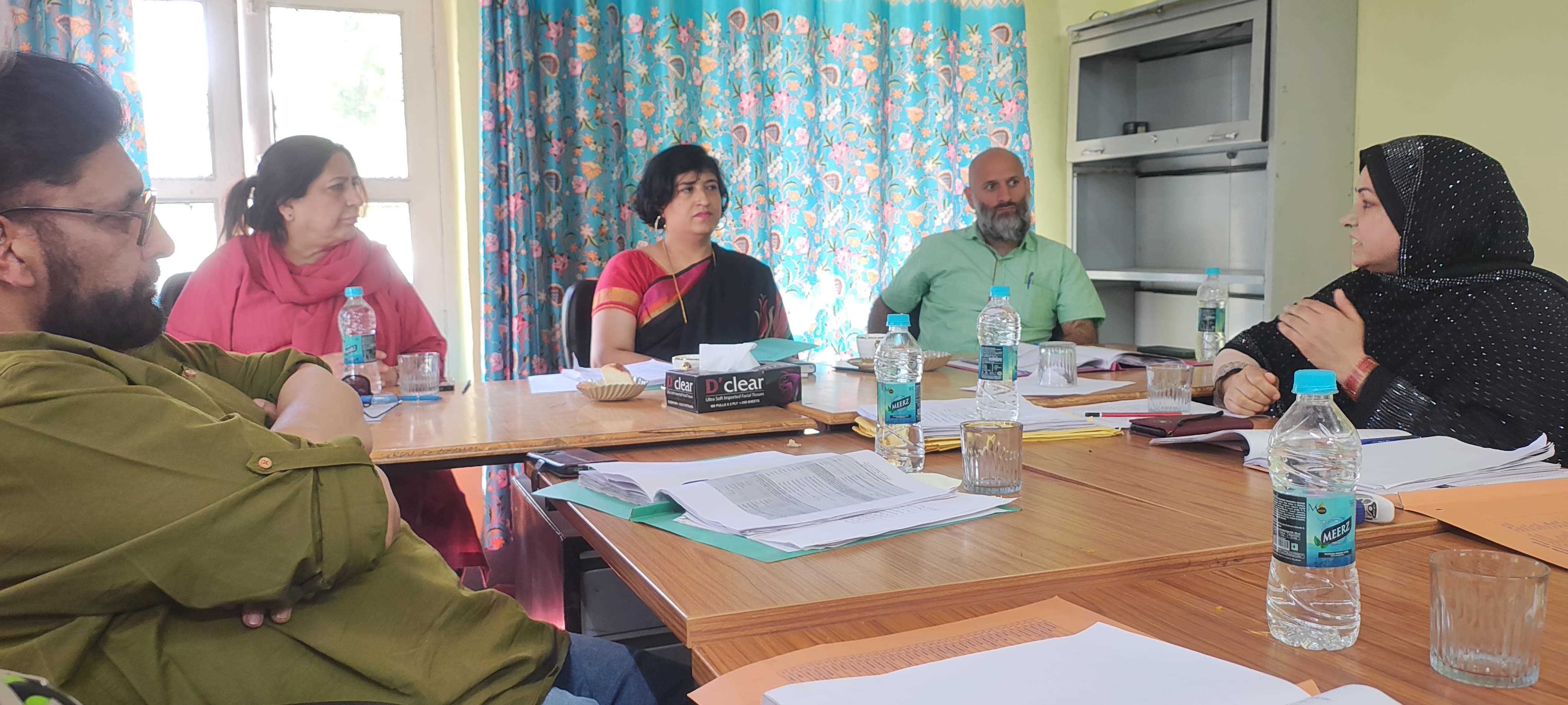
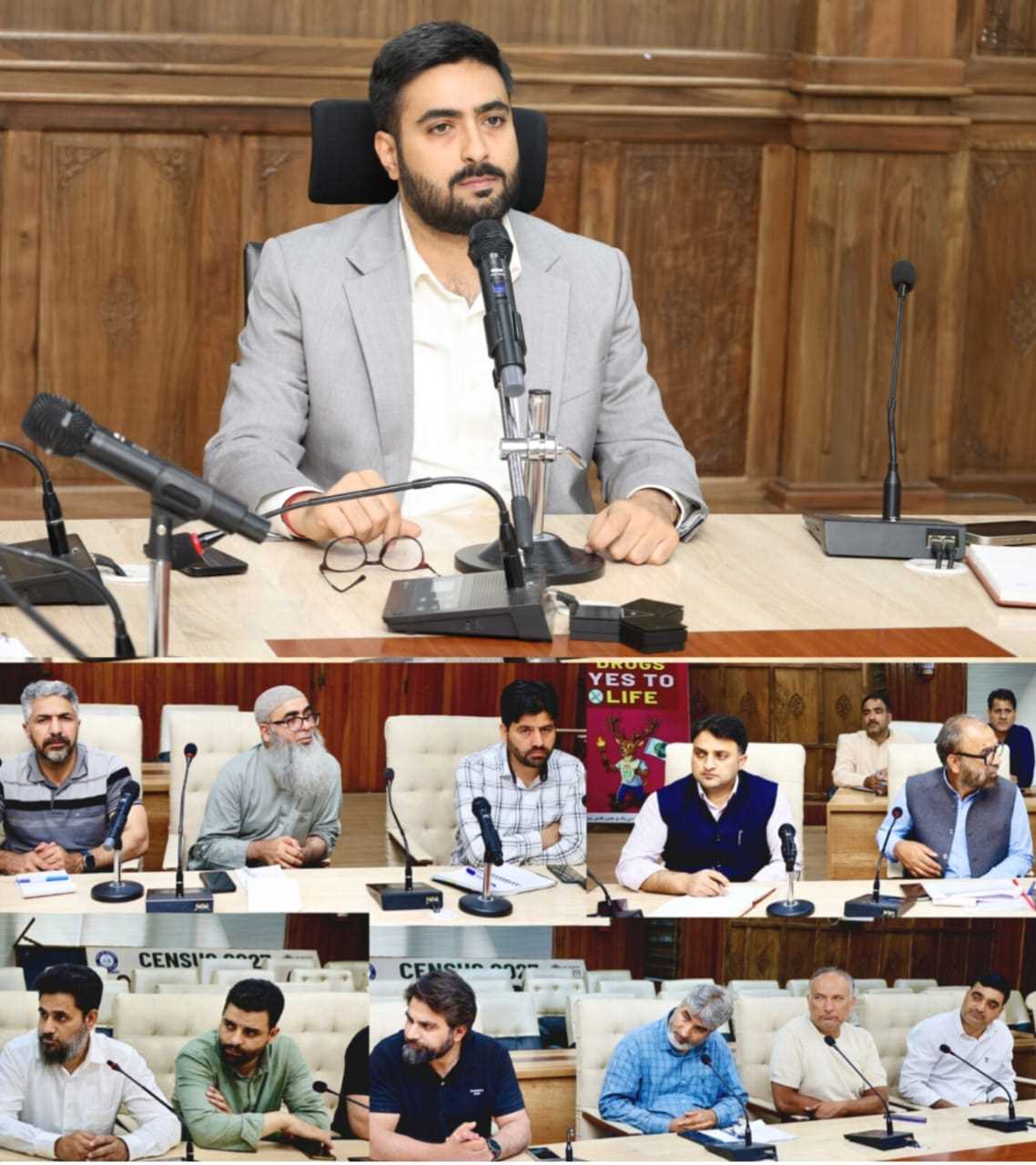
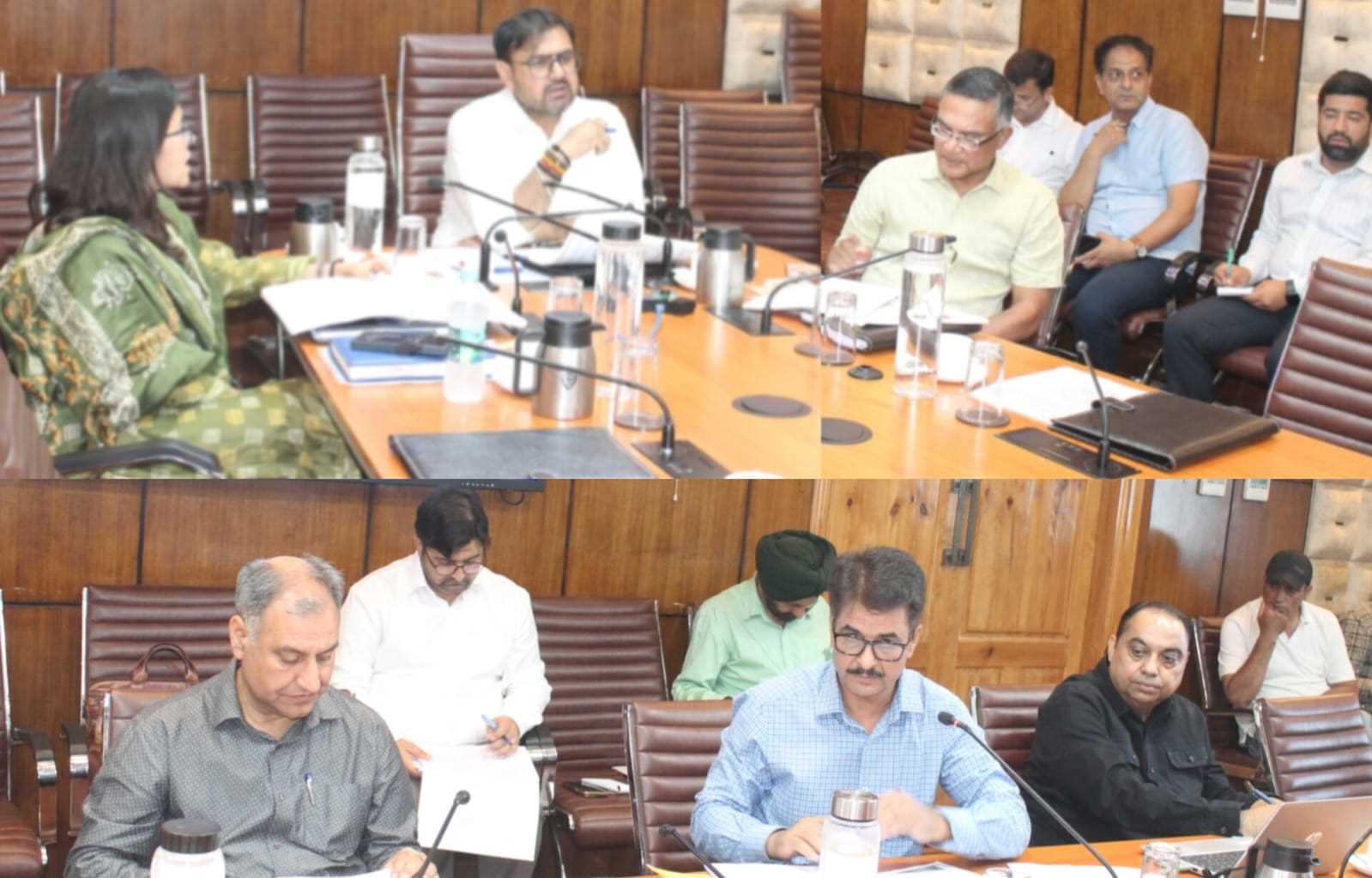
Jammu, Mar 10: Minister for Jal Shakti, Forest, Ecology & Environment, and Tribal Affairs, Javed Ahmed Rana, chaired a comprehensive review meeting on Tuesday to assess the functioning of the Jal Shakti Department and ongoing developmental initiatives across Jammu & Kashmir. The meeting stressed time-bound execution, stronger monitoring, accountability, and sustainable management of water resources.
The review was attended by Additional Chief Secretary Jal Shakti, Shaleen Kabra, members of the J&K Water Resources Regulatory Authority (JKWRRA), Mission Director Jal Jeevan Mission, all Chief Engineers, Superintending and Executive Engineers across various divisions, and other senior departmental officials.
During the meeting, the Minister examined the district-wise progress of tendering, allotment, and commencement of works under multiple departmental schemes. He took serious note of underperforming divisions and directed officers to intensify efforts, adhere strictly to timelines, and ensure accountability for delays or non-performance. He emphasized transparency, rigorous quality checks, and effective supervision as key measures to ensure successful implementation of projects.
Highlighting emerging water scarcity challenges due to deficient rainfall and drought-like conditions in certain areas, Rana urged prioritization of long-term water conservation strategies. He suggested earmarking a portion of UT funds specifically for resource sustainability, groundwater replenishment, and conservation initiatives.
The Minister also reviewed the department’s preparedness for the upcoming summer season, stressing uninterrupted water supply services and effective grievance redressal mechanisms. He directed inter-departmental coordination to ensure smooth execution during peak demand periods and emergencies. Challenges such as land disputes, flash flood damage, and technical feasibility issues were also deliberated.
Key updates presented by Shaleen Kabra included:
Har Ghar Jal certification: Out of 1,379 reported villages, 874 have been certified; officers were instructed to complete certification by month-end.
RPWSS coverage: 17,004 habitations targeted, with accelerated progress required.
UT Capex Budget 2025–26: Of 762 projects, 551 are in execution, 161 completed; 97% of works have received administrative approval.
Irrigation & Flood Control (I&FC): 523 projects in Jammu (364 in progress, 143 completed).
Public Health Engineering (PHE): 113 of 129 allotted projects in Jammu commenced; 9 completed in Kashmir.
SASCI 2025–26: 43 projects with an estimated cost of ₹423.86 crore undertaken.
Power backup for water supply schemes: 308 schemes equipped with DG sets to ensure uninterrupted service.
Digital governance: Transition to fully functional e-office system for paperless operations and improved administrative efficiency.
Other initiatives: Desiltation works, PMKSY and PMDP projects, and monitoring of Household Tap Connections (HTCs).
Rana stressed that all completed projects must be commissioned promptly to ensure benefits reach the public without delay. He called for enhanced monitoring, strong field-level supervision, and efficient fund utilisation to achieve the department’s targets and strengthen water security in the Union Territory.
This high-level review underscores the J&K government’s commitment to sustainable water resource management, efficient project execution, and resilient service delivery to meet the growing needs of its citizens.

Jammu, Mar 10: Minister for Jal Shakti, Forest, Ecology & Environment, and Tribal Affairs, Javed Ahmed Rana, chaired a comprehensive review meeting on Tuesday to assess the functioning of the Jal Shakti Department and ongoing developmental initiatives across Jammu & Kashmir. The meeting stressed time-bound execution, stronger monitoring, accountability, and sustainable management of water resources.
The review was attended by Additional Chief Secretary Jal Shakti, Shaleen Kabra, members of the J&K Water Resources Regulatory Authority (JKWRRA), Mission Director Jal Jeevan Mission, all Chief Engineers, Superintending and Executive Engineers across various divisions, and other senior departmental officials.
During the meeting, the Minister examined the district-wise progress of tendering, allotment, and commencement of works under multiple departmental schemes. He took serious note of underperforming divisions and directed officers to intensify efforts, adhere strictly to timelines, and ensure accountability for delays or non-performance. He emphasized transparency, rigorous quality checks, and effective supervision as key measures to ensure successful implementation of projects.
Highlighting emerging water scarcity challenges due to deficient rainfall and drought-like conditions in certain areas, Rana urged prioritization of long-term water conservation strategies. He suggested earmarking a portion of UT funds specifically for resource sustainability, groundwater replenishment, and conservation initiatives.
The Minister also reviewed the department’s preparedness for the upcoming summer season, stressing uninterrupted water supply services and effective grievance redressal mechanisms. He directed inter-departmental coordination to ensure smooth execution during peak demand periods and emergencies. Challenges such as land disputes, flash flood damage, and technical feasibility issues were also deliberated.
Key updates presented by Shaleen Kabra included:
Har Ghar Jal certification: Out of 1,379 reported villages, 874 have been certified; officers were instructed to complete certification by month-end.
RPWSS coverage: 17,004 habitations targeted, with accelerated progress required.
UT Capex Budget 2025–26: Of 762 projects, 551 are in execution, 161 completed; 97% of works have received administrative approval.
Irrigation & Flood Control (I&FC): 523 projects in Jammu (364 in progress, 143 completed).
Public Health Engineering (PHE): 113 of 129 allotted projects in Jammu commenced; 9 completed in Kashmir.
SASCI 2025–26: 43 projects with an estimated cost of ₹423.86 crore undertaken.
Power backup for water supply schemes: 308 schemes equipped with DG sets to ensure uninterrupted service.
Digital governance: Transition to fully functional e-office system for paperless operations and improved administrative efficiency.
Other initiatives: Desiltation works, PMKSY and PMDP projects, and monitoring of Household Tap Connections (HTCs).
Rana stressed that all completed projects must be commissioned promptly to ensure benefits reach the public without delay. He called for enhanced monitoring, strong field-level supervision, and efficient fund utilisation to achieve the department’s targets and strengthen water security in the Union Territory.
This high-level review underscores the J&K government’s commitment to sustainable water resource management, efficient project execution, and resilient service delivery to meet the growing needs of its citizens.

© Copyright 2023 brighterkashmir.com All Rights Reserved. Quantum Technologies