
BREAKING NEWS
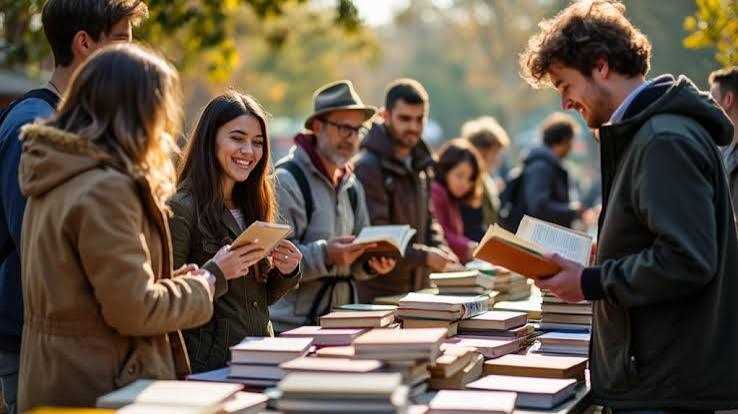
Schools and communities can help revive this tradition by creating book-exchange corners or encouraging students to donate their books at the end of each academic year. Such initiatives would not only help families but also bring back a sense of community and shared responsibility
Every year, as the new academic session approaches in Kashmir, a familiar scene unfolds. Bookshops become crowded, parents search for the prescribed textbooks, stationery shops witness a rush, and children prepare to step into another year of learning. Amid all this activity, something else catches my attention: the exchange of old books.
There was a time when a textbook rarely belonged to just one child. It travelled from an elder sibling to a younger one, from a neighbour's child to another, sometimes even through several households. A book that had once been used by three or four students could still look surprisingly neat. Its pages were intact, its cover carefully preserved, and its corners perhaps slightly worn from years of handling.
Sometimes, a name was written on the first page. Sometimes, a few important lines were underlined. Occasionally, there would be a small handwritten note in the margin, a forgotten calculation or a word whose meaning someone had searched for. These were not signs of a damaged book. They were traces of its journey. A book had a life beyond the academic year for which it was purchased.
Today, however, that culture seems to be gradually disappearing. We have become accustomed to buying new books, even when perfectly usable copies are available. New editions, changing syllabi and the desire to begin the session with everything new have contributed to this shift. The excitement of purchasing fresh textbooks has, in many ways, replaced the simple practice of sharing them.
But perhaps we have forgotten something important. A book does not lose its value simply because another child has read it before. Its knowledge remains the same, its lessons remain meaningful, and its pages continue to offer opportunities to learn. In fact, a reused book carries something extra: a story of children who have held it, read it, learnt from it and passed it forward.
There is also a lesson in this practice that goes beyond saving money. Sharing books teaches children responsibility, care and respect for resources. It reminds them that not everything needs to be replaced just because it is no longer new. In a time when we speak so much about sustainability and reducing waste, reusing schoolbooks is a small but meaningful step in that direction.
Schools and communities can help revive this tradition by creating book-exchange corners or encouraging students to donate their books at the end of each academic year. Such initiatives would not only help families but also bring back a sense of community and shared responsibility.
As another academic session begins, perhaps we should pause and think about the journey of the books we leave behind. The textbook that has completed one child's academic year may be waiting to begin another child's journey. It deserves to be used, not forgotten on a shelf or discarded.
Perhaps the real lesson is not just to teach children how to read books, but also how to value them, preserve them and pass them on.
Email:--------------- Sumayahamid1919@gmail.com

© Copyright 2023 brighterkashmir.com All Rights Reserved. Quantum Technologies