10-15-2026     3 رجب 1440

Saeed Naqvi's Memoir Offers a Front-Row Seat to History

What makes the memoir particularly interesting is its central concern with perspective. Naqvi argues that India has often viewed global affairs through reports produced elsewhere, especially in the West. Throughout the book, he returns to this idea repeatedly, suggesting that countries need their own voices and correspondents if they are to understand international developments properly

October 15, 2026 | Daanish Bin Nabi

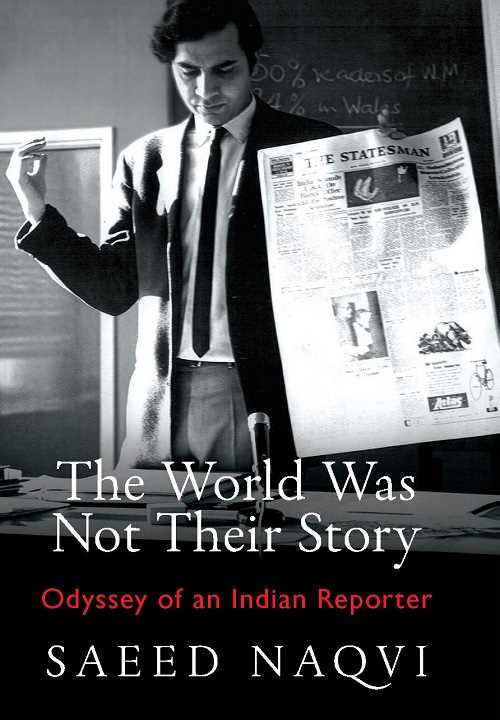
There are books that tell us what happened in history, and then there are books that show us how history was witnessed. The World Was Not Their Story belongs firmly in the second category. Written by veteran journalist Saeed Naqvi and published by Speaking Tiger Books, this memoir is not simply a record of a long career. It is a reflection on journalism, global politics and the importance of seeing the world through one's own eyes.


At first glance, readers might expect a traditional autobiography. After all, the author has spent decades in journalism and has covered some of the most significant international events of modern times. Yet the book rarely focuses on personal glory. Instead, it is driven by the places, events and people encountered along the way. The result is a narrative that feels less like a life story and more like a journey through changing political landscapes.
What makes the memoir particularly interesting is its central concern with perspective. Naqvi argues that India has often viewed global affairs through reports produced elsewhere, especially in the West. Throughout the book, he returns to this idea repeatedly, suggesting that countries need their own voices and correspondents if they are to understand international developments properly.


This argument gives the memoir a significance that goes beyond journalism. Readers are encouraged to think about how news is gathered, who controls the flow of information and why certain narratives become dominant. In an age when information crosses borders instantly, such questions remain highly relevant.


The strongest sections of the book are those that place readers directly in the middle of unfolding events. Naqvi writes as someone who spent years travelling from one international hotspot to another. His descriptions carry the confidence of first-hand observation. Rather than relying on grand theories, he often allows situations and encounters to speak for themselves.


This approach gives the memoir a sense of immediacy. Historical events that may appear distant in textbooks suddenly feel human and accessible. Readers are reminded that major political developments are experienced by ordinary people long before historians begin analysing them.


The book also provides valuable insight into an era of reporting that has almost disappeared. Long before smartphones, live streaming and instant updates became common, foreign correspondents worked under very different conditions. Gathering information required patience, resourcefulness and extensive travel. The memoir captures those realities effectively and serves as a reminder of how demanding international reporting once was.
One of the book's most appealing qualities is its honesty. Naqvi does not try to present journalism as a glamorous profession. Instead, he acknowledges its challenges, uncertainties and occasional frustrations. There is a welcome absence of self-congratulation. Readers are left with the impression of a reporter more interested in events than in celebrating his own achievements.


The memoir is also useful for understanding the development of Indian journalism over several decades. Through the author's experiences, readers gain insight into changing newsroom cultures, editorial priorities and the relationship between politics and the press. These observations add depth to the narrative and make it valuable for students of media studies as well as general readers.


Academically, the book can be approached from several angles. It speaks to discussions about journalism, media representation, international relations and post-colonial perspectives. Naqvi consistently questions the idea that global events should be interpreted from only one viewpoint. Whether readers agree with all his conclusions or not, the discussion is thought-provoking.


The book is not without flaws. Its greatest challenge is perhaps its enormous scope. Covering so many countries, political crises and public figures means that some stories are explored only briefly. Readers may occasionally feel that certain episodes deserve more space and deeper analysis than they receive.


The structure can also appear uneven at times. Rather than following a strict chronological path, the narrative moves between periods and places according to the author's experiences. This creates variety but can sometimes make the book feel fragmented.


Another minor weakness is that some sections seem directed at readers already familiar with international politics. Those without prior knowledge of certain events may occasionally find themselves searching for additional context. A little more background information in these areas would have made the book easier to follow.


Yet these shortcomings do little to reduce the memoir's overall value. The book succeeds because it offers something increasingly rare: a perspective shaped by direct observation. In an era when commentary often receives more attention than reporting, Naqvi reminds readers of the importance of being present where events occur.


The writing style itself is clear and straightforward. There is little unnecessary complexity. The author communicates serious ideas without becoming overly academic, making the book accessible to a wide audience. Readers interested in history, politics or current affairs will find plenty to engage with.


Perhaps the memoir's most important achievement is its challenge to accepted assumptions. It asks readers not only to consider historical events but also to question the ways those events are presented. This focus on perspective gives the book an intellectual depth that separates it from many journalistic memoirs.


Ultimately, The World Was Not Their Story is a book about looking beyond familiar narratives. It argues that understanding the world requires curiosity, independence and a willingness to move beyond conventional sources of information. That message remains as relevant today as it was when the events described in the memoir first took place.
For aspiring journalists, the book offers valuable lessons about reporting with integrity. For academics, it provides an intriguing account of media and international affairs. For general readers, it delivers a fascinating journey through decades of political change.


More than anything else, the memoir stands as a reminder that history is not only made by leaders and governments. It is also recorded by those who witness events, ask questions and bring distant stories to the public. In that respect, Naqvi's work remains both relevant and worth reading.


Ema8il:--------------------daanishinterview@gmail.com

Saeed Naqvi's Memoir Offers a Front-Row Seat to History

What makes the memoir particularly interesting is its central concern with perspective. Naqvi argues that India has often viewed global affairs through reports produced elsewhere, especially in the West. Throughout the book, he returns to this idea repeatedly, suggesting that countries need their own voices and correspondents if they are to understand international developments properly

October 15, 2026 | Daanish Bin Nabi

There are books that tell us what happened in history, and then there are books that show us how history was witnessed. The World Was Not Their Story belongs firmly in the second category. Written by veteran journalist Saeed Naqvi and published by Speaking Tiger Books, this memoir is not simply a record of a long career. It is a reflection on journalism, global politics and the importance of seeing the world through one's own eyes.


At first glance, readers might expect a traditional autobiography. After all, the author has spent decades in journalism and has covered some of the most significant international events of modern times. Yet the book rarely focuses on personal glory. Instead, it is driven by the places, events and people encountered along the way. The result is a narrative that feels less like a life story and more like a journey through changing political landscapes.
What makes the memoir particularly interesting is its central concern with perspective. Naqvi argues that India has often viewed global affairs through reports produced elsewhere, especially in the West. Throughout the book, he returns to this idea repeatedly, suggesting that countries need their own voices and correspondents if they are to understand international developments properly.


This argument gives the memoir a significance that goes beyond journalism. Readers are encouraged to think about how news is gathered, who controls the flow of information and why certain narratives become dominant. In an age when information crosses borders instantly, such questions remain highly relevant.


The strongest sections of the book are those that place readers directly in the middle of unfolding events. Naqvi writes as someone who spent years travelling from one international hotspot to another. His descriptions carry the confidence of first-hand observation. Rather than relying on grand theories, he often allows situations and encounters to speak for themselves.


This approach gives the memoir a sense of immediacy. Historical events that may appear distant in textbooks suddenly feel human and accessible. Readers are reminded that major political developments are experienced by ordinary people long before historians begin analysing them.


The book also provides valuable insight into an era of reporting that has almost disappeared. Long before smartphones, live streaming and instant updates became common, foreign correspondents worked under very different conditions. Gathering information required patience, resourcefulness and extensive travel. The memoir captures those realities effectively and serves as a reminder of how demanding international reporting once was.
One of the book's most appealing qualities is its honesty. Naqvi does not try to present journalism as a glamorous profession. Instead, he acknowledges its challenges, uncertainties and occasional frustrations. There is a welcome absence of self-congratulation. Readers are left with the impression of a reporter more interested in events than in celebrating his own achievements.


The memoir is also useful for understanding the development of Indian journalism over several decades. Through the author's experiences, readers gain insight into changing newsroom cultures, editorial priorities and the relationship between politics and the press. These observations add depth to the narrative and make it valuable for students of media studies as well as general readers.


Academically, the book can be approached from several angles. It speaks to discussions about journalism, media representation, international relations and post-colonial perspectives. Naqvi consistently questions the idea that global events should be interpreted from only one viewpoint. Whether readers agree with all his conclusions or not, the discussion is thought-provoking.


The book is not without flaws. Its greatest challenge is perhaps its enormous scope. Covering so many countries, political crises and public figures means that some stories are explored only briefly. Readers may occasionally feel that certain episodes deserve more space and deeper analysis than they receive.


The structure can also appear uneven at times. Rather than following a strict chronological path, the narrative moves between periods and places according to the author's experiences. This creates variety but can sometimes make the book feel fragmented.


Another minor weakness is that some sections seem directed at readers already familiar with international politics. Those without prior knowledge of certain events may occasionally find themselves searching for additional context. A little more background information in these areas would have made the book easier to follow.


Yet these shortcomings do little to reduce the memoir's overall value. The book succeeds because it offers something increasingly rare: a perspective shaped by direct observation. In an era when commentary often receives more attention than reporting, Naqvi reminds readers of the importance of being present where events occur.


The writing style itself is clear and straightforward. There is little unnecessary complexity. The author communicates serious ideas without becoming overly academic, making the book accessible to a wide audience. Readers interested in history, politics or current affairs will find plenty to engage with.


Perhaps the memoir's most important achievement is its challenge to accepted assumptions. It asks readers not only to consider historical events but also to question the ways those events are presented. This focus on perspective gives the book an intellectual depth that separates it from many journalistic memoirs.


Ultimately, The World Was Not Their Story is a book about looking beyond familiar narratives. It argues that understanding the world requires curiosity, independence and a willingness to move beyond conventional sources of information. That message remains as relevant today as it was when the events described in the memoir first took place.
For aspiring journalists, the book offers valuable lessons about reporting with integrity. For academics, it provides an intriguing account of media and international affairs. For general readers, it delivers a fascinating journey through decades of political change.


More than anything else, the memoir stands as a reminder that history is not only made by leaders and governments. It is also recorded by those who witness events, ask questions and bring distant stories to the public. In that respect, Naqvi's work remains both relevant and worth reading.


Ema8il:--------------------daanishinterview@gmail.com

  • Address: R.C 2 Quarters Press Enclave Near Pratap Park, Srinagar 190001.
  • Phone: 0194-2451076 , +91-941-940-0056 , +91-962-292-4716
  • Email: brighterkmr@gmail.com
Owner, Printer, Publisher, Editor: Farooq Ahmad Wani
Legal Advisor: M.J. Hubi
Printed at: Sangermal offset Printing Press Rangreth ( Budgam)
Published from: Gulshanabad Chraresharief Budgam
RNI No.: JKENG/2010/33802
Office No’s: 0194-2451076
Mobile No’s 9419400056, 9622924716 ,7006086442
Postal Regd No: SK/135/2010-2019
POST BOX NO: 1001
Administrative Office: R.C 2 Quarters Press Enclave Near Pratap Park ( Srinagar -190001)

© Copyright 2023 brighterkashmir.com All Rights Reserved. Quantum Technologies

Owner, Printer, Publisher, Editor: Farooq Ahmad Wani
Legal Advisor: M.J. Hubi
Printed at: Abid Enterprizes, Zainkote Srinagar
Published from: Gulshanabad Chraresharief Budgam
RNI No.: JKENG/2010/33802
Office No’s: 0194-2451076, 9622924716 , 9419400056
Postal Regd No: SK/135/2010-2019
Administrative Office: Abi Guzer Srinagar

© Copyright 2018 brighterkashmir.com All Rights Reserved.