07-31-2026     3 رجب 1440

Saving Kashmir's Lifelines

The conservation reports also reveal that the authorities are taking note of this fact as well. Wildlife Institute of India has a long history of studying, documenting and conserving the wetlands of Jammu & Kashmir. It therefore has a wealth of knowledge on these ecosystems as it has been carrying out research and publishing papers on the subject. The institute has also devised management effectiveness evaluation metrics that ensure that conservation is a sustained process and not something which can be done for a short while. It is this kind of an approach that helps conservationists and administrators deal with these challenges in an effective manner.


July 31, 2026 | Anzar Fayaz


Srinagar for ages has been enamoured by the beauty of Dal Lake and Wular Lake. The former is the epitome of Srinagar as houseboats, shikaras and floating gardens constitute its unique picturesque charm. On the other hand, the Wular lake is an extensive wetland considered vital to the ecological, commercial, and geographical integrity of Kashmir valley. However, the question which these lakes pose for the administrators today is: can these vital wetlands withstand the pressures of urbanization, pollution, and changing climatic conditions?
The response which the official conservation reports make clear is that the story of these two lakes cannot be summed up in just simple terms of degradation or restoration.
What happens to Dal Lake is intensely wound up with the fate of Srinagar. The city’s growth process and the concomitant pressures have been impacting the lake, adding to the burden of sewage, solid waste, encroachment and eutrophication. These have led to proliferation of vegetation on the lake, which has further resulted in changing its very character. It is therefore evident that the restoration process of the lake is directly connected to the manner in which the city is being taken care of.
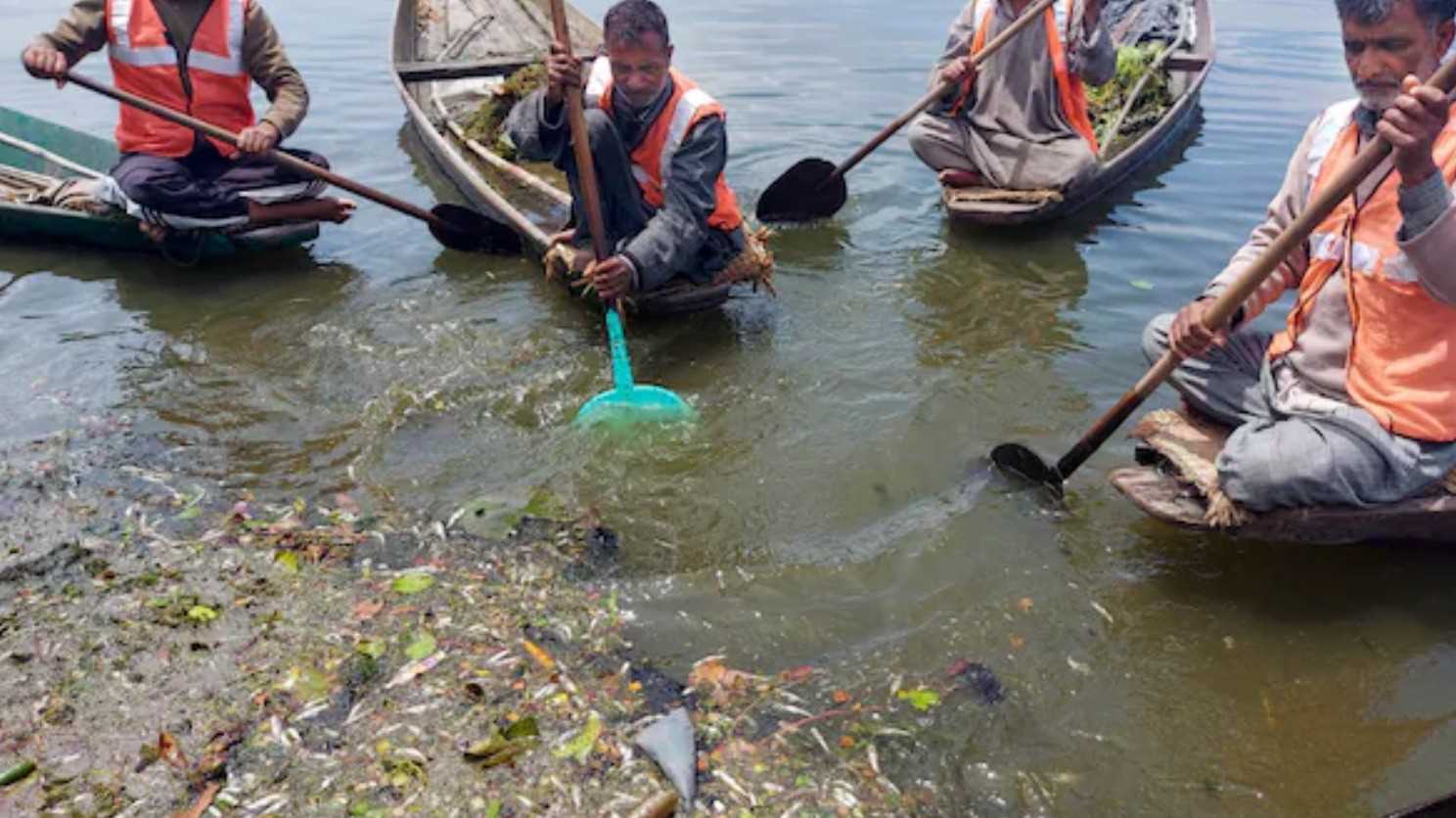
Efforts to manage the pollution and ecological degradation of the lake have therefore focused on treating and eliminating pollution sources while clearing the overgrown vegetation to restore its pristine beauty. However, the lake’s management report makes it clear that cleaning the lake cannot be separated from controlling the waste from the cities that continues to affect it in a serious manner.
It is here that the issue of the lake becomes complex as conservation has to balance between the interests of tourism, residents, commercial activity and the ecology of the lake. It is indeed a multi layered issue of waste management as the city’s waste disposal and pollution control mechanisms are unable to deal with a growing city. This is why Dal Lake stands out as a crucial test case for conservationists, who have to grapple with these issues everyday.
On the other hand, while Wular is also impacted by the pressures of urbanization, it faces other challenges which are not dissimilar to those being faced by Dal. The management and conservation reports show that this wetland too has been subjected to varied forms of degradation which has impacted the very character of this natural wonder in Kashmir. However, for Wular, its complex physiographic set up has added to the burden of conservation, making it imperative that this lake also be dealt with in a manner that takes into account its ecology.
The reports on conservation reveal that the Wular Lake has been given due priority in government circles. The Wildlife Institute of India’s 2024 to 2025 work plan includes a comprehensive study on the waterbird population in Wular Lake and its habitats which would be carried out in collaboration with the Jammu & Kashmir Forest Department. This is yet another illustration of how the authorities realize that to understand and conserve any wetland, it is essential to first study the bird population that inhabits it and which serves as an important bio indicator of the state of the wetland.
It is therefore clear that the conservation report reveals the different challenges which these two wetlands face. While it is true that Wular is facing problems which are different from those being faced by Dal, both require long term sustained attention which goes beyond cosmetic improvements.
The conservation reports also reveal that the authorities are taking note of this fact as well. Wildlife Institute of India has a long history of studying, documenting and conserving the wetlands of Jammu & Kashmir. It therefore has a wealth of knowledge on these ecosystems as it has been carrying out research and publishing papers on the subject. The institute has also devised management effectiveness evaluation metrics that ensure that conservation is a sustained process and not something which can be done for a short while. It is this kind of an approach that helps conservationists and administrators deal with these challenges in an effective manner.
In all this, it is easy to forget that these conservation efforts have a direct impact on the everyday life of the Kashmiris. They see the water of the lake, they look at its beauty, they value its resources. They derive livelihood from it and in turn look after its treasures. These lakes are indeed a part of their lives. It is therefore crucial to create awareness among the general masses so that they also realize the necessity for conserving and managing these wetlands.
It is not difficult to see how the conservation and management of these two wetlands have been the subject of considerable discussion and deliberation, both in official government circles as well as among the civil society. The situation of the lakes reflects the fact that it is not enough to restore and renovate them on a cosmetic level, but it is necessary to tackle various issues like pollution, waste management, encroachment and so on. Only sustained efforts can ensure that these problems are controlled.
These lakes especially Dal have been the hallmark of Srinagar and their conservation is vital to maintaining the ecological integrity of this beautiful valley. It is to be hoped that authorities will take the pulse of these wetlands and ensure that Srinagar is able to balance between tourism ecology and urbanization.


Email:------------------------- shaneHind114@gmail.com

Saving Kashmir's Lifelines

The conservation reports also reveal that the authorities are taking note of this fact as well. Wildlife Institute of India has a long history of studying, documenting and conserving the wetlands of Jammu & Kashmir. It therefore has a wealth of knowledge on these ecosystems as it has been carrying out research and publishing papers on the subject. The institute has also devised management effectiveness evaluation metrics that ensure that conservation is a sustained process and not something which can be done for a short while. It is this kind of an approach that helps conservationists and administrators deal with these challenges in an effective manner.


July 31, 2026 | Anzar Fayaz


Srinagar for ages has been enamoured by the beauty of Dal Lake and Wular Lake. The former is the epitome of Srinagar as houseboats, shikaras and floating gardens constitute its unique picturesque charm. On the other hand, the Wular lake is an extensive wetland considered vital to the ecological, commercial, and geographical integrity of Kashmir valley. However, the question which these lakes pose for the administrators today is: can these vital wetlands withstand the pressures of urbanization, pollution, and changing climatic conditions?
The response which the official conservation reports make clear is that the story of these two lakes cannot be summed up in just simple terms of degradation or restoration.
What happens to Dal Lake is intensely wound up with the fate of Srinagar. The city’s growth process and the concomitant pressures have been impacting the lake, adding to the burden of sewage, solid waste, encroachment and eutrophication. These have led to proliferation of vegetation on the lake, which has further resulted in changing its very character. It is therefore evident that the restoration process of the lake is directly connected to the manner in which the city is being taken care of.
Efforts to manage the pollution and ecological degradation of the lake have therefore focused on treating and eliminating pollution sources while clearing the overgrown vegetation to restore its pristine beauty. However, the lake’s management report makes it clear that cleaning the lake cannot be separated from controlling the waste from the cities that continues to affect it in a serious manner.
It is here that the issue of the lake becomes complex as conservation has to balance between the interests of tourism, residents, commercial activity and the ecology of the lake. It is indeed a multi layered issue of waste management as the city’s waste disposal and pollution control mechanisms are unable to deal with a growing city. This is why Dal Lake stands out as a crucial test case for conservationists, who have to grapple with these issues everyday.
On the other hand, while Wular is also impacted by the pressures of urbanization, it faces other challenges which are not dissimilar to those being faced by Dal. The management and conservation reports show that this wetland too has been subjected to varied forms of degradation which has impacted the very character of this natural wonder in Kashmir. However, for Wular, its complex physiographic set up has added to the burden of conservation, making it imperative that this lake also be dealt with in a manner that takes into account its ecology.
The reports on conservation reveal that the Wular Lake has been given due priority in government circles. The Wildlife Institute of India’s 2024 to 2025 work plan includes a comprehensive study on the waterbird population in Wular Lake and its habitats which would be carried out in collaboration with the Jammu & Kashmir Forest Department. This is yet another illustration of how the authorities realize that to understand and conserve any wetland, it is essential to first study the bird population that inhabits it and which serves as an important bio indicator of the state of the wetland.
It is therefore clear that the conservation report reveals the different challenges which these two wetlands face. While it is true that Wular is facing problems which are different from those being faced by Dal, both require long term sustained attention which goes beyond cosmetic improvements.
The conservation reports also reveal that the authorities are taking note of this fact as well. Wildlife Institute of India has a long history of studying, documenting and conserving the wetlands of Jammu & Kashmir. It therefore has a wealth of knowledge on these ecosystems as it has been carrying out research and publishing papers on the subject. The institute has also devised management effectiveness evaluation metrics that ensure that conservation is a sustained process and not something which can be done for a short while. It is this kind of an approach that helps conservationists and administrators deal with these challenges in an effective manner.
In all this, it is easy to forget that these conservation efforts have a direct impact on the everyday life of the Kashmiris. They see the water of the lake, they look at its beauty, they value its resources. They derive livelihood from it and in turn look after its treasures. These lakes are indeed a part of their lives. It is therefore crucial to create awareness among the general masses so that they also realize the necessity for conserving and managing these wetlands.
It is not difficult to see how the conservation and management of these two wetlands have been the subject of considerable discussion and deliberation, both in official government circles as well as among the civil society. The situation of the lakes reflects the fact that it is not enough to restore and renovate them on a cosmetic level, but it is necessary to tackle various issues like pollution, waste management, encroachment and so on. Only sustained efforts can ensure that these problems are controlled.
These lakes especially Dal have been the hallmark of Srinagar and their conservation is vital to maintaining the ecological integrity of this beautiful valley. It is to be hoped that authorities will take the pulse of these wetlands and ensure that Srinagar is able to balance between tourism ecology and urbanization.


Email:------------------------- shaneHind114@gmail.com

  • Address: R.C 2 Quarters Press Enclave Near Pratap Park, Srinagar 190001.
  • Phone: 0194-2451076 , +91-941-940-0056 , +91-962-292-4716
  • Email: brighterkmr@gmail.com
Owner, Printer, Publisher, Editor: Farooq Ahmad Wani
Legal Advisor: M.J. Hubi
Printed at: Sangermal offset Printing Press Rangreth ( Budgam)
Published from: Gulshanabad Chraresharief Budgam
RNI No.: JKENG/2010/33802
Office No’s: 0194-2451076
Mobile No’s 9419400056, 9622924716 ,7006086442
Postal Regd No: SK/135/2010-2019
POST BOX NO: 1001
Administrative Office: R.C 2 Quarters Press Enclave Near Pratap Park ( Srinagar -190001)

© Copyright 2023 brighterkashmir.com All Rights Reserved. Quantum Technologies

Owner, Printer, Publisher, Editor: Farooq Ahmad Wani
Legal Advisor: M.J. Hubi
Printed at: Abid Enterprizes, Zainkote Srinagar
Published from: Gulshanabad Chraresharief Budgam
RNI No.: JKENG/2010/33802
Office No’s: 0194-2451076, 9622924716 , 9419400056
Postal Regd No: SK/135/2010-2019
Administrative Office: Abi Guzer Srinagar

© Copyright 2018 brighterkashmir.com All Rights Reserved.