
BREAKING NEWS
Education is not simply a commercial transaction; it is a moral and social responsibility. Schools must produce thoughtful, confident and compassionate citizens, not merely examination toppers. Their success should be measured by the character they build, the knowledge they impart and the lives they transform
A school is not merely a building where children read textbooks, appear in examinations and collect certificates. It is an environment where young minds learn to become responsible human beings, develop confidence, acquire practical wisdom and prepare themselves to face life's challenges. A true school teaches kindness, respect, empathy, tolerance and humility. It encourages children to celebrate others' success, accept defeat with dignity, forgive mistakes and stand up for the weak rather than mock them. Unfortunately, the real purpose of education is gradually being overshadowed by commercial interests.
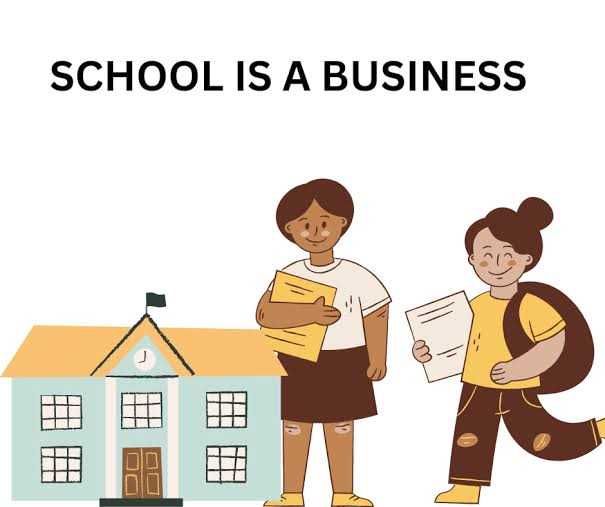
Education is the foundation of a progressive society. It empowers individuals to think independently, question injustice and contribute meaningfully to the community. Yet an uncomfortable question confronts us: Are some schools genuinely centres of learning or merely money-making enterprises?
While many institutions continue to serve society with dedication, others appear increasingly concerned about profits, publicity and popularity. Impressive buildings, expensive facilities, smart classrooms and attractive advertisements are often projected as indicators of educational excellence. However, infrastructure alone cannot guarantee quality education. What matters is what a child actually learns inside the classroom.
The situation in our education system raises serious concerns. Despite years of schooling, a large number of students struggle to translate their academic qualifications into practical abilities and employment opportunities. The gap between classroom learning and real-life requirements continues to widen. Examination transparency, genuine assessment and accountability also deserve greater attention. When students are not evaluated honestly and parents are not informed about their children's actual performance, both are left struggling to understand their strengths and weaknesses.
Having observed the education sector over the years, one disturbing reality is the growing disconnect between academic performance and a student's real potential. Marks and certificates often become more important than creativity, independent thinking and practical intelligence. Such an approach can push students into uncertainty and gradually weaken their confidence.
Equally disturbing is the treatment of teachers in certain private institutions. Low salaries, excessive workloads and inadequate job security undermine their dignity and motivation. Teachers are the backbone of any educational institution. A school that fails to respect its teachers cannot genuinely teach children the importance of respect. Fair remuneration, professional freedom and a healthy working environment are essential for meaningful education.
Another concern is the excessive academic burden placed on children. Mountains of homework, numerous textbooks, assignments and frequent examinations leave little room for sports, creativity, reading and personal interests. The National Education Policy (NEP) 2020 emphasises experiential learning, critical thinking, creativity and conceptual understanding. But are our schools sincerely implementing these principles, or are children still being trained to memorise textbooks and reproduce information in examinations?
School activities, too, must serve a meaningful purpose. Cultural programmes, competitions, educational tours and extracurricular events should develop confidence, teamwork and practical skills. Merely organising events, taking photographs and promoting them on social media cannot be equated with quality education. Publicity should never become a substitute for learning.
Parents also have an important responsibility. Choosing a school should not depend merely on expensive uniforms, impressive buildings, costly facilities or promotional campaigns. They must examine teaching standards, teacher-student interaction, academic transparency and the institution's commitment to children's moral and intellectual development. They have every right to question management when the future of their children is at stake.
The government, too, must strengthen monitoring mechanisms, ensure transparency in assessment, protect teachers' interests and hold institutions accountable for educational standards.
Education is not simply a commercial transaction; it is a moral and social responsibility. Schools must produce thoughtful, confident and compassionate citizens, not merely examination toppers. Their success should be measured by the character they build, the knowledge they impart and the lives they transform.
A school must be a temple of learning, not a marketplace of promises. Its ultimate achievement lies not in the money it earns or the publicity it receives, but in the human beings it creates.
Email:---------------------------atharislam5@gmail.com

© Copyright 2023 brighterkashmir.com All Rights Reserved. Quantum Technologies