
BREAKING NEWS
FM announces big infra, cuts import tariffs tax holiday for AI data centres, cheaper cancer drugs
12.2 lakh crore public capex proposed
Customs duty on 17 cancer drugs, easing treatment costs
Pushes ‘orange economy’ with nationwide creative tech labs
Projects Real GDP at 7.4 %, Nominal GDP at 10
Proposes sports goods initiative, launch of Khelo India Mission
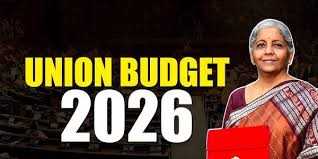
Finance Minister Nirmala Sitharaman on Sunday presented the Union Budget 2026-27 in Parliament where she announced a nearly 9% rise in Capital Expenditure for the next financial year, increasing the allocation to Rs 12.2 lakh crore in this year’s budget.
While presenting the Budget in Parliament, she said the higher capital expenditure is meant to keep infrastructure projects moving and support overall economic growth.
Capital spending has been raised from Rs 11.21 lakh crore, which was allocated in the previous Budget for 2025–26. The government had kept the same capex level for FY26, but has now decided to step it up for the coming year.
Sitharaman also pointed to the sharp increase in public investment over the last decade. She said capital expenditure has grown significantly from about Rs 2 lakh crore in 2014–15 to Rs 11.2 lakh crore in 2025–26, and will now rise further to Rs 12.2 lakh crore in 2026–27 to maintain this growth momentum.
Sitharaman presented the Union Budget for 2026-27 with a clear focus on India’s growth and people’s welfare.
To drive progress, she suggested focused actions in six main areas: growing manufacturing in key future-focused sectors, reviving older industries, building strong small and medium businesses (MSMEs), giving a big boost to roads, railways, and other infrastructure, ensuring long-term safety and stability, and creating strong economic zones around cities.
The deadline to file revised income tax returns will be extended from December 31 to March 31. This gives taxpayers extra time to fix mistakes or update income details without facing penalties.
Interest awarded by Motor Accident Claims Tribunals (MACT) to individuals will be fully exempt from income tax. No TDS will be deducted, helping victims get faster and hassle-free compensation.
Tax collected at source on overseas tour packages will be cut to a flat 2%, down from the earlier 5% and 20% rates. This will reduce upfront costs for people travelling abroad.
TCS under the Liberalised Remittance Scheme for sending money abroad for education or medical treatment will also be reduced from 5% to 2%, easing the burden on families.
A new automated, rule-based system will allow small taxpayers to get lower or nil TDS certificates without manual applications or approvals, cutting delays and paperwork.
Depositories will be able to collect Form 15G or 15H directly from investors and pass it on to companies. This removes the need for repeated submissions and simplifies tax compliance on interest and dividend income.
The direct tax changes in Budget 2026 focus on trust-based taxation, digital systems and simpler rules, while aiming to reduce disputes and compliance hassles.
The FM announced plans to set up a dedicated ₹10,000 crore SME Growth Fund to help create future jobs and support promising small businesses based on specific criteria. She said the government sees MSMEs as a key driver of economic growth and has laid out a three-part plan to help them grow into strong and competitive enterprises, starting with equity support. She also said the government will add ₹2,000 crore to the Self-Reliant India Fund, which was launched in 2021, to continue supporting micro-enterprises and ensure they have access to risk capital.
To further unlock the sector’s potential, she outlined four new steps.
First, all central public sector enterprises will be required to use the TREDS platform to settle payments for purchases made from MSMEs, which is expected to set an example for private companies as well. Second, a credit guarantee system will be introduced through CGTMSE to support invoice discounting on the TREDS platform. Third, the government will link the Government e-Marketplace (GeM) with TREDS so that financiers can access information on government purchases from SMEs, helping them offer faster and cheaper loans. Fourth, receivables on the TREDS platform will be turned into asset-backed securities, creating a secondary market that improves liquidity and speeds up payments.
The FM announced the removal of basic customs duty on 17 cancer related drugs and medicines in the Union Budget 2026-27 on Sunday.
“To provide relief to patients, particularly those suffering from cancer, I propose to exempt basic customs duty on 17 drugs or medicines,” she said.
She also proposed the inclusion of seven additional rare diseases for the purpose of exempting import duties on personal imports of drugs, medicines and Food for Special Medical Purposes (FSMP) used in their treatment.
She also mentioned that the country is facing an external environment in which trade and multilateralism are imperilled and access to resources and supply chains are disrupted. New technologies are transforming production systems while sharply increasing demands on water, energy and critical minerals.
The Finance Minister said that after the Prime Minister’s announcement on Independence Day in 2025, over 350 reforms have been rolled out. These include GST simplification, notification of Labour Codes, and rationalisation of mandatory Quality Control Orders. High Level Committees have been formed and in parallel, the Central Government is working with the State Governments on deregulation and reducing compliance requirements.
India is poised for high economic growth, driven by strong domestic demand, record investment, rising foreign inflows, and continued fiscal discipline, Sitharaman said.
Real GDP in FY 2026-27 is estimated to grow 7.4 per cent, with nominal GDP at 8 per cent. Services continue to lead growth at 9.1 per cent, manufacturing and construction expand by 7 per cent, and agriculture is expected to grow 3.1 per cent. Nominal GDP for FY 2026-27 is projected to rise 10 per cent over FY 2025-26.
The FM proposed an initiative for sports goods manufacturing and proposed the launch of a Khelo India Mission as part of the union Budget 2026–27, aimed at strengthening India’s sporting ecosystem and generating employment.
She said India’s potential to emerge as a global hub for high-quality and affordable sports goods would be leveraged through a focused initiative promoting manufacturing, research and innovation.
The announcement on sports goods is centred on the first of the three kartavyas that form the pillars of this year’s Budget, namely, ‘to accelerate and sustain economic growth, by enhancing productivity and competitiveness, and building resilience to volatile global dynamics’.
In another key announcement, Sitharaman proposed the launch of a Khelo India Mission to further develop the sports sector over the next decade.
“The Sports Sector provides multiple means of employment, skilling and job opportunities. Taking forward the systematic nurturing of sports talent which is set in motion through the Khelo India programme, I propose to launch a Khelo India Mission to transform the Sports sector over the next decade,” the Finance Minister said in her Budget speech.
Giving a strong push to India’s fast-growing creative and digital content sector, Sitharaman announced a major initiative to strengthen the country’s “orange economy.”
As part of the plan, the government will back the Indian Institute of Creative Technologies in Mumbai to establish specialised AVGC (Animation, Visual Effects, Gaming and Comics) and content creation laboratories in 15,000 secondary schools and 500 colleges nationwide.
The first Indian Institute of Creative Technology (IICT) was established in Mumbai with an allocated budget of Rs 400 crore. Located at the NFDC Complex, Mumbai, IICT is designed as a premier institution (modelled on IITs/IIMs) to bridge the skill gap in AVGC-XR, with 17 specialized programs in VFX, gaming, and animation. It functions on a Public-Private Partnership (PPP) model, with industry partners including Google, Meta, NVIDIA, Microsoft, Adobe, and WPP.
The minister said that the move will aid the sector in meeting the growing manpower demand and provide employment to 2 million professionals by 2030. “Orange economy. India's animation, visual effects, gaming and comics (AVCG) sector is a growing industry projected to require 2 million professionals by 2030. I propose to support the Indian Institute of Creative Technologies Mumbai in setting up AVCG content creator labs in 15,000 secondary schools all over the country and 500 colleges,” Sitharaman said in her Budget speech.
FM announces big infra, cuts import tariffs tax holiday for AI data centres, cheaper cancer drugs
12.2 lakh crore public capex proposed
Customs duty on 17 cancer drugs, easing treatment costs
Pushes ‘orange economy’ with nationwide creative tech labs
Projects Real GDP at 7.4 %, Nominal GDP at 10
Proposes sports goods initiative, launch of Khelo India Mission
Finance Minister Nirmala Sitharaman on Sunday presented the Union Budget 2026-27 in Parliament where she announced a nearly 9% rise in Capital Expenditure for the next financial year, increasing the allocation to Rs 12.2 lakh crore in this year’s budget.
While presenting the Budget in Parliament, she said the higher capital expenditure is meant to keep infrastructure projects moving and support overall economic growth.
Capital spending has been raised from Rs 11.21 lakh crore, which was allocated in the previous Budget for 2025–26. The government had kept the same capex level for FY26, but has now decided to step it up for the coming year.
Sitharaman also pointed to the sharp increase in public investment over the last decade. She said capital expenditure has grown significantly from about Rs 2 lakh crore in 2014–15 to Rs 11.2 lakh crore in 2025–26, and will now rise further to Rs 12.2 lakh crore in 2026–27 to maintain this growth momentum.
Sitharaman presented the Union Budget for 2026-27 with a clear focus on India’s growth and people’s welfare.
To drive progress, she suggested focused actions in six main areas: growing manufacturing in key future-focused sectors, reviving older industries, building strong small and medium businesses (MSMEs), giving a big boost to roads, railways, and other infrastructure, ensuring long-term safety and stability, and creating strong economic zones around cities.
The deadline to file revised income tax returns will be extended from December 31 to March 31. This gives taxpayers extra time to fix mistakes or update income details without facing penalties.
Interest awarded by Motor Accident Claims Tribunals (MACT) to individuals will be fully exempt from income tax. No TDS will be deducted, helping victims get faster and hassle-free compensation.
Tax collected at source on overseas tour packages will be cut to a flat 2%, down from the earlier 5% and 20% rates. This will reduce upfront costs for people travelling abroad.
TCS under the Liberalised Remittance Scheme for sending money abroad for education or medical treatment will also be reduced from 5% to 2%, easing the burden on families.
A new automated, rule-based system will allow small taxpayers to get lower or nil TDS certificates without manual applications or approvals, cutting delays and paperwork.
Depositories will be able to collect Form 15G or 15H directly from investors and pass it on to companies. This removes the need for repeated submissions and simplifies tax compliance on interest and dividend income.
The direct tax changes in Budget 2026 focus on trust-based taxation, digital systems and simpler rules, while aiming to reduce disputes and compliance hassles.
The FM announced plans to set up a dedicated ₹10,000 crore SME Growth Fund to help create future jobs and support promising small businesses based on specific criteria. She said the government sees MSMEs as a key driver of economic growth and has laid out a three-part plan to help them grow into strong and competitive enterprises, starting with equity support. She also said the government will add ₹2,000 crore to the Self-Reliant India Fund, which was launched in 2021, to continue supporting micro-enterprises and ensure they have access to risk capital.
To further unlock the sector’s potential, she outlined four new steps.
First, all central public sector enterprises will be required to use the TREDS platform to settle payments for purchases made from MSMEs, which is expected to set an example for private companies as well. Second, a credit guarantee system will be introduced through CGTMSE to support invoice discounting on the TREDS platform. Third, the government will link the Government e-Marketplace (GeM) with TREDS so that financiers can access information on government purchases from SMEs, helping them offer faster and cheaper loans. Fourth, receivables on the TREDS platform will be turned into asset-backed securities, creating a secondary market that improves liquidity and speeds up payments.
The FM announced the removal of basic customs duty on 17 cancer related drugs and medicines in the Union Budget 2026-27 on Sunday.
“To provide relief to patients, particularly those suffering from cancer, I propose to exempt basic customs duty on 17 drugs or medicines,” she said.
She also proposed the inclusion of seven additional rare diseases for the purpose of exempting import duties on personal imports of drugs, medicines and Food for Special Medical Purposes (FSMP) used in their treatment.
She also mentioned that the country is facing an external environment in which trade and multilateralism are imperilled and access to resources and supply chains are disrupted. New technologies are transforming production systems while sharply increasing demands on water, energy and critical minerals.
The Finance Minister said that after the Prime Minister’s announcement on Independence Day in 2025, over 350 reforms have been rolled out. These include GST simplification, notification of Labour Codes, and rationalisation of mandatory Quality Control Orders. High Level Committees have been formed and in parallel, the Central Government is working with the State Governments on deregulation and reducing compliance requirements.
India is poised for high economic growth, driven by strong domestic demand, record investment, rising foreign inflows, and continued fiscal discipline, Sitharaman said.
Real GDP in FY 2026-27 is estimated to grow 7.4 per cent, with nominal GDP at 8 per cent. Services continue to lead growth at 9.1 per cent, manufacturing and construction expand by 7 per cent, and agriculture is expected to grow 3.1 per cent. Nominal GDP for FY 2026-27 is projected to rise 10 per cent over FY 2025-26.
The FM proposed an initiative for sports goods manufacturing and proposed the launch of a Khelo India Mission as part of the union Budget 2026–27, aimed at strengthening India’s sporting ecosystem and generating employment.
She said India’s potential to emerge as a global hub for high-quality and affordable sports goods would be leveraged through a focused initiative promoting manufacturing, research and innovation.
The announcement on sports goods is centred on the first of the three kartavyas that form the pillars of this year’s Budget, namely, ‘to accelerate and sustain economic growth, by enhancing productivity and competitiveness, and building resilience to volatile global dynamics’.
In another key announcement, Sitharaman proposed the launch of a Khelo India Mission to further develop the sports sector over the next decade.
“The Sports Sector provides multiple means of employment, skilling and job opportunities. Taking forward the systematic nurturing of sports talent which is set in motion through the Khelo India programme, I propose to launch a Khelo India Mission to transform the Sports sector over the next decade,” the Finance Minister said in her Budget speech.
Giving a strong push to India’s fast-growing creative and digital content sector, Sitharaman announced a major initiative to strengthen the country’s “orange economy.”
As part of the plan, the government will back the Indian Institute of Creative Technologies in Mumbai to establish specialised AVGC (Animation, Visual Effects, Gaming and Comics) and content creation laboratories in 15,000 secondary schools and 500 colleges nationwide.
The first Indian Institute of Creative Technology (IICT) was established in Mumbai with an allocated budget of Rs 400 crore. Located at the NFDC Complex, Mumbai, IICT is designed as a premier institution (modelled on IITs/IIMs) to bridge the skill gap in AVGC-XR, with 17 specialized programs in VFX, gaming, and animation. It functions on a Public-Private Partnership (PPP) model, with industry partners including Google, Meta, NVIDIA, Microsoft, Adobe, and WPP.
The minister said that the move will aid the sector in meeting the growing manpower demand and provide employment to 2 million professionals by 2030. “Orange economy. India's animation, visual effects, gaming and comics (AVCG) sector is a growing industry projected to require 2 million professionals by 2030. I propose to support the Indian Institute of Creative Technologies Mumbai in setting up AVCG content creator labs in 15,000 secondary schools all over the country and 500 colleges,” Sitharaman said in her Budget speech.

© Copyright 2023 brighterkashmir.com All Rights Reserved. Quantum Technologies