
BREAKING NEWS
Srinagar, Oct 13: Sher-e-Kashmir University of Agricultural Sciences and Technology of Kashmir (SKUAST-K) is preparing a policy roadmap for the revival of Jammu and Kashmir's silk industry, incorporating recommendations from national experts and representatives of six countries to address production challenges, improve silk quality and strengthen market access.
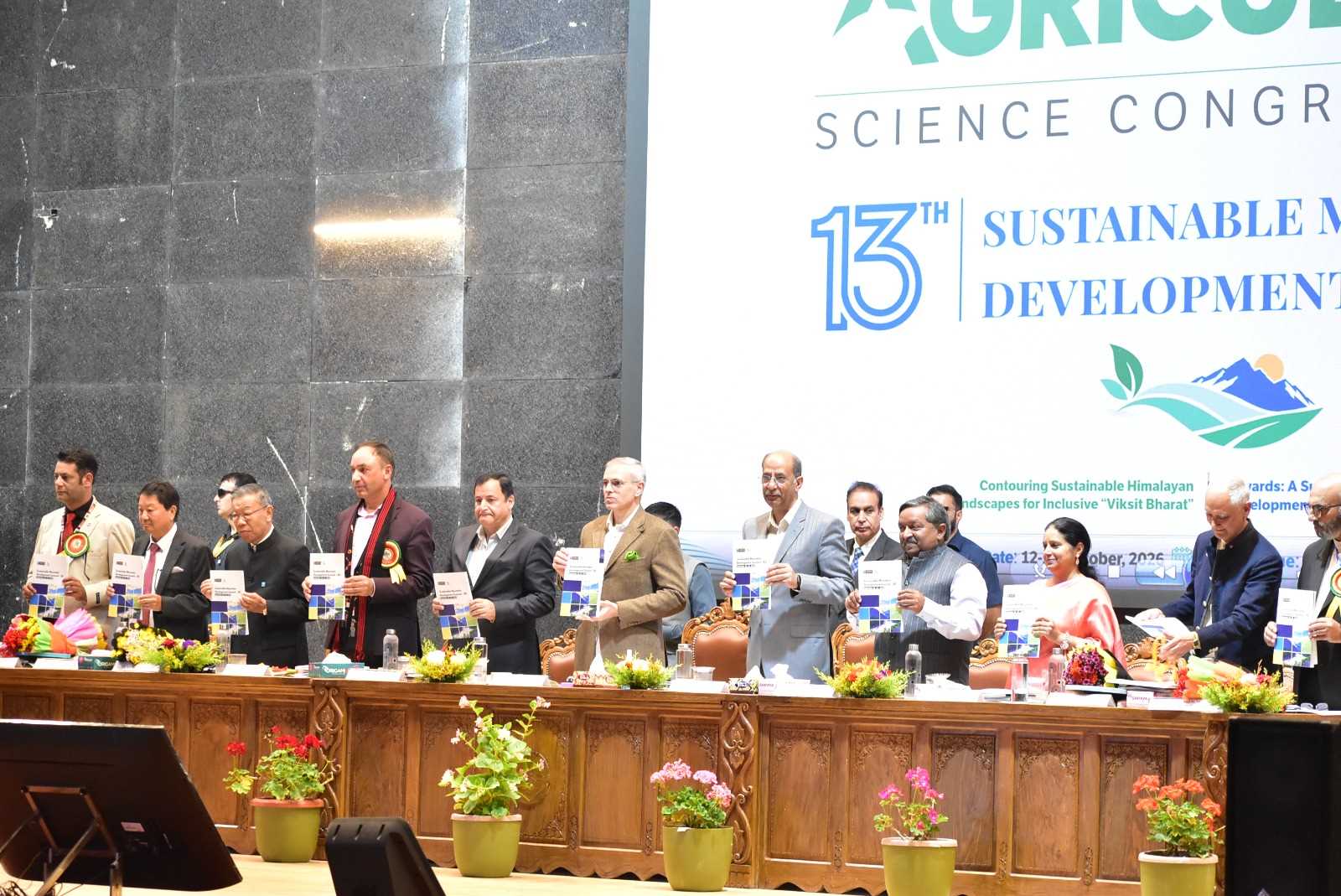
The proposed framework, which will be submitted to the Jammu and Kashmir government, follows a first-of-its-kind brainstorming session organised by the university's College of Temperate Sericulture on the sidelines of the J&K Agriculture Science Congress 2026.
Experts from Uganda, Vietnam, Thailand, Romania, Japan and Turkey, along with representatives of the Central Silk Board, J&K Sericulture Development Department and other institutions, participated in the deliberations aimed at identifying measures to revitalise the sector.
Vice-Chancellor SKUAST-K Prof Nazir Ahmad Ganie, who attended as chief guest, said the university had initiated the exercise to bring together national and international expertise for developing a comprehensive policy framework to address the challenges confronting the silk industry.
He stressed the need for coordinated institutional efforts, scientific interventions and the adoption of modern technologies to improve productivity, enhance farmers' returns and generate employment opportunities in rural areas.
Ganie said strengthening the sericulture sector could also create opportunities for silk-based entrepreneurship and contribute to the economic development of communities dependent on the industry.
The discussions focused on several critical areas, including mulberry cultivation, silkworm seed quality, modern rearing techniques, cocoon productivity, silk quality, market linkages and value addition.
Experts highlighted the need to strengthen extension services, integrate traditional sericulture practices with modern scientific technologies and encourage greater participation of young entrepreneurs in the silk value chain.
They also discussed measures to address production and marketing constraints, improve the quality of raw materials and ensure better economic returns for sericulture farmers.
The university said recommendations emerging from the deliberations would be consolidated into a policy framework for submission to the J&K government.
The proposed roadmap will focus on strengthening the silk value chain, improving production efficiency, expanding market opportunities and enhancing livelihoods for farmers engaged in sericulture.
The session was chaired by former Director Extension SKUAST-K Prof Afifa Shaheen Kamili, while Associate Dean, College of Temperate Sericulture, Prof M R Mir served as co-chairperson.
Technical sessions were moderated by Prof I L Khan, Prof K A Dar and Dr Aabid Khaliq Tantray.
Prof Sajad Ahmad Baba and Dr Parvaiz Nabi Reshi served as rapporteurs, while Prof Khursheed Ahmad Dar was the organising secretary of the event.
Srinagar, Oct 13: Sher-e-Kashmir University of Agricultural Sciences and Technology of Kashmir (SKUAST-K) is preparing a policy roadmap for the revival of Jammu and Kashmir's silk industry, incorporating recommendations from national experts and representatives of six countries to address production challenges, improve silk quality and strengthen market access.
The proposed framework, which will be submitted to the Jammu and Kashmir government, follows a first-of-its-kind brainstorming session organised by the university's College of Temperate Sericulture on the sidelines of the J&K Agriculture Science Congress 2026.
Experts from Uganda, Vietnam, Thailand, Romania, Japan and Turkey, along with representatives of the Central Silk Board, J&K Sericulture Development Department and other institutions, participated in the deliberations aimed at identifying measures to revitalise the sector.
Vice-Chancellor SKUAST-K Prof Nazir Ahmad Ganie, who attended as chief guest, said the university had initiated the exercise to bring together national and international expertise for developing a comprehensive policy framework to address the challenges confronting the silk industry.
He stressed the need for coordinated institutional efforts, scientific interventions and the adoption of modern technologies to improve productivity, enhance farmers' returns and generate employment opportunities in rural areas.
Ganie said strengthening the sericulture sector could also create opportunities for silk-based entrepreneurship and contribute to the economic development of communities dependent on the industry.
The discussions focused on several critical areas, including mulberry cultivation, silkworm seed quality, modern rearing techniques, cocoon productivity, silk quality, market linkages and value addition.
Experts highlighted the need to strengthen extension services, integrate traditional sericulture practices with modern scientific technologies and encourage greater participation of young entrepreneurs in the silk value chain.
They also discussed measures to address production and marketing constraints, improve the quality of raw materials and ensure better economic returns for sericulture farmers.
The university said recommendations emerging from the deliberations would be consolidated into a policy framework for submission to the J&K government.
The proposed roadmap will focus on strengthening the silk value chain, improving production efficiency, expanding market opportunities and enhancing livelihoods for farmers engaged in sericulture.
The session was chaired by former Director Extension SKUAST-K Prof Afifa Shaheen Kamili, while Associate Dean, College of Temperate Sericulture, Prof M R Mir served as co-chairperson.
Technical sessions were moderated by Prof I L Khan, Prof K A Dar and Dr Aabid Khaliq Tantray.
Prof Sajad Ahmad Baba and Dr Parvaiz Nabi Reshi served as rapporteurs, while Prof Khursheed Ahmad Dar was the organising secretary of the event.

© Copyright 2023 brighterkashmir.com All Rights Reserved. Quantum Technologies