
BREAKING NEWS
Drug abuse does not begin suddenly. In many cases, it starts quietly. Sometimes it is curiosity, sometimes peer pressure, and sometimes emotional stress. Young people may not fully understand the long-term effects at the beginning. What seems like a temporary escape can slowly turn into a habit, and then into dependence
Kashmir is passing through a phase where one social issue demands serious and continuous attention drug abuse. Over the years, its presence has become more visible, especially among the youth. This is not something that can be ignored or treated as a minor concern. It directly affects individuals, but its deeper impact is seen in families, relationships, and the overall environment of society. The idea of “Nasha Mukt Jammu & Kashmir” reflects a collective effort to move in a better direction, where awareness, responsibility, and support come together.
Efforts to curb the menace of drugs should not rest solely on the efforts of the government. It is everyone’s responsibility. All the stakeholders such as parents, teachers, community leaders, and even the youth, have a duty here. The more we share our responsibilities, the higher the likelihood of success. Indeed, the people in many places have already begun to realize the gravity of this matter.
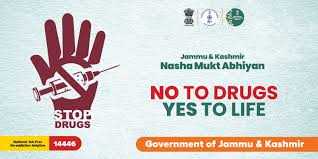
In recent times, the Nasha Mukt Jammu & Kashmir Abhiyaan has brought more focus to this concern. It is a step that aims to deal with the issue in a practical and grounded way. The initiative looks at different aspects, such as spreading awareness, offering support, strengthening enforcement, and improving access to treatment. Instead of treating addiction as only a legal issue, it also considers the emotional and social side of the problem.
Under the leadership of Manoj Sinha, efforts have been more structured. The introduction of a focused 100-day campaign reflects a sense of urgency. It brings together different departments and encourages coordination at various levels. Such campaigns help in creating momentum, where action is visible and people feel encouraged to participate.
Drug abuse does not begin suddenly. In many cases, it starts quietly. Sometimes it is curiosity, sometimes peer pressure, and sometimes emotional stress. Young people may not fully understand the long-term effects at the beginning. What seems like a temporary escape can slowly turn into a habit, and then into dependence. By the time the seriousness is realised, it often becomes difficult to step back without support.
The effect on individuals is clear. Physical health begins to decline, mental clarity reduces, and decision-making becomes weak. A person who once had clear goals may begin to lose direction. Daily routines get disturbed, and responsibilities are neglected. Over time, this creates a gap between the individual and their aspirations.
The impact is strongly felt by families. Where there is an addicted family member, everything around will be affected. There will be a lot of tension, as well as a lack of clarity. There will even be times when the family feels helpless in trying to help out their addicted loved one. In some cases, money may even be affected as the addicted person uses up the funds.
Parents, in particular, face a difficult situation. They want to support their children, but sometimes they are unsure how to respond. This is why communication becomes important. When children feel comfortable sharing their thoughts and struggles, it becomes easier to guide them. Silence or fear of judgment often makes situations worse. A supportive environment at home can make a meaningful difference.
The influence is not limited to the family only; the community is also affected. There are instances where addiction results in theft and vandalism because of the need to support the habit. The result is fear and insecurity in people's minds, which erodes the bond between members of the community.
These problems highlight the need for prevention and action to be equally important. This is where the importance of awareness comes into play. If young individuals are made fully aware of the dangers involved, they will make informed decisions. Educational institutions such as schools and colleges also play a vital role in this process.
Many organizations have initiated discussions and activities centred around real-world challenges, such as drug abuse. Such an initiative allows students to develop critical thinking skills and become aware of the results of their actions beforehand. Timely awareness prevents many complications in the future.
At the same time, strong action against the supply of drugs is necessary. Law enforcement agencies have increased their efforts to control illegal activities related to narcotics. This step is important because reducing availability makes a difference. When access becomes difficult, it can discourage use, especially among those who are at an early stage.
But just action is not sufficient. Some are already facing trouble and require help. And that’s when the concept of rehabilitation comes into play. Recovery takes some time. It needs patience and perseverance. Rehabilitation can assist people in getting back on track with their lives.
One important aspect of recovery is dignity. Individuals who seek help should feel supported, not judged. When society shows understanding, more people are willing to come forward and take steps toward recovery. This reduces the hidden nature of the problem and brings it into open discussion, where solutions are possible.
The involvement of community members is a bonus for all these initiatives. Community leaders and social groups, and volunteers, can reach out to the masses with information that makes a huge difference in their lives. Oftentimes, one-on-one interaction has the biggest effect on a person.
Youth also have a powerful role. They are not just the group at risk but also the group that can lead change. When young people take initiative through awareness drives, peer support, or positive activities, they influence others around them. Their involvement makes the movement more active and relatable.
Promoting involvement in physical activities, arts, and hobbies is yet another pragmatic strategy. Such activities offer direction, instill confidence, and impart a sense of purpose to an individual. With constructive utilization of time and effort, the probability of being affected by negative forces diminishes.
The statement that drugs harm families, communities, and the social setup is something many people have observed directly or indirectly. At the same time, there is also a growing understanding that the situation can improve with consistent effort. Change may not happen immediately, but steady progress is possible.
The program is one that has been launched under the leadership of His Honourable Lieutenant Governor, and this shows a very serious attitude. The 100-day challenge, in particular, brings to light the seriousness of action that needs to be done in an organized manner.
Looking ahead, the need is for continuity. Awareness should remain active, support systems should remain accessible, and efforts should remain consistent. This is not a short-term issue that can be resolved quickly. It requires long-term commitment from every section of society.
Everyone has their own role, large or small. From a parent guiding their children, a teacher instructing their pupils, an individual from within the community who disseminates information, to an adolescent making sound judgments, all these individuals contribute to a common goal.
“Nasha Mukt Jammu & Kashmir” is not just a phrase; it represents a direction. It reflects the hope for a society where young people are focused, families are stable, and communities are strong. With shared responsibility, practical steps, and continued awareness, this direction can gradually turn into reality.
The author is a writer and Social Educator from District Baramulla
Email:--------------------------------shoaibhat2018@gmail.com
Drug abuse does not begin suddenly. In many cases, it starts quietly. Sometimes it is curiosity, sometimes peer pressure, and sometimes emotional stress. Young people may not fully understand the long-term effects at the beginning. What seems like a temporary escape can slowly turn into a habit, and then into dependence
Kashmir is passing through a phase where one social issue demands serious and continuous attention drug abuse. Over the years, its presence has become more visible, especially among the youth. This is not something that can be ignored or treated as a minor concern. It directly affects individuals, but its deeper impact is seen in families, relationships, and the overall environment of society. The idea of “Nasha Mukt Jammu & Kashmir” reflects a collective effort to move in a better direction, where awareness, responsibility, and support come together.
Efforts to curb the menace of drugs should not rest solely on the efforts of the government. It is everyone’s responsibility. All the stakeholders such as parents, teachers, community leaders, and even the youth, have a duty here. The more we share our responsibilities, the higher the likelihood of success. Indeed, the people in many places have already begun to realize the gravity of this matter.
In recent times, the Nasha Mukt Jammu & Kashmir Abhiyaan has brought more focus to this concern. It is a step that aims to deal with the issue in a practical and grounded way. The initiative looks at different aspects, such as spreading awareness, offering support, strengthening enforcement, and improving access to treatment. Instead of treating addiction as only a legal issue, it also considers the emotional and social side of the problem.
Under the leadership of Manoj Sinha, efforts have been more structured. The introduction of a focused 100-day campaign reflects a sense of urgency. It brings together different departments and encourages coordination at various levels. Such campaigns help in creating momentum, where action is visible and people feel encouraged to participate.
Drug abuse does not begin suddenly. In many cases, it starts quietly. Sometimes it is curiosity, sometimes peer pressure, and sometimes emotional stress. Young people may not fully understand the long-term effects at the beginning. What seems like a temporary escape can slowly turn into a habit, and then into dependence. By the time the seriousness is realised, it often becomes difficult to step back without support.
The effect on individuals is clear. Physical health begins to decline, mental clarity reduces, and decision-making becomes weak. A person who once had clear goals may begin to lose direction. Daily routines get disturbed, and responsibilities are neglected. Over time, this creates a gap between the individual and their aspirations.
The impact is strongly felt by families. Where there is an addicted family member, everything around will be affected. There will be a lot of tension, as well as a lack of clarity. There will even be times when the family feels helpless in trying to help out their addicted loved one. In some cases, money may even be affected as the addicted person uses up the funds.
Parents, in particular, face a difficult situation. They want to support their children, but sometimes they are unsure how to respond. This is why communication becomes important. When children feel comfortable sharing their thoughts and struggles, it becomes easier to guide them. Silence or fear of judgment often makes situations worse. A supportive environment at home can make a meaningful difference.
The influence is not limited to the family only; the community is also affected. There are instances where addiction results in theft and vandalism because of the need to support the habit. The result is fear and insecurity in people's minds, which erodes the bond between members of the community.
These problems highlight the need for prevention and action to be equally important. This is where the importance of awareness comes into play. If young individuals are made fully aware of the dangers involved, they will make informed decisions. Educational institutions such as schools and colleges also play a vital role in this process.
Many organizations have initiated discussions and activities centred around real-world challenges, such as drug abuse. Such an initiative allows students to develop critical thinking skills and become aware of the results of their actions beforehand. Timely awareness prevents many complications in the future.
At the same time, strong action against the supply of drugs is necessary. Law enforcement agencies have increased their efforts to control illegal activities related to narcotics. This step is important because reducing availability makes a difference. When access becomes difficult, it can discourage use, especially among those who are at an early stage.
But just action is not sufficient. Some are already facing trouble and require help. And that’s when the concept of rehabilitation comes into play. Recovery takes some time. It needs patience and perseverance. Rehabilitation can assist people in getting back on track with their lives.
One important aspect of recovery is dignity. Individuals who seek help should feel supported, not judged. When society shows understanding, more people are willing to come forward and take steps toward recovery. This reduces the hidden nature of the problem and brings it into open discussion, where solutions are possible.
The involvement of community members is a bonus for all these initiatives. Community leaders and social groups, and volunteers, can reach out to the masses with information that makes a huge difference in their lives. Oftentimes, one-on-one interaction has the biggest effect on a person.
Youth also have a powerful role. They are not just the group at risk but also the group that can lead change. When young people take initiative through awareness drives, peer support, or positive activities, they influence others around them. Their involvement makes the movement more active and relatable.
Promoting involvement in physical activities, arts, and hobbies is yet another pragmatic strategy. Such activities offer direction, instill confidence, and impart a sense of purpose to an individual. With constructive utilization of time and effort, the probability of being affected by negative forces diminishes.
The statement that drugs harm families, communities, and the social setup is something many people have observed directly or indirectly. At the same time, there is also a growing understanding that the situation can improve with consistent effort. Change may not happen immediately, but steady progress is possible.
The program is one that has been launched under the leadership of His Honourable Lieutenant Governor, and this shows a very serious attitude. The 100-day challenge, in particular, brings to light the seriousness of action that needs to be done in an organized manner.
Looking ahead, the need is for continuity. Awareness should remain active, support systems should remain accessible, and efforts should remain consistent. This is not a short-term issue that can be resolved quickly. It requires long-term commitment from every section of society.
Everyone has their own role, large or small. From a parent guiding their children, a teacher instructing their pupils, an individual from within the community who disseminates information, to an adolescent making sound judgments, all these individuals contribute to a common goal.
“Nasha Mukt Jammu & Kashmir” is not just a phrase; it represents a direction. It reflects the hope for a society where young people are focused, families are stable, and communities are strong. With shared responsibility, practical steps, and continued awareness, this direction can gradually turn into reality.
The author is a writer and Social Educator from District Baramulla
Email:--------------------------------shoaibhat2018@gmail.com

© Copyright 2023 brighterkashmir.com All Rights Reserved. Quantum Technologies