
BREAKING NEWS
The story begins in the early 1950s when Pakistan joined American led military alliances such as SEATO and CENTO, alliances explicitly designed to contain Soviet and communist influence. In return, Pakistan received billions of dollars in arms and economic aid.
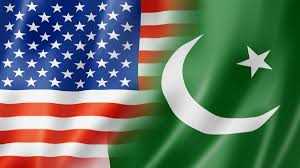
For nearly eight decades, the United States has treated Pakistan as a prized strategic asset in South Asia, a relationship that has repeatedly undermined India’s sovereignty and prolonged the suffering of the people of Jammu and Kashmir. From the Cold War to the War on Terror and now to the renewed great power competition with China, Washington’s policy towards Islamabad has followed a remarkably consistent pattern: generous military and economic assistance, diplomatic protection at critical moments and a deliberate blindness to Pakistan’s use of terrorism as an instrument of state policy against India. The result has been catastrophic for Kashmir, because American geopolitical calculations invariably place Pakistan’s utility above India’s legitimate security concerns and the human rights of Kashmiri civilians.
The story begins in the early 1950s when Pakistan joined American led military alliances such as SEATO and CENTO, alliances explicitly designed to contain Soviet and communist influence. In return, Pakistan received billions of dollars in arms and economic aid, much of which was used to build a military machine whose primary purpose, even then, was to challenge India rather than fight communism. India, choosing non-alignment, was denied comparable assistance. The imbalance became starkly visible during the 1965 war when American weapons supplied to Pakistan were turned against Indian forces in Kashmir. Although Washington imposed an arms embargo on both countries, the damage had already been done; Pakistan’s military parity with a larger neighbour had been artificially created with American help and the Kashmir dispute acquired a permanence it might otherwise have lacked.
The pattern repeated itself with even greater intensity during the Soviet occupation of Afghanistan. Under Operation Cyclone, the largest covert operation in CIA history, the United States funnelled between six and twelve billion dollars through Pakistan’s Inter Services Intelligence Directorate to arm Afghan mujahideen. Pakistan’s price for cooperation was not merely financial; it was the freedom to divert trained fighters, weapons and ideological zeal into Kashmir the moment the Soviets withdrew. By 1988, the ISI had already launched Operation Topac, a blueprint to detach Kashmir from India through insurgency. American intelligence was fully aware that surplus Stinger missiles, Kalashnikovs and battle-hardened jihadists were crossing the Line of Control, yet Washington chose silence because Pakistan remained indispensable for the Afghan endgame. The insurgency that erupted in Kashmir in 1989, claiming tens of thousands of lives and displacing hundreds of thousands of Kashmiri Pandits, was therefore not merely a Pakistani project; it bore the unmistakable fingerprints of American indifference.
After the 9/11 attacks, the contradiction became grotesque. Pakistan, the country that had nurtured the Taliban and provided safe haven to Osama bin Laden, was declared a major non-NATO ally and rewarded with more than thirty-three billion dollars in aid over the next two decades. Successive American administrations knew that large portions of this money were diverted to anti India terrorist groups such as Lashkar-e-Taiba and Jaish-e-Mohammed. Reports from the Pentagon, the State Department and independent watchdogs repeatedly documented the existence of terrorist infrastructure in Pakistan Occupied Kashmir, yet military reimbursements and security assistance continued to flow. When India presented irrefutable evidence after attacks such as the 2008 Mumbai massacre or the 2019 Pulwama bombing, Washington’s response was invariably symmetrical: it urged “restraint” from both sides and offered to facilitate dialogue, thereby equating aggressor with victim and treating the disputed status of Kashmir as an article of faith rather than a Pakistani fiction sustained by force.
Even after the Taliban returned to power in Kabul in August 2021, exposing Pakistan’s double game in the most dramatic fashion possible, the United States refused to impose meaningful costs. American officials privately acknowledged that the ISI had preserved Taliban sanctuaries for twenty years, yet public criticism remained muted and assistance, though reduced, never stopped entirely. Humanitarian aid, debt relief coordination at the IMF and quiet lobbying to keep Pakistan off the FATF blacklist ensured that Islamabad faced no real financial strangulation despite its bankruptcy level economy. Every dollar that America helped keep afloat in Pakistan’s treasury freed up resources for the military and intelligence apparatus that continues to bleed India through a thousand cuts in Kashmir.
The year 2025 has brought the old pattern into sharper focus than ever before. Following the horrific terrorist attack on unarmed tourists in Pahalgam in April, India responded with precise strikes on terrorist camps across the Line of Control under Operation Sindoor. Instead of supporting India’s right to self defence against groups that Washington itself designates as foreign terrorist organisations, the United States rushed to broker a ceasefire and offered mediation on the Kashmir dispute itself. President Trump’s public statement that he would “work with both countries” to find a solution was celebrated in Islamabad and rejected outright in New Delhi and rightly so. By placing India and Pakistan on the same moral plane after an act of cross border terrorism, Washington once again signalled that Pakistan’s patronage of terror carries no irreversible penalty
More disturbing still has been the quiet resumption of military supply lines. Advanced F-16 maintenance packages, missile technology cooperation and intelligence sharing agreements have all been revived under the pretext of countering China and securing Afghanistan’s stability. Each of these steps strengthens the very institution, the Pakistan Army, that treats Kashmir as an unfinished part of Partition to be completed by force or demographic change. American diplomats continue to visit Muzaffarabad and Gilgit-Baltistan, routing aid and conducting assessments through Pakistani authorities, thereby conferring legitimacy on an occupation that India has never accepted and that the people in those areas increasingly resent. When local protests erupt against Islamabad’s exploitative rule, they receive no international spotlight because American policy prefers the convenient fiction that Pakistan-administered Kashmir is simply the other half of a bilateral dispute.
The human cost of this policy is incalculable. More than a hundred thousand Kashmiris have lost their lives since 1989. An entire generation has grown up under curfews, pellets, and disappearances in the Valley, while another lives under the shadow of ISI control in PoK and Gilgit-Baltistan. The ethnic cleansing of Kashmiri Pandits remains unacknowledged in any meaningful American forum. Internet shutdowns, preventive detentions, and the choking of democratic space continue unabated, yet successive US State Department human-rights reports treat Indian-administered Kashmir and Pakistan-occupied areas as moral equivalents, a equivalence that only emboldens Islamabad to persist with its proxies.
India’s patience is not infinite. The strategic partnership that New Delhi has painstakingly built with Washington through the Quad, technology cooperation, and defence agreements now stands at a moment of truth. Every time the United States chooses transactional convenience with Pakistan over principled solidarity with India, it erodes the foundation of that partnership. Kashmir is not a bilateral dispute in the sense Pakistan claims; it is an integral part of India that has been subjected to seven decades of externally sponsored terrorism, terrorism that American policy has repeatedly refused to confront at its source.
Until Washington recognises that Pakistan’s utility as a geopolitical pawn does not justify the indefinite sacrifice of Kashmiri lives and Indian security, the United States will remain complicit in one of the longest-running injustices of the post-colonial era. Real change would require tying every form of assistance, military, economic, and diplomatic, to verifiable dismantling of terrorist infrastructure targeting India and genuine autonomy for the people living under Pakistani occupation. Anything less is not neutrality; it is acquiescence in aggression. The people of Jammu and Kashmir, whether they aspire to remain with India or seek greater freedoms within the framework of the Indian Constitution, deserve better than to be perpetual bargaining chips in a great game that America refuses to end.
The story begins in the early 1950s when Pakistan joined American led military alliances such as SEATO and CENTO, alliances explicitly designed to contain Soviet and communist influence. In return, Pakistan received billions of dollars in arms and economic aid.
For nearly eight decades, the United States has treated Pakistan as a prized strategic asset in South Asia, a relationship that has repeatedly undermined India’s sovereignty and prolonged the suffering of the people of Jammu and Kashmir. From the Cold War to the War on Terror and now to the renewed great power competition with China, Washington’s policy towards Islamabad has followed a remarkably consistent pattern: generous military and economic assistance, diplomatic protection at critical moments and a deliberate blindness to Pakistan’s use of terrorism as an instrument of state policy against India. The result has been catastrophic for Kashmir, because American geopolitical calculations invariably place Pakistan’s utility above India’s legitimate security concerns and the human rights of Kashmiri civilians.
The story begins in the early 1950s when Pakistan joined American led military alliances such as SEATO and CENTO, alliances explicitly designed to contain Soviet and communist influence. In return, Pakistan received billions of dollars in arms and economic aid, much of which was used to build a military machine whose primary purpose, even then, was to challenge India rather than fight communism. India, choosing non-alignment, was denied comparable assistance. The imbalance became starkly visible during the 1965 war when American weapons supplied to Pakistan were turned against Indian forces in Kashmir. Although Washington imposed an arms embargo on both countries, the damage had already been done; Pakistan’s military parity with a larger neighbour had been artificially created with American help and the Kashmir dispute acquired a permanence it might otherwise have lacked.
The pattern repeated itself with even greater intensity during the Soviet occupation of Afghanistan. Under Operation Cyclone, the largest covert operation in CIA history, the United States funnelled between six and twelve billion dollars through Pakistan’s Inter Services Intelligence Directorate to arm Afghan mujahideen. Pakistan’s price for cooperation was not merely financial; it was the freedom to divert trained fighters, weapons and ideological zeal into Kashmir the moment the Soviets withdrew. By 1988, the ISI had already launched Operation Topac, a blueprint to detach Kashmir from India through insurgency. American intelligence was fully aware that surplus Stinger missiles, Kalashnikovs and battle-hardened jihadists were crossing the Line of Control, yet Washington chose silence because Pakistan remained indispensable for the Afghan endgame. The insurgency that erupted in Kashmir in 1989, claiming tens of thousands of lives and displacing hundreds of thousands of Kashmiri Pandits, was therefore not merely a Pakistani project; it bore the unmistakable fingerprints of American indifference.
After the 9/11 attacks, the contradiction became grotesque. Pakistan, the country that had nurtured the Taliban and provided safe haven to Osama bin Laden, was declared a major non-NATO ally and rewarded with more than thirty-three billion dollars in aid over the next two decades. Successive American administrations knew that large portions of this money were diverted to anti India terrorist groups such as Lashkar-e-Taiba and Jaish-e-Mohammed. Reports from the Pentagon, the State Department and independent watchdogs repeatedly documented the existence of terrorist infrastructure in Pakistan Occupied Kashmir, yet military reimbursements and security assistance continued to flow. When India presented irrefutable evidence after attacks such as the 2008 Mumbai massacre or the 2019 Pulwama bombing, Washington’s response was invariably symmetrical: it urged “restraint” from both sides and offered to facilitate dialogue, thereby equating aggressor with victim and treating the disputed status of Kashmir as an article of faith rather than a Pakistani fiction sustained by force.
Even after the Taliban returned to power in Kabul in August 2021, exposing Pakistan’s double game in the most dramatic fashion possible, the United States refused to impose meaningful costs. American officials privately acknowledged that the ISI had preserved Taliban sanctuaries for twenty years, yet public criticism remained muted and assistance, though reduced, never stopped entirely. Humanitarian aid, debt relief coordination at the IMF and quiet lobbying to keep Pakistan off the FATF blacklist ensured that Islamabad faced no real financial strangulation despite its bankruptcy level economy. Every dollar that America helped keep afloat in Pakistan’s treasury freed up resources for the military and intelligence apparatus that continues to bleed India through a thousand cuts in Kashmir.
The year 2025 has brought the old pattern into sharper focus than ever before. Following the horrific terrorist attack on unarmed tourists in Pahalgam in April, India responded with precise strikes on terrorist camps across the Line of Control under Operation Sindoor. Instead of supporting India’s right to self defence against groups that Washington itself designates as foreign terrorist organisations, the United States rushed to broker a ceasefire and offered mediation on the Kashmir dispute itself. President Trump’s public statement that he would “work with both countries” to find a solution was celebrated in Islamabad and rejected outright in New Delhi and rightly so. By placing India and Pakistan on the same moral plane after an act of cross border terrorism, Washington once again signalled that Pakistan’s patronage of terror carries no irreversible penalty
More disturbing still has been the quiet resumption of military supply lines. Advanced F-16 maintenance packages, missile technology cooperation and intelligence sharing agreements have all been revived under the pretext of countering China and securing Afghanistan’s stability. Each of these steps strengthens the very institution, the Pakistan Army, that treats Kashmir as an unfinished part of Partition to be completed by force or demographic change. American diplomats continue to visit Muzaffarabad and Gilgit-Baltistan, routing aid and conducting assessments through Pakistani authorities, thereby conferring legitimacy on an occupation that India has never accepted and that the people in those areas increasingly resent. When local protests erupt against Islamabad’s exploitative rule, they receive no international spotlight because American policy prefers the convenient fiction that Pakistan-administered Kashmir is simply the other half of a bilateral dispute.
The human cost of this policy is incalculable. More than a hundred thousand Kashmiris have lost their lives since 1989. An entire generation has grown up under curfews, pellets, and disappearances in the Valley, while another lives under the shadow of ISI control in PoK and Gilgit-Baltistan. The ethnic cleansing of Kashmiri Pandits remains unacknowledged in any meaningful American forum. Internet shutdowns, preventive detentions, and the choking of democratic space continue unabated, yet successive US State Department human-rights reports treat Indian-administered Kashmir and Pakistan-occupied areas as moral equivalents, a equivalence that only emboldens Islamabad to persist with its proxies.
India’s patience is not infinite. The strategic partnership that New Delhi has painstakingly built with Washington through the Quad, technology cooperation, and defence agreements now stands at a moment of truth. Every time the United States chooses transactional convenience with Pakistan over principled solidarity with India, it erodes the foundation of that partnership. Kashmir is not a bilateral dispute in the sense Pakistan claims; it is an integral part of India that has been subjected to seven decades of externally sponsored terrorism, terrorism that American policy has repeatedly refused to confront at its source.
Until Washington recognises that Pakistan’s utility as a geopolitical pawn does not justify the indefinite sacrifice of Kashmiri lives and Indian security, the United States will remain complicit in one of the longest-running injustices of the post-colonial era. Real change would require tying every form of assistance, military, economic, and diplomatic, to verifiable dismantling of terrorist infrastructure targeting India and genuine autonomy for the people living under Pakistani occupation. Anything less is not neutrality; it is acquiescence in aggression. The people of Jammu and Kashmir, whether they aspire to remain with India or seek greater freedoms within the framework of the Indian Constitution, deserve better than to be perpetual bargaining chips in a great game that America refuses to end.

© Copyright 2023 brighterkashmir.com All Rights Reserved. Quantum Technologies