Technology has transformed the way weddings are conceived, experienced and remembered. A wedding is no longer confined to those physically present at the venue. Photographs, videos and social of wedding culture. Certain elements of the celebration may now be planned with photography and video in mind. The entrance, clothing, stage, lighting, decoration and even particular moments of the ceremony can-media reels can circulate instantly among extended family, friends and wider social networks
The Environmental Footprint of Festivity
The environmental impact of weddings extends beyond food and plastic. Large celebrations can require considerable energy for lighting, sound systems, heating or cooling. Temporary decorations, synthetic materials, floral arrangements and other event infrastructure may also contribute to waste. Large guest gatherings can involve increased transportation, adding to traffic congestion and fuel consumption. Individually, these impacts may appear small. Collectively, however, the environmental footprint becomes significant when multiplied across numerous weddings and functions during the marriage season. The modern wedding is therefore no longer simply a private social event. At sufficient scale, it becomes part of the urban environmental equation. This is especially relevant to a city such as Srinagar, where environmental pressures and waste-management challenges require responsible civic behaviour. Celebrations need not be abandoned, but they can be organised in ways that reduce their ecological burden. The idea of a sustainable wedding is therefore not about removing joy from the occasion; it is about making celebration compatible with environmental responsibility.
Social Media and the Rise of the Wedding Reel
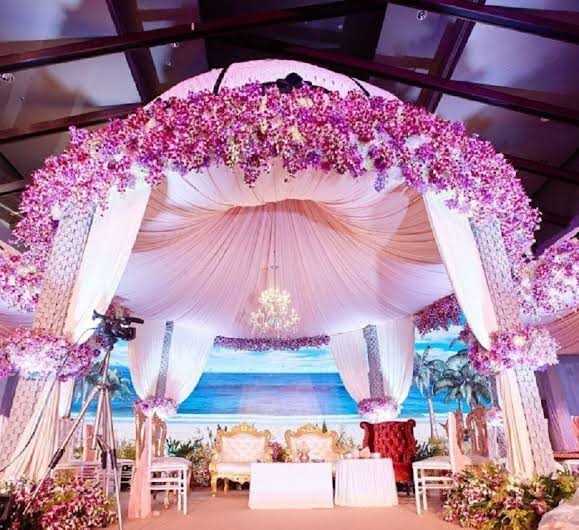
Technology has transformed the way weddings are conceived, experienced and remembered. A wedding is no longer confined to those physically present at the venue. Photographs, videos and social of wedding culture. Certain elements of the celebration may now be planned with photography and video in mind. The entrance, clothing, stage, lighting, decoration and even particular moments of the ceremony can-media reels can circulate instantly among extended family, friends and wider social networks. This has created a new dimension of wedding culture. Certain elements of the celebration may now be planned with photography and video in mind. The entrance, clothing, stage, lighting, decoration and even particular moments of the ceremony can be carefully arranged to create visually attractive content. Social media can undoubtedly serve positive purposes. It allows distant relatives to share in celebrations and provides families with permanent visual memories. But it can also intensify comparison and race for extravagance too. Families repeatedly encounter elaborate weddings online and may begin to view such celebrations as standards that their own weddings should match. The result can be a cycle of escalating expectations. One elaborate wedding becomes the reference point for another, and consumption becomes a means of communicating social status and social conformity. The problem, therefore, is not technology itself. The important question is whether social media is documenting the wedding or gradually encompass and embroil elders often to contributed unswervingly to the preparations and celebrations. Earlier people helped organise food, welcomed guests, participated in rituals and share dating how the wedding should be experienced has also vanished from our weddings. Vanwn and gaewun which was a community and family affair, is fast fading in the face social change and social conformity to bollywood and other songs by toeing to the line, in the face of growing extravagance.
The Erosion of Community Participation
Traditional Kashmiri weddings were deeply participatory. Relatives, neighbours and elders often contributed directly to preparations and celebrations. People helped organise food, welcomed guests, participated in rituals and shared responsibilities. Such involvement strengthened relationships and created a sense of collective ownership. The expansion of professional wedding services has brought considerable convenience. Caterers, decorators, event managers, photographers and other professionals can organise celebrations efficiently and provide specialised services. They also contribute to the local economy. However, when nearly every aspect of a wedding is outsourced, family and community members can gradually become spectators rather than participants. The event may become more polished and professionally managed while becoming less intimate and participatory. The answer is not necessarily to reject professional services. Rather, modern convenience should coexist with the traditional spirit of participation. A wedding should remain an occasion where people do things together, not merely an event that people a society where many families are already concerned about employment, housing, education and financial security, the expectation of an elaborate wedding can create attend.
The Financial Burden of Extravagance
The pressure surrounding extravagant weddings also has an economic dimension. In a society where many families are already concerned about employment, housing, education and financial security, the expectation of an elaborate wedding can create considerable financial strain. Families may feel compelled to spend beyond their means because they fear criticism or comparison. What should be a joyful occasion can therefore become, ate, prayed and interacted with one another. The modern wedding, by contrast, can sometimes be organised around a rigid sequence of events a source of anxiety and, in some cases, prolonged financial pressure. A wedding should not become a demonstration of who can spend the most. The size of the venue, number of dishes, price of clothing or sophistication of decoration should not determine the social value of a marriage. A culture of reasonable expenditure would allow families to celebrate with dignity while protecting their longer-term financial security.
The Problem of Time
In all most all the marriage, guests are aquiline, held like captives and made to wait for the feast for hours wasting time shows indifferent tolerance of Kashmiri’s for such happenings/events. Thus, another very vital and often overlooked feature of contemporary weddings is the changing respect and relationship with time. Guests may be required to wait for long periods because of delayed meals, prolonged photography sessions, multiple ceremonies or elaborate arrangements. Such events in Kashmir wedding have become a routine and attained social conformity which is a disparaging the wedding flavor and celebrations. In traditional gatherings, time was often experienced collectively. People talked, ate, prayed and interacted with one another. The modern wedding, by contrast, can sometimes be organised around a rigid sequence of events in which photography, staging, scheduling take precedence over the comfort of guests over and above use of mobile acting as a factor of isolation with the gathering and celebrations is a more concerning trend . The woes of waiting for long hours is also due to the arrival of the guests most of them often do not hesitate to come as per their convenience without any consideration to the scheduled time and results in deferred hospitality and feasts timings. When people are compelled to spend hours waiting for food or for a ceremony to begin, hospitality becomes tiring rather than welcoming. Respecting guests therefore means respecting not only their appetite but also their time.
Towards a Sustainable Kashmiri Wedding
The solution is not to make Kashmiri weddings joyless, colourless or culturally sterile. A sustainable Kashmiri wedding can remain vibrant, beautiful and deeply rooted in tradition. What needs to change is the relationship between celebration and consumption. Single-use plastic can be substantially reduced, particularly in the distribution of meat, sweets and beverages. Reusable serving ware can replace disposable plates, cups and cutlery wherever practical. Food quantities can be planned more carefully so that abundance does not automatically translate into waste. Suitable surplus food can be safely redirected through authorised arrangements, while organic waste can be separated from recyclable and residual material. Wedding decorations can also be designed with reuse in mind. Fabrics, furniture, lighting structures and decorative elements can circulate between events instead of being discarded after one function. Such practices would gradually shift the wedding economy from a linear model of “purchase, consume and discard” towards. Wazwan can remain an important culinary tradition without encouraging unnecessary food waste. Traditional clothing, music and rituals can continue to provide colour and a more circular model based on reuse, recovery and recycling. This transition could also create opportunities for local enterprises specialising in sustainable catering, reusable event materials, waste recovery and environmentally responsible decoration.
Rediscovering the Meaning of Kashmiri Hospitality
The answer to excessive consumption is not the rejection of Kashmiri culture. On the contrary, the solution may lie in rediscovering the values that already exist within that culture. Kashmiri hospitality can remain generous without becoming extravagant. Wazwan can remain an important culinary tradition without encouraging unnecessary food waste. Traditional clothing, music and rituals can continue to provide colour and beauty without every wedding becoming a competition in expenditure. The distinction between generosity and extravagance is crucial. Generosity is about making people feel welcome; extravagance is often about demonstrating what one can afford. Generosity strengthens relationships, while excessive display can encourage comparison and competition. If the emphasis returns to people rather than packages, relationships rather than appearances and memories rather than material display, the Kashmiri wedding can recover much of its original social meaning.
Bringing Spectacle Back to Meaning
The changing face of urban Kashmiri marriage reflects a broader transformation in contemporary society. Weddings are increasingly influenced by consumer culture, social media, professional event management and the desire to display prosperity. At the same time, concerns about food waste, disposable packaging, environmental impact, financial pressure and declining community participation have become increasingly Wazwan, hospitality, rituals, music, clothing and family gatherings while reducing unnecessary consumption. Technology can document memories without becoming wedding should celebrate people rather than packages, relationships rather than status, hospitality rather than excess, and faith rather than fashion. Its success wedding can instead be one that brings people together, honours the couple, preserves cultural heritage relevant. Yet the future of Kashmiri marriage does not have to involve a choice between tradition and modernity. Kashmir can preserve its Wazwan, hospitality, rituals, music, clothing and family gatherings while reducing unnecessary consumption. Technology can document memories without becoming the purpose of the celebration. Professional services can provide employment and convenience without completely replacing community participation.
Need for Restoration of Proportion
A wedding should celebrate people rather than packages, relationships rather than status, hospitality rather than excess, and faith rather than fashion. Its success should not be measured simply by how much money was spent, how many dishes were served or how spectacular the photographs appear. A truly meaningful Kashmiri wedding can instead be one that brings people together, honours the couple, preserves cultural heritage, respects religious values and remains mindful of the community and environment in which the celebration takes place. A wedding may last a day, but its meaning can last a lifetime. Its waste, however, may remain for years. The challenge before urban Kashmir is therefore not to stop celebrating, but to celebrate more thoughtfully—preserving the warmth and beauty of Kashmiri tradition while moving away from conspicuous consumption, unnecessary waste and social competition. The future of the Kashmiri wedding can be both traditional and modern, joyful and responsible, beautiful and sustainable. ( Concluded)
Email: -----------------------------------hamwani24@gmail.com

Technology has transformed the way weddings are conceived, experienced and remembered. A wedding is no longer confined to those physically present at the venue. Photographs, videos and social of wedding culture. Certain elements of the celebration may now be planned with photography and video in mind. The entrance, clothing, stage, lighting, decoration and even particular moments of the ceremony can-media reels can circulate instantly among extended family, friends and wider social networks
The Environmental Footprint of Festivity
The environmental impact of weddings extends beyond food and plastic. Large celebrations can require considerable energy for lighting, sound systems, heating or cooling. Temporary decorations, synthetic materials, floral arrangements and other event infrastructure may also contribute to waste. Large guest gatherings can involve increased transportation, adding to traffic congestion and fuel consumption. Individually, these impacts may appear small. Collectively, however, the environmental footprint becomes significant when multiplied across numerous weddings and functions during the marriage season. The modern wedding is therefore no longer simply a private social event. At sufficient scale, it becomes part of the urban environmental equation. This is especially relevant to a city such as Srinagar, where environmental pressures and waste-management challenges require responsible civic behaviour. Celebrations need not be abandoned, but they can be organised in ways that reduce their ecological burden. The idea of a sustainable wedding is therefore not about removing joy from the occasion; it is about making celebration compatible with environmental responsibility.
Social Media and the Rise of the Wedding Reel
Technology has transformed the way weddings are conceived, experienced and remembered. A wedding is no longer confined to those physically present at the venue. Photographs, videos and social of wedding culture. Certain elements of the celebration may now be planned with photography and video in mind. The entrance, clothing, stage, lighting, decoration and even particular moments of the ceremony can-media reels can circulate instantly among extended family, friends and wider social networks. This has created a new dimension of wedding culture. Certain elements of the celebration may now be planned with photography and video in mind. The entrance, clothing, stage, lighting, decoration and even particular moments of the ceremony can be carefully arranged to create visually attractive content. Social media can undoubtedly serve positive purposes. It allows distant relatives to share in celebrations and provides families with permanent visual memories. But it can also intensify comparison and race for extravagance too. Families repeatedly encounter elaborate weddings online and may begin to view such celebrations as standards that their own weddings should match. The result can be a cycle of escalating expectations. One elaborate wedding becomes the reference point for another, and consumption becomes a means of communicating social status and social conformity. The problem, therefore, is not technology itself. The important question is whether social media is documenting the wedding or gradually encompass and embroil elders often to contributed unswervingly to the preparations and celebrations. Earlier people helped organise food, welcomed guests, participated in rituals and share dating how the wedding should be experienced has also vanished from our weddings. Vanwn and gaewun which was a community and family affair, is fast fading in the face social change and social conformity to bollywood and other songs by toeing to the line, in the face of growing extravagance.
The Erosion of Community Participation
Traditional Kashmiri weddings were deeply participatory. Relatives, neighbours and elders often contributed directly to preparations and celebrations. People helped organise food, welcomed guests, participated in rituals and shared responsibilities. Such involvement strengthened relationships and created a sense of collective ownership. The expansion of professional wedding services has brought considerable convenience. Caterers, decorators, event managers, photographers and other professionals can organise celebrations efficiently and provide specialised services. They also contribute to the local economy. However, when nearly every aspect of a wedding is outsourced, family and community members can gradually become spectators rather than participants. The event may become more polished and professionally managed while becoming less intimate and participatory. The answer is not necessarily to reject professional services. Rather, modern convenience should coexist with the traditional spirit of participation. A wedding should remain an occasion where people do things together, not merely an event that people a society where many families are already concerned about employment, housing, education and financial security, the expectation of an elaborate wedding can create attend.
The Financial Burden of Extravagance
The pressure surrounding extravagant weddings also has an economic dimension. In a society where many families are already concerned about employment, housing, education and financial security, the expectation of an elaborate wedding can create considerable financial strain. Families may feel compelled to spend beyond their means because they fear criticism or comparison. What should be a joyful occasion can therefore become, ate, prayed and interacted with one another. The modern wedding, by contrast, can sometimes be organised around a rigid sequence of events a source of anxiety and, in some cases, prolonged financial pressure. A wedding should not become a demonstration of who can spend the most. The size of the venue, number of dishes, price of clothing or sophistication of decoration should not determine the social value of a marriage. A culture of reasonable expenditure would allow families to celebrate with dignity while protecting their longer-term financial security.
The Problem of Time
In all most all the marriage, guests are aquiline, held like captives and made to wait for the feast for hours wasting time shows indifferent tolerance of Kashmiri’s for such happenings/events. Thus, another very vital and often overlooked feature of contemporary weddings is the changing respect and relationship with time. Guests may be required to wait for long periods because of delayed meals, prolonged photography sessions, multiple ceremonies or elaborate arrangements. Such events in Kashmir wedding have become a routine and attained social conformity which is a disparaging the wedding flavor and celebrations. In traditional gatherings, time was often experienced collectively. People talked, ate, prayed and interacted with one another. The modern wedding, by contrast, can sometimes be organised around a rigid sequence of events in which photography, staging, scheduling take precedence over the comfort of guests over and above use of mobile acting as a factor of isolation with the gathering and celebrations is a more concerning trend . The woes of waiting for long hours is also due to the arrival of the guests most of them often do not hesitate to come as per their convenience without any consideration to the scheduled time and results in deferred hospitality and feasts timings. When people are compelled to spend hours waiting for food or for a ceremony to begin, hospitality becomes tiring rather than welcoming. Respecting guests therefore means respecting not only their appetite but also their time.
Towards a Sustainable Kashmiri Wedding
The solution is not to make Kashmiri weddings joyless, colourless or culturally sterile. A sustainable Kashmiri wedding can remain vibrant, beautiful and deeply rooted in tradition. What needs to change is the relationship between celebration and consumption. Single-use plastic can be substantially reduced, particularly in the distribution of meat, sweets and beverages. Reusable serving ware can replace disposable plates, cups and cutlery wherever practical. Food quantities can be planned more carefully so that abundance does not automatically translate into waste. Suitable surplus food can be safely redirected through authorised arrangements, while organic waste can be separated from recyclable and residual material. Wedding decorations can also be designed with reuse in mind. Fabrics, furniture, lighting structures and decorative elements can circulate between events instead of being discarded after one function. Such practices would gradually shift the wedding economy from a linear model of “purchase, consume and discard” towards. Wazwan can remain an important culinary tradition without encouraging unnecessary food waste. Traditional clothing, music and rituals can continue to provide colour and a more circular model based on reuse, recovery and recycling. This transition could also create opportunities for local enterprises specialising in sustainable catering, reusable event materials, waste recovery and environmentally responsible decoration.
Rediscovering the Meaning of Kashmiri Hospitality
The answer to excessive consumption is not the rejection of Kashmiri culture. On the contrary, the solution may lie in rediscovering the values that already exist within that culture. Kashmiri hospitality can remain generous without becoming extravagant. Wazwan can remain an important culinary tradition without encouraging unnecessary food waste. Traditional clothing, music and rituals can continue to provide colour and beauty without every wedding becoming a competition in expenditure. The distinction between generosity and extravagance is crucial. Generosity is about making people feel welcome; extravagance is often about demonstrating what one can afford. Generosity strengthens relationships, while excessive display can encourage comparison and competition. If the emphasis returns to people rather than packages, relationships rather than appearances and memories rather than material display, the Kashmiri wedding can recover much of its original social meaning.
Bringing Spectacle Back to Meaning
The changing face of urban Kashmiri marriage reflects a broader transformation in contemporary society. Weddings are increasingly influenced by consumer culture, social media, professional event management and the desire to display prosperity. At the same time, concerns about food waste, disposable packaging, environmental impact, financial pressure and declining community participation have become increasingly Wazwan, hospitality, rituals, music, clothing and family gatherings while reducing unnecessary consumption. Technology can document memories without becoming wedding should celebrate people rather than packages, relationships rather than status, hospitality rather than excess, and faith rather than fashion. Its success wedding can instead be one that brings people together, honours the couple, preserves cultural heritage relevant. Yet the future of Kashmiri marriage does not have to involve a choice between tradition and modernity. Kashmir can preserve its Wazwan, hospitality, rituals, music, clothing and family gatherings while reducing unnecessary consumption. Technology can document memories without becoming the purpose of the celebration. Professional services can provide employment and convenience without completely replacing community participation.
Need for Restoration of Proportion
A wedding should celebrate people rather than packages, relationships rather than status, hospitality rather than excess, and faith rather than fashion. Its success should not be measured simply by how much money was spent, how many dishes were served or how spectacular the photographs appear. A truly meaningful Kashmiri wedding can instead be one that brings people together, honours the couple, preserves cultural heritage, respects religious values and remains mindful of the community and environment in which the celebration takes place. A wedding may last a day, but its meaning can last a lifetime. Its waste, however, may remain for years. The challenge before urban Kashmir is therefore not to stop celebrating, but to celebrate more thoughtfully—preserving the warmth and beauty of Kashmiri tradition while moving away from conspicuous consumption, unnecessary waste and social competition. The future of the Kashmiri wedding can be both traditional and modern, joyful and responsible, beautiful and sustainable. ( Concluded)
Email: -----------------------------------hamwani24@gmail.com
© Copyright 2023 brighterkashmir.com All Rights Reserved. Quantum Technologies