
BREAKING NEWS
The ozone layer, situated in the stratosphere, acts as Earth's natural sunscreen. It absorbs the Sun’s harmful ultraviolet (UV) radiation, especially UV-B rays, shielding living organisms from genetic damage, skin cancers, cataracts, and other health issues. Beyond human health, the ozone layer is vital for maintaining ecological balance — protecting crops, marine life, and biodiversity
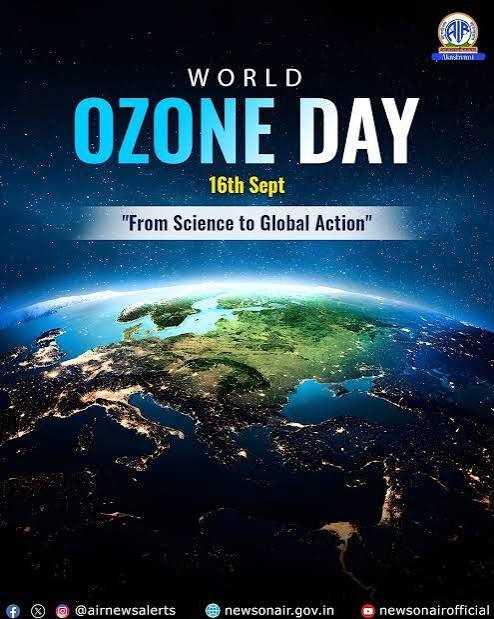
World Ozone Day, observed annually on September 16, marks a crucial moment for humanity to reflect on the delicate balance between nature and human activity. It is not just a celebration of a scientific breakthrough but a reminder of our collective responsibility to safeguard the ozone layer — Earth’s invisible shield. This day urges us to acknowledge past mistakes, recognize ongoing threats, and reinforce our commitment to environmental preservation for a sustainable future.
The Significance of Ozone Layer
The ozone layer, situated in the stratosphere, acts as Earth's natural sunscreen. It absorbs the Sun’s harmful ultraviolet (UV) radiation, especially UV-B rays, shielding living organisms from genetic damage, skin cancers, cataracts, and other health issues. Beyond human health, the ozone layer is vital for maintaining ecological balance — protecting crops, marine life, and biodiversity. Its health directly influences agriculture, fisheries, and the stability of ecosystems worldwide.
Human Activities
Ironically, this life-protecting layer has been severely damaged by human actions. Industrialization, reckless use of chemicals, and outdated technologies have played significant roles in ozone depletion. Substances like chlorofluorocarbons (CFCs), halons, carbon tetrachloride, methyl chloroform, and methyl bromide, once widely used in refrigeration, air conditioning, aerosols, and fire-fighting systems, persist in the atmosphere for decades. When these chemicals reach the stratosphere, UV radiation breaks them down, releasing chlorine and bromine atoms that catalyze destructive reactions, thinning the ozone layer.
This depletion is not merely a high-altitude phenomenon; its consequences ripple across the entire biosphere. Increased UV-B exposure can lead to higher incidences of skin cancer, cataracts, and immune suppression in humans. It also damages crops, aquatic ecosystems, and marine organisms like plankton — the foundation of the ocean food chain. Additionally, UV radiation accelerates the deterioration of materials such as plastics, wood, and rubber, impacting infrastructure and economies.
Lessons from the Past
Despite these challenges, the global community’s response has been remarkably effective. The 1987 Montreal Protocol stands as a beacon of international cooperation, successfully phasing out nearly 99% of controlled ozone-depleting substances. Scientific assessments project a full recovery of the ozone layer by 2040 globally, with Antarctic recovery taking until 2066. This progress demonstrates that environmental crises can be reversed with collective political will, science-based policies, technological innovation, and financial cooperation.
The Montreal Protocol’s success underscores the importance of swift, coordinated action. It shows that environmental recovery is possible when nations prioritize long-term sustainability over short-term gains. The Protocol’s adaptation through the Kigali Amendment in 2016 expanded its scope to address hydrofluorocarbons (HFCs), potent greenhouse gases that do not deplete ozone but have high global warming potential. This integrated approach highlights that protecting the ozone layer and combating climate change are interconnected challenges requiring unified solutions.
India’s Role
India has played a pivotal role in protecting the ozone layer. The country phased out CFC production in August 2008, ahead of schedule, and eliminated their use in inhalers by December 2012. It also ceased manufacturing and usage of carbon tetrachloride and halons by 2010. Moving forward, India is working on a phasedown of HFCs and the phase-out of HCFCs, with restrictions on new equipment manufacturing from January 2025.
India’s India Cooling Action Plan (ICAP), launched in 2019, exemplifies sustainable development. It aims to reduce cooling demand, improve energy efficiency, promote environmentally friendly refrigerants, and develop better cooling technologies. As a rapidly developing nation with rising temperatures and increasing cooling needs, India’s proactive policies are vital to balancing development and environmental sustainability.
The Need for Sustainable Cooling
The theme for 2026 — “Global Action for a Cool Planet – Celebrating 10 Years of Sustainable Cooling” — emphasizes that the future of cooling must be sustainable. While cooling appliances like air conditioners and refrigerators are vital in modern life, their energy consumption and refrigerant emissions pose environmental risks. Outdated, energy-intensive systems and high-GWP (Global Warming Potential) refrigerants can worsen climate change, creating a paradox where solutions for comfort exacerbate environmental problems.
To address this, we need a shift towards energy-efficient appliances, low-GWP refrigerants, climate-responsive building designs, natural ventilation, and effective refrigerant management. Proper disposal of obsolete equipment, refrigerant recovery, and trained technicians are crucial for minimizing leaks and emissions. Embracing innovation and affordable green technologies, especially in developing countries, is imperative for a sustainable cooling future.
Broader Environmental Challenges
The ozone layer’s recovery is just one aspect of a broader environmental crisis. Pollution, deforestation, and greenhouse gas emissions continue to threaten our planet. Vehicle emissions and industrial activities contribute significantly to air pollution and climate change. Ground-level ozone, a component of smog, exacerbates respiratory diseases and reduces air quality in urban centers.
Addressing these challenges requires comprehensive action: adopting cleaner technologies, expanding public transportation and cycling infrastructure, increasing green cover, protecting forests, and harnessing renewable energy sources such as solar, wind, and hydropower. These measures can reduce pollution, mitigate climate change, and restore ecological balance.
Collective Responsibility
World Ozone Day underscores that safeguarding the environment is a shared moral responsibility. Governments, industries, scientists, and citizens must work together to implement policies, adopt green technologies, and promote sustainable practices. Consumers should choose energy-efficient appliances, properly recycle old equipment, and support eco-friendly products.
Technicians and industry players must ensure safe handling and disposal of refrigerants, while policymakers should provide incentives and frameworks that facilitate green innovation. The fight against environmental degradation is interconnected; replacing ozone-depleting substances with harmful alternatives is not a sustainable solution.
The Path Forward
The recovery of the ozone layer offers a powerful message of hope. It proves that concerted international efforts, driven by science and shared commitment, can reverse environmental damage. This collective spirit must now extend to tackling climate change and promoting sustainable development.
Protecting the ozone layer is more than an environmental goal; it is essential for human health, food security, biodiversity, and economic stability. We must learn to balance development with ecological responsibility — integrating wisdom, technology, and environmental consciousness into our everyday choices.
Conclusion
World Ozone Day is a reminder that the fight for a healthier planet is ongoing. It calls us to renew our commitment to reduce pollution, embrace renewable energy, protect forests, and adopt sustainable technologies. Protecting the ozone layer is not the responsibility of any single nation but a collective moral duty of humanity.
By working together, we can ensure a safer, healthier, and more sustainable future for generations to come. Let this day inspire action — because the battle to protect our sky is ultimately a battle to preserve life on Earth.
Email: ----------------------mushtaqwani786@gmail.com
The ozone layer, situated in the stratosphere, acts as Earth's natural sunscreen. It absorbs the Sun’s harmful ultraviolet (UV) radiation, especially UV-B rays, shielding living organisms from genetic damage, skin cancers, cataracts, and other health issues. Beyond human health, the ozone layer is vital for maintaining ecological balance — protecting crops, marine life, and biodiversity
World Ozone Day, observed annually on September 16, marks a crucial moment for humanity to reflect on the delicate balance between nature and human activity. It is not just a celebration of a scientific breakthrough but a reminder of our collective responsibility to safeguard the ozone layer — Earth’s invisible shield. This day urges us to acknowledge past mistakes, recognize ongoing threats, and reinforce our commitment to environmental preservation for a sustainable future.
The Significance of Ozone Layer
The ozone layer, situated in the stratosphere, acts as Earth's natural sunscreen. It absorbs the Sun’s harmful ultraviolet (UV) radiation, especially UV-B rays, shielding living organisms from genetic damage, skin cancers, cataracts, and other health issues. Beyond human health, the ozone layer is vital for maintaining ecological balance — protecting crops, marine life, and biodiversity. Its health directly influences agriculture, fisheries, and the stability of ecosystems worldwide.
Human Activities
Ironically, this life-protecting layer has been severely damaged by human actions. Industrialization, reckless use of chemicals, and outdated technologies have played significant roles in ozone depletion. Substances like chlorofluorocarbons (CFCs), halons, carbon tetrachloride, methyl chloroform, and methyl bromide, once widely used in refrigeration, air conditioning, aerosols, and fire-fighting systems, persist in the atmosphere for decades. When these chemicals reach the stratosphere, UV radiation breaks them down, releasing chlorine and bromine atoms that catalyze destructive reactions, thinning the ozone layer.
This depletion is not merely a high-altitude phenomenon; its consequences ripple across the entire biosphere. Increased UV-B exposure can lead to higher incidences of skin cancer, cataracts, and immune suppression in humans. It also damages crops, aquatic ecosystems, and marine organisms like plankton — the foundation of the ocean food chain. Additionally, UV radiation accelerates the deterioration of materials such as plastics, wood, and rubber, impacting infrastructure and economies.
Lessons from the Past
Despite these challenges, the global community’s response has been remarkably effective. The 1987 Montreal Protocol stands as a beacon of international cooperation, successfully phasing out nearly 99% of controlled ozone-depleting substances. Scientific assessments project a full recovery of the ozone layer by 2040 globally, with Antarctic recovery taking until 2066. This progress demonstrates that environmental crises can be reversed with collective political will, science-based policies, technological innovation, and financial cooperation.
The Montreal Protocol’s success underscores the importance of swift, coordinated action. It shows that environmental recovery is possible when nations prioritize long-term sustainability over short-term gains. The Protocol’s adaptation through the Kigali Amendment in 2016 expanded its scope to address hydrofluorocarbons (HFCs), potent greenhouse gases that do not deplete ozone but have high global warming potential. This integrated approach highlights that protecting the ozone layer and combating climate change are interconnected challenges requiring unified solutions.
India’s Role
India has played a pivotal role in protecting the ozone layer. The country phased out CFC production in August 2008, ahead of schedule, and eliminated their use in inhalers by December 2012. It also ceased manufacturing and usage of carbon tetrachloride and halons by 2010. Moving forward, India is working on a phasedown of HFCs and the phase-out of HCFCs, with restrictions on new equipment manufacturing from January 2025.
India’s India Cooling Action Plan (ICAP), launched in 2019, exemplifies sustainable development. It aims to reduce cooling demand, improve energy efficiency, promote environmentally friendly refrigerants, and develop better cooling technologies. As a rapidly developing nation with rising temperatures and increasing cooling needs, India’s proactive policies are vital to balancing development and environmental sustainability.
The Need for Sustainable Cooling
The theme for 2026 — “Global Action for a Cool Planet – Celebrating 10 Years of Sustainable Cooling” — emphasizes that the future of cooling must be sustainable. While cooling appliances like air conditioners and refrigerators are vital in modern life, their energy consumption and refrigerant emissions pose environmental risks. Outdated, energy-intensive systems and high-GWP (Global Warming Potential) refrigerants can worsen climate change, creating a paradox where solutions for comfort exacerbate environmental problems.
To address this, we need a shift towards energy-efficient appliances, low-GWP refrigerants, climate-responsive building designs, natural ventilation, and effective refrigerant management. Proper disposal of obsolete equipment, refrigerant recovery, and trained technicians are crucial for minimizing leaks and emissions. Embracing innovation and affordable green technologies, especially in developing countries, is imperative for a sustainable cooling future.
Broader Environmental Challenges
The ozone layer’s recovery is just one aspect of a broader environmental crisis. Pollution, deforestation, and greenhouse gas emissions continue to threaten our planet. Vehicle emissions and industrial activities contribute significantly to air pollution and climate change. Ground-level ozone, a component of smog, exacerbates respiratory diseases and reduces air quality in urban centers.
Addressing these challenges requires comprehensive action: adopting cleaner technologies, expanding public transportation and cycling infrastructure, increasing green cover, protecting forests, and harnessing renewable energy sources such as solar, wind, and hydropower. These measures can reduce pollution, mitigate climate change, and restore ecological balance.
Collective Responsibility
World Ozone Day underscores that safeguarding the environment is a shared moral responsibility. Governments, industries, scientists, and citizens must work together to implement policies, adopt green technologies, and promote sustainable practices. Consumers should choose energy-efficient appliances, properly recycle old equipment, and support eco-friendly products.
Technicians and industry players must ensure safe handling and disposal of refrigerants, while policymakers should provide incentives and frameworks that facilitate green innovation. The fight against environmental degradation is interconnected; replacing ozone-depleting substances with harmful alternatives is not a sustainable solution.
The Path Forward
The recovery of the ozone layer offers a powerful message of hope. It proves that concerted international efforts, driven by science and shared commitment, can reverse environmental damage. This collective spirit must now extend to tackling climate change and promoting sustainable development.
Protecting the ozone layer is more than an environmental goal; it is essential for human health, food security, biodiversity, and economic stability. We must learn to balance development with ecological responsibility — integrating wisdom, technology, and environmental consciousness into our everyday choices.
Conclusion
World Ozone Day is a reminder that the fight for a healthier planet is ongoing. It calls us to renew our commitment to reduce pollution, embrace renewable energy, protect forests, and adopt sustainable technologies. Protecting the ozone layer is not the responsibility of any single nation but a collective moral duty of humanity.
By working together, we can ensure a safer, healthier, and more sustainable future for generations to come. Let this day inspire action — because the battle to protect our sky is ultimately a battle to preserve life on Earth.
Email: ----------------------mushtaqwani786@gmail.com

© Copyright 2023 brighterkashmir.com All Rights Reserved. Quantum Technologies