
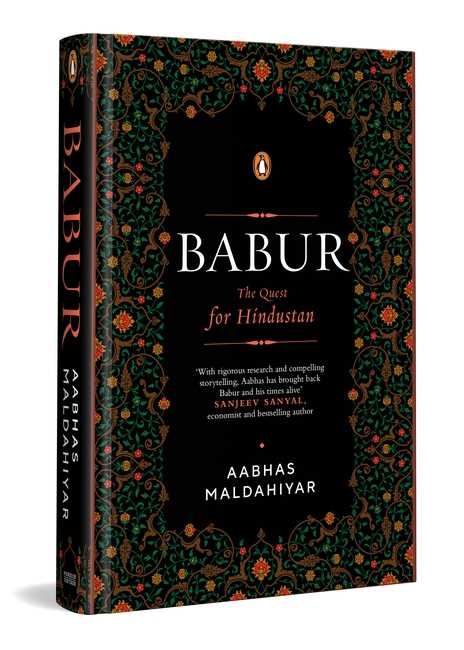
In an exclusive interview for the Brighter Kashmir, author Aabhas K. Maldahiyar in conversation with Muhmmad Daanish speaks about challenges the romanticised narrative of Ganga-Jamuni Teḥzib
The rakhi legend has long been used to frame Humāyūn as a chivalrous saviour. Why do you think this myth endured, and what does its persistence say about our historical memory?
The rakhi legend endures because it offers a convenient balm — a tale of chivalry that softens the harder truths of history. By casting Humāyūn as a gallant saviour who rushes to defend Rani Karnavati out of honour, the story transforms a ruler marked by religious partisanship and imperial indifference into a knightly figure palatable to modern sensibilities. It shifts the focus from his refusal to defend Chittor against Bahadur Shah to an imagined gesture of Hindu–Muslim brotherhood.
The persistence of this myth reveals the way our historical memory is shaped less by manuscripts than by moral desire. We want emperors to be noble, wars to be softened by romance, and civilisational conflict to be rewritten as coexistence. The rakhi tale provided precisely that—a bridge-narrative that allowed successive generations, especially under colonial and postcolonial lenses, to emphasise harmony over hostility.
But when we return to the primary sources—Humayun-nama, and other chroniclers of that age—the silence is deafening. There is no rakhi, no sudden dash to rescue; what we find instead is Humāyūn’s choice to stand aside, privileging religious solidarity with a Muslim adversary over any bond with a Hindu queen.
That the rakhi myth endured says less about Humāyūn and more about us: it exposes our longing to mythologise away uncomfortable truths. In this sense, the legend itself becomes evidence—not of history, but of the politics of memory, where fiction is often preferred because it flatters our ideals more than the record does.
Your analysis of Humāyūn’s correspondence with Bahādur Shāh suggests a hierarchy of loyalties—faith over alliance. Was this a personal conviction or a systemic feature of Timurid diplomacy?
Humāyūn’s correspondence with Bahādur Shāh is telling because it reveals the deeper grammar of Timurid politics. On the surface, he and Bahādur were rivals locked in a territorial contest, but his letters carry an unmistakable undertone: a fellow Muslim ruler, even as an enemy, could never be placed on the same plane as the kāfir Rajputs.
This was not merely Humāyūn’s personal quirk. It reflected a systemic feature of Timurid diplomacy, where the fraternity of faith consistently outweighed the expediencies of alliance. The Timurids carried with them a worldview in which sovereignty was never fully divorced from theology. The idiom of rulership was couched in Islamic legitimacy—whether in invoking the banner of jihad, using terms like kāfir in correspondence, or in distinguishing between adversaries of the faith and adversaries within it.
That said, Humāyūn’s personal disposition amplified this tendency. Unlike Babur, who combined conquest with pragmatic statecraft, Humāyūn leaned heavily into the cosmic and theological self-image of kingship. For him, siding—directly or indirectly—with Bahādur Shāh against Chittor was not just strategy, it was fidelity to the larger cause of Islamic supremacy in Hindustan.
So the hierarchy of loyalties visible in that correspondence cannot be dismissed as circumstantial. It was the structural lens through which the Timurids saw diplomacy, and Humāyūn embodied it with a particular fervour.
You cite the Hidāya to argue that Hindu polities were excluded from Muslim international equity. How did this legal framing shape the broader architecture of conquest and diplomacy in Hindūstān?
The Hidāya is crucial because it codifies the limits of Muslim international law: treaties, alliances, and obligations of equity applied only within the fraternity of Islam or, at most, to the ahl al-kitāb—the People of the Book. Hindus, cast as kāfirs outside this circle, were excluded by definition. This legal framing meant that Hindu polities were never treated as equal sovereigns but as entities to be subdued, taxed, or tolerated only under the rubric of zimmī status.
In Hindūstān, this translated into a structural asymmetry in diplomacy. While Muslim rulers could quarrel and reconcile with one another as peers—as we see in Humāyūn’s correspondence with Bahādur Shāh—the same logic did not extend to Rajput or other Hindu powers. Even when temporary arrangements were made, they carried the shadow of impermanence, always vulnerable to abrogation under the higher principle of jihad.
This legal scaffolding shaped the very architecture of conquest: it normalised permanent war against unbelievers, valorised the destruction of temples as acts of piety, and stripped diplomacy with Hindu rulers of genuine parity. Every treaty with a Hindu polity was provisional at best, an expedient pause before resuming the religiously sanctioned struggle.
Thus, the Hidāya was not an abstract text but a living manual of the empire. It provided the jurisprudential justification for why Humāyūn could prefer solidarity with Bahādur Shāh over aiding Chittor, why Akbar’s later gestures of inclusion were so exceptional, and why Timurid diplomacy with Hindu rulers always carried the imprint of conditional tolerance rather than true equality.
You write that wars against Hindus were elevated to jihād, and rulers crowned as ghāzīs. How do you distinguish between religious zeal and imperial ambition in this context?
In the Timurid imagination, the line between religious zeal and imperial ambition was deliberately blurred—because the most effective way to sanctify conquest was to baptise it in the language of faith. Babur’s own writings illustrate this. When he fought Afghan rivals or other Muslim chieftains, he described these campaigns in the pragmatic idiom of power and succession. But when the adversary was Hindu, the same battles were elevated to the rank of jihād, and victory made him a ghāzī, a warrior of the faith.
This distinction is telling. Against Muslims, the contest was framed as dynastic or territorial rivalry—an extension of imperial ambition. Against Hindus, the identical act of war acquired a sacred register: temple destruction became piety, enslavement a proof of orthodoxy, and the ruler’s title transformed from conqueror to ghāzī. In other words, zeal was not a separate motivation; it was the legitimising vocabulary through which ambition was made acceptable to the ruling elite and sanctified for posterity.
So how do we distinguish them? By examining Babur’s own rhetoric. When he fought Ibrahim Lodi at Panipat—another Muslim—he invoked destiny and Timurid legitimacy. But when he fought Rajput forces at Khanua, his language hardened: it became a war of Islam against kāfirs, his victory celebrated as a triumph of the faith. The battlefield was the same, the soldiers the same, but the register of description shifted according to the enemy’s religion.
Thus, zeal and ambition were not two distinct motives but two faces of the same enterprise. Imperial ambition gave rulers their power; religious zeal gave them their moral justification. Together, they forged a conquest that was both empire-building and jihad.
Do you see parallels between this episode and other instances where religious orthodoxy was used to justify political violence?
Absolutely. What we see in Babur’s elevation of wars against Hindus into jihād is part of a much larger pattern where religious orthodoxy is conscripted to dignify political violence. The template is not unique to Hindustan—it runs through Islamic, Christian, and even modern ideological histories.
Within the Islamic world, the Abbasid–Umayyad struggle was couched in claims of true religious legitimacy, even though it was at heart a dynastic contest. The rhetoric of jihād against “deviation” sanctified fratricidal bloodshed. In Christendom, the Crusades turned territorial ambition into “holy wars,” enabling kings to appear as defenders of the Cross while pursuing expansion. Babur’s campaigns against Hindu polities followed the same pattern: when fighting Muslims like the Lodis, he invoked dynastic right; but against the Rajputs, he recast the battlefield as sacred space, victory as proof of the faith, and himself as a ghāzī.
Here lies the sharp contrast with Indic rulers. Hindu kings did not wage wars to spread their religion. Their dharmic framework permitted warfare, yes—but only as defense of faith, land, and dignity, never as an evangelical project. When Rana Kumbha broke mosques or when Chhatrapati Shivaji struck back at Islamic shrines, these acts were retaliatory responses to aggression, not religious expansionism. Hinduism, unlike the Abrahamic traditions (except Judaism), prescribes no doctrine of converting the world by the sword; its wars were fought to protect dharma, not to propagate it.
The parallel, then, is clear: across Islamic and Christian histories, orthodoxy has often been the alibi that ennobles ambition and sanctifies slaughter. But in the Indic world, orthodoxy was not a tool of conquest. It was a shield, not a spear.
Your critique of Akbar’s treatment of women, based on Badāʾūnī’s testimony, challenges the notion of Mughal reformism. How do you reconcile this with Akbar’s reputation as a liberal monarch?
Akbar’s liberalism stopped at the palace gates; beyond them, women bore the cost of his reformist myth.
Akbar’s image as the liberal monarch has been constructed largely through later hagiographies and the colonial appetite for a “good Mughal” to stand in contrast to an “intolerant Aurangzeb.” Yet when we return to contemporaries like ʿAbd al-Qādir Badāʾūnī, the record looks very different. Badāʾūnī describes how Akbar’s so-called reformist policies degraded women of the court—forcing some to live unveiled, reducing others to little more than objects of royal indulgence, with the line between concubinage and prostitution blurred. This is hardly the hallmark of liberalism; it is exploitation cloaked in rhetoric of reform.
Reconciling this with Akbar’s reputation means recognising that “liberalism” in the Timurid context was selective and self-serving. He could abolish jizya for political advantage (though still had heavy taxes, and anti-Hindu laws), invite debates in the Ibadat Khana to bolster his claim as founder of religion (he did so, as when he tried to become Caliph, Turks hit him hard, and hence he thought of founding his own religion)—but within his harem and his immediate exercise of power, the same ruler sanctioned practices that stripped women of dignity and agency.
What emerges, then, is not a contradiction but a duality: Akbar the empire-builder understood the value of appearing liberal to secure Rajput loyalty and placate diverse subjects. But Akbar the man of the court could be deeply exploitative, as Badāʾūnī testifies. The myth of his liberalism endured because it suited later chroniclers and modern historians eager to find a tolerant face in Timurid history. Yet the testimony of insiders reveals that this tolerance was often a mask for power, not a principle of rule.
You write that “love was conquest, marriage was subjugation.” How should historians approach the romanticised accounts of Hindu-Muslim marital alliances in light of this assertion ?
Historians must strip away the veneer of romance that later imagination has draped over these alliances. When I write that “love was conquest, marriage was subjugation,” I mean that these unions were not tales of mutual affection or cultural fusion but deliberate strategies of domination. For a Timurid emperor, to take a Rajput (Hindu) princess was to transform political submission into the intimacy of the household, making the conquered body itself a symbol of vassalage.
The much-celebrated stories—whether it is Akbar’s so-called marriage with “Jodha Bai” or other Rajput alliances—have been romanticised into fables of harmony. But when we return to the Persian chronicles and court practices, the pattern is stark: these women were absorbed into the imperial harem, often pressured to adopt new religious and cultural codes, their individuality erased into the machinery of empire. It was not an embrace of equality; it was an act of assimilation that reaffirmed Timurid supremacy.
So historians must approach such accounts with evidentiary precision (as pointed earlier in your question too), recognising that these were not bridges of love but instruments of power. The romance was largely retrofitted later—colonial writers eager for tales of tolerance, or Indian historians anxious to showcase unity. In reality, these marriages symbolised conquest twice over: first on the battlefield, and then in the household.
And it was a one way-street, no Hindu was allowed to marry a Muslim girl ( if done, it invited capital punishment). (To Be Continued)
Email:------------------daanishinterview@gmail.com

In an exclusive interview for the Brighter Kashmir, author Aabhas K. Maldahiyar in conversation with Muhmmad Daanish speaks about challenges the romanticised narrative of Ganga-Jamuni Teḥzib
The rakhi legend has long been used to frame Humāyūn as a chivalrous saviour. Why do you think this myth endured, and what does its persistence say about our historical memory?
The rakhi legend endures because it offers a convenient balm — a tale of chivalry that softens the harder truths of history. By casting Humāyūn as a gallant saviour who rushes to defend Rani Karnavati out of honour, the story transforms a ruler marked by religious partisanship and imperial indifference into a knightly figure palatable to modern sensibilities. It shifts the focus from his refusal to defend Chittor against Bahadur Shah to an imagined gesture of Hindu–Muslim brotherhood.
The persistence of this myth reveals the way our historical memory is shaped less by manuscripts than by moral desire. We want emperors to be noble, wars to be softened by romance, and civilisational conflict to be rewritten as coexistence. The rakhi tale provided precisely that—a bridge-narrative that allowed successive generations, especially under colonial and postcolonial lenses, to emphasise harmony over hostility.
But when we return to the primary sources—Humayun-nama, and other chroniclers of that age—the silence is deafening. There is no rakhi, no sudden dash to rescue; what we find instead is Humāyūn’s choice to stand aside, privileging religious solidarity with a Muslim adversary over any bond with a Hindu queen.
That the rakhi myth endured says less about Humāyūn and more about us: it exposes our longing to mythologise away uncomfortable truths. In this sense, the legend itself becomes evidence—not of history, but of the politics of memory, where fiction is often preferred because it flatters our ideals more than the record does.
Your analysis of Humāyūn’s correspondence with Bahādur Shāh suggests a hierarchy of loyalties—faith over alliance. Was this a personal conviction or a systemic feature of Timurid diplomacy?
Humāyūn’s correspondence with Bahādur Shāh is telling because it reveals the deeper grammar of Timurid politics. On the surface, he and Bahādur were rivals locked in a territorial contest, but his letters carry an unmistakable undertone: a fellow Muslim ruler, even as an enemy, could never be placed on the same plane as the kāfir Rajputs.
This was not merely Humāyūn’s personal quirk. It reflected a systemic feature of Timurid diplomacy, where the fraternity of faith consistently outweighed the expediencies of alliance. The Timurids carried with them a worldview in which sovereignty was never fully divorced from theology. The idiom of rulership was couched in Islamic legitimacy—whether in invoking the banner of jihad, using terms like kāfir in correspondence, or in distinguishing between adversaries of the faith and adversaries within it.
That said, Humāyūn’s personal disposition amplified this tendency. Unlike Babur, who combined conquest with pragmatic statecraft, Humāyūn leaned heavily into the cosmic and theological self-image of kingship. For him, siding—directly or indirectly—with Bahādur Shāh against Chittor was not just strategy, it was fidelity to the larger cause of Islamic supremacy in Hindustan.
So the hierarchy of loyalties visible in that correspondence cannot be dismissed as circumstantial. It was the structural lens through which the Timurids saw diplomacy, and Humāyūn embodied it with a particular fervour.
You cite the Hidāya to argue that Hindu polities were excluded from Muslim international equity. How did this legal framing shape the broader architecture of conquest and diplomacy in Hindūstān?
The Hidāya is crucial because it codifies the limits of Muslim international law: treaties, alliances, and obligations of equity applied only within the fraternity of Islam or, at most, to the ahl al-kitāb—the People of the Book. Hindus, cast as kāfirs outside this circle, were excluded by definition. This legal framing meant that Hindu polities were never treated as equal sovereigns but as entities to be subdued, taxed, or tolerated only under the rubric of zimmī status.
In Hindūstān, this translated into a structural asymmetry in diplomacy. While Muslim rulers could quarrel and reconcile with one another as peers—as we see in Humāyūn’s correspondence with Bahādur Shāh—the same logic did not extend to Rajput or other Hindu powers. Even when temporary arrangements were made, they carried the shadow of impermanence, always vulnerable to abrogation under the higher principle of jihad.
This legal scaffolding shaped the very architecture of conquest: it normalised permanent war against unbelievers, valorised the destruction of temples as acts of piety, and stripped diplomacy with Hindu rulers of genuine parity. Every treaty with a Hindu polity was provisional at best, an expedient pause before resuming the religiously sanctioned struggle.
Thus, the Hidāya was not an abstract text but a living manual of the empire. It provided the jurisprudential justification for why Humāyūn could prefer solidarity with Bahādur Shāh over aiding Chittor, why Akbar’s later gestures of inclusion were so exceptional, and why Timurid diplomacy with Hindu rulers always carried the imprint of conditional tolerance rather than true equality.
You write that wars against Hindus were elevated to jihād, and rulers crowned as ghāzīs. How do you distinguish between religious zeal and imperial ambition in this context?
In the Timurid imagination, the line between religious zeal and imperial ambition was deliberately blurred—because the most effective way to sanctify conquest was to baptise it in the language of faith. Babur’s own writings illustrate this. When he fought Afghan rivals or other Muslim chieftains, he described these campaigns in the pragmatic idiom of power and succession. But when the adversary was Hindu, the same battles were elevated to the rank of jihād, and victory made him a ghāzī, a warrior of the faith.
This distinction is telling. Against Muslims, the contest was framed as dynastic or territorial rivalry—an extension of imperial ambition. Against Hindus, the identical act of war acquired a sacred register: temple destruction became piety, enslavement a proof of orthodoxy, and the ruler’s title transformed from conqueror to ghāzī. In other words, zeal was not a separate motivation; it was the legitimising vocabulary through which ambition was made acceptable to the ruling elite and sanctified for posterity.
So how do we distinguish them? By examining Babur’s own rhetoric. When he fought Ibrahim Lodi at Panipat—another Muslim—he invoked destiny and Timurid legitimacy. But when he fought Rajput forces at Khanua, his language hardened: it became a war of Islam against kāfirs, his victory celebrated as a triumph of the faith. The battlefield was the same, the soldiers the same, but the register of description shifted according to the enemy’s religion.
Thus, zeal and ambition were not two distinct motives but two faces of the same enterprise. Imperial ambition gave rulers their power; religious zeal gave them their moral justification. Together, they forged a conquest that was both empire-building and jihad.
Do you see parallels between this episode and other instances where religious orthodoxy was used to justify political violence?
Absolutely. What we see in Babur’s elevation of wars against Hindus into jihād is part of a much larger pattern where religious orthodoxy is conscripted to dignify political violence. The template is not unique to Hindustan—it runs through Islamic, Christian, and even modern ideological histories.
Within the Islamic world, the Abbasid–Umayyad struggle was couched in claims of true religious legitimacy, even though it was at heart a dynastic contest. The rhetoric of jihād against “deviation” sanctified fratricidal bloodshed. In Christendom, the Crusades turned territorial ambition into “holy wars,” enabling kings to appear as defenders of the Cross while pursuing expansion. Babur’s campaigns against Hindu polities followed the same pattern: when fighting Muslims like the Lodis, he invoked dynastic right; but against the Rajputs, he recast the battlefield as sacred space, victory as proof of the faith, and himself as a ghāzī.
Here lies the sharp contrast with Indic rulers. Hindu kings did not wage wars to spread their religion. Their dharmic framework permitted warfare, yes—but only as defense of faith, land, and dignity, never as an evangelical project. When Rana Kumbha broke mosques or when Chhatrapati Shivaji struck back at Islamic shrines, these acts were retaliatory responses to aggression, not religious expansionism. Hinduism, unlike the Abrahamic traditions (except Judaism), prescribes no doctrine of converting the world by the sword; its wars were fought to protect dharma, not to propagate it.
The parallel, then, is clear: across Islamic and Christian histories, orthodoxy has often been the alibi that ennobles ambition and sanctifies slaughter. But in the Indic world, orthodoxy was not a tool of conquest. It was a shield, not a spear.
Your critique of Akbar’s treatment of women, based on Badāʾūnī’s testimony, challenges the notion of Mughal reformism. How do you reconcile this with Akbar’s reputation as a liberal monarch?
Akbar’s liberalism stopped at the palace gates; beyond them, women bore the cost of his reformist myth.
Akbar’s image as the liberal monarch has been constructed largely through later hagiographies and the colonial appetite for a “good Mughal” to stand in contrast to an “intolerant Aurangzeb.” Yet when we return to contemporaries like ʿAbd al-Qādir Badāʾūnī, the record looks very different. Badāʾūnī describes how Akbar’s so-called reformist policies degraded women of the court—forcing some to live unveiled, reducing others to little more than objects of royal indulgence, with the line between concubinage and prostitution blurred. This is hardly the hallmark of liberalism; it is exploitation cloaked in rhetoric of reform.
Reconciling this with Akbar’s reputation means recognising that “liberalism” in the Timurid context was selective and self-serving. He could abolish jizya for political advantage (though still had heavy taxes, and anti-Hindu laws), invite debates in the Ibadat Khana to bolster his claim as founder of religion (he did so, as when he tried to become Caliph, Turks hit him hard, and hence he thought of founding his own religion)—but within his harem and his immediate exercise of power, the same ruler sanctioned practices that stripped women of dignity and agency.
What emerges, then, is not a contradiction but a duality: Akbar the empire-builder understood the value of appearing liberal to secure Rajput loyalty and placate diverse subjects. But Akbar the man of the court could be deeply exploitative, as Badāʾūnī testifies. The myth of his liberalism endured because it suited later chroniclers and modern historians eager to find a tolerant face in Timurid history. Yet the testimony of insiders reveals that this tolerance was often a mask for power, not a principle of rule.
You write that “love was conquest, marriage was subjugation.” How should historians approach the romanticised accounts of Hindu-Muslim marital alliances in light of this assertion ?
Historians must strip away the veneer of romance that later imagination has draped over these alliances. When I write that “love was conquest, marriage was subjugation,” I mean that these unions were not tales of mutual affection or cultural fusion but deliberate strategies of domination. For a Timurid emperor, to take a Rajput (Hindu) princess was to transform political submission into the intimacy of the household, making the conquered body itself a symbol of vassalage.
The much-celebrated stories—whether it is Akbar’s so-called marriage with “Jodha Bai” or other Rajput alliances—have been romanticised into fables of harmony. But when we return to the Persian chronicles and court practices, the pattern is stark: these women were absorbed into the imperial harem, often pressured to adopt new religious and cultural codes, their individuality erased into the machinery of empire. It was not an embrace of equality; it was an act of assimilation that reaffirmed Timurid supremacy.
So historians must approach such accounts with evidentiary precision (as pointed earlier in your question too), recognising that these were not bridges of love but instruments of power. The romance was largely retrofitted later—colonial writers eager for tales of tolerance, or Indian historians anxious to showcase unity. In reality, these marriages symbolised conquest twice over: first on the battlefield, and then in the household.
And it was a one way-street, no Hindu was allowed to marry a Muslim girl ( if done, it invited capital punishment). (To Be Continued)
Email:------------------daanishinterview@gmail.com

© Copyright 2023 brighterkashmir.com All Rights Reserved. Quantum Technologies