

BREAKING NEWS
LG Sinha’s speech highlighted significant milestones in the democratic journey of J&K with the formation of and elected government after a gap of several years
The Jammu and Kashmir legislative assembly started with its Budget Session on February 2, 2026 and the session will end on April 4, 2026. It is a total of 62 days including recess from Feb 20- March 26.
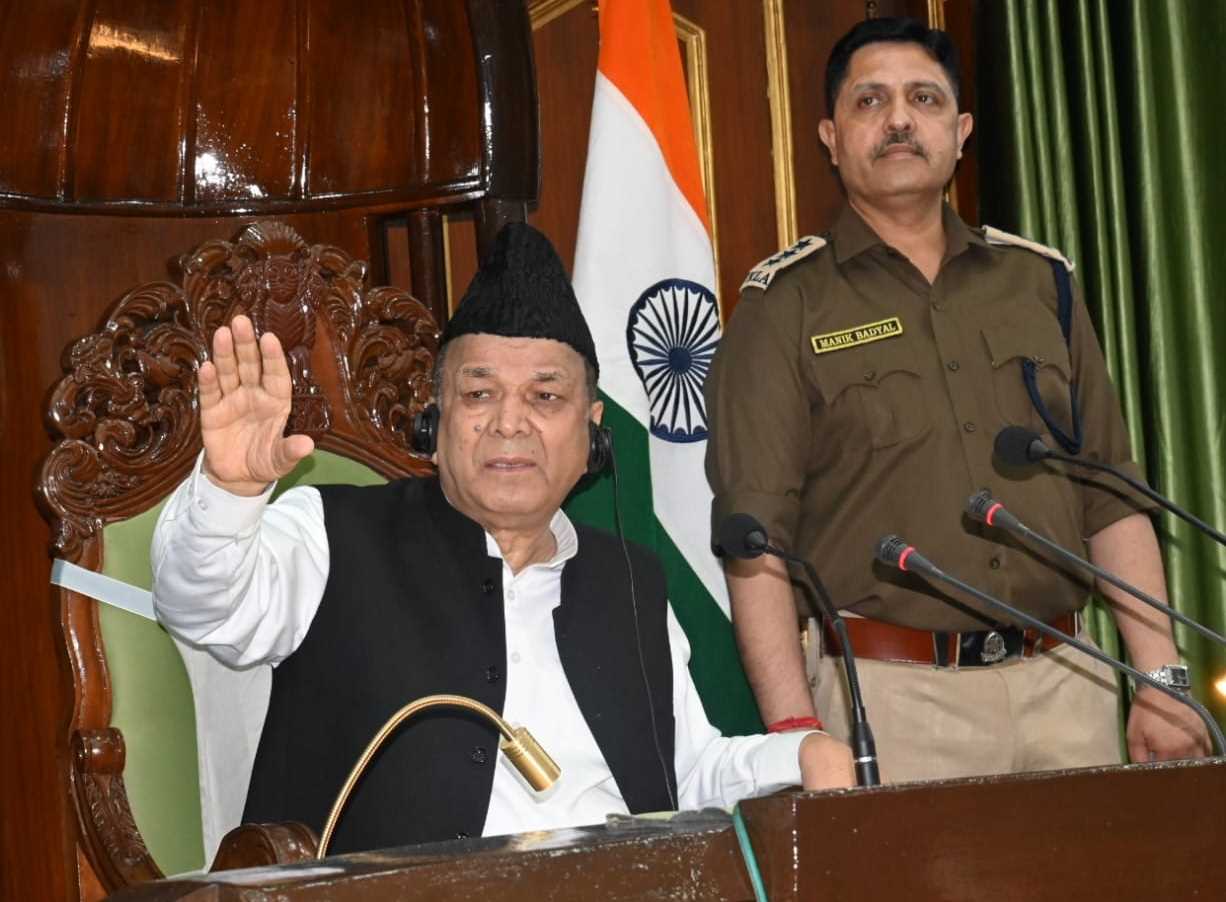
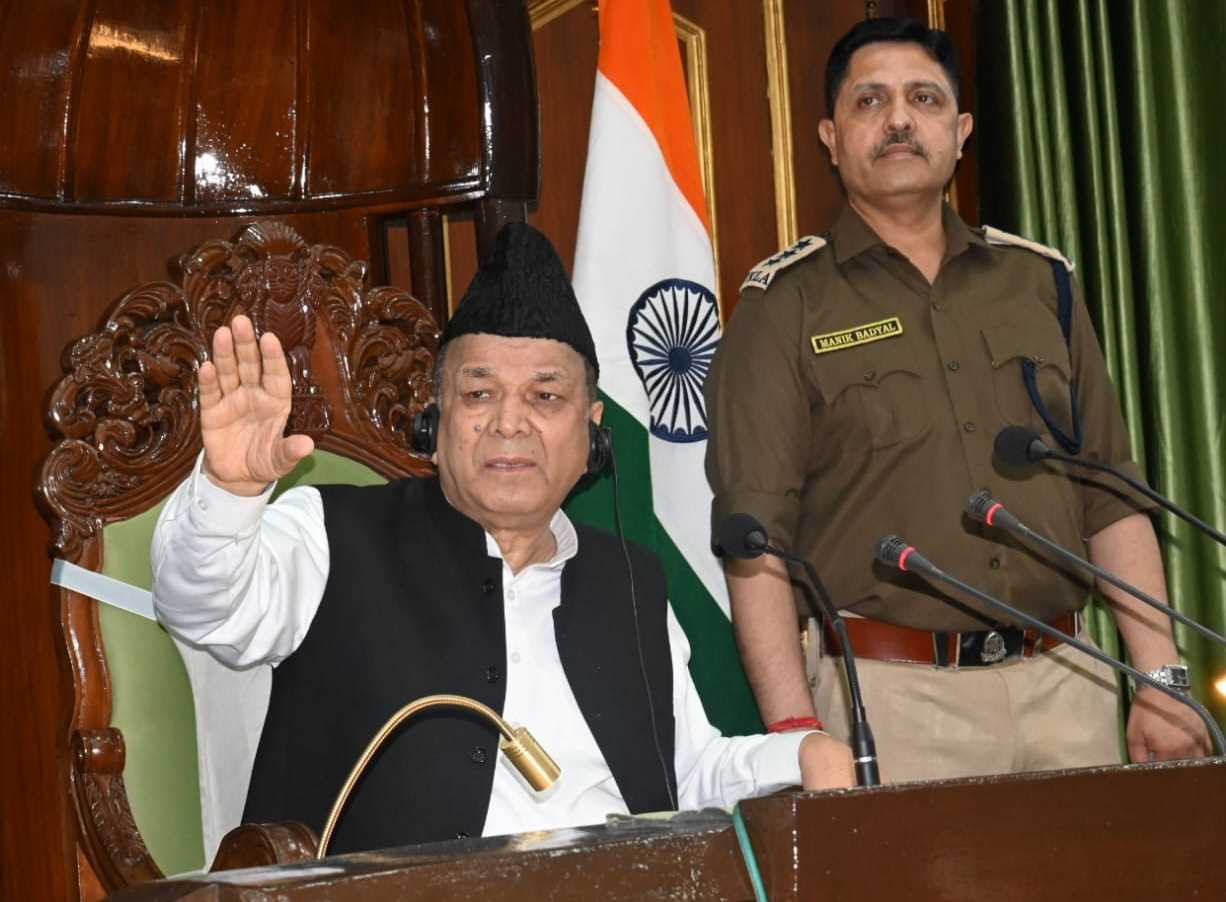
The session opened with the Honorable LG Manoj Sinha’s inaugural speech on 2nd February, 2026 at 10 o clock. His speech outlined the UT of Jammu and Kashmir’s vision, priorities, governance reforms, development progress and policy direction. It emphasized not merely on accounting of resources or outcomes but a reflection of our vision for a prosperous, inclusive and resilient J&K.
LG Sinha’s speech highlighted significant milestones in the democratic journey of J&K with the formation of and elected government after a gap of several years. This transition to popular governance strengthened public faith in democratic institutions. After completion of reading the speech by LG Sinha, one aspect caught my eye and that is one of the most important sectors of any society and nation and that is EDUCATION.
LG Sinha Ji’s speech emphasized on following measures
The education sector is undergoing comprehensive transformation. Implementation of the National Education Policy, introduction of smart classrooms, ATAL Tinkering Laboratories, STEM facilities, and ICT labs are improving learning outcomes.
172 Atal Tinkering Labs have already been established and 500 more are being established under Atal Innovation Mission of NITI Aayog. Further, 1420 CAL (Computer Aided & Learning) Centres and 1588 ICT (Information & Communication Technology) Labs stand established. 1512 ICT Labs and 4000 Smart Class rooms are in process of establishment. Records of 34.50 Lac Students of class 10th, 11th & 12th has been uploaded on Digi Locker by JK BOSE, to facilitate the students under digital transformation.
396 schools are being upgraded under the PMSHRI Yojana, in the first phase. Vidya Samiksha Kendra has been set up and made operational for data-driven decision making and educational improvements. To expand access, the government is launching JK e-Pathshala, a free TV channel broadcasting curriculum-based lessons and lectures in local languages.
396 schools are being upgraded under the PMSHRI Yojana, in the first phase. Vidya Samiksha Kendra has been set up and made operational for data-driven decision making and educational improvements. To expand access, the government is launching JK e-Pathshala, a free TV channel broadcasting curriculum-based lessons and lectures in local languages.
The attainment of A accreditation by the higher educational institutions, along with advances in higher education and research, reflects the Government’s commitment to academic excellence. University of Jammu and University of Kashmir have been accredited with A grade by NAAC. 74 Government Degree Colleges have also received NAAC accreditation and efforts are being made to ensure that all colleges achieve this standard for quality education. Five (5) new college buildings-GDC, Purmandal (Samba), GDC, Boniyar (Baramulla), GDC, Domel Pouni (Reasi), GDC, Hyderpora (Srinagar) and GDC, Eidgah (Srinagar) have been completed during this year and 3 more college buildings-GDC, Nagrota (Jammu), GDC, Kakryal Katra (Reasi), GDC, Vailoo Larnoo (Anantnag) are likely to be completed in 2026.
Implementation of NEP-2020
In my understanding, the major focus has been assigned to the infrastructure and numbers. There are less assessment of the human capacity and the learning outcomes.
The focus should be on:
Teacher’s training
Permanent faculty in government runed institutions which is less that shows employability mismatches.
Local Job Market Alignment which is substantially unavailable and highlights alarming signs of silence by government on Learning Outcomes and Teacher Preparedness.
All in all, the major attention should be given to quality over quantity and inclusivity and equity should be promoted.
The LG’s address followed by the presentation of Annual Financial Statement aka Budget- FY26/27 by CM and Finance Minister of UT of JK Mr. Omer Abdullah. The Budget for FY 26/27 totals approximately 1,13,767 crores with a focus on infrastructure, welfare and human development where in Education emerged as a priority sector receiving 15, 139 Crore in total allocations across School and Higher Education Department. An increase of about 8-9% from the previous year’s 13.890 Crore. This represents roughly 13% of the budget.
Problems in J&K’s Education Sector as reflected within the JK Budget 2026–27 itself:
Access without Equity: Fee Waiver is Narrow and Exclusionary
Fee waivers are limited only to AAY families (Class 9–12 and UG level).
Large vulnerable groups excluded:
BPL but non-AAY families
Migrant students
Problem: Poverty in J&K is multidimensional, not ration-card based.
Structural failure: Welfare targeting relies on outdated poverty identification.
Dropout Problem is Acknowledged — But Addressed Only Financially
Budget admits dropouts at secondary & college levels due to economic hardship.
However:
No mention of transport support, hostels, or mental health counselling.
No remedial programs for first-generation learners
Education exclusion in J&K is geographical/ psychological, not just monetary.
Policy blind spot: TREATS dropout as an economic issue alone.
Massive Infrastructure Push, Weak Academic Outcomes
Heavy emphasis on:
Buildings
Solarization
Smart classrooms
ATLs
But no clear learning outcome framework:
No subject-wise performance data
No teacher-student ratio reform
No curriculum localization for conflict zones
Classic “hardware over human ware” problem.
Teacher Crisis Quietly Admitted
Only 594 lecturer vacancies referred for recruitment.
This is insignificant given:
Expansion of schools
New colleges
FYUG rollout
No timeline, no subject-wise breakup.
Result: Infrastructure expansion without teachers = hollow education.
FYUG Universalization without Capacity Readiness
Four-Year UG Programme implemented in all degree colleges.
But:
No clarity on faculty training
No additional funding for curriculum transition
No exit-option clarity for rural colleges
Risk: FYUG becomes a formality, not an academic reform.
6. Regional Imbalance in Higher Education Infrastructure
Multiple colleges still:
Non-functional
Under construction
Delayed for years (Feisal, Qazi Gund, Veering, Maalti, etc.)
Students in these regions forced to migrate or drop out.
Educational inequality mirrors regional inequality.
Private Universities Policy: Access vs Commercialization
Policy for private universities is being finalized.
But:
No regulation on fee ceilings
No reservation clarity
No social obligation clauses
Danger: Higher education privatization may widen inequality.
Digital Push Ignores Digital Divide
Digi Locker records uploaded for 34.5 lakh students.
Smart classrooms expanded.
But:
Internet connectivity in rural & border areas remains weak
No device-support scheme mentioned
Digital inclusion ≠ digital availability.
Vocational Education without Employment Linkages
Vocational education expanded in schools.
But:
No industry linkage framework
No local job mapping
No placement data
Skill without market = educated unemployment.
Performance Claims Hide Learning Crisis
Pass percentage ~85% in Class 10 & 12 highlighted.
But:
No data on learning levels
No independent assessment (NAS-like data)
No subject-wise proficiency indicators
Pass percentage ≠ quality education.
There is a Core Structural Problem
J&K Education Policy remains input-heavy, outcome-light, and equity-blind.
Focused on buildings, schemes, announcements
Weak on:
Learning outcomes
Teacher capacity
Regional justice
Conflict-sensitive education
Moreover, what about the students belonging to Middle Class families and at the same time being meritorious. Does Government intend to frame a scholarship policy for university-level students based on merit and need, so that poverty status alone does not become the sole criterion for access to higher education support? The absence of merit-based scholarships for non-AAY students is likely to increase dropouts at the University level, particularly among lower middle-income and first-generation learners, and what are the corrective measures the Government proposes to take in this regard. These pointers are missing as of now but should be taken care of.
TOTAL BUDGET –
General Budget Overview (2026–27)
Chief Minister- Omar Abdullah presented the J&K Budget for 2026–27 in the UT Legislative Assembly on 6 February 2026, with a total outlay of ₹1,13,767 crore for the financial year.
Of this, ₹80,640 crore is earmarked for revenue expenditure and ₹33,127 crore for capital expenditure.
The UT expects ₹90,018 crore in revenue receipts and ₹23,749 crore in capital receipts.
Central assistance including Centrally Sponsored Schemes is projected at over ₹56,000 crore combined.
J&K Education Policy remains input heavy, output light and equity blind. It focuses on quantity over quality. Buildings, schemes and announcements won’t cut out the differences on the ground level where as the real time work on ground will mark a difference. The existing education system in J&K is severally weak on learning outcomes. The educational outcomes don’t cater the skill-based job market. Measures should be taken in order to cater the mess as Youth are the nation builders and change makers through their formative skills and creativity yet the youth of J&K is facing crisis because of mismanagement and unmatching skills and lack of availability of jobs.
However, the budget of UT of J&K signals the ambition in the Education Sector in the coming years with the youth unemployment rate in J&K at 23% which is more than the national average. Such ambiguities and crisis need real time solutions. Showcasing numbers and figures won’t help. Grass-root level analysis and authentic policy making on what are the local problems and circumstances and why is Youth not able to get adjusted in the local job market? for that matter, the question is as well,
Does Local Job Market Exist?
The problem is that there is structural difference between the Curriculum and current Job Market. A Core- Structural Crisis that needs redressal at the earliest until it’s too late.
Email:-------------------afreenmanzoor121@gmail.com

LG Sinha’s speech highlighted significant milestones in the democratic journey of J&K with the formation of and elected government after a gap of several years
The Jammu and Kashmir legislative assembly started with its Budget Session on February 2, 2026 and the session will end on April 4, 2026. It is a total of 62 days including recess from Feb 20- March 26.
The session opened with the Honorable LG Manoj Sinha’s inaugural speech on 2nd February, 2026 at 10 o clock. His speech outlined the UT of Jammu and Kashmir’s vision, priorities, governance reforms, development progress and policy direction. It emphasized not merely on accounting of resources or outcomes but a reflection of our vision for a prosperous, inclusive and resilient J&K.
LG Sinha’s speech highlighted significant milestones in the democratic journey of J&K with the formation of and elected government after a gap of several years. This transition to popular governance strengthened public faith in democratic institutions. After completion of reading the speech by LG Sinha, one aspect caught my eye and that is one of the most important sectors of any society and nation and that is EDUCATION.
LG Sinha Ji’s speech emphasized on following measures
The education sector is undergoing comprehensive transformation. Implementation of the National Education Policy, introduction of smart classrooms, ATAL Tinkering Laboratories, STEM facilities, and ICT labs are improving learning outcomes.
172 Atal Tinkering Labs have already been established and 500 more are being established under Atal Innovation Mission of NITI Aayog. Further, 1420 CAL (Computer Aided & Learning) Centres and 1588 ICT (Information & Communication Technology) Labs stand established. 1512 ICT Labs and 4000 Smart Class rooms are in process of establishment. Records of 34.50 Lac Students of class 10th, 11th & 12th has been uploaded on Digi Locker by JK BOSE, to facilitate the students under digital transformation.
396 schools are being upgraded under the PMSHRI Yojana, in the first phase. Vidya Samiksha Kendra has been set up and made operational for data-driven decision making and educational improvements. To expand access, the government is launching JK e-Pathshala, a free TV channel broadcasting curriculum-based lessons and lectures in local languages.
396 schools are being upgraded under the PMSHRI Yojana, in the first phase. Vidya Samiksha Kendra has been set up and made operational for data-driven decision making and educational improvements. To expand access, the government is launching JK e-Pathshala, a free TV channel broadcasting curriculum-based lessons and lectures in local languages.
The attainment of A accreditation by the higher educational institutions, along with advances in higher education and research, reflects the Government’s commitment to academic excellence. University of Jammu and University of Kashmir have been accredited with A grade by NAAC. 74 Government Degree Colleges have also received NAAC accreditation and efforts are being made to ensure that all colleges achieve this standard for quality education. Five (5) new college buildings-GDC, Purmandal (Samba), GDC, Boniyar (Baramulla), GDC, Domel Pouni (Reasi), GDC, Hyderpora (Srinagar) and GDC, Eidgah (Srinagar) have been completed during this year and 3 more college buildings-GDC, Nagrota (Jammu), GDC, Kakryal Katra (Reasi), GDC, Vailoo Larnoo (Anantnag) are likely to be completed in 2026.
Implementation of NEP-2020
In my understanding, the major focus has been assigned to the infrastructure and numbers. There are less assessment of the human capacity and the learning outcomes.
The focus should be on:
Teacher’s training
Permanent faculty in government runed institutions which is less that shows employability mismatches.
Local Job Market Alignment which is substantially unavailable and highlights alarming signs of silence by government on Learning Outcomes and Teacher Preparedness.
All in all, the major attention should be given to quality over quantity and inclusivity and equity should be promoted.
The LG’s address followed by the presentation of Annual Financial Statement aka Budget- FY26/27 by CM and Finance Minister of UT of JK Mr. Omer Abdullah. The Budget for FY 26/27 totals approximately 1,13,767 crores with a focus on infrastructure, welfare and human development where in Education emerged as a priority sector receiving 15, 139 Crore in total allocations across School and Higher Education Department. An increase of about 8-9% from the previous year’s 13.890 Crore. This represents roughly 13% of the budget.
Problems in J&K’s Education Sector as reflected within the JK Budget 2026–27 itself:
Access without Equity: Fee Waiver is Narrow and Exclusionary
Fee waivers are limited only to AAY families (Class 9–12 and UG level).
Large vulnerable groups excluded:
BPL but non-AAY families
Migrant students
Problem: Poverty in J&K is multidimensional, not ration-card based.
Structural failure: Welfare targeting relies on outdated poverty identification.
Dropout Problem is Acknowledged — But Addressed Only Financially
Budget admits dropouts at secondary & college levels due to economic hardship.
However:
No mention of transport support, hostels, or mental health counselling.
No remedial programs for first-generation learners
Education exclusion in J&K is geographical/ psychological, not just monetary.
Policy blind spot: TREATS dropout as an economic issue alone.
Massive Infrastructure Push, Weak Academic Outcomes
Heavy emphasis on:
Buildings
Solarization
Smart classrooms
ATLs
But no clear learning outcome framework:
No subject-wise performance data
No teacher-student ratio reform
No curriculum localization for conflict zones
Classic “hardware over human ware” problem.
Teacher Crisis Quietly Admitted
Only 594 lecturer vacancies referred for recruitment.
This is insignificant given:
Expansion of schools
New colleges
FYUG rollout
No timeline, no subject-wise breakup.
Result: Infrastructure expansion without teachers = hollow education.
FYUG Universalization without Capacity Readiness
Four-Year UG Programme implemented in all degree colleges.
But:
No clarity on faculty training
No additional funding for curriculum transition
No exit-option clarity for rural colleges
Risk: FYUG becomes a formality, not an academic reform.
6. Regional Imbalance in Higher Education Infrastructure
Multiple colleges still:
Non-functional
Under construction
Delayed for years (Feisal, Qazi Gund, Veering, Maalti, etc.)
Students in these regions forced to migrate or drop out.
Educational inequality mirrors regional inequality.
Private Universities Policy: Access vs Commercialization
Policy for private universities is being finalized.
But:
No regulation on fee ceilings
No reservation clarity
No social obligation clauses
Danger: Higher education privatization may widen inequality.
Digital Push Ignores Digital Divide
Digi Locker records uploaded for 34.5 lakh students.
Smart classrooms expanded.
But:
Internet connectivity in rural & border areas remains weak
No device-support scheme mentioned
Digital inclusion ≠ digital availability.
Vocational Education without Employment Linkages
Vocational education expanded in schools.
But:
No industry linkage framework
No local job mapping
No placement data
Skill without market = educated unemployment.
Performance Claims Hide Learning Crisis
Pass percentage ~85% in Class 10 & 12 highlighted.
But:
No data on learning levels
No independent assessment (NAS-like data)
No subject-wise proficiency indicators
Pass percentage ≠ quality education.
There is a Core Structural Problem
J&K Education Policy remains input-heavy, outcome-light, and equity-blind.
Focused on buildings, schemes, announcements
Weak on:
Learning outcomes
Teacher capacity
Regional justice
Conflict-sensitive education
Moreover, what about the students belonging to Middle Class families and at the same time being meritorious. Does Government intend to frame a scholarship policy for university-level students based on merit and need, so that poverty status alone does not become the sole criterion for access to higher education support? The absence of merit-based scholarships for non-AAY students is likely to increase dropouts at the University level, particularly among lower middle-income and first-generation learners, and what are the corrective measures the Government proposes to take in this regard. These pointers are missing as of now but should be taken care of.
TOTAL BUDGET –
General Budget Overview (2026–27)
Chief Minister- Omar Abdullah presented the J&K Budget for 2026–27 in the UT Legislative Assembly on 6 February 2026, with a total outlay of ₹1,13,767 crore for the financial year.
Of this, ₹80,640 crore is earmarked for revenue expenditure and ₹33,127 crore for capital expenditure.
The UT expects ₹90,018 crore in revenue receipts and ₹23,749 crore in capital receipts.
Central assistance including Centrally Sponsored Schemes is projected at over ₹56,000 crore combined.
J&K Education Policy remains input heavy, output light and equity blind. It focuses on quantity over quality. Buildings, schemes and announcements won’t cut out the differences on the ground level where as the real time work on ground will mark a difference. The existing education system in J&K is severally weak on learning outcomes. The educational outcomes don’t cater the skill-based job market. Measures should be taken in order to cater the mess as Youth are the nation builders and change makers through their formative skills and creativity yet the youth of J&K is facing crisis because of mismanagement and unmatching skills and lack of availability of jobs.
However, the budget of UT of J&K signals the ambition in the Education Sector in the coming years with the youth unemployment rate in J&K at 23% which is more than the national average. Such ambiguities and crisis need real time solutions. Showcasing numbers and figures won’t help. Grass-root level analysis and authentic policy making on what are the local problems and circumstances and why is Youth not able to get adjusted in the local job market? for that matter, the question is as well,
Does Local Job Market Exist?
The problem is that there is structural difference between the Curriculum and current Job Market. A Core- Structural Crisis that needs redressal at the earliest until it’s too late.
Email:-------------------afreenmanzoor121@gmail.com

© Copyright 2023 brighterkashmir.com All Rights Reserved. Quantum Technologies