
BREAKING NEWS
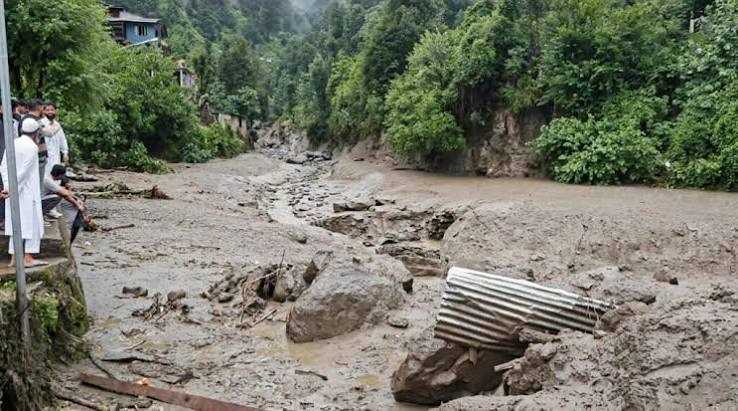
Srinagar, Aug 4,: Jammu and Kashmir has witnessed more than 35 cloudburst incidents since the onset of moon this year, resulting in the deaths of around 31 people and causing extensive damage to houses, roads, bridges and other public infrastructure across the Union Territory.
According to official data, at least 22 cloudbursts were reported between June 1 and the middle of July. However, persistent heavy rainfall during the latter half of July and the beginning of August triggered several more cloudbursts, pushing the total number of such incidents beyond 35.
The fatalities have largely been attributed to cloudbursts, flash floods and rain-triggered landslides, with the Jammu division accounting for the majority of the deaths.
Among the worst-affected districts are Poonch, Rajouri, Kathua, Doda and Kishtwar, where repeated weather-related disasters have caused significant loss of life and property. In Kashmir, districts including Shopian and Kupwara have also witnessed multiple cloudbursts and flash floods in recent weeks, disrupting normal life and damaging infrastructure.
The recurring extreme weather events have led to the destruction of residential houses, roads, bridges, agricultural land and other public utilities, besides affecting connectivity in several remote areas.
The latest spell of heavy rainfall has once again highlighted the vulnerability of mountainous regions to weather-induced disasters, with authorities continuing rescue, restoration and relief operations in several affected districts.
Disaster management authorities have advised people residing in flood-prone and landslide-vulnerable areas to remain alert and strictly follow weather advisories as the monsoon continues to impact the region.
Experts have attributed these devastating cloudbursts and other weather-related disasters to local factors in the Himalayan region and to the global phenomenon of climate change.
“The local factors include ecological degradation caused by hill cutting, deforestation, and heavy construction in fragile zones. These factors destabilise slopes and choke natural drainage channels. Global factors include rising global temperatures, which allow the atmosphere to hold roughly 7 per cent more moisture per degree Celsius, supercharging monsoon clouds. Higher sea surface temperatures in the Arabian Sea and Indian Ocean increase the volume of water vapour carried by incoming winds toward the mountains,” they said.
They say geographical factors in Kashmir include fragile mountain terrain.
“Steep, narrow valleys and high-altitude slopes force warm, moist air rapidly upward, causing sudden heavy condensation and immediate runoff,” they added.
Srinagar, Aug 4,: Jammu and Kashmir has witnessed more than 35 cloudburst incidents since the onset of moon this year, resulting in the deaths of around 31 people and causing extensive damage to houses, roads, bridges and other public infrastructure across the Union Territory.
According to official data, at least 22 cloudbursts were reported between June 1 and the middle of July. However, persistent heavy rainfall during the latter half of July and the beginning of August triggered several more cloudbursts, pushing the total number of such incidents beyond 35.
The fatalities have largely been attributed to cloudbursts, flash floods and rain-triggered landslides, with the Jammu division accounting for the majority of the deaths.
Among the worst-affected districts are Poonch, Rajouri, Kathua, Doda and Kishtwar, where repeated weather-related disasters have caused significant loss of life and property. In Kashmir, districts including Shopian and Kupwara have also witnessed multiple cloudbursts and flash floods in recent weeks, disrupting normal life and damaging infrastructure.
The recurring extreme weather events have led to the destruction of residential houses, roads, bridges, agricultural land and other public utilities, besides affecting connectivity in several remote areas.
The latest spell of heavy rainfall has once again highlighted the vulnerability of mountainous regions to weather-induced disasters, with authorities continuing rescue, restoration and relief operations in several affected districts.
Disaster management authorities have advised people residing in flood-prone and landslide-vulnerable areas to remain alert and strictly follow weather advisories as the monsoon continues to impact the region.
Experts have attributed these devastating cloudbursts and other weather-related disasters to local factors in the Himalayan region and to the global phenomenon of climate change.
“The local factors include ecological degradation caused by hill cutting, deforestation, and heavy construction in fragile zones. These factors destabilise slopes and choke natural drainage channels. Global factors include rising global temperatures, which allow the atmosphere to hold roughly 7 per cent more moisture per degree Celsius, supercharging monsoon clouds. Higher sea surface temperatures in the Arabian Sea and Indian Ocean increase the volume of water vapour carried by incoming winds toward the mountains,” they said.
They say geographical factors in Kashmir include fragile mountain terrain.
“Steep, narrow valleys and high-altitude slopes force warm, moist air rapidly upward, causing sudden heavy condensation and immediate runoff,” they added.

© Copyright 2023 brighterkashmir.com All Rights Reserved. Quantum Technologies