
BREAKING NEWS
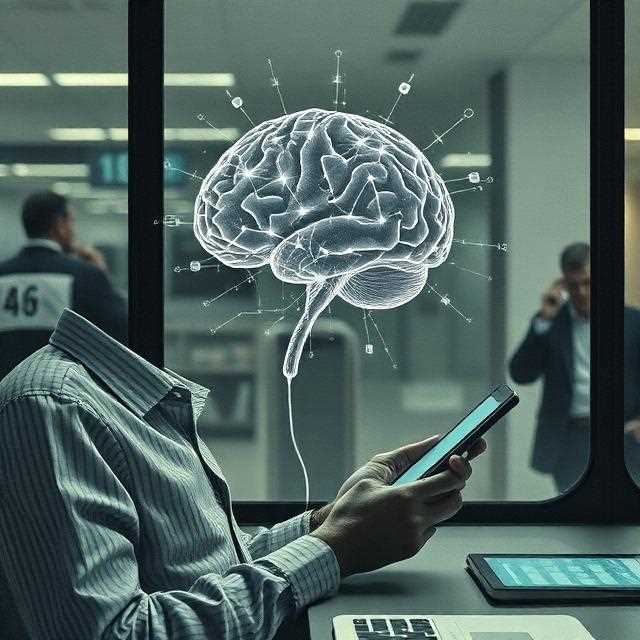
Relying too much on AI can also lead to a decline in memory. When there is no need to remember anything since a machine can immediately produce a piece of information, then the mind begins to change
Artificial intelligence has gradually made its way into the tiniest aspects of our daily lives. We use it not just for making sense of complicated information and data or for carrying out scientific research, but it is also assisting us in typing a message, rewording short paragraphs, improving our grammar, suggesting replies, and even helping us to decide which words to use. Yet, as we make use of these technologies, a unpleasant idea arises: is our reliance on AI damaging our mental abilities?
From Assistance to Dependence
Humans have always been affected in the way they think by technological advances. Calculators have decreased the need for people to think when carrying out numerical calculations, while GPS has caused us to lose our sense of direction. AI goes a step beyond this. It is not only helpful in carrying out physical and mechanical processes but also in those cognitive processes which in the past have required concentration, memory, and rationality. Tasks such as sending a short message, summarising a text, or constructing an argument were once simple mental activities. Nowadays, most people automatically turn to AI in order to carry out these tasks. As a result, we lose important abilities such as critical thinking, understanding language, and solving problems on our own. The moment we stop struggling with words, ideas, and structures, we also stop exercising our mental "muscles".
The waning of Deep Thinking
Thinking is not a spontaneous process; it involves a great deal of effort. The effort required to understand a piece of writing, to choose the right word, or even to form sentences from one's thoughts all count as intense mental work—and it is precisely this kind of intense mental effort that develops mental tenacity. By eliminating that kind of hard work, AI does so. Although it makes life appear to be easier, it removes the opportunities to learn.
We are told by science that any ability which is not exercised regularly will deteriorate. If we constantly use AI to produce summaries for us, then we aren't employing our ability to analyse the information we get. And if AI does the writing for us, then we never think about how to say the things that need to be said.
Language, Thought, and Atrophying the Mind
Language is not merely a means of communication since it also has an effect on thinking. When people write they have to be clear and concise in their thoughts, and when reading it promotes comprehension. Once people begin to rely on AI as an easy way of communicating their ideas, they will inevitably give up on practising fluency, nuance, and the ability to think about an issue without the aid of artificial intelligence.
Relying too much on AI can also lead to a decline in memory. When there is no need to remember anything since a machine can immediately produce a piece of information, then the mind begins to change.
Is a new kind of cognitive disability being created?
While AI will not cause clinical cognitive deficits, a dependence on technology could lead to a functional cognitive impairment, such as poor concentration, an inability to solve problems, and a reduced confidence in one's own reasoning abilities. People might come to the conclusion that they are unable to write, analyse, or make decisions without the use of some technological aid. This kind of reliance on AI is similar to the situation that occurs when certain skills are outsourced and as a result are no longer used.
The problem is not apparent. Far from the way traditional technologies usually fail to live up to our expectations, AI works and achieves success. By making thinking easier, it might turn out to be a factor which makes the thinker unnecessary.
Striking a Balance
On the contrary, rather than dismissing AI, people ought to learn to use technology in a conscious manner. AI should be seen as a way of enhancing our intellectual abilities not as a replacement for thinking. Before using AI as a tool for refining our work, one should first draft ideas, generate them, and carry out an analysis of complex texts. Both educational institutions, the working environment, and individual users should promote the principle of 'thinking-first'.
Convenience must not be gained by sacrificing our ability to think. Although we might become more efficient if we allowed computers to carry out even the most minor tasks, we should then lose the capacity to think properly.
Conclusion
AI itself is not harmful to human intelligence, but an uncritical dependence on it could be. The fact that we are getting machines to carry out the most elementary cognitive functions—such as reading, writing, reasoning and other similar activities—puts our cognitive abilities at risk and means that we fail to get the necessary practice for making use of our intellectual potential.
We have to take charge of our own cognitive development instead of handing our thinking over to machines. To put it plainly, even though AI can aid learning and understanding, assist us in expressing our ideas more effectively, and so on, it cannot take over any of these roles. It is essential to maintain a balance between AI and human cognition; if we opt for convenience at the expense of cognition, then we will lose something highly valuable.
Email:-----------------------mehrajhina16@gmail.com
Relying too much on AI can also lead to a decline in memory. When there is no need to remember anything since a machine can immediately produce a piece of information, then the mind begins to change
Artificial intelligence has gradually made its way into the tiniest aspects of our daily lives. We use it not just for making sense of complicated information and data or for carrying out scientific research, but it is also assisting us in typing a message, rewording short paragraphs, improving our grammar, suggesting replies, and even helping us to decide which words to use. Yet, as we make use of these technologies, a unpleasant idea arises: is our reliance on AI damaging our mental abilities?
From Assistance to Dependence
Humans have always been affected in the way they think by technological advances. Calculators have decreased the need for people to think when carrying out numerical calculations, while GPS has caused us to lose our sense of direction. AI goes a step beyond this. It is not only helpful in carrying out physical and mechanical processes but also in those cognitive processes which in the past have required concentration, memory, and rationality. Tasks such as sending a short message, summarising a text, or constructing an argument were once simple mental activities. Nowadays, most people automatically turn to AI in order to carry out these tasks. As a result, we lose important abilities such as critical thinking, understanding language, and solving problems on our own. The moment we stop struggling with words, ideas, and structures, we also stop exercising our mental "muscles".
The waning of Deep Thinking
Thinking is not a spontaneous process; it involves a great deal of effort. The effort required to understand a piece of writing, to choose the right word, or even to form sentences from one's thoughts all count as intense mental work—and it is precisely this kind of intense mental effort that develops mental tenacity. By eliminating that kind of hard work, AI does so. Although it makes life appear to be easier, it removes the opportunities to learn.
We are told by science that any ability which is not exercised regularly will deteriorate. If we constantly use AI to produce summaries for us, then we aren't employing our ability to analyse the information we get. And if AI does the writing for us, then we never think about how to say the things that need to be said.
Language, Thought, and Atrophying the Mind
Language is not merely a means of communication since it also has an effect on thinking. When people write they have to be clear and concise in their thoughts, and when reading it promotes comprehension. Once people begin to rely on AI as an easy way of communicating their ideas, they will inevitably give up on practising fluency, nuance, and the ability to think about an issue without the aid of artificial intelligence.
Relying too much on AI can also lead to a decline in memory. When there is no need to remember anything since a machine can immediately produce a piece of information, then the mind begins to change.
Is a new kind of cognitive disability being created?
While AI will not cause clinical cognitive deficits, a dependence on technology could lead to a functional cognitive impairment, such as poor concentration, an inability to solve problems, and a reduced confidence in one's own reasoning abilities. People might come to the conclusion that they are unable to write, analyse, or make decisions without the use of some technological aid. This kind of reliance on AI is similar to the situation that occurs when certain skills are outsourced and as a result are no longer used.
The problem is not apparent. Far from the way traditional technologies usually fail to live up to our expectations, AI works and achieves success. By making thinking easier, it might turn out to be a factor which makes the thinker unnecessary.
Striking a Balance
On the contrary, rather than dismissing AI, people ought to learn to use technology in a conscious manner. AI should be seen as a way of enhancing our intellectual abilities not as a replacement for thinking. Before using AI as a tool for refining our work, one should first draft ideas, generate them, and carry out an analysis of complex texts. Both educational institutions, the working environment, and individual users should promote the principle of 'thinking-first'.
Convenience must not be gained by sacrificing our ability to think. Although we might become more efficient if we allowed computers to carry out even the most minor tasks, we should then lose the capacity to think properly.
Conclusion
AI itself is not harmful to human intelligence, but an uncritical dependence on it could be. The fact that we are getting machines to carry out the most elementary cognitive functions—such as reading, writing, reasoning and other similar activities—puts our cognitive abilities at risk and means that we fail to get the necessary practice for making use of our intellectual potential.
We have to take charge of our own cognitive development instead of handing our thinking over to machines. To put it plainly, even though AI can aid learning and understanding, assist us in expressing our ideas more effectively, and so on, it cannot take over any of these roles. It is essential to maintain a balance between AI and human cognition; if we opt for convenience at the expense of cognition, then we will lose something highly valuable.
Email:-----------------------mehrajhina16@gmail.com

© Copyright 2023 brighterkashmir.com All Rights Reserved. Quantum Technologies