
BREAKING NEWS
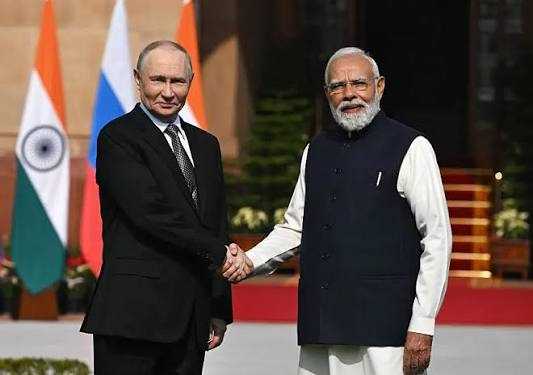
The forthcoming meeting between Prime Minister Narendra Modi and Russian President Vladimir Putin carries significance far beyond another round of defence negotiations. At a time when global geopolitics is undergoing a profound transformation, the real test of the India-Russia relationship is whether it can move from a traditional buyer-seller equation to a deeper partnership in technology, production and strategic capability. Defence cooperation is expected to dominate the discussions. The completion of pending S-400 deliveries remains an immediate priority, while the proposed cooperation around Russia’s fifth-generation Su-57 fighter could open a new chapter in advanced military technology. Discussions on technology sharing are particularly important because India’s defence ambitions are no longer limited to acquiring sophisticated platforms; New Delhi increasingly wants the capability to design, manufacture and upgrade them at home. The BrahMos programme offers perhaps the clearest example of what such a partnership can achieve. Developed jointly by India and Russia, BrahMos has evolved into one of the most visible symbols of successful defence co-development. The proposed next phase of upgrades should therefore focus not merely on greater range or improved performance, but also on expanding indigenous components, production capabilities and export opportunities. Moscow has itself indicated that the missile's capabilities and competitiveness need to be enhanced. For India, however, every new defence agreement must pass through one important filter: Will it strengthen self-reliance? India cannot afford to remain excessively dependent on any single foreign supplier. The Russia relationship remains strategically valuable, but New Delhi has also diversified its defence partnerships with the United States, France, Israel and other countries. This diversification is not a rejection of Moscow; it is an assertion of India's strategic autonomy. Russia, meanwhile, remains an important partner because it has historically been willing to share technology and undertake joint development. That legacy should now be converted into deeper industrial cooperation, particularly in advanced aviation, missiles, air defence, engines, electronics and emerging defence technologies. The Modi-Putin dialogue must therefore look beyond immediate contracts. India needs assured supplies, but it needs technology absorption even more. It needs weapons today, while building the capacity to design tomorrow's weapons itself. The strongest India-Russia partnership will not be measured by how many systems India buys from Russia. It will be measured by how much India learns, builds and exports with Russia. That is the real strategic opportunity before Modi and Putin.
The forthcoming meeting between Prime Minister Narendra Modi and Russian President Vladimir Putin carries significance far beyond another round of defence negotiations. At a time when global geopolitics is undergoing a profound transformation, the real test of the India-Russia relationship is whether it can move from a traditional buyer-seller equation to a deeper partnership in technology, production and strategic capability. Defence cooperation is expected to dominate the discussions. The completion of pending S-400 deliveries remains an immediate priority, while the proposed cooperation around Russia’s fifth-generation Su-57 fighter could open a new chapter in advanced military technology. Discussions on technology sharing are particularly important because India’s defence ambitions are no longer limited to acquiring sophisticated platforms; New Delhi increasingly wants the capability to design, manufacture and upgrade them at home. The BrahMos programme offers perhaps the clearest example of what such a partnership can achieve. Developed jointly by India and Russia, BrahMos has evolved into one of the most visible symbols of successful defence co-development. The proposed next phase of upgrades should therefore focus not merely on greater range or improved performance, but also on expanding indigenous components, production capabilities and export opportunities. Moscow has itself indicated that the missile's capabilities and competitiveness need to be enhanced. For India, however, every new defence agreement must pass through one important filter: Will it strengthen self-reliance? India cannot afford to remain excessively dependent on any single foreign supplier. The Russia relationship remains strategically valuable, but New Delhi has also diversified its defence partnerships with the United States, France, Israel and other countries. This diversification is not a rejection of Moscow; it is an assertion of India's strategic autonomy. Russia, meanwhile, remains an important partner because it has historically been willing to share technology and undertake joint development. That legacy should now be converted into deeper industrial cooperation, particularly in advanced aviation, missiles, air defence, engines, electronics and emerging defence technologies. The Modi-Putin dialogue must therefore look beyond immediate contracts. India needs assured supplies, but it needs technology absorption even more. It needs weapons today, while building the capacity to design tomorrow's weapons itself. The strongest India-Russia partnership will not be measured by how many systems India buys from Russia. It will be measured by how much India learns, builds and exports with Russia. That is the real strategic opportunity before Modi and Putin.

© Copyright 2023 brighterkashmir.com All Rights Reserved. Quantum Technologies