
BREAKING NEWS
The ecological measures suggested by the watershed-development programmes form a valuable basis for the town's future. Contour trenching, planting, vegetative check dams, retaining structures, fencing and slope treatment should not be seen as separate projects carried out by different departments; rather they should be included as part of a permanent green infrastructure and watershed-management system
Shrine Precinct Needs a Special Planning Regime
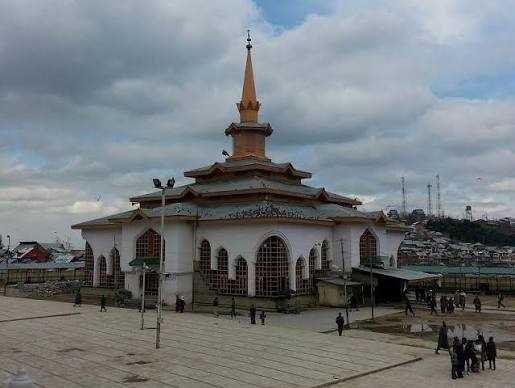
The shrine together with the area immediately around it must be regarded as a Special Heritage and Pilgrimage Precinct and conventional urban rules will probably not be adequate. A special development-control regime should therefore regulate such matters as building height, the treatment of the façades, signage, setbacks, construction materials, street vending, commercial frontage, pedestrian movement and the visual corridors. The visual axis leading to the shrine must be preserved and new buildings should not be allowed to block any important view corridors. The open spaces surrounding the sacred area should be seen as forming part of the shrine's setting and not as empty land to be developed. It is equally important to establish a pedestrian-priority pilgrimage zone. Where normal conditions exist, controlled access for vehicles can be kept; but during Urs and at other peak times, traffic management plans should allow for the temporary conversion of key sections into pedestrian zones. Bada Talab, the Khankah precinct, Kalai Bazar and the routes leading to the shrine should form a connected network of public space rather than remain as separate urban projects. The proposed processional path and the landscaped terraces can then serve as the backbone of this network.
Water Security Is Urban Security
Any plan for Charar-e-Sharief will fail if the problem of water shortage is not solved. Since it is a pilgrimage town with large variations in population throughout the seasons, it needs a water system that is not only adequate for the average daily demand but also capable of meeting peak demand and including emergency reserves. In the past, the town has been vulnerable to shortfalls and capacity limitations because of its reliance on the Yousmarg and Manzoo reservoirs; siltation has also decreased the amount of storage available. The suggested measures for improvement include desilting and expanding the reservoirs, as well as the construction of the Reikot impounding reservoir connecting the Zaloosa-Budenbal area and constructing the Fresnag-Yousmarg raw-water main, must therefore be assessed as part of an overall urban water-security strategy. Yet increasing the water supply by itself is not sufficient. Rainwater harvesting, leakage reduction, the installation of meters, the use of water-efficient fittings, the management and reuse of grey water should all become a standard part of the town's development-control regulations. Public buildings, pilgrim facilities, schools and other institutional sites should be required to adopt water-sensitive urban design. In such a delicate mountain environment, each litre conserved is just as important as each litre provided.
Erosion Control to Ecological Infrastructure
The ecological measures suggested by the watershed-development programmes form a valuable basis for the town's future. Contour trenching, planting, vegetative check dams, retaining structures, fencing and slope treatment should not be seen as separate projects carried out by different departments; rather they should be included as part of a permanent green infrastructure and watershed-management system. The hills surrounding Charar-e-Sharief should be mapped in respect of their ecological sensitivity and suitability for development. In areas prone to erosion, drainage congestion and slope instability, no-build and restricted-development zones should be established. Green belts should also be used strategically as fire-breaks, for recreation, as visual buffers and as ecological corridors. The future pattern of urban development should therefore be compact in regions where infrastructure already exists, but have a low impact in environmentally sensitive areas.
Building Resilience After 1995
The lesson from 1995 should still form part of the town's development regulations. Fire safety needs to be considered as an essential element of urban design and not left until after construction has taken place. The buildings in the old town should be constructed using fire-resistant materials, have sufficient separation, include safe electrical systems and provide accessible means of escape. Just as important is the street layout; the roads must be wide and well connected so that fire engines and ambulances can get to the shrine area and the densely populated residential zones. Strategic open spaces should also serve as sites where people can gather in an emergency. A resilient city of Charar-e-Sharief should also expect other hazards—such as landslides, flash flooding, earthquakes, extreme weather events and interruptions to the supplies of water and electricity. For this reason, there needs to be a shift from disaster response to risk-informed spatial planning.
Need to make Pilgrimage Economy a Local Development Strategy
The pilgrimage economy of Charar-e-Sharief should not be eliminated; it should be regarded as an economic asset and therefore organised. Livelihoods are already being provided by the retail sector, hospitality, handicrafts, transport, food services and religious tourism. The aim of any planning should be to formalise and to arrange these activities in space, at the same time as making sure that economic activity does not dominate the sacred environment. A planned shopping area can cater for both traders who have been displaced and those who are already there. Craft centres can help to preserve traditional skills. Interpretation centres can enable visitors to become acquainted with the history of the Rishi-Sufi tradition. Better accommodation will promote longer stays and spread the economic benefits beyond the vicinity of the shrine itself. These measures would change pilgrimage from a high-volume, short-duration activity into a more varied local economic system.
Governance to Determine the Plan Success
Even the most ambitious development plan will fail if action is left fragmented. In the case of Charar-e-Sharief, an integrated institutional arrangement is needed which brings together town planning, municipal administration, shrine management, public works, water supply, forests, disaster management, tourism and local representatives. There should be a special planning and implementation unit which keeps track of changes in land use, building permits, the delivery of infrastructure, environmental indicators and violations of development controls. Above all, planning has to become a participatory process. Residents, traders, religious groups, women, young people, transport operators and representatives of the pilgrimage economy all need to have a structured place in the decision-making. Land acquisition and rehabilitation must be carried out in a transparent way, with adequate compensation and with due regard to social considerations. Otherwise, the decongestion proposals might lead to resistance and end up reproducing the informality that they are aiming to eliminate.
The Way Forward: A Sustainable Acropolis
The future of Charar-e-Sharief must not be seen in terms of ordinary urban expansion. Instead, the town requires an innovative approach to planning one that integrates heritage conservation, pilgrimage management, landscape planning, disaster-risk reduction, ecological restoration and compact urban development. This strategy could be built upon six closely linked pillars. It should aim at protecting the sacred core by means of a special pilgrimage and heritage area which includes strict development controls and preserved visual corridors. The satellite township should be developed as the main area for growth and act as the spatial safety valve for future urbanisation. A resilient infrastructure network should be created, one based on a secure water supply, efficient drainage, easy access for firefighting, sanitation, electricity and emergency services. The ecological carrying capacity should be restored through watershed management, slope stabilisation, afforestation, the establishment of green belts and no-build zones. The pilgrimage economy should be reorganised via planned markets, parking facilities, public transport, hospitality services, crafts and cultural interpretation. Integrated governance should be put in place with a strong planning capacity, transparent land management and real community involvement. The goal must not be to preserve things in a static way or to develop at all costs but rather a managed transformation. Charar-e-Sharief has already shown that it can grow. The real challenge now is whether it can learn to grow intelligently. Its future identity should be that of a living acropolis, a town in which sacred architecture, human settlement, the landscape and the infrastructure support one another rather than weakening each other; in which the shrine continues to be the spiritual and visual centre, in which residents have homes and means of livelihood that are respectful of their dignity; in which pilgrims can move about safely and comfortably and in which the hills, the streams and the green spaces are regarded as essential parts of the urban system. The disaster of 1995 revealed what occurs when urban growth goes ahead of planning. The opportunity facing Charar-e-Sharief today is to show the opposite situation, namely that planning can make growth a means of achieving conservation, resilience and renewal. If the lessons from its history are turned into firm land-use controls, ecological stewardship, investment in infrastructure and participatory governance, Charar-e-Sharief can go beyond being simply a "fast-growing" town and become something much more lasting — a sustainable, resilient and culturally rooted acropolis of Kashmir. (Concluded )
Email:------------------------------------- hamwani24@gmail.com
The ecological measures suggested by the watershed-development programmes form a valuable basis for the town's future. Contour trenching, planting, vegetative check dams, retaining structures, fencing and slope treatment should not be seen as separate projects carried out by different departments; rather they should be included as part of a permanent green infrastructure and watershed-management system
Shrine Precinct Needs a Special Planning Regime
The shrine together with the area immediately around it must be regarded as a Special Heritage and Pilgrimage Precinct and conventional urban rules will probably not be adequate. A special development-control regime should therefore regulate such matters as building height, the treatment of the façades, signage, setbacks, construction materials, street vending, commercial frontage, pedestrian movement and the visual corridors. The visual axis leading to the shrine must be preserved and new buildings should not be allowed to block any important view corridors. The open spaces surrounding the sacred area should be seen as forming part of the shrine's setting and not as empty land to be developed. It is equally important to establish a pedestrian-priority pilgrimage zone. Where normal conditions exist, controlled access for vehicles can be kept; but during Urs and at other peak times, traffic management plans should allow for the temporary conversion of key sections into pedestrian zones. Bada Talab, the Khankah precinct, Kalai Bazar and the routes leading to the shrine should form a connected network of public space rather than remain as separate urban projects. The proposed processional path and the landscaped terraces can then serve as the backbone of this network.
Water Security Is Urban Security
Any plan for Charar-e-Sharief will fail if the problem of water shortage is not solved. Since it is a pilgrimage town with large variations in population throughout the seasons, it needs a water system that is not only adequate for the average daily demand but also capable of meeting peak demand and including emergency reserves. In the past, the town has been vulnerable to shortfalls and capacity limitations because of its reliance on the Yousmarg and Manzoo reservoirs; siltation has also decreased the amount of storage available. The suggested measures for improvement include desilting and expanding the reservoirs, as well as the construction of the Reikot impounding reservoir connecting the Zaloosa-Budenbal area and constructing the Fresnag-Yousmarg raw-water main, must therefore be assessed as part of an overall urban water-security strategy. Yet increasing the water supply by itself is not sufficient. Rainwater harvesting, leakage reduction, the installation of meters, the use of water-efficient fittings, the management and reuse of grey water should all become a standard part of the town's development-control regulations. Public buildings, pilgrim facilities, schools and other institutional sites should be required to adopt water-sensitive urban design. In such a delicate mountain environment, each litre conserved is just as important as each litre provided.
Erosion Control to Ecological Infrastructure
The ecological measures suggested by the watershed-development programmes form a valuable basis for the town's future. Contour trenching, planting, vegetative check dams, retaining structures, fencing and slope treatment should not be seen as separate projects carried out by different departments; rather they should be included as part of a permanent green infrastructure and watershed-management system. The hills surrounding Charar-e-Sharief should be mapped in respect of their ecological sensitivity and suitability for development. In areas prone to erosion, drainage congestion and slope instability, no-build and restricted-development zones should be established. Green belts should also be used strategically as fire-breaks, for recreation, as visual buffers and as ecological corridors. The future pattern of urban development should therefore be compact in regions where infrastructure already exists, but have a low impact in environmentally sensitive areas.
Building Resilience After 1995
The lesson from 1995 should still form part of the town's development regulations. Fire safety needs to be considered as an essential element of urban design and not left until after construction has taken place. The buildings in the old town should be constructed using fire-resistant materials, have sufficient separation, include safe electrical systems and provide accessible means of escape. Just as important is the street layout; the roads must be wide and well connected so that fire engines and ambulances can get to the shrine area and the densely populated residential zones. Strategic open spaces should also serve as sites where people can gather in an emergency. A resilient city of Charar-e-Sharief should also expect other hazards—such as landslides, flash flooding, earthquakes, extreme weather events and interruptions to the supplies of water and electricity. For this reason, there needs to be a shift from disaster response to risk-informed spatial planning.
Need to make Pilgrimage Economy a Local Development Strategy
The pilgrimage economy of Charar-e-Sharief should not be eliminated; it should be regarded as an economic asset and therefore organised. Livelihoods are already being provided by the retail sector, hospitality, handicrafts, transport, food services and religious tourism. The aim of any planning should be to formalise and to arrange these activities in space, at the same time as making sure that economic activity does not dominate the sacred environment. A planned shopping area can cater for both traders who have been displaced and those who are already there. Craft centres can help to preserve traditional skills. Interpretation centres can enable visitors to become acquainted with the history of the Rishi-Sufi tradition. Better accommodation will promote longer stays and spread the economic benefits beyond the vicinity of the shrine itself. These measures would change pilgrimage from a high-volume, short-duration activity into a more varied local economic system.
Governance to Determine the Plan Success
Even the most ambitious development plan will fail if action is left fragmented. In the case of Charar-e-Sharief, an integrated institutional arrangement is needed which brings together town planning, municipal administration, shrine management, public works, water supply, forests, disaster management, tourism and local representatives. There should be a special planning and implementation unit which keeps track of changes in land use, building permits, the delivery of infrastructure, environmental indicators and violations of development controls. Above all, planning has to become a participatory process. Residents, traders, religious groups, women, young people, transport operators and representatives of the pilgrimage economy all need to have a structured place in the decision-making. Land acquisition and rehabilitation must be carried out in a transparent way, with adequate compensation and with due regard to social considerations. Otherwise, the decongestion proposals might lead to resistance and end up reproducing the informality that they are aiming to eliminate.
The Way Forward: A Sustainable Acropolis
The future of Charar-e-Sharief must not be seen in terms of ordinary urban expansion. Instead, the town requires an innovative approach to planning one that integrates heritage conservation, pilgrimage management, landscape planning, disaster-risk reduction, ecological restoration and compact urban development. This strategy could be built upon six closely linked pillars. It should aim at protecting the sacred core by means of a special pilgrimage and heritage area which includes strict development controls and preserved visual corridors. The satellite township should be developed as the main area for growth and act as the spatial safety valve for future urbanisation. A resilient infrastructure network should be created, one based on a secure water supply, efficient drainage, easy access for firefighting, sanitation, electricity and emergency services. The ecological carrying capacity should be restored through watershed management, slope stabilisation, afforestation, the establishment of green belts and no-build zones. The pilgrimage economy should be reorganised via planned markets, parking facilities, public transport, hospitality services, crafts and cultural interpretation. Integrated governance should be put in place with a strong planning capacity, transparent land management and real community involvement. The goal must not be to preserve things in a static way or to develop at all costs but rather a managed transformation. Charar-e-Sharief has already shown that it can grow. The real challenge now is whether it can learn to grow intelligently. Its future identity should be that of a living acropolis, a town in which sacred architecture, human settlement, the landscape and the infrastructure support one another rather than weakening each other; in which the shrine continues to be the spiritual and visual centre, in which residents have homes and means of livelihood that are respectful of their dignity; in which pilgrims can move about safely and comfortably and in which the hills, the streams and the green spaces are regarded as essential parts of the urban system. The disaster of 1995 revealed what occurs when urban growth goes ahead of planning. The opportunity facing Charar-e-Sharief today is to show the opposite situation, namely that planning can make growth a means of achieving conservation, resilience and renewal. If the lessons from its history are turned into firm land-use controls, ecological stewardship, investment in infrastructure and participatory governance, Charar-e-Sharief can go beyond being simply a "fast-growing" town and become something much more lasting — a sustainable, resilient and culturally rooted acropolis of Kashmir. (Concluded )
Email:------------------------------------- hamwani24@gmail.com

© Copyright 2023 brighterkashmir.com All Rights Reserved. Quantum Technologies