
BREAKING NEWS
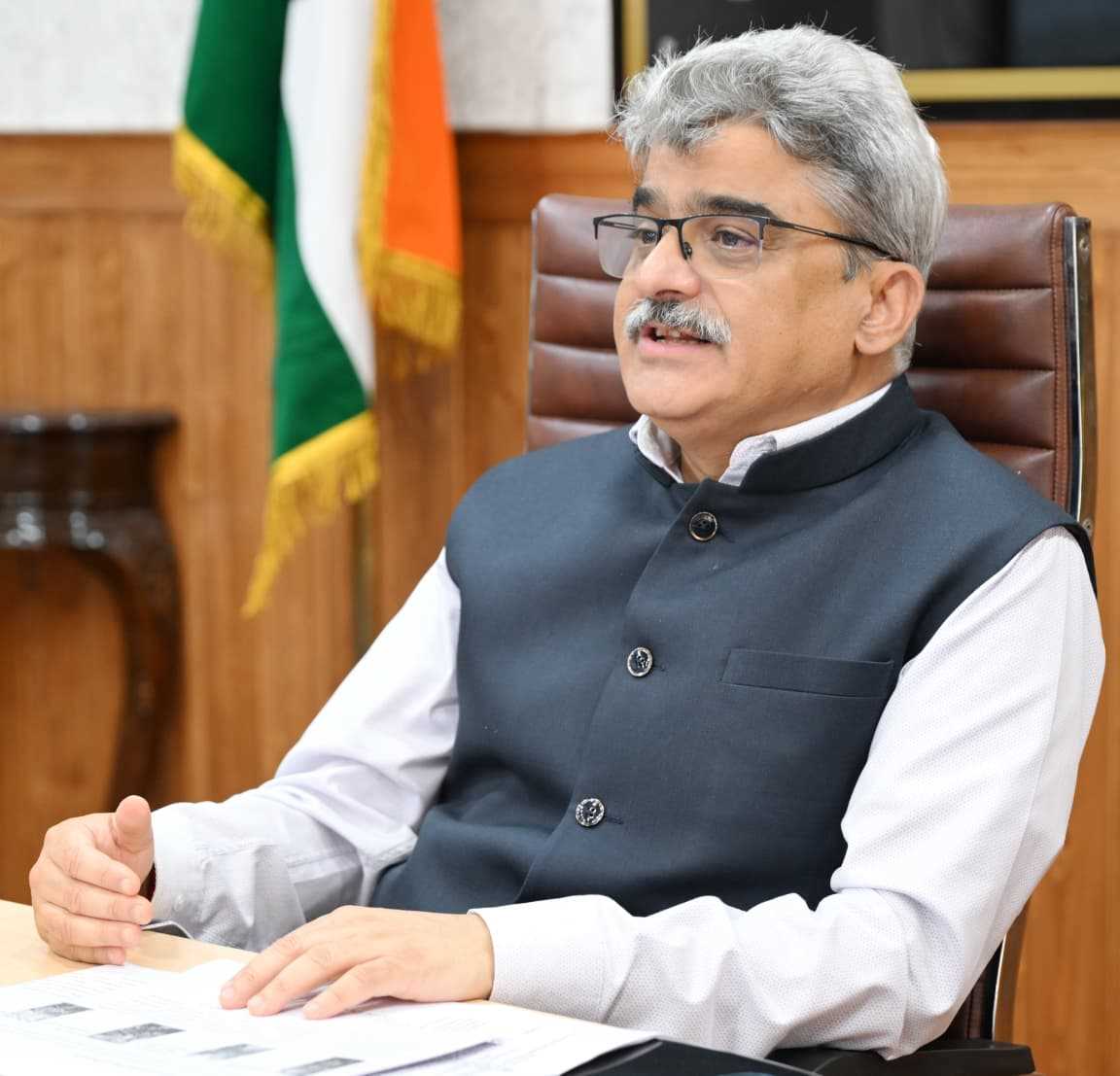
Srinagar, Sept 4: Chief Secretary, Atal Dulloo on Friday called for a reliability-first and fiscally prudent approach to electric mobility in Jammu and Kashmir, with EV adoption to be scaled up with establishing adequate service readiness, winter performance and dependable charging infrastructure.
The Chief Secretary was chairing a meeting to review the comprehensive framework of the Draft Jammu and Kashmir Electric Vehicle (EV) Policy 2026, formulated by the Transport Department with support from the Centre for Innovation and Transformation in Governance (CITaG).
The meeting was attended by ACS, Power Development Department; ACS, Finance; Commissioner Secretary, FCS&CA; Commissioner Secretary, Housing & Urban Development Department; Commissioner Secretary, Law; Secretary, Transport; Commissioner, JMC/SMC, besides other concerned officers and subject experts from CITaG.
While speaking the Chief Secretary directed that implementation of the proposed policy should follow a strictly sequenced approach, beginning with service preparedness before expansion of charging corridors and wider market adoption.
He stressed that EV deployment in J&K must be in consonance with the Union Territory’s distinct terrain, climatic conditions and sub-zero operating environments, particularly on difficult routes, so that infrastructure and vehicle performance are validated under actual field conditions before scaling up.
On the fiscal framework, the Chief Secretary directs for ensuring that government support remains targeted towards strategic gaps and capacity building of the concerned.
He emphasised greater reliance on centrally sponsored interventions, including PM E-DRIVE, as the principal fiscal anchor for the transition.
The Chief Secretary further directed the Law Department to undertake the requisite legal vetting of the draft policy before its finalisation.
Regarding electrification of the government fleet, Dulloo directed that replacement of government vehicles should be undertaken in a phased and need-based manner, strictly keeping in view the terrain, climatic conditions and operational requirements of different areas of J&K.
On this occasion the Secretary, Transport, Avny Lavasa highlighted that the proposed policy has been structured around eight strategic pillars, with measurable targets for vehicle adoption, charging infrastructure, workforce development, fiscal support, power-system integration and environmental outcomes.
She said tangible policy targets had been envisaged within the next 6 years of the policy adoption constituting an EV share of 40 per cent in new personal four-wheeler registrations, 35 per cent in two-wheelers, 30 per cent in buses and 25 per cent in taxis and shared mobility.
To support this transition, the proposed roadmap envisages expansion of the public charging network from the present baseline of around 180 stations to 450 sites by the third year and 900 sites by the sixth year. This would include 140 priority fast-charging hubs, each targeted to maintain at least 98 per cent monthly uptime.
A dedicated Winter Validation Protocol has been proposed to assess battery thermal behaviour, low-temperature charging acceptance and the impact of cabin heating on vehicle performance.
The proposed policy also favours incentivising the early adopters. It envisages giving eligible buyers the option of either interest subvention of up to 3 per cent per annum or a rolling top-up support, with both benefits not being admissible simultaneously.
An annual scrappage exchange bonus has too been recommended for a maximum period of three years. The benefit would be available only through authorised scrappage channels and subject to verification through a centralised digital database.
The policy also proposes managed integration of EV charging demand with the power system through Time-of-Day tariffs and solar-hour charging, with a target of 40 per cent renewable-energy integration in charging operations within the targeted period of time.
Srinagar, Sept 4: Chief Secretary, Atal Dulloo on Friday called for a reliability-first and fiscally prudent approach to electric mobility in Jammu and Kashmir, with EV adoption to be scaled up with establishing adequate service readiness, winter performance and dependable charging infrastructure.
The Chief Secretary was chairing a meeting to review the comprehensive framework of the Draft Jammu and Kashmir Electric Vehicle (EV) Policy 2026, formulated by the Transport Department with support from the Centre for Innovation and Transformation in Governance (CITaG).
The meeting was attended by ACS, Power Development Department; ACS, Finance; Commissioner Secretary, FCS&CA; Commissioner Secretary, Housing & Urban Development Department; Commissioner Secretary, Law; Secretary, Transport; Commissioner, JMC/SMC, besides other concerned officers and subject experts from CITaG.
While speaking the Chief Secretary directed that implementation of the proposed policy should follow a strictly sequenced approach, beginning with service preparedness before expansion of charging corridors and wider market adoption.
He stressed that EV deployment in J&K must be in consonance with the Union Territory’s distinct terrain, climatic conditions and sub-zero operating environments, particularly on difficult routes, so that infrastructure and vehicle performance are validated under actual field conditions before scaling up.
On the fiscal framework, the Chief Secretary directs for ensuring that government support remains targeted towards strategic gaps and capacity building of the concerned.
He emphasised greater reliance on centrally sponsored interventions, including PM E-DRIVE, as the principal fiscal anchor for the transition.
The Chief Secretary further directed the Law Department to undertake the requisite legal vetting of the draft policy before its finalisation.
Regarding electrification of the government fleet, Dulloo directed that replacement of government vehicles should be undertaken in a phased and need-based manner, strictly keeping in view the terrain, climatic conditions and operational requirements of different areas of J&K.
On this occasion the Secretary, Transport, Avny Lavasa highlighted that the proposed policy has been structured around eight strategic pillars, with measurable targets for vehicle adoption, charging infrastructure, workforce development, fiscal support, power-system integration and environmental outcomes.
She said tangible policy targets had been envisaged within the next 6 years of the policy adoption constituting an EV share of 40 per cent in new personal four-wheeler registrations, 35 per cent in two-wheelers, 30 per cent in buses and 25 per cent in taxis and shared mobility.
To support this transition, the proposed roadmap envisages expansion of the public charging network from the present baseline of around 180 stations to 450 sites by the third year and 900 sites by the sixth year. This would include 140 priority fast-charging hubs, each targeted to maintain at least 98 per cent monthly uptime.
A dedicated Winter Validation Protocol has been proposed to assess battery thermal behaviour, low-temperature charging acceptance and the impact of cabin heating on vehicle performance.
The proposed policy also favours incentivising the early adopters. It envisages giving eligible buyers the option of either interest subvention of up to 3 per cent per annum or a rolling top-up support, with both benefits not being admissible simultaneously.
An annual scrappage exchange bonus has too been recommended for a maximum period of three years. The benefit would be available only through authorised scrappage channels and subject to verification through a centralised digital database.
The policy also proposes managed integration of EV charging demand with the power system through Time-of-Day tariffs and solar-hour charging, with a target of 40 per cent renewable-energy integration in charging operations within the targeted period of time.

© Copyright 2023 brighterkashmir.com All Rights Reserved. Quantum Technologies